REVIEW · BARCELONA
Barcelona: Insider Street Art Tour with Private Studio Visit
Book on GetYourGuide →Bookable on GetYourGuide
Barcelona’s street art has secrets.
This 2-hour Barcelona street art tour takes you from big, obvious murals to quieter corners, then finishes with a private studio visit where you can talk with the artists themselves. You’ll also get a quick Urban Art Gallery stop that shows how the same works change once they move off the walls.
I really like two parts: first, the guides are artists and art historians who explain what you’re looking at, not just where to stand for a good photo. Second, I like that the format ends in a studio setting, so you see process, materials, and the human stories behind the pieces.
One thing to consider: you will be walking between neighborhoods for part of the route, so comfy shoes matter. If you prefer long museum time over street-level looking, this may feel a bit fast at just two hours.
In This Review
- Key highlights worth planning for
- Enter Teatre Condal and start with art that feels lived-in
- Av. del Paral·lel, then El Raval and the Gothic Quarter (with smart pauses)
- How the guide teaches you to read tags, paste-ups, murals, and sculpture
- Canal Gallery: seeing urban art after it leaves the streets
- The studio visit: what private access changes
- Photo planning and walking pace for a 2-hour street art route
- Price and value: what you actually get for about $33
- Who should book this (and who might pass)
- Quick booking decision: should you book this Barcelona street art tour?
- FAQ
- Where does the tour start?
- How long is the street art tour?
- How much does it cost?
- What language is the guide?
- Is there a studio visit included?
- Is there a gallery stop during the tour?
- Who are the guides?
- Is the tour wheelchair accessible?
- Can I cancel for a full refund?
- Can I pay later?
Key highlights worth planning for
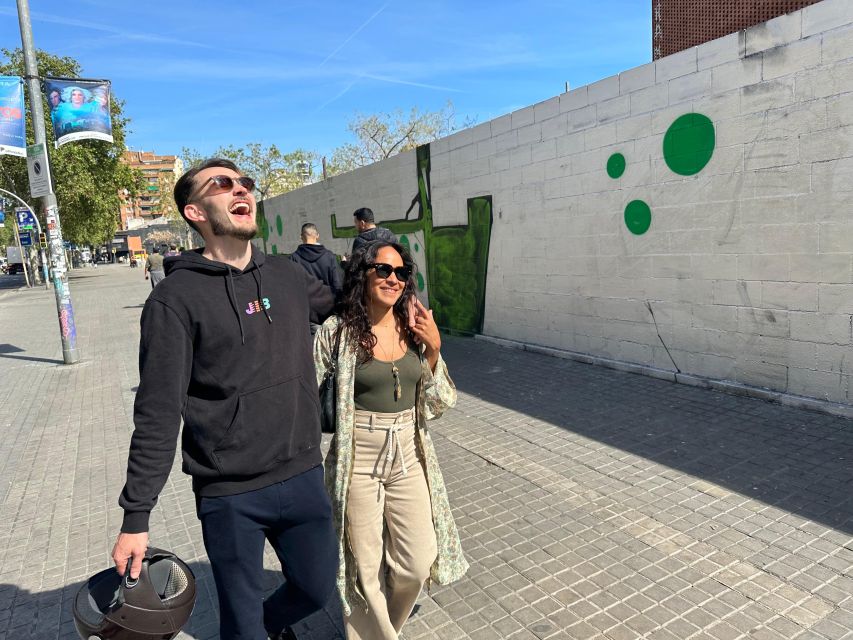
- Artist-guided street reading: learn tags, paste-ups, murals, and even urban sculpture basics
- Street-to-gallery transition: see how works shift when they’re shown indoors
- Private studio access: meet artists in an underground studio space
- Real context, in plain language: stories you won’t get from postcards
- Small-group potential: some time slots can be quiet enough for lots of questions
- Photo-friendly route: frequent mural stops along the walk
Enter Teatre Condal and start with art that feels lived-in
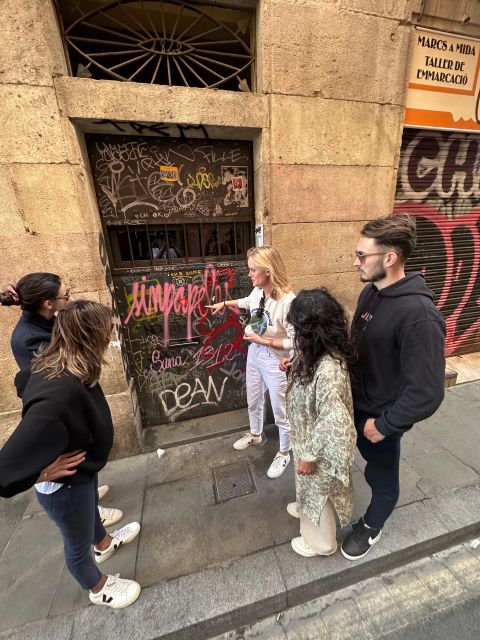
The tour starts at Teatre Condal, in front of the BINGO sign. It’s an easy meeting point because the area around the theater has cafés and shops where you can grab a drink or use the restroom before you head out.
From the first walk, the goal is to shift you from viewer mode to reader mode. You’re not just taking pictures of street art. You’re learning how to spot different styles and techniques, then connect them to the people and the street culture that made them.
The pace is designed for short stops and quick interpretation. You get those “wait, look at that detail” moments without turning the morning into a homework assignment.
Av. del Paral·lel, then El Raval and the Gothic Quarter (with smart pauses)
A big chunk of the route runs through El Raval and into the Gothic Quarter area, with a brief visit along La Rambla. These neighborhoods are close enough to feel efficient on foot, but different enough that the street art doesn’t feel repetitive.
At first, you’ll spend time with a guide on exterior walls and street-level works near Av. del Paral·lel. Then you’ll move through Raval with a longer walk that gives you room to keep absorbing what you’ve learned. This is where the tour helps most: once you’ve got a few visual “keys,” you start noticing things on your own.
A short stop along La Rambla adds variety, and then the Gothic Quarter walk brings you into a different atmosphere—more historic streets, different textures, and street art that can look like it’s talking to the old city at the same time.
Practical note: because the route includes walking segments, plan for uneven sidewalks and shifting crowds near the busier areas.
How the guide teaches you to read tags, paste-ups, murals, and sculpture
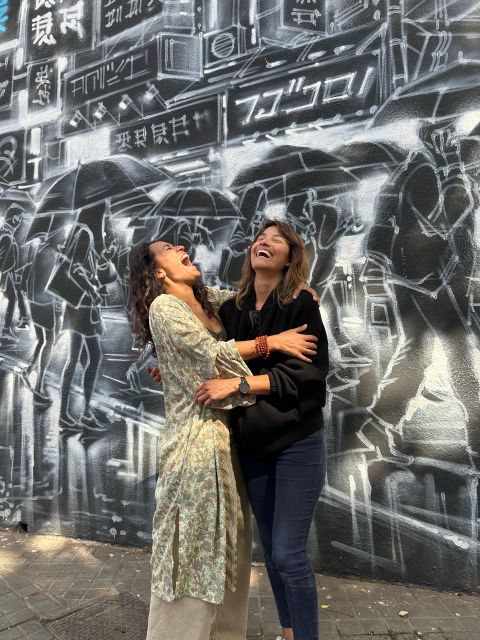
This tour is built around teaching you how to look. You’ll learn how to recognize tags, paste-ups, and murals, plus basics of urban sculpture. Even if you don’t know street art terminology, the guide’s job is to translate what you see into something you can actually understand.
What I like about this approach is that it changes what happens after the tour. Once you can separate a tag from a paste-up or spot a mural style, you start seeing Barcelona differently. It’s not just graffiti anymore—it’s a whole visual language.
The guides are also not doing a lecture. They explain the real stories behind pieces, and they connect the look of a work to technique and context. That’s why names like Kate, Kat, Anya, Juan, and Luke pop up in guides you might meet—each one brings that artist or art-historian angle that keeps the explanations grounded.
You’ll also have regular photo opportunities. The trick is to take a few wide shots, but also slow down at a detail or two so you can remember what you learned when you later compare styles.
Canal Gallery: seeing urban art after it leaves the streets
One of the smartest parts of this experience is the transition stop at Canal Gallery. It’s where you see the work in a new setting and understand why street art and gallery art often feel like cousins rather than twins.
In the gallery, you’re no longer limited by wall texture, weather, or the pressure of being temporary. You can focus on composition, placement, and how the artwork communicates when it’s presented with intention. The tour also includes meeting the people behind the space, so you get a sense of what happens when artists move from street visibility to gallery representation.
This indoor stop doesn’t feel like a detour. It’s there to help you compare the same kind of creativity under different rules—public vs. curated, quick vs. contemplated.
If you love art but get impatient with long gallery rules, this format is a good compromise. It’s short, focused, and connected to what you saw outside.
The studio visit: what private access changes
The experience’s main payoff is the underground studio visit, where you meet members of an artist collective in their working space. Instead of just seeing final pieces on walls, you get access to the environment where art gets made.
This is where you can really ask questions. You’re not trying to catch a creator after the fact. You’re in their territory—so conversations can turn practical, like how they think about style, how they approach new work, or why certain pieces end up where they do.
Even for people who are only curious, the studio visit tends to click fast because it’s human-scale. You see the tools and the workspace mindset. You hear explanations that aren’t optimized for a crowd.
It also helps that the tour ends with studio time after the street and gallery parts. By then, you’ve already learned the language a bit, so the studio stops feel less like random art sightings and more like the continuation of a story.
Photo planning and walking pace for a 2-hour street art route
This is a 2-hour tour, which means you’ll see a lot without getting stuck in one place forever. Expect a rhythm of short guided segments and walks between stops, including time spent around Teatre Condal and later finishing at Canal Gallery.
Photo-wise, Barcelona street art rewards both planning and patience. Bring your camera ready, but don’t shoot everything at once. Pause when the guide points out technique—those are often the details that make a photo actually useful later.
If you’re sensitive to crowds, keep in mind that La Rambla and central areas can be busy. The upside is that you’re not only walking past crowds—you’re stopping to look with a plan.
Price and value: what you actually get for about $33
At $33 per person for a 2-hour guided experience, this tour is positioned closer to a guided “street art education + access” than a casual street walk. The cost makes sense because you’re not just getting a map. You’re getting an interpretation layer plus private studio access.
You also receive an interactive map that points you toward galleries, cafés, and other cool spots. That kind of add-on is small but useful because it helps you keep the momentum after the tour ends.
Here’s the value test I suggest you use: if your goal is simply to photograph murals, you could do that on your own. But if your goal is to understand the differences between styles and get permission-level access to a studio space, the guide’s role becomes the product.
Who should book this (and who might pass)
I think this is a great fit if you:
- want to learn how to read street art quickly, without needing a crash course
- like the idea of meeting artists in a working studio space
- enjoy short, focused stops instead of long museum marathons
- want practical tips on where else street art shows up
It may be less ideal if you want a slow-paced, museum-style experience with lots of sitting and minimal walking. The tour is built for moving through neighborhoods and seeing street art in context, not for quiet indoor time.
Also, if you’re coming with family or friends, note that private, customized experiences are available for groups, families, or special occasions. That can help if you want a slower pace or more specific interests.
Quick booking decision: should you book this Barcelona street art tour?
Book it if you want street art that comes with meaning—plus studio access—within a short timeframe. The two big strengths are the artist/art-historian guidance and the private studio visit where you can talk with the creators.
Skip it if your main goal is only pictures and you don’t care about learning how to distinguish techniques. In that case, a self-guided walk might be enough.
If you can handle short walks and you like asking questions, this tour is one of the better ways to get past the first layer of Barcelona street art.
FAQ
Where does the tour start?
You’ll meet in front of the BINGO sign on Teatre Condal.
How long is the street art tour?
The tour lasts 2 hours.
How much does it cost?
It costs $33 per person.
What language is the guide?
The live guide speaks English.
Is there a studio visit included?
Yes. Part of the experience includes visiting an underground urban art studio and meeting artists there.
Is there a gallery stop during the tour?
Yes. You’ll visit an urban art gallery (ending at Canal Gallery) to see work and meet the people behind the space.
Who are the guides?
The guides are artists or art historians active in the street art scene.
Is the tour wheelchair accessible?
Yes, it is wheelchair accessible.
Can I cancel for a full refund?
You can cancel up to 24 hours in advance for a full refund.
Can I pay later?
Yes. You can reserve now and pay later.
If you want, tell me when you’re visiting Barcelona and what you’re most into (tags, murals, or the studio conversation). I’ll help you plan the rest of the day so this tour fits smoothly with your neighborhoods.