Barcelona’s backstreets teach you the city fast. This small-group walk strings together the Gothic Quarter, El Born, and Old Town landmarks so you don’t just see places—you understand why they look the way they do. You’ll get guided context in a compact route, built for first-timers who want order in the chaos.
Two things I really like: the small group size (you can actually hear your guide) and the storytelling pace that keeps moving without feeling rushed. A quick stop at Boqueria also turns the route into more than architecture—more like local life with history mixed in.
One thing to consider: it’s still a walking tour. If your legs are touchy, you’ll want comfy shoes, because you’ll be on stone streets for about 2.5 hours.
In This Review
- Key takeaways before you go
- Why this Gothic Quarter walk works when you’re short on time
- Group size, pace, and what the 2.5 hours is really like
- Meeting at Carrer de Fontanella and ending near Palau de la Música
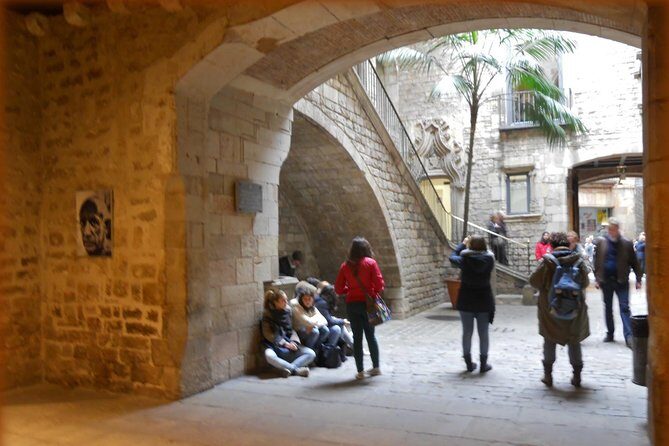
- Gothic Quarter on foot: narrow streets, Roman traces, and medieval stories
- What to watch for during this stop
- Ciutat Vella, La Rambla, and the walk that connects Old Town to everyday life
- Mercat de la Boqueria: local food culture without turning the tour into a food tour
- A small caution
- Plaça Reial and a Cathedral pass-by: architecture you can spot fast
- El Born and Santa Maria del Mar: the Old Town’s everyday heart
- Finishing at Palau de la Música Catalana: the UNESCO payoff
- What you’ll gain beyond the stops
- Who should book this tour (and who might skip it)
- Should you book this Barcelona Old Town & Gothic Quarter small group tour?
- FAQ
- How long is the Barcelona Old Town & Gothic Quarter Small Group Tour?
- What’s the group size?
- Is the tour offered in English?
- Where do I meet, and where does the tour end?
- Are admission tickets included for the cathedral and Santa Maria del Mar?
- Does the tour include food and drinks?
- Can I cancel for a full refund?
- Is it suitable for families and kids?
- Are service animals allowed?
- Is there a mobile ticket?
Key takeaways before you go
- Small group size (max 15; often about a dozen) makes questions easy and sound carry better in narrow streets
- Roman-to-modern story arc: you’ll connect Roman traces in the Gothic Quarter to Catalan modernism at the end
- Boqueria stop with snack options: grab a fresh fruit juice or a quick bite if you want to eat on your own
- A mix of interiors and exteriors: some big sights are view-and-explain, while certain entries aren’t included
- Finish at Palau de la Música: you end at a UNESCO World Heritage music hall, not just a random plaza
Why this Gothic Quarter walk works when you’re short on time
If you only have a day (or even just a half-day) to orient yourself, Barcelona Old Town can feel like a puzzle you didn’t know you bought. This tour is built to reduce that stress. You walk the core area with a guide who links the streets to the centuries that shaped them.
The route hits the big “first-time Barcelona” zones—Gothic Quarter and Ciutat Vella, then La Rambla, then El Born—so you leave with a map in your head. Guides I’ve seen praised for staying friendly and answering lots of questions (names like Joris, Alba, Steven, and Nilo pop up often) tend to be the difference between a tour that’s just facts and one that actually helps you navigate.
It’s also a good choice for couples and families who want structure. One review mentioned it worked well with kids and even with a stroller, which matters because these streets are crowded and uneven.
Group size, pace, and what the 2.5 hours is really like
This runs about 2 hours 30 minutes. The timing matters: you get enough time to actually notice details, but not so much time that you burn out before you reach the best architecture.
The group is kept small—maximum 15 travelers, and the tour is described as a small group of up to 12—which usually means:
- You’re not swallowed by a giant pack in the Gothic alleys
- Your guide can regroup people if someone falls a step behind
- You can ask questions without shouting over everyone
In the praised reviews, the guides were repeatedly credited for pace that felt right, with the tour “flying by.” That’s exactly what you want on a walking route where crowds can slow things down.
Meeting at Carrer de Fontanella and ending near Palau de la Música
You start at Carrer de Fontanella, 2 (Ciutat Vella, 08002). The end point is near Carrer del Palau de la Música (Ciutat Vella, 08003), by Palau de la Música Catalana. That means you don’t just loop back to where you began—you finish in a major landmark zone, which is handy for continuing your day.
Practical note: the meeting point is in the historic center and near public transportation, so getting there is usually straightforward. Still, one guest pointed out that the written meeting address and the on-the-ground spot weren’t perfectly aligned. Your best move: open Google Maps before you head out and plan to arrive a few minutes early.
Also, it’s offered in English, with morning or afternoon times. Pick the slot that matches your energy level. Old Town looks great in any light, but crowds can feel different depending on the hour.
Gothic Quarter on foot: narrow streets, Roman traces, and medieval stories
The heart of this tour is the Gothic Quarter, with about 45 minutes here. This is where Barcelona’s layers stack up. Your guide points out the narrow streets and squares that feel like a maze—yet you’ll be moving with a plan, so you’re not just guessing.
A standout theme is the mix of Roman and medieval Barcelona. You’ll hear about Roman remains still visible in corners of what was once a Roman village. Then the story shifts forward to how a small settlement grew into the area now known for its medieval and Gothic architecture.
This is also the zone where a guide really earns their pay. The Gothic Quarter can trick you into thinking you’re only looking at scenery. A good guide helps you see the city as a timeline—why walls, streets, and building styles look the way they do.
What to watch for during this stop
- Look up more often than you think you should. Gothic streets reward that
- Keep an ear open for the big cultural shifts you’ll mention along the way (you’ll hear the city’s long history, not just one era)
- Don’t rush photos; the guide’s explanations are tied to specific details
A possible drawback here: in busy narrow alleys, you may occasionally feel like you’re standing in a crowd while listening. That’s not the tour’s fault—it’s the neighborhood. The small group helps, but you still need patience.
Ciutat Vella, La Rambla, and the walk that connects Old Town to everyday life
After the Gothic Quarter, you get a shorter 15-minute stop in Ciutat Vella, the Catalan term for Old City. This segment works like a bridge. It connects the Gothic side of the maze to the broader Old Town rhythm—less “lost in history,” more “here’s how people live and move through it.”
Then comes Las Ramblas for about 15 minutes. This is the famous avenue you’ve seen in photos, but on a guided walk it stops being just a tourist corridor. Your guide frames it historically: in medieval times it was linked to a small sandy river used as a natural defense at the old city wall edge. Today, it’s one of the liveliest public spaces in the city.
This portion can feel a little more hectic than the Gothic lanes, but it’s worth it because it gives you contrast. After the tight medieval streets, the long boulevard teaches you how Barcelona’s city planning changed as it grew.
Mercat de la Boqueria: local food culture without turning the tour into a food tour
Next is Mercat de la Boqueria, again about 15 minutes. This stop is practical: you can sample on your own if you want, but you don’t have to. The market is described as full of color and life, with elegant architecture, and it’s a great place to get your bearings.
You’ll likely be pointed toward things like:
- Fresh fruit juice (a classic quick option)
- The regional story behind Catalan food traditions
- The background of world-famous Iberian cured ham
You shouldn’t expect a long tasting extravaganza here. The point is orientation plus a short taste of the market’s vibe. In one review, the market stop was a highlight because it gave people a place they could return to later. That’s a smart use of your time: do a quick guided look now, then explore independently when you’re hungry.
A small caution
Boqueria can be crowded. If you’re shopping for gifts or food, keep it quick during the tour stop and save deeper browsing for later. The guide’s time is better spent on context you’d miss on your own.
Plaça Reial and a Cathedral pass-by: architecture you can spot fast
Then you move to Plaça Reial for about 15 minutes. This square is one of those “you’ll recognize it once you’re there” places. It’s open compared to the alleys, and it acts as a meeting point in the middle of the Gothic Quarter area.
What makes this stop special is the architectural detail. You’ll see:
- Napoleonic architecture
- The fountain called de Tres Gracias
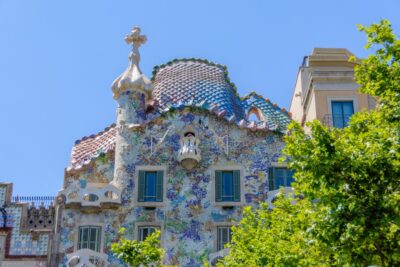
- Lanterns designed by a very young Gaudí on one of his early public assignments
- And the royal palm trees, which help the square stand out instantly
After that, you pass by the Barcelona Cathedral in another 15 minutes. The tour doesn’t treat this like a long interior visit. Instead, it’s a “look and learn” moment. You’ll notice the famous gargoyle sculptures near the top of the towers, and you’ll get context for the cathedral’s role and dedication.
The interior isn’t included as part of the ticketed experience here. The tour notes admission for the cathedral is not included, so if you want to go inside, you’ll need to handle entry separately.
This is still a good stop because it trains your eyes. Even from outside, the scale and details help you understand why people treat this building as one of Europe’s major cathedrals.
El Born and Santa Maria del Mar: the Old Town’s everyday heart
Next is El Born, about 15 minutes. If the Gothic Quarter is a maze you can’t stop talking about, El Born is a different kind of maze—more social, more mixed, more layered. You’ll get a sense of the fusion between old and newer buildings and the neighborhood’s vibe.
This part works well because it breaks up the “big monuments” rhythm. El Born gives you a human scale: streets, small squares, and the feeling that this is where Barcelona’s everyday culture runs alongside its heritage.
Then you reach Basilica de Santa Maria del Mar, about 15 minutes. This is described as the real cathedral of the Old Town because it was founded and constructed in medieval times by people from the neighborhood itself. It’s also framed as an emblem of Catalan Gothic art and a must-see.
Just like with the cathedral, admission isn’t included for this basilica. So again: expect guided context and exterior-focused viewing unless you separately arrange entry.
Finishing at Palau de la Música Catalana: the UNESCO payoff
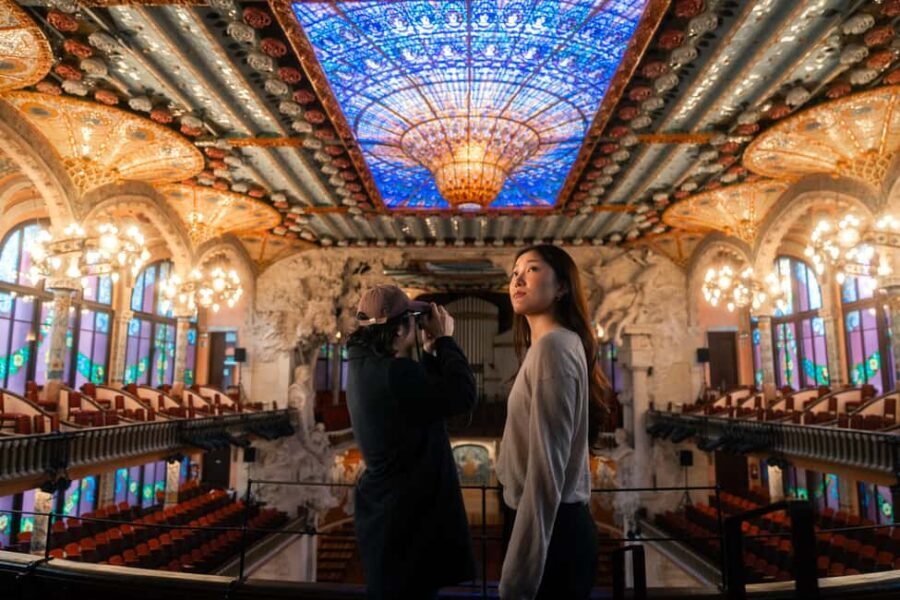
The tour ends near Palau de la Música Catalana, close to Carrer del Palau de la Música. This finish is not random. Your guide frames the building as a UNESCO World Heritage Site, and it’s designed by Lluís Domènech i Montaner, who’s described as Gaudí’s teacher.
This part is where Catalan modernism becomes tangible. Your guide highlights why it feels like a music box: applied arts come together here—sculpture, mosaic, stained glass, and wrought iron.
Even if you only have exterior time during the tour, the building’s look is its own explanation. It helps you connect the dots between centuries: medieval Gothic you walked through earlier, and then later modern design that still respects craftsmanship and public art.
If you plan to continue your day, finishing at Palau de la Música is smart. You end in a strong landmark area where it’s easy to choose your next stop.
What you’ll gain beyond the stops
A good Old Town tour isn’t about collecting checkmarks. It’s about learning how to read the city. This route does that by pairing:
- Roman and medieval traces in the Gothic Quarter
- The Old City identity of Ciutat Vella
- The public-life corridor of La Rambla
- Market life at Boqueria
- Squares that show how Barcelona mixes politics, design, and everyday gathering
- And finally the Catalan modernism of Palau de la Música
The most praised aspect from guides you’ll see mentioned in feedback is their ability to mix facts with stories and keep the pace comfortable. Names like Isabel, Alba, Steven, Jose Carlos, Tatiana, and Miguel show up repeatedly—one or two of those might be the style you hope for: friendly, engaging, and ready for questions.
Who should book this tour (and who might skip it)
This tour is a great fit if:
- You’re visiting Barcelona for the first time and want an organized orientation
- You want a walk that’s small-group and question-friendly
- You like history that explains what you’re looking at, not just names and dates
- You want a short taste of Boqueria without turning the day into a full food crawl
You might prefer something else if:
- You dislike walking on uneven streets or crowded areas
- You’re hoping for long, sit-down time inside major churches and museums (ticketed entries like the cathedral and Santa Maria del Mar aren’t included)
- You want a slow-paced, deeply architectural photography session without stopping for stories
Should you book this Barcelona Old Town & Gothic Quarter small group tour?
I’d book it if your goal is to get your bearings fast and leave with a clearer mental map of Barcelona’s Old Town. The combination of small group size, guided pacing, and a finish at Palau de la Música gives this tour real momentum.
One more practical reason: it’s positioned as a value play. At $22.15 per person for about 2.5 hours with a professional local guide, you’re paying for direction and context. The market stop gives you optional food time, while the cathedral and basilica are set up for you to decide whether you want to add entry later.
If you want a structured intro to Gothic Quarter + Born, this is the kind of tour that helps you enjoy the rest of your day instead of wandering while guessing.
FAQ
How long is the Barcelona Old Town & Gothic Quarter Small Group Tour?
It runs for about 2 hours 30 minutes.
What’s the group size?
It’s a small group with a stated maximum of 15 travelers (and it’s also described as up to about a dozen for a personalized experience).
Is the tour offered in English?
Yes, it’s offered in English.
Where do I meet, and where does the tour end?
You start at Carrer de Fontanella, 2, Ciutat Vella, 08002 Barcelona. You end near Carrer del Palau de la Música, Ciutat Vella, 08003 Barcelona, by Palau de la Música Catalana.
Are admission tickets included for the cathedral and Santa Maria del Mar?
No. Admission is not included for Catedral de Barcelona and Basilica de Santa Maria del Mar. Other stops are listed as admission free.
Does the tour include food and drinks?
No. Food and drinks are not included. The Boqueria market stop is a chance to look around and buy something if you want.
Can I cancel for a full refund?
Yes. Free cancellation is available up to 24 hours in advance for a full refund.
Is it suitable for families and kids?
It’s marked as suitable for most travelers, and children must be accompanied by an adult. Children under 2 can join free. Children between 3 and 8 get 30% off.
Are service animals allowed?
Yes, service animals are allowed.
Is there a mobile ticket?
Yes. The tour includes a mobile ticket.