Barcelona history feels close-up on this route. This walking tour strings together the Gothic Quarter and major Gaudí exteriors with just enough Ramblas and Modernist street sparkle to make you feel like you’ve mapped the city.
I especially like the small-group setup (max 15) and the way the guide keeps the story moving from Roman layers to medieval corners. In the reviews, guides such as Filipa, Anna, Loïc, Yannis, and Christian get singled out for pacing, humor, and answering questions without rushing people.
One possible drawback: the tour is mostly outside, and key stops like the cathedral and Gaudí sites don’t include admission. You’ll also want to budget for a short added cost for the headset and a brief metro ride.
In This Review
- Key points before you go
- Why this Gothic + Gaudí walk works as a first-day move
- Price, time, and what you truly get for $35.37
- Start point: Pl. de Catalunya to the Gaudí area
- Gothic Quarter: where the city’s oldest layers feel real
- Las Ramblas and the cathedral heart: a quick pivot through the Old Town
- Plaça Sant Felip Neri: the Old Town’s calmer pocket
- Placa Reial: arcade-lined views, palm trees, and night-life energy
- Casa Batlló and La Pedrera: famous silhouettes without the inside crowds
- Passeig de Gràcia: where Modernist details get practical
- Casa Amatller: a quick Modernist neighbor stop that adds context
- The real value: guides who keep the pace friendly
- What to bring so the tour feels smooth
- Who should book this tour
- Should you book? My honest recommendation
- FAQ
- FAQ
- How long is the Ramblas, Old Town, Gothic and Gaudí walking tour?
- How much does the tour cost?
- Is the tour offered in English?
- What is included in the tour price?
- What is not included?
- Do you go inside Casa Batlló?
- Where do you meet and where does the tour end?
- How big is the group?
- Does the tour run in bad weather?
Key points before you go
- Small group, max 15: easier questions and more personal pacing than big-bus chaos.
- Two neighborhoods in 2h15: Old Town Gothic details plus Modernist masterpieces along Passeig de Gràcia.
- Gaudí exteriors only: you’ll see the famous shapes, but you won’t go inside Casa Batlló.
- Headset rental is optional but useful: plan on paying about 1€ at the start if you want clearer audio.
- Bring your own metro ticket or get it through the guide: the tour includes a short metro hop.
Why this Gothic + Gaudí walk works as a first-day move
Barcelona can feel like it has three different cities in one: the ancient maze of the Gothic Quarter, the world-famous theater of Gaudí, and the clean, grand “magazine layout” of Passeig de Gràcia. This tour stitches those parts together on foot so you don’t just see landmarks in isolation.
The value is in the ordering. You start in the oldest streets, where the city’s layers make more sense. Then you slide toward Gaudí’s Modernist world with a guide who gives context for why the buildings look the way they do and how Barcelona’s style changed over time.
And yes, it’s popular for a reason: the group is kept small, and the reviews repeatedly mention guides who keep people engaged and moving. If you want an efficient overview that still feels human, this tour does that job.
Price, time, and what you truly get for $35.37
At $35.37 per person for about 2 hours 15 minutes, you’re paying for a professional guide and a structured walking route that covers multiple major sights. What you’re not paying for is entry into monuments.
That trade-off matters. If you’re the kind of traveler who hates wasting vacation time lining up for tickets, this tour’s “outside views first” approach can be a plus. On the other hand, if you specifically want to go inside the cathedral or enter Gaudí interiors during the tour window, you’ll need to plan that separately because monument tickets aren’t included.
Also watch for the small extras that pop up in the details:
- A radio headset is not included. Rental is about 1€ per person at the start via an external provider.
- There’s a short metro ride during the tour. You should bring your own public transport ticket or expect to buy it through the guide.
Those items are minor, but they can affect your budget and your “what do I need today?” mental checklist.
Start point: Pl. de Catalunya to the Gaudí area
The tour begins at Foot Locker, Pl. de Catalunya 20, in Ciutat Vella. That’s a very central starting point, which helps if you’re coming from your hotel on foot or by metro.
You end at Carrer del Consell de Cent 310 in Eixample, near Casa Batlló and Casa Mila. That matters because the tour finishes right where many people want to spend the rest of the afternoon/evening anyway. You can roll straight into your own exploration of Passeig de Gràcia and the surrounding blocks.
Gothic Quarter: where the city’s oldest layers feel real
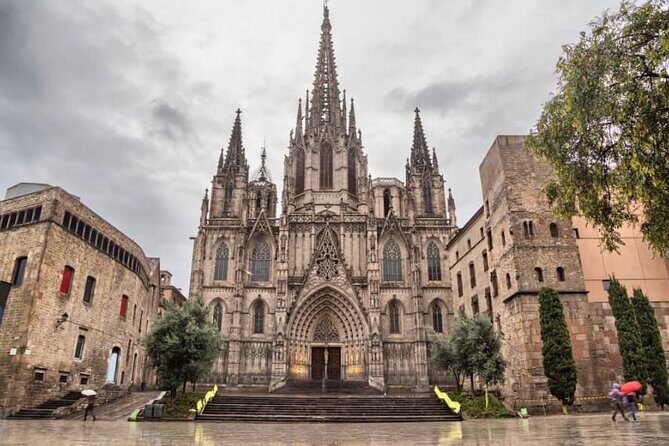
The first stop is the Gothic Quarter, and it’s the kind of start that pays off. You get the oldest part of the city, with Roman ruins, medieval churches, and the kind of tight streets where corners turn into viewpoints.
Expect about 30 minutes here, plus a focus on the Barcelona Cathedral. The cathedral is listed as not including admission tickets, so treat this as a guided orientation and exterior/interior awareness rather than a guaranteed entry experience.
What makes this portion valuable is how the guide connects the architecture to the city’s timeline. Medieval churches and Roman-era remnants aren’t just “pretty stone.” They tell you how Barcelona grew, what mattered to people back then, and why today’s streets feel the way they do.
Practical note: this is where you’ll benefit most from comfortable shoes. You’re on uneven historic streets and you’ll be stopping often, looking up, and weaving through alleys and courtyards.
Las Ramblas and the cathedral heart: a quick pivot through the Old Town
After the Gothic Quarter, the tour briefly touches Las Ramblas (about 2 minutes). This is not the “sit and people-watch all day” version of Ramblas. It’s more like a fast reality check: you see the famous street, then you move on before it becomes a distraction.
Then comes another cathedral-focused stop: Catedral de Barcelona (about 3 minutes). This is short, so it’s designed for context and orientation, not deep exploration. If you want more time inside, you’ll be glad you did the tour first because you’ll know where to return later.
Plaça Sant Felip Neri: the Old Town’s calmer pocket
Next up is Placa Sant Felip Neri, about 5 minutes. This is one of those squares that feels tucked away from the main stream of sightseeing. You get a moment of open space inside the old layout, which helps you reset after the tight streets of the Gothic maze.
If you like architecture that’s more “lived-in” than “museum-like,” this kind of stop gives you a more human view of the neighborhood.
Placa Reial: arcade-lined views, palm trees, and night-life energy
Then it’s Placa Reial for another 5 minutes. This square is described as big and arcade-lined, with restaurants, palm trees, and a notable night-life vibe. Even if you’re there in daylight, it helps you understand why this area feels like a social hub.
What I like about finishing the Old Town section this way is that it shifts the mood. You go from stone history into atmosphere and movement, and then you’re ready to climb toward the Gaudí/Modernist story.
Casa Batlló and La Pedrera: famous silhouettes without the inside crowds
You’ll hit Casa Batlló next for about 10 minutes, and the big detail here is that the tour does not go inside. You’re seeing the outside first, and you’ll hear about its fairy-tale reputation, including the House of Bones or House of Dragons descriptions.
After that, there’s La Pedrera (Casa Mila) for about 5 minutes, again focused on the exterior.
These quick, outside-only stops are a good fit for a 2h15 route. If the goal is a first orientation to Gaudí style, this works. You’ll learn to recognize motifs and understand how the façades communicate ideas. If you want the full interior experience, plan separate timed tickets later, when you can control your pacing.
Passeig de Gràcia: where Modernist details get practical
The biggest block of time is Passeig de Gràcia at about 45 minutes. This is the tour’s “slow down and look” stretch—Barcelona’s showcase for Modernist design.
The description focuses on the Modernist jewels all along the street: houses, plus lampposts and tiles. That sounds like minor decoration until you start seeing how deliberate it all is. The street becomes a kind of open-air design guide, and a good guide will help you connect those details to the wider Modernist movement.
If you’ve ever walked past a façade and wondered what you’re supposed to notice, this is where the tour can help the most. The guide’s job is to make your eyes smarter, not just your facts fuller.
Casa Amatller: a quick Modernist neighbor stop that adds context
To wrap the Gaudí/Modernist arc, there’s Casa Amatller for about 5 minutes next to Casa Batlló. This is short, but it’s strategically useful. You compare façades side-by-side and get a feel for how different Modernist architects expressed similar ambitions with different visual language.
In a route like this, those brief comparisons can be more memorable than a longer stop at just one building—especially if you’re trying to grasp Barcelona’s “style family.”
The real value: guides who keep the pace friendly
What stands out across the reviews is not just that people like the sights. They love how the tour runs: engaging stories, laughs, patient explanations, and question time.
Several guide names pop up again and again: Yannis (especially praised for making Barcelona history fun), Henrietta (praised for ideal pacing), Cristina (for enthusiasm and charm), and Melanie (for useful local tips like where to eat and how to stay safe). Even where the tour is set up as a standard route, the human delivery seems to matter a lot.
That’s why I think this tour is best used as a relationship-builder with the city. It’s not just a checklist. It’s a chance to walk with someone who can translate what you’re seeing into what it means—and then send you off with smarter next steps.
What to bring so the tour feels smooth
You don’t need much, but a few items make a difference:
- Comfortable walking shoes: the tour is mostly on foot through historic streets.
- A small amount of cash or card for the headset rental (about 1€) if you choose it. One review notes they accept credit card if needed.
- A public transport ticket plan for the short metro ride (bring your own or get it from the guide).
- Your mobile ticket: the tour uses a mobile ticket system, and you’ll get confirmation at booking.
And for weather: the experience requires good weather. If it gets canceled because of poor conditions, you’ll be offered a different date or a full refund.
Who should book this tour
This is a great fit if you:
- Want an efficient first look at Gothic Quarter + Gaudí/Modernist Barcelona.
- Prefer exteriors and street-level architecture to long monument lines.
- Like guided storytelling that connects buildings to the city’s past and design evolution.
- Want a smaller group (max 15) for a more relaxed feel.
It may be less ideal if you:
- Plan to spend most of your time inside monuments. Here, key sites like Casa Batlló are exterior only, and cathedral entry isn’t part of what you pay for.
- Want zero extra costs. The headset rental and metro ride are small, but they’re real.
Should you book? My honest recommendation
If you’re visiting Barcelona for the first time and you want your bearings fast, I think this tour is a strong booking choice. You get a lot of “why this matters” in a short window, and the route links Old Town history to Gaudí-style design without making you bounce around the city on your own.
Book it on day one if you can, then use the tour as your map for what to revisit later. If you’re specifically chasing interior access, plan separate ticket time for the cathedral and Gaudí houses—but still do this walk first. It tends to make everything you see afterward feel clearer.
FAQ
FAQ
How long is the Ramblas, Old Town, Gothic and Gaudí walking tour?
It runs for about 2 hours 15 minutes (approx.).
How much does the tour cost?
The price is $35.37 per person.
Is the tour offered in English?
Yes, it’s offered in English.
What is included in the tour price?
You get a professional guide, a guided walking tour of the Old Town, and guided walking by the main Gaudí buildings (exterior).
What is not included?
Monuments tickets are not included. Also, the tour does not include a radio headset and you may need a public transport ticket for a short metro ride.
Do you go inside Casa Batlló?
No. The tour notes you do not go inside Casa Batlló; it’s an exterior stop.
Where do you meet and where does the tour end?
Meet at Foot Locker, Pl. de Catalunya 20. End at Carrer del Consell de Cent 310, near Casa Batlló and Casa Mila.
How big is the group?
The tour has a maximum of 15 travelers.
Does the tour run in bad weather?
It requires good weather. If canceled due to poor weather, you’ll be offered another date or a full refund.