REVIEW · BARCELONA
Tarragona and Sitges Small Group Tour – Roman History & Culture
Book on Viator →Bookable on Viator
Roman ruins and sea air in one day. That’s the simple magic of this small-group trip: you swap Barcelona’s streets for Tarraco’s stone-and-sea drama, then cool off in Sitges with time to wander, snack, and swim if you want. It’s a day built around two places most people skip, but that you’ll remember for the mix of monuments, viewpoints, and coastal vibes.
I really like the pacing here because you get proper time to walk key Roman spots without the day feeling like a nonstop sprint. Two stops in particular anchor the whole experience for me: walking across the Pont del Diable aqueduct and getting a guided look at Tarragona’s Roman forum and circus tucked right into the modern city.
One consideration: the schedule is full, and Tarragona’s time block is limited. If you’re the type who wants hours inside every museum room, you’ll likely wish you had more time to expand on the monuments beyond what the tour covers.
In This Review
- Key highlights you’ll actually feel
- Getting started at Palau de la Música (and why it matters)
- The 90-minute ride: what you’ll learn before you reach Tarragona
- Pont del Diable aqueduct: the walk across history
- Tarragona’s old walls and the surprise of Roman + modern together
- Roman forum and circus: Placa de la Font and the underground stands
- A brief coast stop at Roc de Sant Gaieta (less time, big effect)
- Sitges at 2:30: beach time, cafes, boutiques, and a classic seaside town feel
- Returning to Barcelona around 7:00–7:15: where to go next
- Price and value: is $119.48 a good deal?
- Guides and the small-group advantage: when names matter
- What to pack so the day stays comfortable
- Who should book this Tarragona and Sitges tour
- FAQ
- What time does the tour start in Barcelona?
- Where is the meeting point?
- How long is the tour?
- What is the return point in Barcelona?
- Is the tour in English?
- Is transportation included?
- How big is the group?
- Are entrance fees included for Tarragona’s monuments?
- Can I swim in Sitges?
- Should you book this tour?
Key highlights you’ll actually feel
- Cross Pont del Diable on top of the Roman aqueduct for a very real sense of scale
- Forum + circus in Tarragona with underground passageways and Placa de la Font viewpoints
- Sea views at Roc de Sant Gaieta for a quick coastal reset between cities
- Sitges beach time in a town known for shops, cafes, and a long sandy shoreline
- Small-group minivan ride with air-conditioning and an expert guide (English-only)
Getting started at Palau de la Música (and why it matters)
The day begins near Palau de la Música—at C/ Palau de la Música, 1, Ciutat Vella. You meet your guide a little before departure (you’ll be there around 8:15), with time to use restrooms and grab a quick coffee if you want one. Then you roll out at 8:30 in an air-conditioned minivan.
That early start is the point. Barcelona traffic can be a bear, and this tour is designed to get you to Tarragona while the day still feels calm. Plus, leaving at 8:30 gives you the whole afternoon for Sitges instead of rushing through it like a drive-by.
If you’re arriving from elsewhere in Barcelona, you’ll be grateful the meeting point is near public transportation. And if you’re nervous about finding the group, it’s also one of those places you can orient to quickly—Palau de la Música is hard to miss.
The 90-minute ride: what you’ll learn before you reach Tarragona
After you leave Barcelona through the Example district area, the guide gives you a short history of the city as you head out. Then it’s mostly a sit-and-relax stretch: about 90 minutes toward Tarragona.
This matters more than you might think. Tarragona can feel confusing if you only see it as a scatter of ruins. Having a basic framework first helps you recognize what you’re seeing later—the water system, the civic center, and the way the Roman city lines up (or doesn’t) with what’s above it now.
And since you’re traveling in a small group (the tour lists a cap of 15, and it also notes a maximum of 8 travelers), the guide can keep the energy friendly and conversational rather than lecture-style.
Pont del Diable aqueduct: the walk across history
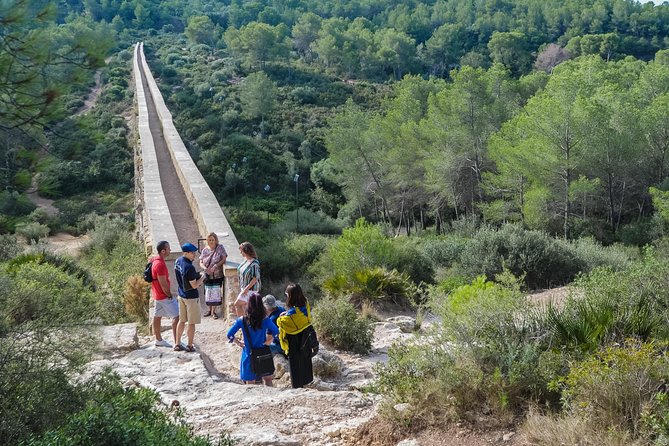
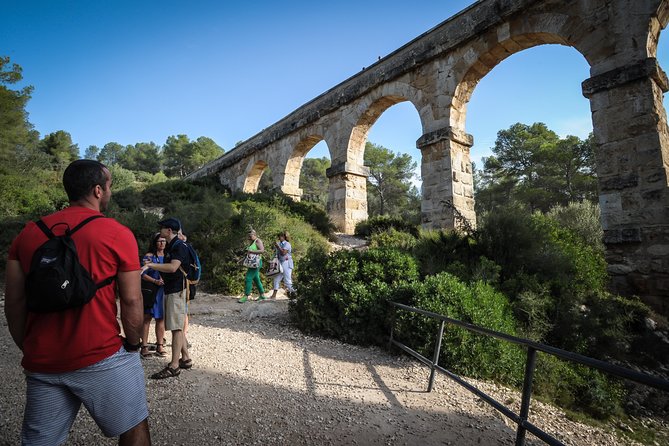
Around 10:00, you reach the Roman aqueduct just outside Tarragona: Pont del Diable (also known as Les Ferreres). This is the stop people talk about, and for good reason.
You’re looking at a 1st-century BC aqueduct built to supply water. Today it’s still standing in impressively solid form, and you can do something many Roman sites don’t let you do: you can walk across the top from one side to the other.
That “up there” view changes the experience. From street level, ruins can feel distant. Up on the aqueduct, you understand how it functioned as part of a larger system, and you feel the scale of what took serious engineering effort two thousand years ago.
Practical tip: wear shoes with decent grip. Even if the weather is fine, stone surfaces near water can be slick. And bring sun protection—this is an outdoor walk with limited shade.
Tarragona’s old walls and the surprise of Roman + modern together
After the aqueduct, you head into Tarragona’s old center. You enter through a narrow gateway in the ancient walls, and the first thing you notice is the contrast: modern life sits on top of a Roman acropolis-like layer. It’s one of those places where you can see how cities evolve without fully erasing what came before.
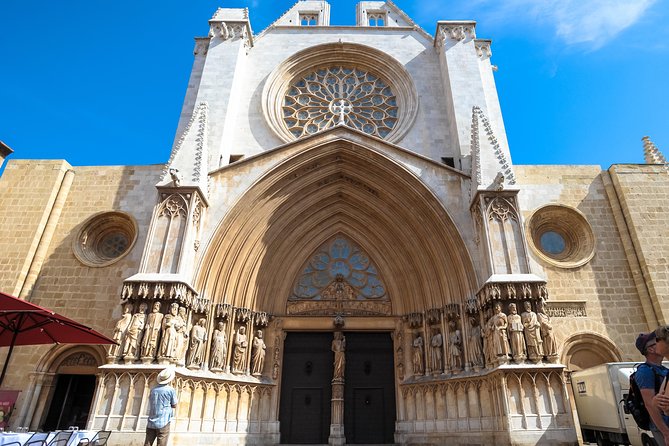
The tour then takes you along the archaeological walkway and through the historic old quarter, where you’ll pass landmarks including a medieval hospital and continue toward the cathedral area. The cathedral stop is also a useful reset point, especially if you want a view over the coast.
One small note if you’re there on the right day: the cathedral area can have a Sunday morning antique market. If your date doesn’t match, don’t worry—you’ll still get time to orient and enjoy the square energy.
Roman forum and circus: Placa de la Font and the underground stands
The best part of Tarragona is the way the tour guides you into the Roman city’s civic “center of gravity.” Around late morning into early afternoon, you focus on the Roman forum and the nearby Roman circus, which are tucked into the urban layout in a way that feels almost secret until you know where to look.
You’ll walk through areas that include underground passageways that once held the circus stands. That detail is a big deal. It helps you picture not just a ruin but the movement of people and the mechanics behind the scenes.
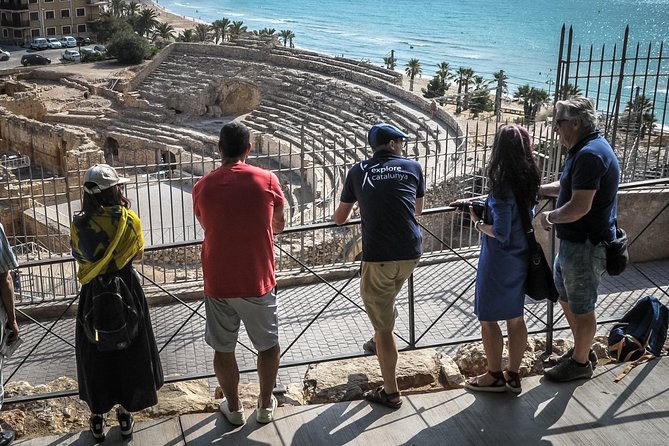
Then you arrive at Placa de la Font, a famous square located inside the Roman circus. This is the spot where your imagination can actually do useful work. If you close your eyes for a moment (yes, really), you can sense how loud and crowded chariot-racing events must have been—right where you stand now.
The guide also points out how a Christian church was built in the middle of the stage area using blocks from the earlier amphitheater/circus structures. That’s one of the clearest examples of how civilizations reuse materials and reshape sacred spaces.
And there’s a final payoff: the seaview over the Roman amphitheater area. It’s a good moment to stop, look at the water, and connect the “Roman Tarragona” idea to the Mediterranean reality that surrounds it today.
A brief coast stop at Roc de Sant Gaieta (less time, big effect)
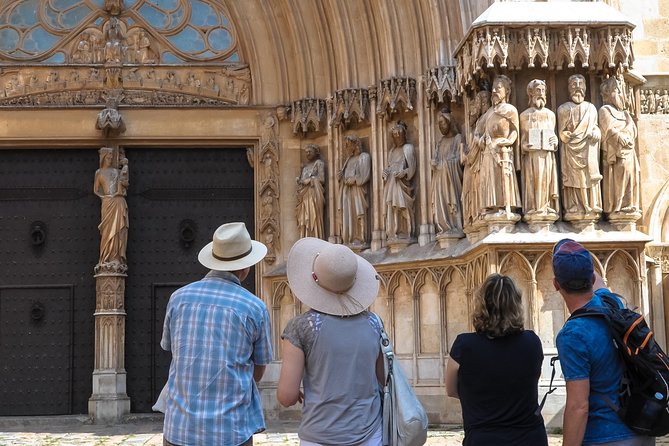
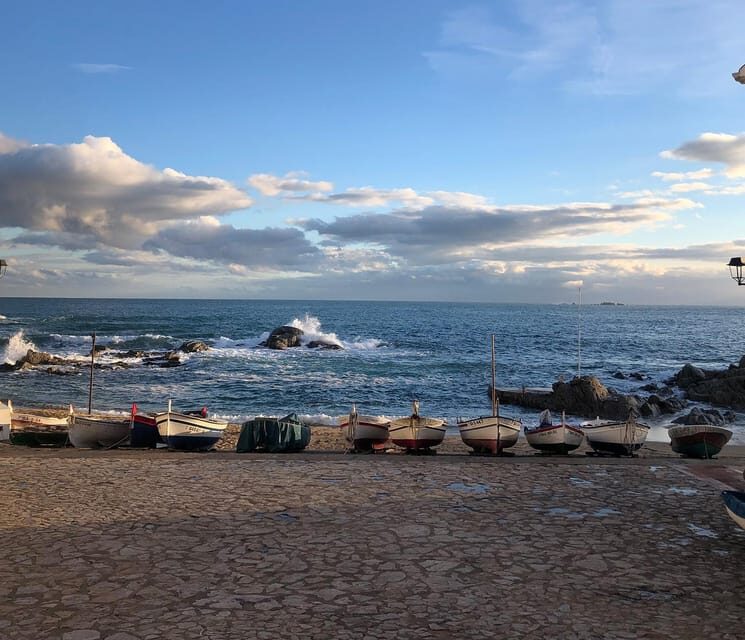
By 1:30, you’re already heading toward Sitges, with a short stop at El Roc de Sant Gaieta. This is a small coastal village built along a rocky shoreline, with tiny white houses clustered close together.
You only have about 20 minutes, so this is not a deep dive. But it works like a palate cleanser. You get quick sea views, the feel of a quiet shoreline town, and a break from the longer archaeological walking.
Think of it as the emotional switch: from Roman stonework to salt air and beach mood. If you want to take photos, this is also the moment—small scale, dramatic coastline, and light that usually looks good for snapshots.
Sitges at 2:30: beach time, cafes, boutiques, and a classic seaside town feel
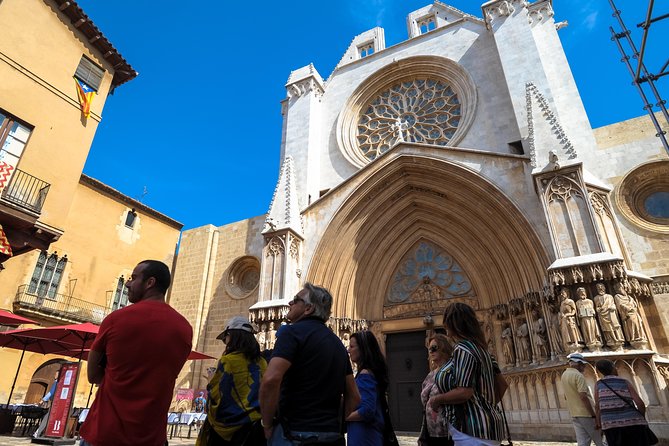
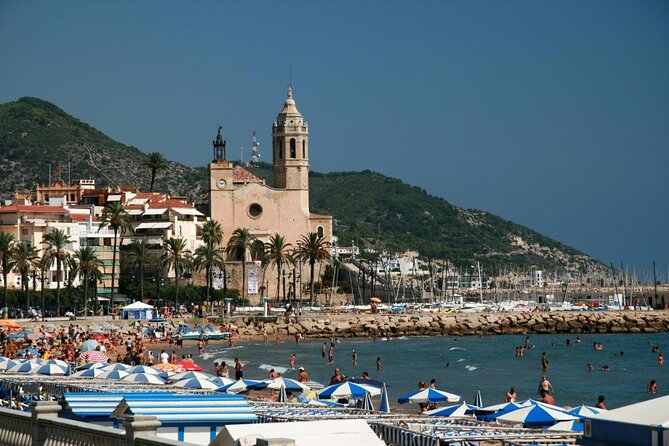
Around 2:30, you arrive in Sitges for your main leisure block. Sitges started as a fishing village and became a fashionable seaside destination back in the 1890s. Today it keeps that old-white-house look, but it also has a modern, feel-good layer—groovy boutiques, cafes, and bars in shaded side streets.
You’ll have time to wander from the atmospheric lanes out to the seafront. Sitges is known for having 17 beaches, and the tour gives you the freedom to choose your own beach vibe rather than forcing one spot.
If you’d like to swim, you can—just plan ahead. The tour notes that you should bring your swimming costume and a beach towel if you want water time. Even if you don’t swim, having that option adds confidence to your day. You’re not spending the whole afternoon just looking at the sea.
For a lunch plan, keep it simple: this is where you choose your own rhythm. The guide can point you toward options, but the tour is designed so you can stop when it suits you instead of being rushed back to a van every 45 minutes.
Two practical cautions:
- Bring water or buy it on-site. You’ll walk and bake in sun-trap spots.
- Sitges can be busy during peak hours, so go with flexible expectations if you hit a line for a table.
Returning to Barcelona around 7:00–7:15: where to go next
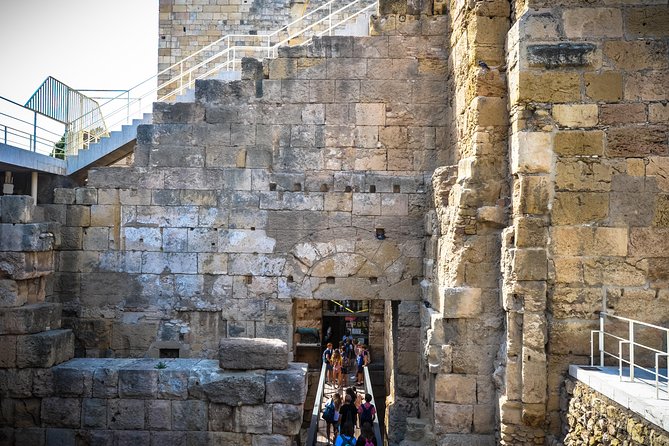
You leave Sitges around 5:30, which gives you a good buffer for a relaxed ride back without turning the evening into a sprint. Then you end near Plaça Catalunya around 7:00–7:15.
That’s a smart finish location because it’s easy to get around Barcelona from there—metro or taxi options are close. And if you want dinner nearby, your guide can share recommendations, but you can also just follow your nose. The point is: you don’t feel stranded at the end of the day.
Price and value: is $119.48 a good deal?
At $119.48 per person, this tour is priced for people who want guided context and transportation without spending big on multiple separate bookings.
Here’s what you’re paying for:
- Professional guide throughout
- Air-conditioned minivan
- Small-group format
- Roman stops that are mostly free to access (the aqueduct and the main Tarragona areas are listed as free entry for the tour stops)
The one thing not included is food and drinks, and entrance fees for museums or monuments in Tarragona if you choose to go beyond what’s covered in the guided walkthrough. So if you’re planning to add extra museum tickets on your own, budget a bit more.
Where the price feels strongest is the guide-led value. Tarragona is not just “cool ruins.” It’s a place where the same stone block can matter in different eras, where a circus becomes a city square, and where a church can be built using older amphitheater blocks. Without a guide, you’d still enjoy it. With one, you understand what you’re looking at—and that’s the real return on investment.
Guides and the small-group advantage: when names matter
One trend shows up again and again in how this tour runs: guides bring the day to life with clear explanations and a friendly tone. Names you might meet include Sergio, Rod, Xavier, Henrique, Steve, Jordi, and Enrique/Stephen (the guide pool varies by departure date).
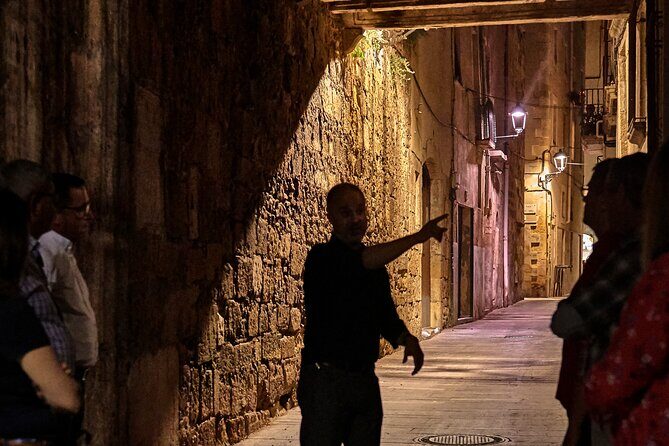
What matters for you is not the name on a sign—it’s the style. The best moments of the day are when the guide points out details you’d otherwise miss: where the circus fits into the urban plan, why the aqueduct is so intact, and how Tarragona layers Roman and medieval life.
Small-group format helps here. You’re not swallowed by a huge crowd. You can ask questions, hear answers, and get your bearings faster.
What to pack so the day stays comfortable
This is a full-day trip, with walking at multiple points and outdoor time at the aqueduct and in Sitges. Bring:
- Comfortable walking shoes (you’ll cross the aqueduct top)
- Sun protection (hat, sunscreen)
- A swimsuit and towel if you plan to swim in Sitges
- A light layer for the ride, since air-conditioning can feel chilly
The tour also isn’t recommended for very young kids (it notes it’s not for child age 4 and under). If you’re traveling with little ones, check with the operator before assuming it’ll work.
Who should book this Tarragona and Sitges tour
Book it if you want:
- A Roman-focused day trip that doesn’t feel like a rushed bus tour
- A chance to combine ruins with real downtime on the coast
- Guided walking through Tarragona’s Roman forum and circus areas
- A small-group minivan day with free time in Sitges for your own beach and café choices
Skip it (or pair it with extra time) if:
- You want to spend hours in indoor museums rather than doing outdoor Roman city walking and viewpoints
- You’re not a fan of early starts and a long day on your feet
FAQ
What time does the tour start in Barcelona?
The tour starts at 8:30am. You meet earlier, around 8:15am, at the main office near Palau de la Música.
Where is the meeting point?
The meeting point is C/ Palau de la Música, 1, Ciutat Vella, 08010 Barcelona, Spain.
How long is the tour?
The duration is about 10 hours 30 minutes.
What is the return point in Barcelona?
The tour ends around 7:00–7:15pm at Plaça Catalunya in the Eixample area.
Is the tour in English?
Yes. The tour is offered in English only.
Is transportation included?
Yes. You travel by air-conditioned minivan.
How big is the group?
The tour lists small-group sizes: it’s capped at a maximum of 15 people, and it also notes a maximum of 8 travelers.
Are entrance fees included for Tarragona’s monuments?
Entrance fees for museums and monuments in Tarragona are not included. The specific tour stops listed are marked free to access.
Can I swim in Sitges?
You may have the opportunity to swim in Sitges. Bring your swimming costume and a beach towel if you want to.
Should you book this tour?
If you want an efficient “Roman Tarragona plus real seaside time” day, I’d book it. The value comes from guided access to places like Pont del Diable (including the walk across) and Tarragona’s forum and circus areas, then letting you breathe in Sitges with your own pace for lunch and beach time.
Just be honest about what you need. If you want lots of museum rooms and slow wandering, you’ll probably want extra time in Tarragona on a separate day. But if you want the highlights with a guide, comfort transport, and a memorable mix of coast and ruins, this is a strong choice.