REVIEW · BARCELONA
Tarragona and Sitges Tour with Small Group and Hotel Pick Up
Book on Viator →Bookable on Viator
Most days trip itself.
This full-day outing takes you from Barcelona’s streets to the Roman UNESCO complex of Tarragona, then back to the seaside mood of Sitges. I like that it is built around a real mix of places: aqueduct engineering and amphitheatre drama in Tarragona, followed by a relaxed stroll and potential swim at San Sebastian Beach in Sitges. One thing to consider is the walking: you’ll cover a lot of ground with hills and stairs at the Roman sites and around old-town streets.
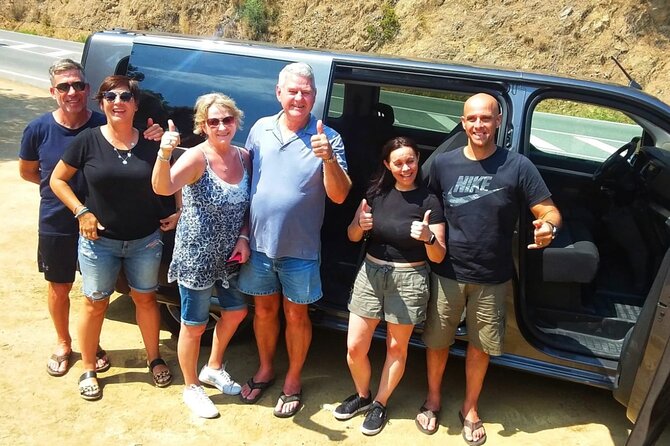
The payoff is the pacing. You start with a convenient hotel pick-up, then you get expert guiding while you move between major stops instead of figuring out bus routes or renting a car. My second favorite part is the small group size (max 8), which usually makes it easier to ask questions and move at a human pace. The main drawback is that food and drinks are on you, so plan for lunch costs even if you bring snacks.
If you want a day that feels like two different worlds—ancient and coastal—this is a strong fit. Just bring sturdy shoes and expect some uneven surfaces, especially in Tarragona’s older areas where the ground is not designed for modern comfort.
In This Review
- Key points before you go
- The big idea: Roman Tarragona plus a genuine seaside town
- Hotel pickup and the southbound drive that sets the mood
- Pont del Diable: Roman engineering you can actually photograph
- Tarragona Old Town on foot: medieval streets layered over Roman power
- The amphitheatre: where the Roman show happened
- Roman walls and viewpoints: Murallas de Tarragona
- Cathedrals, markets, and a Catalan human-tower moment
- Museum stop and the Tarraco Model: why it helps your brain
- Sitges arrival: a walking tour that feels like a slow exhale
- San Sebastian Beach time: when you get to stop and breathe
- Small-group reality: how the max 8 changes your day
- Cost, timing, and what you should budget for meals
- Pacing and terrain: the one thing you should plan around
- Should you book the Tarragona and Sitges small-group tour?
- FAQ
- How long is the Tarragona and Sitges tour?
- Do you pick me up from my hotel or apartment in Barcelona?
- What is the group size?
- Is the tour offered in English?
- Are tickets included for Tarragona attractions?
- Where do we start?
- Is a mobile ticket used?
- What about food and drinks?
- Can I swim during the Sitges portion?
- What if I need to cancel?
Key points before you go
- Hotel pickup in central Barcelona helps you lose less time to logistics
- Tarragona’s Roman highlights include the UNESCO site plus a guided look at major ruins
- Amphitheatre admission is included (and you also get access to the Tarragona Circus venue area)
- Sitges on foot gives you a proper feel for the old town’s lanes and views
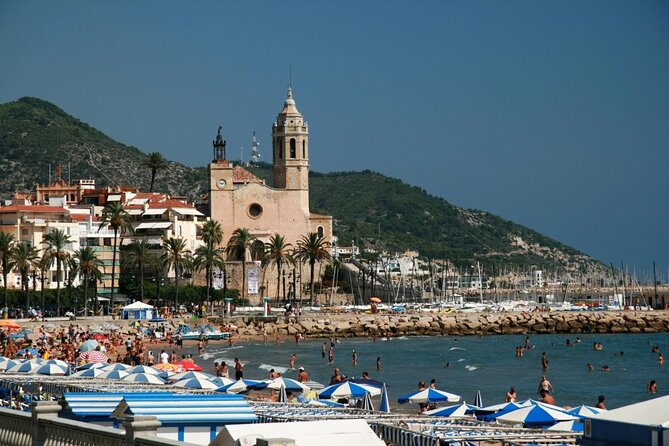
- Beach time is real, not just a quick photo stop at San Sebastian
- Max 8 people keeps the experience personal, and guides can respond to questions
The big idea: Roman Tarragona plus a genuine seaside town
This tour is a day of contrasts, and that contrast is the whole reason it works. You’re guided through Tarragona’s Roman layers—those monumental structures and the logic of Roman city design—then you shift gears to Sitges, where the atmosphere is more relaxed and artistic.
I like that the day is not only “see buildings.” In Tarragona, you’re guided through the meaning behind the sites: why a bridge carried water for centuries, what an amphitheatre was used for, and how the old town’s street pattern feels like it has been doing the same job for ages. Then Sitges brings you back to the Mediterranean tempo, where you can slow down on a terrace or hop into the water when the weather cooperates.
If you want a day that breaks you out of the Barcelona city bubble without feeling rushed, this is built for that.
Hotel pickup and the southbound drive that sets the mood
The day starts with pickup from your hotel or apartment in Barcelona city. The operator schedules pick-up between 8 and 9 am, then you board an air-conditioned vehicle. That matters more than it sounds, because the day includes two different towns and a lot of walking.
On the drive south along the Costa Dorada, you also get an overview of Barcelona along the way—passing places like Catalunya Square, Barcelona Cathedral, and Passeig de Gracia, including the Gaudí-related highlights such as Casa Batlló and Casa Pedrera. It’s a nice way to anchor your geography before you leave the city behind.
Timing note: the tour is about 10 hours total, so you’ll want to treat it like a full outing, not a half-day stroll.
Pont del Diable: Roman engineering you can actually photograph
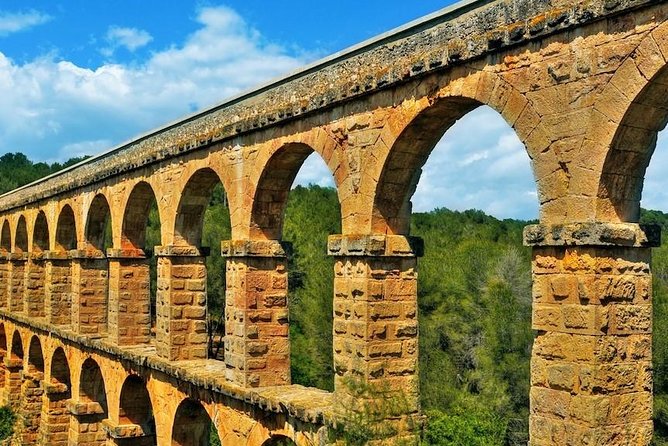
Before Tarragona becomes a maze of cobblestone streets, you get one of the most striking engineering views: Pont del Diable, the Devil’s Bridge aqueduct.
It’s long—217 meters (about 711 feet)—and tall—26 meters (about 85 feet). You also get the story behind why it mattered: this aqueduct supplied water to Tarragona up until the 18th century. That long timeline makes it feel less like a museum object and more like infrastructure that once kept real people alive day after day.
This stop is around 30 minutes and admission is free. You’re outdoors among woodlands, so it’s one of the stops where a good camera spot is easy to find. Bring a jacket if the morning feels cool, because coastal air can change fast.
Tarragona Old Town on foot: medieval streets layered over Roman power
Once you’re in Tarragona, the walking tour leans into atmosphere. You move through narrow, shaded areas—small squares, tight lanes, and that slightly unreal feeling of moving through time.
The tour includes the Antiga Casa del Consolat Tarragoni area for about 1 hour 30 minutes. The idea here is to help you read the town, not just check boxes. Tarragona’s older streets make it easier to imagine how the area functioned in the Roman Empire era and later medieval periods.
Then you’re guided toward the Roman core again, where the scale starts to hit you differently.
If you like cities that reward slower looking—arches, walls, street angles—this part is a strong match. If you’re chasing minimal walking, it may feel like too much, because Tarragona’s older sections are not flat.
The amphitheatre: where the Roman show happened
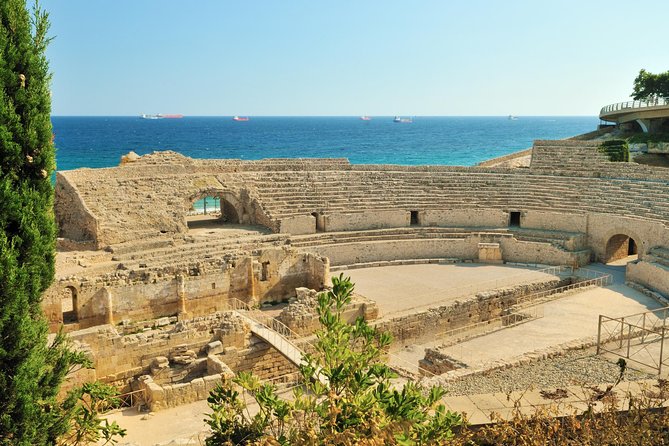
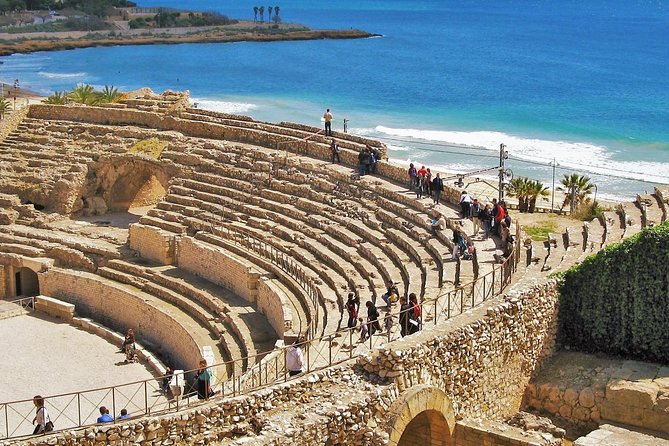
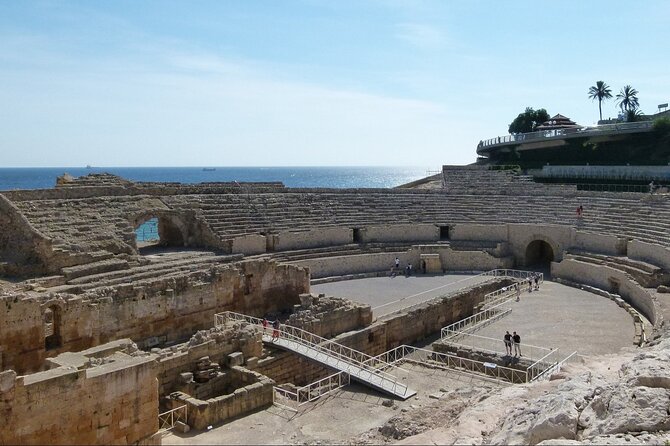
One of the most memorable stops is Anfiteatro, the Tarragona amphitheatre. The duration here is about 1 hour 30 minutes, and the big win is that admission is included.
This amphitheatre dates back to the 2nd century AD and was cut into the hillside near the beach. It was used for gladiator contests and public executions. Even if you’re not into ancient spectacle, the location helps you understand why amphitheatres were designed the way they were: visibility, drama, and a sense of crowd energy.
This is also where a guide’s storytelling really helps. You don’t need to memorize dates. You just need to understand how the place worked, and the guide does the connecting for you.
Practical note: amphitheatre sites often mean uneven steps and changes in ground level. Wear shoes you trust.
Roman walls and viewpoints: Murallas de Tarragona
After the amphitheatre, the day continues with the city walls (Murallas de Tarragona). This stop is shorter—about 30 minutes—and admission is free.
What I like here is that walls shift your perspective from theater scale to city planning. You’re seeing the oldest construction of Roman Tarragona in the area, tied back to the foundation of the initial military camp and later periods.
Walls are also one of those places where weather and light make a real difference. If you’ve got a sunny day, the stone and line of sight can look far more dramatic than it would in flat indoor lighting.
Cathedrals, markets, and a Catalan human-tower moment
Tarragona isn’t only Roman. The tour adds a few stops that make it feel like a living place.
You get a look at the cathedral area—described as a National Monument and a Cultural Good of National Interest. You also pass by a standout Castellers structure: a human-tower monument built from 219 figures, around 11 meters high, and weighing about 12 tons.
If you’re curious about Catalan culture beyond Barcelona, the castellers moment is a good reminder that traditions have their own architecture, too. It also gives you a break from stone ruins while still staying anchored in local identity.
Then there’s the Mercado Central de Tarragona for about 1 hour. It’s housed in a Modernist hallmark building from 1915, and you’ll learn how the market functions as the city’s daily heartbeat. Even if you don’t plan to eat there, it’s a helpful way to understand the rhythms of Tarragona and what people might buy seasonally.
Museum stop and the Tarraco Model: why it helps your brain
The National Archaeological Museum of Tarragona is part of the experience. You’ll spend time in front of displays tied to Roman Tarraco, plus a specific highlight: the Tarraco Model, a scale model of the city from the 2nd century BC, shown in its period of maximum splendor.
This is the kind of stop that makes the ruins make more sense later. When you look at scattered remains, your brain struggles to connect the dots. A model gives you the map inside your head.
Admission here is not stated as included, so treat it as a guided viewing moment based on what the tour covers. The value is the context you pick up from the guide.
Sitges arrival: a walking tour that feels like a slow exhale
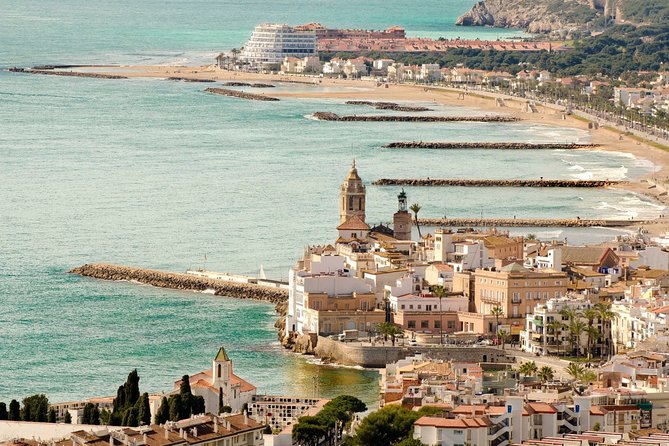
After Tarragona, you drive up along the coast to Sitges, a charming former fishing town with a long reputation as a health destination because of the nearby sea and mountains.
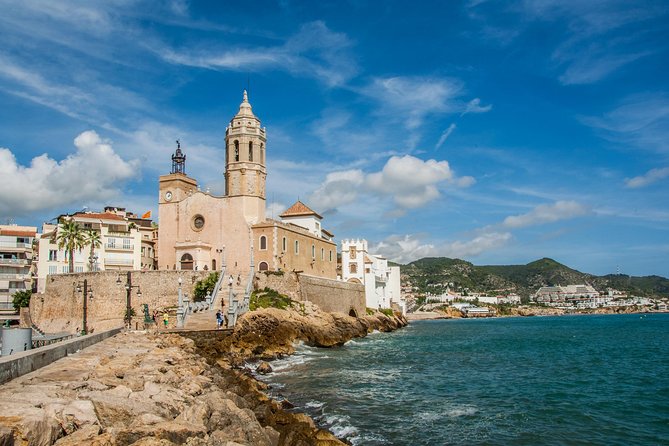
The Sitges walking portion is about 3 hours, and you’ll cover the historic center’s winding streets and lesser-known corners. This is where the town’s personality comes through: you’ll pass major landmarks like the church of Sant Bartomeu & Santa Tecla, known for great views and photo spots.
You’ll also see Modernist touches, including Casa Bacardi, and you can hear the story behind the Bacardi family. If you like drink culture, this is where the tour may offer ideas like trying a cocktail made by professional bartenders, with colorful flavor combinations.
One of the best parts: the walking tour keeps you in the town’s flow instead of isolating you at one scenic overlook.
San Sebastian Beach time: when you get to stop and breathe
Once the old town walking wraps, you get time near the sea—often the “vacation part” of the day.
The plan includes relaxation and possible swimming at San Sebastian Beach, described as one of the best urban beaches in Europe. There’s also additional time at Playa de Sitges for about 1 hour, with Mediterranean views and the chance to take a dip if you want.
I love that this isn’t forced. You can treat it as quiet time on a terrace, or you can jump into the water and cool off after the Roman walking.
Pack sense: if you plan to swim, bring swimwear and a towel. Drying might be casual, and you’ll be grateful if you have a bag for wet things.
Small-group reality: how the max 8 changes your day
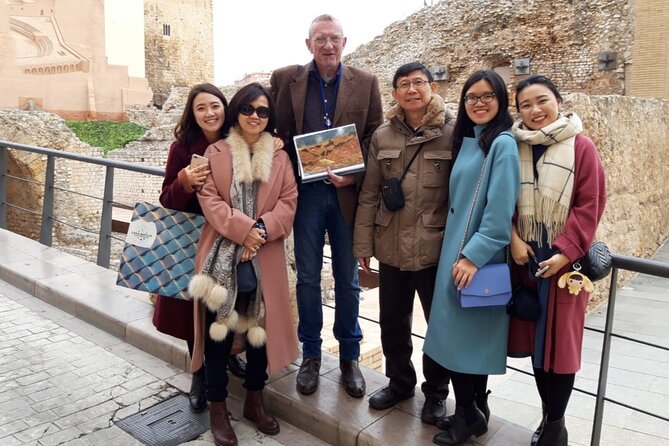
A small group tour with up to 8 people turns the whole day from a schedule into an experience you can steer.
In practical terms, it means:
- You get more back-and-forth with your guide when questions pop up.
- You’re less likely to disappear into a crowd at tight stops.
- The guide can adjust timing if someone needs an extra minute at a viewpoint.
This shows up in real guide style across different runs: names like Ramon, Miquel, Luis, Eduardo, Diego, and Lluís Goula are associated with this tour. Across those guides, the common thread is engaging explanations and a light, friendly tone that makes Roman sites less like homework.
Cost, timing, and what you should budget for meals
The price is $120.29 per person, and the duration is about 10 hours. For that money, you’re not just paying for transportation. You’re paying for a guide who connects the dots across two towns, plus included admissions to the Tarragona amphitheatre and the Tarragona Circus venue area.
Food and drinks are not included, so you should budget for lunch and any snacks you want. In the day-trip rhythm, you’ll be doing enough walking that you’ll likely want a proper meal instead of relying on vending-machine energy.
Value check: if you’re traveling without a car, this price starts to look fair. Between pickup logistics and the included ticketed time in Tarragona, you’re buying convenience plus interpretation—not just sightseeing.
Pacing and terrain: the one thing you should plan around
The biggest “watch-outs” here are physical rather than cultural.
There’s plenty of walking on uneven surfaces and stairs—especially around Tarragona’s Roman areas and amphitheatre settings. One important practical consideration: if you have knee, hip, or mobility issues, you may need to take breaks or choose when to push through steps.
Even when you manage it fine, you should plan for a tired day. This isn’t a short, mostly-flat city tour.
Also, opening hours can shift with local observances, and some sites may close on certain days. If your schedule lands on a weekend or special day, keep some flexibility in your expectations.
Should you book the Tarragona and Sitges small-group tour?
Book it if you want one day that covers: Roman Tarragona’s major UNESCO-era sights, a walkable old town in Sitges, and time at an actual urban beach. The hotel pickup and max 8 group size make the day feel organized without feeling like you’re stuck on a loud bus circuit.
Skip it (or consider another option) if you hate stairs, expect lots of rolling hills, or you’re not up for long walking. Also think twice if you want food included in the price, since you’ll need to handle meals yourself.
FAQ
How long is the Tarragona and Sitges tour?
It runs about 10 hours.
Do you pick me up from my hotel or apartment in Barcelona?
Yes. Pickup is offered from any hotel or apartment in Barcelona city, and the pickup time is scheduled between 8 and 9 am.
What is the group size?
This is a small-group tour with a maximum of 8 travelers.
Is the tour offered in English?
Yes, the tour is offered in English.
Are tickets included for Tarragona attractions?
Yes. Entrance to the Tarragona amphitheatre is included, and the tour also includes entrance to the Tarragona Circus (Roman events venue). Other stops like Pont del Diable and parts of the old town are described as free.
Where do we start?
The tour starts directly from your hotel or apartment in Barcelona city.
Is a mobile ticket used?
Yes, a mobile ticket is offered.
What about food and drinks?
Food and drinks are not included, so you’ll want to plan for lunch on your own.
Can I swim during the Sitges portion?
You have time at San Sebastian Beach and Playa de Sitges, and the tour includes the option to relax or take a dip.
What if I need to cancel?
You can cancel up to 24 hours in advance for a full refund.