Half a day, zero map stress.
This private Barcelona highlights tour is interesting because you can shape the route to your group, then relax while a driver handles the city grind. I especially like the hotel or port pickup and drop-off—it’s a big deal if you’re on a cruise or you arrive the day you tour. I also like that the sights mix major icons with real “local-feeling” streets, from La Sagrada Família to the Barri Gòtic and up to Montjuïc. One drawback to keep in mind: tickets for sights are not included, and some stops are short photo breaks, so you’ll want to plan where you want more time.
The tour is priced per group (up to 7), runs about 4 hours, and comes with bottled water and air-conditioned private transportation. If you upgrade to a licensed guide, you’ll get more context—many guides in this style of tour are strong at turning quick stops into clear, memorable stories, like Carlos, Daniel, Anna, Aida, Mari, Cecilla, David, and Landry have done for groups in the past. Just note that language skills can vary if you’re doing more driver-only interpretation, so choose the guide option if that matters to you.
In This Review
- Quick hits: why this private Barcelona highlights tour works
- A private 4-hour loop that saves you time (and energy)
- Price and value: what $532.33 per group really buys
- Transfers from your hotel or the cruise port: the real stress reducer
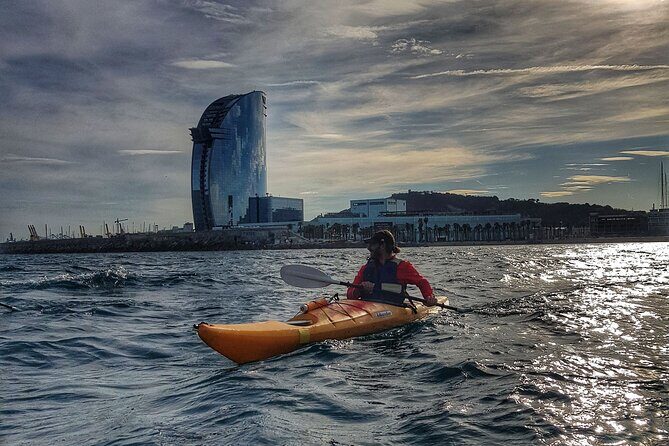
- Start at Port Olímpic: a calm opener before the big sights
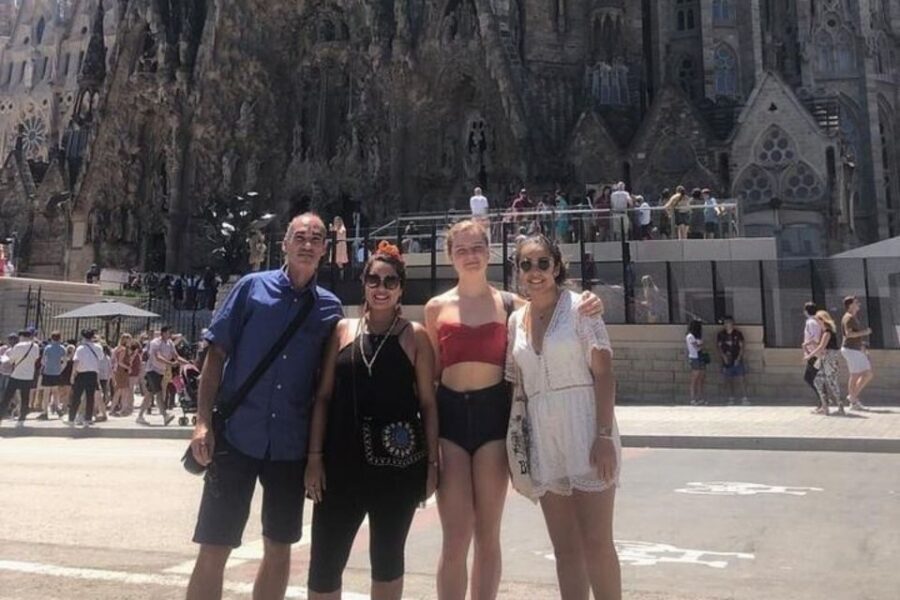
- La Sagrada Família: the stop everyone remembers
- Passeig de Gràcia: where Modernisme crowds your camera roll
- La Pedrera (Casa Milà)
- Casa Batlló
- Casa Amatller and Casa Lleó i Morera (La Manzana de la Discordia set)
- Plaza Catalunya and Vía Laietana: the city’s nerve center
- Gothic Quarter and Barcelona Cathedral: medieval lanes with clear context
- Paseo de Colón and Monument a Colom: history plus a view option
- Montjuïc in one half-day: fortress, viewpoints, and Expo energy
- The Olympic Ring: Estadi Olímpic and Palau Sant Jordi
- MNAC: Romanesque art in a palace setting
- Pueblo Español and the Magic Fountain: two Expo-era icons
- Torres Venecianas and Plaza España: finishing with a big-city anchor
- The best part: customization that keeps you from wasting your time
- Who should book this tour (and who might not)
- Should you book this Barcelona Highlights Private Tour?
- FAQ
- How long is the Barcelona highlights private tour?
- How many people can be in a group?
- Is hotel or port pickup included?
- Are tickets for attractions included?
- Is the tour offered in English?
- Does the tour provide a vehicle with air-conditioning?
- Are child seats available?
- What is the cancellation policy?
Quick hits: why this private Barcelona highlights tour works
- Hotel or Port pickup means you skip the scramble and start sightseeing fast
- Gaudí-heavy stops on and around Passeig de Gràcia let you spot several Modernist facades in one go
- Old Town + sea views from the Gothic Quarter to Columbus Monument helps you understand the city layout
- Montjuïc in one half-day covers viewpoints, the Olympic ring area, MNAC, and major Expo-era landmarks
- Short, adjustable photo stops are great if you have limited time and want control over priorities
A private 4-hour loop that saves you time (and energy)
Barcelona rewards walking, but it punishes the “see everything” approach—especially when you’re dragging luggage from a hotel or fitting a tour around cruise timing. This format is built around a simple idea: you get transferred between key zones, then you decide how long to stay at each highlight.
In about 4 hours, you can cover three big mental maps:
- the “Gaudí and Modernisme” corridor (Sagrada Família and Passeig de Gràcia)
- the “medieval streets and atmosphere” zone (Plaza Catalunya through the Barri Gòtic)
- the “views and Expo/Olympics” zone (Montjuïc and Plaza España)
That structure is why it feels efficient without feeling like you’re sprinting. Your driver can keep the pacing realistic, and your group stays together. With a private setup, you also avoid the awkward bus rhythm of everyone herded out at once, then stuck waiting your turn.
Price and value: what $532.33 per group really buys
The price is $532.33 per group for up to 7 people, for roughly 4 hours. That sounds like a lot until you do the math per person.
- At the full group limit (7 people), it works out to about $76 per person.
- If you’re fewer than 7, it’s naturally higher per person—but you still get private transfers, a dedicated vehicle, and control of the stops.
Here’s what you’re paying for beyond “a ride”:
- private transportation in an air-conditioned vehicle
- bottled water
- pickup and drop-off at your hotel or at the port
- flexibility to adjust the route based on what you want to emphasize
Also, this tour is often booked around 59 days in advance. That doesn’t guarantee smoother traffic, but it does suggest many people plan it as a same-trip orientation on arrival day. If you’re traveling in peak periods, booking earlier usually helps you lock in pickup timing.
Transfers from your hotel or the cruise port: the real stress reducer
This tour starts from your hotel in Barcelona or from the port. That matters because Barcelona can be a puzzle if you’re arriving with a tight schedule or if you’re not staying in the city center.
Cruise days are the biggest test. You’ll need to share practical details like your ship name, docking time, disembarkation time, and re-boarding time. Once that’s handled, you’re basically outsourcing the timing headache to the operator.
A nice bonus: several groups with cruise pickup have described the day as smooth—like getting dropped near where you need to be next without walking miles while you’re figuring out streets. If you’re doing a sailing day after the tour, this kind of clean handoff is the difference between a fun port day and a frantic one.
Start at Port Olímpic: a calm opener before the big sights
Your first stop is typically Port Olímpic (Puerto Olímpico de Barcelona), a leisure harbor in the San Martín district between Barceloneta and Nova Icària. Admission here is free, and the point isn’t to “do” the port—it’s to set the tone.
Why it’s smart at the start:
- You get a quick sea-level look at Barcelona’s geography
- It’s an easy breather before the city turns into stone, angles, and crowds
- It’s a clean reference point for the rest of the day: you’ll later see how the city climbs toward Montjuïc
Expect this to feel like a warm-up, not a “must-do.” Use the minutes to take a few photos and get your bearings.
La Sagrada Família: the stop everyone remembers
Then it’s up to Basilica de la Sagrada Família, Antonio Gaudí’s long-running masterwork. Construction began in 1882 and continues today. It’s widely treated as Barcelona’s biggest “wow” moment, and you’re right to expect that.
A few practical things to know:
- The stop length is about 30 minutes
- Admission tickets are not included, so you’ll want your entry sorted separately
- If you come at the right light, the interior colors (stained-glass effect) are often what people talk about later
One group note worth paying attention to: with the right guide, security lines can be less painful. Even when tickets aren’t included, a strong guide-driver team can help with pacing so you’re not wasting your best minutes standing around.
If you care about context (why Gaudí designed things the way he did), consider the licensed guide upgrade. Without that layer, you’ll still see an incredible building—but with it, the details start to click.
Passeig de Gràcia: where Modernisme crowds your camera roll
Next comes Passeig de Gràcia, Barcelona’s famous central avenue in the Ensanche district. It’s a corridor of architecture and status, connecting Plaza Catalunya to the east and toward Gràcia on the west.
This is where the tour becomes very “Barcelona”: Modernist facades in a short distance, each one with its own personality. The good part is that you can hop between buildings with minimal transit time. The only catch is timing—each exterior stop is short, so you’re basically choosing your favorite angles.
La Pedrera (Casa Milà)
Casa Milà, commonly called La Pedrera, dates to 1906–1910. Expect about 10 minutes here, and plan for exterior viewing unless you buy entry separately (admission not included).
What makes it worth the stop: the building’s silhouette feels sculpted rather than “constructed.” Even if you’re not an architecture person, the curves tend to disarm your brain in a good way.
Casa Batlló
Casa Batlló (about 5 minutes on the route) is at Passeig de Gràcia 43, in the “Manzana de la Discordia,” the Apple of Discord block. Construction dates 1904–1906.
This is a great stop for fast-photo travelers because you can frame a clear “Gaudí signature” moment. If you want the full story, again, tickets and time matter—this is mostly for seeing the exterior and moving on.
Casa Amatller and Casa Lleó i Morera (La Manzana de la Discordia set)
You’ll also spot:
- Casa Amatller (Josep Puig i Cadafalch, 1898–1900)
- Casa Lleó i Morera (Lluís Domènech i Montaner)
These are listed as short photo stops (about 5 minutes each). They’re quick, but the payoff is you’re comparing styles in real time rather than reading about them later.
Plaza Catalunya and Vía Laietana: the city’s nerve center
After the Modernisme stretch, the tour typically connects toward the Old Town via Plaza de Catalunya—a major hub between the old city and the Ensanche. It’s a logical waypoint because it sits right where you’d otherwise need to navigate trains, buses, and street grids.
Then you move along Vía Layetana, a street that links the Ensanche to the port side through Ciutat Vella. Even if you don’t stop much here, it helps you understand how Barcelona “funnels” you from broad avenues down into tighter medieval streets.
Gothic Quarter and Barcelona Cathedral: medieval lanes with clear context
You’ll reach Catedral de Barcelona, the Gothic cathedral dedicated to the Holy Cross and Saint Eulàlia. Construction ran from the 13th to the 15th centuries over older structures. You’ll also notice that the facade is more modern (19th century) than the rest of the building.
Admission is not included, and the stop is about 30 minutes. If you’re inside, it’s worth staying for the feeling of scale and the mix of old foundations with later layers.
Then it’s into Barri Gòtic, the Gothic Quarter—medieval alleys plus modern-day food and shops. It’s a great area to slow down for a bit because the streets are narrow and the vibe is instantly “Barcelona.”
A specific thing to watch for: at the Plaza del Pi, there’s an art market every weekend. If you’re there on the right day, it can turn a normal stroll into something lively.
Paseo de Colón and Monument a Colom: history plus a view option
From the Gothic Quarter zone, you head toward the sea with the Paseo de Colón, an avenue in the Old City area running parallel to the water. It’s directly tied to the Monument a Colom in the Portal de la Pau square.
The monument was built to honor Christopher Columbus and was inaugurated June 1, 1888. It’s one of the city’s most recognizable icons because it sits right where the big walking routes meet the harbor area.
Admission is listed as free for this stop, but note the monument’s structure includes an elevator option inside the column up to a half-sphere viewing area. If you want the “Barcelona looks like a city map from above” moment, this is one of the better places to ask your driver how to best time it.
Montjuïc in one half-day: fortress, viewpoints, and Expo energy
Montjuïc is where Barcelona starts showing its theatrical side—steep slopes, major museums, Olympic venues, and the kind of views that make you forget you ever had a schedule.
Your tour includes several Montjuïc landmarks, starting with Montjuïc Castle—an old military fortress with a key role in Barcelona’s history. The stop is short (about 10 minutes) and admission is not included.
Then you shift to the Jardins del Mirador del Alcalde, a viewpoint area in Montjuïc. The gardens were created between 1962 and 1969, and there’s a monumental fountain nearby plus a cableway stop in the area. Even if you don’t ride the cable car, the viewpoint angle is what you’re here for.
The Olympic Ring: Estadi Olímpic and Palau Sant Jordi
Next comes L’Anella Olímpica de Montjuïc, the Olympic facilities area built or restored for the Barcelona 1992 Olympics. You’ll also pass by major venues like:
- Estadi Olímpic (Olympic Stadium)
- Palau Sant Jordi (multi-purpose pavilion)
These stops are brief (minutes, not hours), and tickets aren’t included for the venues. The point isn’t deep stadium tourism—it’s to show you why Montjuïc is still tied to major international events, and to get the exterior viewpoints along the way.
MNAC: Romanesque art in a palace setting
Then you reach Museu Nacional d’Art de Catalunya (MNAC), also known as the National Palace. It’s known for its Romanesque art collection, described here as one of the most complete in the world, and the building itself was created for the 1929 International Exposition.
This stop is about 20 minutes with admission listed as free. In reality, you’ll decide on the spot whether to go inside deeper or just use the time for the exterior and the most obvious interior highlights—your driver can help you weigh that.
Pueblo Español and the Magic Fountain: two Expo-era icons
Montjuïc then adds two big “Expo nostalgia” elements:
- Pueblo Español: an outdoor architectural museum with 117 life-sized buildings representing a typical Spanish village—built because the 1929 exposition planned for short-term construction, yet it stayed.
- Magic Fountain of Montjuïc: built for the 1929 exposition where the Four Columns used to be. Music was added later, the fountain was restored before the 1992 Olympics, and it has also hosted major events like the MTV Europe Music Awards 2002. Since 2013, it has been used for the New Year tradition known as the Barcelona Campanadas.
These are quick stops, but they work well because the tour is showing you variety: you move from fortress to gardens, from sports architecture to art museum scale, then to theme-fair feeling.
Torres Venecianas and Plaza España: finishing with a big-city anchor
The tour wraps up with the Torres Venecianes, the twin ornamental towers built as entrances for the 1929 exposition area. They’re called “Venetian” because of their resemblance to Saint Mark’s belfry in Venice.
Then comes Plaza España, a major emblematic square built for the 1929 exposition. It’s a traffic center and a hub for getting to Montjuïc. You’ll also see the Centro Comercial Las Arenas, a former bullring now a mall in a neomudéjar style.
This ending is useful because you’re left near a major anchor—easy for you to continue on your own plan, whether that’s dinner, another museum, or a return route back to your hotel.
The best part: customization that keeps you from wasting your time
This tour is designed to be fully customizable. The practical value is simple: if you’re more into architecture than beaches, or you want a photo-heavy day rather than museum-heavy, the driver can help you shape the day.
Some guides have handled requests that sound small but make the tour feel personal—like building in extra photo time at key spots, using short stops at the most photogenic angles, and adjusting pacing for families and mixed mobility needs.
If you’re choosing between options, here’s the decision logic:
- If you want mainly a comfortable route with minimal decision-making, the driver-led plan is solid.
- If you want more “why this matters” context for Gaudí and Barcelona’s layers, upgrade to the licensed guide.
Language is the one variable you can’t ignore. One negative note in the record was that a driver’s English was limited, which made simple questions harder. If you care about conversations and deeper explanations, don’t gamble on translation—pick the guide option.
Who should book this tour (and who might not)
I think this tour is a strong fit if:
- you have only a half day and want a fast layout of the city
- you’re on a cruise and want a smooth port-to-tour-to-port flow
- you’re traveling with mixed ages or you want fewer logistics headaches
- you want to see both Gaudí highlights and Montjuïc without multiple separate planning sessions
You might want to pick something else if:
- you expect lots of time inside major attractions (this is mostly timed for exterior viewing and short stops)
- you want a long walking-only deep dive into one neighborhood
- you’re very ticket-dependent and don’t want to handle additional entry planning
Should you book this Barcelona Highlights Private Tour?
If your priority is seeing the key pillars—Sagrada Família area, the Modernisme facades on Passeig de Gràcia, the Gothic Quarter, and Montjuïc—then yes, this is one of the cleanest ways to do it in 4 hours. The private hotel or port transfer alone is worth serious consideration, especially if you’re tight on time.
I’d book it if you’re also the kind of traveler who likes options: you can adjust stops, add photo time where it counts, and finish with a strong view-zone day in Montjuïc. If you know you’ll want explanation more than sightseeing checkmarks, choose the licensed guide upgrade.
FAQ
How long is the Barcelona highlights private tour?
The tour lasts about 4 hours.
How many people can be in a group?
The price is per group for up to 7 people.
Is hotel or port pickup included?
Yes. The tour includes hotel or port pickup and drop-off.
Are tickets for attractions included?
No. Tickets for the attractions are not included, though some stops are listed as free.
Is the tour offered in English?
Yes. The tour is offered in English.
Does the tour provide a vehicle with air-conditioning?
Yes. Private transportation is provided in an air-conditioned vehicle.
Are child seats available?
Baby chairs and boosters for children are available on request.
What is the cancellation policy?
Free cancellation is available if you cancel up to 24 hours in advance for a full refund.