REVIEW · BARCELONA
Photo Walking Tour Barcelona Cathedral Gothic Quarter El Born
Book on Viator →Bookable on Viator
Barcelona is made for pictures.
This 2-hour photo walking tour in El Born and the Gothic Quarter is a smart way to see major landmarks and learn how to shoot them better without special gear. I like that it stays practical and phone-friendly, with personalized guidance from Leonardo in a small group of up to 10. It also helps you slow down and notice details you’d normally miss while walking fast through the streets.
I also love the mix of architectural styles packed into one route: from the clean lines of Estació de França to Gothic spires and Modernisme flourishes. One possible drawback is that it’s highly weather-dependent, and there’s been at least one reported case of a no-show guide—so it pays to arrive a bit early and keep your confirmation handy.
In This Review
- Key photo-walk takeaways before you go
- Starting at Estació de França: your first shot with train-station drama
- Ciutadella Park and Arc de Triomf: shade, symmetry, and easier compositions
- Palau de la Música Catalana: Modernisme details that punish sloppy angles
- El Born to El Raval: turning poetry into a photo moment
- Barcelona Cathedral and Casa de l’Ardiaca: Gothic drama, done with control
- Pont del Bisbe and Plaça de Sant Jaume: photographing power and patience
- Plaça Sant Miquel and Plaça Reial: finish with local rhythm and photo variety
- Price, timing, and value: why $59.90 can make sense
- Who should book this (and who might not love it)
- Should you book Photo Walking Tour Barcelona Cathedral Gothic Quarter El Born?
- FAQ
- Do I need a camera or can I use my phone?
- How long is the photo walking tour in Barcelona?
- What landmarks will we see during the walk?
- Is the tour offered in English?
- Is food or transportation included?
- What if the weather is bad or I need to cancel?
Key photo-walk takeaways before you go
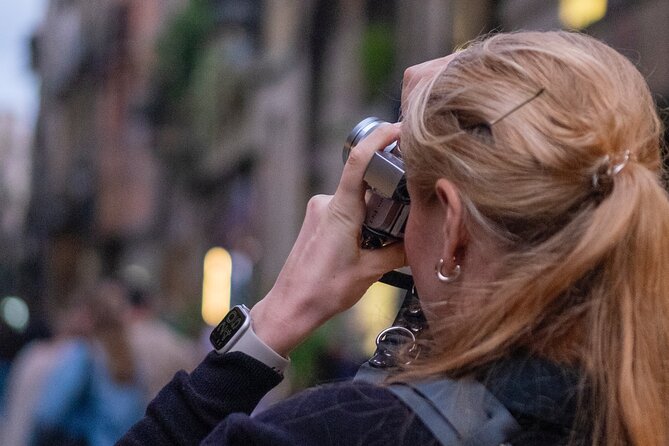
- Small group (max 10): you’ll actually get attention, not just a lecture from the front.
- Bring only your phone or camera: no rentals, no extra gear, no excuses.
- Leonardo’s angle-and-reflection focus: you’ll learn framing tricks you can reuse later.
- A concentrated route: rail station, parks, Modernisme, and the Gothic Quarter in about 2 hours.
- English tour: good if you want clear, direct explanations.
- Beginner-safe: you don’t need prior photography experience to benefit.
Starting at Estació de França: your first shot with train-station drama
You begin at Estación de Francia (Av. del Marquès de l’Argentera, 6). It’s a great opener because it’s visually “loud” in a good way—clean architectural lines, big shapes, and a sense of movement even when you’re standing still. The station was inaugurated in 1929 for railway traffic connected to Barcelona’s International Exposition, so it carries real historical weight while still being easy to frame.
This is where I’d expect the guide to set the tone: quick orientation, then immediately turning that front façade into a photo assignment. The goal is simple: get you shooting with intention right away. If you’re holding a phone, you can still work on composition—think wide-angle placement, vertical lines, and finding a viewpoint where the building looks tall instead of squashed.
Practical note: this start point is in Ciutat Vella, and it’s described as near public transportation, which matters because you don’t want your “photo walk” to start with a transportation headache.
You can also read our reviews of more tours and experiences in Barcelona.
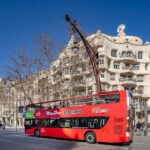
Ciutadella Park and Arc de Triomf: shade, symmetry, and easier compositions
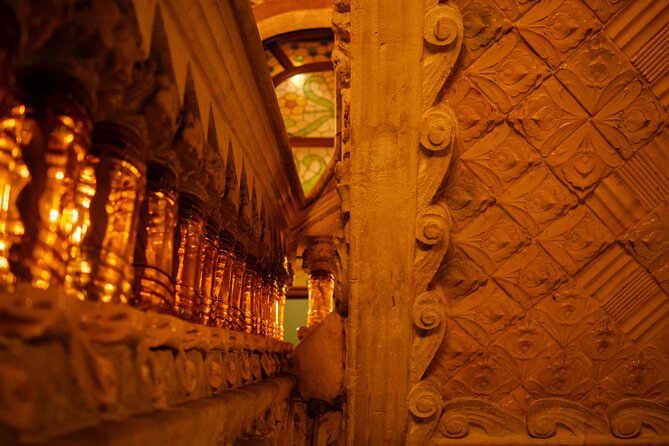
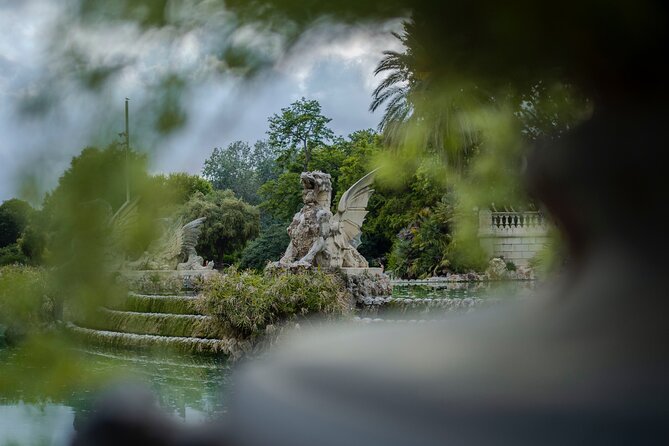
From the station area, the walk swings to Parc de la Ciutadella. This park is famous for being a green pause in the middle of the city, designed for the 1859 Barcelona Universal Exposition. For photography, parks are useful because they offer both background options (trees, paths, open space) and light control (shade under leaves, softer tones in the grass).
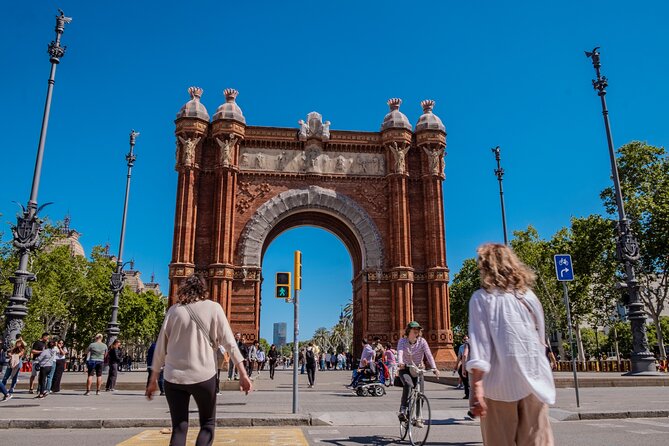
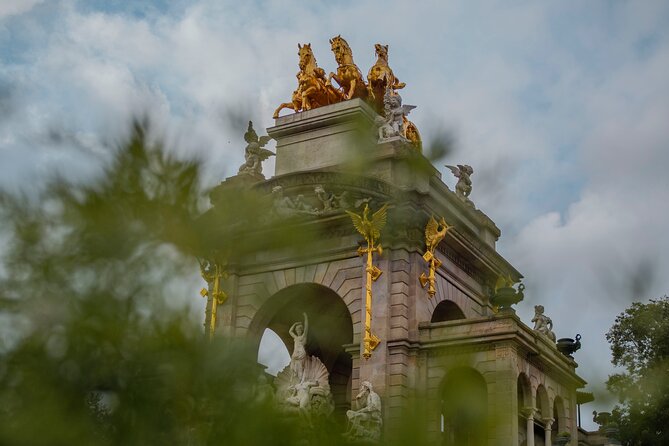
Next comes the Arc de Triomf, built in 1888 for the same kind of exposition era. It’s also a chance to focus on style: the arch is a striking example of Neo-Mudéjar architecture. Where you’ll benefit most is learning how to “compose with structure.” Arches are basically built-in framing tools. You can position yourself so the arch border creates a natural border around the scene, or you can shoot at an angle to emphasize depth.
In a small group, the guide can nudge individuals toward what will work best with their exact device—phone cameras and DSLRs behave differently, but you can still use the same framing principles. This is one of the tour’s big values: the tips aren’t just theory; they’re connected to what you’re holding.
Palau de la Música Catalana: Modernisme details that punish sloppy angles
The walk then reaches the Palau de la Música Catalana (Carrer Palau de la Música, 4-6). This is one of those stops where the architecture almost feels like a character in the story. Designed by Lluís Domènech i Montaner, a key figure in Catalan Modernisme, the building rewards slow looking—stone, ornament, and the kinds of shapes that don’t translate well if your framing is careless.
This stop is valuable because it pushes you to photograph something more complex than a skyline. You’ll likely get guidance on how to avoid the common problem: taking one photo that’s technically sharp but visually confusing. Modernisme details can look like clutter if they’re all competing for attention. The better approach is to choose a focal point—an edge, a repeating motif, a doorway frame, or a shape that leads your eye.
Timing is short here (it’s listed as about 10 minutes), so the guide’s job becomes critical: helping you use your time well. In other words, you’re not “touring” a building for hours—you’re learning how to extract strong images fast.
El Born to El Raval: turning poetry into a photo moment
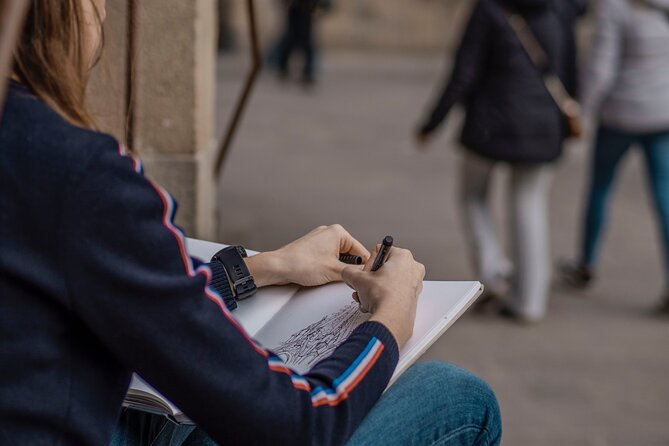
After the park/monument arc, the route includes El Mon Neix En Cada Besada at Plaça de Isidre Nonell, in the El Raval area. The phrase translates to The World Begins in Every Kiss, which hints at the tone of the place: more emotional and cultural than “landmark for the postcard.”
This stop matters because it broadens your photography beyond architecture. You’re nudged toward storytelling—how to capture mood, meaning, and symbolism, not just stone and sky. If you’ve only ever shot travel photos that look like “I was here,” this kind of stop can reset your expectations.
You’ll also get practice working with smaller scenes. Phone cameras often struggle in tight urban spaces, so this is a chance to learn how to step back for context, use clean edges, and keep your background from stealing attention.
Barcelona Cathedral and Casa de l’Ardiaca: Gothic drama, done with control
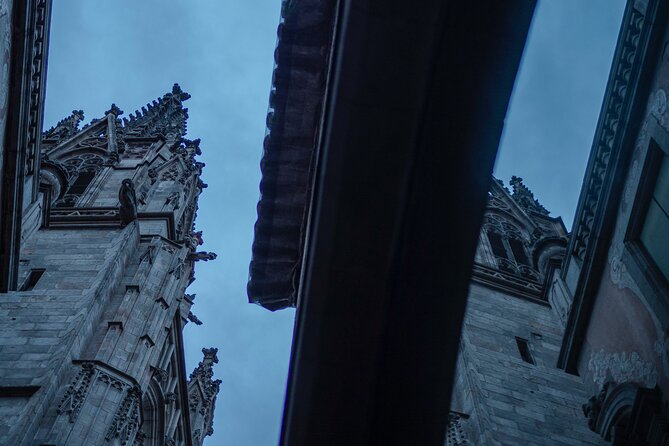
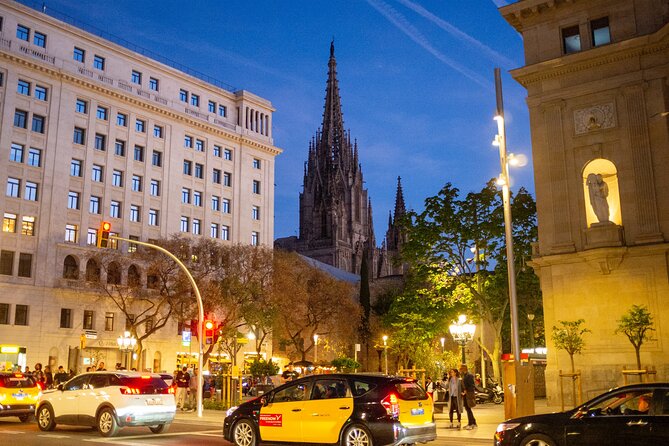
Then you enter the heart of the Gothic Quarter with Barcelona Cathedral (Catedral de la Santa Creu i Santa Eulàlia) at Pla de la Seu. Gothic architecture is glorious, but it also has a trap: there’s so much vertical detail that your photo can end up looking chaotic. A good photo walk should teach you how to simplify.
The cathedral stop is listed as about 10 minutes, which tells you the real goal isn’t “fully visit the interior”—it’s photograph the outside forms effectively and learn how to frame the structure. Expect guidance that focuses on angles and reflections (that’s a theme that shows up strongly in the tour’s feedback). Even with a phone, you can work on clean lines and highlight symmetry when the space allows.
A few minutes later comes Casa de l’Ardiaca at Carrer de Santa Llúcia, 1. The name Ardiaca connects to the archdeacon—historically the head of the canons linked to the medieval cathedral—so it carries both architectural beauty and civic/religious significance. From a photo perspective, this stop is perfect for learning “close storytelling.” Instead of shooting the biggest thing in front of you, you can frame smaller, meaningful details that show continuity with the city’s medieval past.



Pont del Bisbe and Plaça de Sant Jaume: photographing power and patience
One of the most recognizable spots on this route is the Pont del Bisbe (Bishop’s Bridge). It connects parts of the Palau de la Generalitat, the government palace of Catalonia. Visually, it’s also a gift because the bridge creates natural leading lines. You can shoot it so the bridge guides your eye toward the buildings, or you can angle your shot to emphasize the bridge’s Gothic-revival feel.
After that, you reach Plaça de Sant Jaume, one of Barcelona’s central historic squares in the Gothic Quarter. This kind of square is great for learning a key photo skill: capturing place without overstuffing your image. Squares can look messy if you let the frame include everything. In a small group, the guide can help you decide what to include so your photo tells one clear story.
This part of the walk tends to feel different than the monument stops. It’s slower, more grounded. Even if you’re not a “history person,” the architecture and the layout help you understand why people gather in the same spaces across centuries.
Plaça Sant Miquel and Plaça Reial: finish with local rhythm and photo variety
The route continues to Plaça Sant Miquel, described as small but historically significant. It’s the kind of spot that can be easy to miss if you’re sprinting between the headline attractions. That’s exactly why it’s good for a photo walk: it trains you to look for the quieter angles, the calmer corners, and the everyday texture of medieval Barcelona.
Finally, you end at Plaça Reial near La Rambla. This square is iconic for a reason: elegant architecture, lively street energy, and a strong sense of place. It’s a strong finale because it gives you photo variety. You can shoot wide to capture the square’s geometry and then tighten in for human-scale details. For phone shooters, this is where reflections and light cues can make a big difference—especially if you practice the guide’s angle-and-reflection tips earlier in the walk.
You also finish back near where you started, which is convenient. You won’t have to problem-solve your return right after you’ve used up your camera battery and your patience.
Price, timing, and value: why $59.90 can make sense
At $59.90 per person for about 2 hours, this isn’t a “long tour” price. It’s more like a focused skill session wrapped in a landmark walk. That can be excellent value if your real goal is improving your photos, not just checking boxes.
The key value drivers are:
- Small group size (up to 10), which supports personalized photo tips
- Guidance targeted at what you’re using (phone or camera)
- A dense route that covers multiple architectural styles in one efficient loop
If you’re the kind of traveler who loves street photography but feels stuck when the light changes or the frame looks messy, this is a good use of time. If you want a deep, sit-down museum experience, you’ll likely want something longer.
One more detail: it’s described as mobile-ticketed, offered in English, and usually booked about 41 days in advance on average. That’s a hint that popular dates go fast, so planning ahead helps.
Who should book this (and who might not love it)
This tour fits best if you:
- want to learn photo basics that work immediately on the street
- travel with a phone and want better results without buying new gear
- enjoy architecture and city streets but prefer practical help over lectures
- like small-group experiences where your questions can actually get answered
You might not love it if you:
- expect a long, unhurried walking pace with lots of indoor time
- want a classic guided history tour more than a photo-skills session
- dislike weather-dependent activities (the tour requires good weather)
Should you book Photo Walking Tour Barcelona Cathedral Gothic Quarter El Born?
Yes—if you want a fast, practical way to get better photos while seeing real Barcelona neighborhoods. The strongest selling points are the personal guidance, the small group size, and the way the route moves through major architectural scenes that teach you how to frame angles and handle reflections. Even in a short time, you can leave with usable habits you’ll apply the next day in other cities.
Just go in with a clear mindset: this is about shooting smarter, not about “taking every photo perfectly.” Arrive a bit early at Estación de Francia, bring your phone (or camera), and expect to get nudged into trying new viewpoints—especially when the Gothic lines and Modernisme details could easily overwhelm a rushed shot.
FAQ
Do I need a camera or can I use my phone?
You’ll need to bring your own device. The tour doesn’t provide camera equipment, but you can use any mobile phone (Android or iPhone) or any camera that works for you.
How long is the photo walking tour in Barcelona?
The tour runs for about 2 hours (approx.).
What landmarks will we see during the walk?
You’ll photograph and learn about major stops including Estació de França, Parc de la Ciutadella, Arc de Triomf, Palau de la Música Catalana, El Mon Neix En Cada Besada, Barcelona Cathedral, Casa de l’Ardiaca, Pont del Bisbe, Plaça de Sant Jaume, Plaça Sant Miquel, and Plaça Reial.
Is the tour offered in English?
Yes, it’s offered in English.
Is food or transportation included?
No. Food and drinks aren’t included, and transportation to and from the meeting point isn’t included.
What if the weather is bad or I need to cancel?
The experience requires good weather. If it’s canceled due to poor weather, you’ll be offered a different date or a full refund. You can cancel up to 24 hours in advance for a full refund.