REVIEW · BARCELONA
Bodega Barcelona Barrio Tradition in Bulk
Book on Viator →Operated by Culinary Backstreets Walks · Bookable on Viator
Four hours can change how you see Barcelona. This small-group bodega walk is built around real neighborhood rhythm, from a carajillo in El Raval to vermut hour in Eixample.
I like that it is not just “eat here, drink that.” Guides such as Ivan, Pam, Paola, and Senem connect each stop to how the city works—food, streets, and local habits in one loop. I also like the pacing: short hops (with breaks) that let you compare old-school bodegas with places that feel more modern.
One thing to consider: the tour includes alcohol-focused moments (brandies, vermut, and tastings), so if you want a mostly non-alcohol evening, you may need to manage your choices carefully.
In This Review
- Key highlights at a glance
- A Small-Group Bodega Walk Starts in El Raval
- How the 4-Hour Timing Fits a Real Barcelona Evening
- Stop 1: El Raval and the Carajillo Reset
- Stop 2: Sant Andreu’s Tres Tombs Interpretation Center
- Stop 3: Casa Golferichs for a Community-Centered Bite
- Stop 4: Mercat de Sant Antoni and the Drink Mile
- Stop 5: L’Eixample Vermut Hour the Old-School Way
- The Drinks and Bites You’re Likely to Remember
- Price and Value: What You Get for About $160
- What the Best Guides Do Differently (Ivan, Pam, Paola, Senem)
- Who This Barcelona Bodega Tour Suits Best
- Should You Book This Bodega Barcelona Barrio Tradition Tour?
- FAQ
- How long is the bodega tour?
- What does it cost?
- Where does the tour start?
- Where does the tour end?
- What language is the tour offered in?
- How many people are in the group?
- Will I receive a ticket on my phone?
- Is the tour family-friendly or suitable for most travelers?
- Is alcohol included?
- Is free cancellation available?
Key highlights at a glance
- El Raval start with a proper carajillo (coffee spiked with Catalan brandy) to set the tone fast
- Real neighborhood stops, not a food-court lineup across El Raval, Sant Andreu, Sant Antoni, and Eixample
- Small group size (max 7) that keeps the experience personal, even on busy nights
- Vermut hour in Eixample the traditional way: chilled vermut, olive garnish, and soda siphon
- Guides who teach the why, not just the what, including Barcelona and Catalonia history
- You’ll try specific favorites mentioned by past guests, like gildas
A Small-Group Bodega Walk Starts in El Raval
El Raval is the kind of neighborhood that makes you feel like you’re arriving in the city, not just touring it. This walk begins there, and it matters. You get grounded early in Barcelona’s everyday mix—locals, small bars, and streets that still feel like they belong to the people who live there.
The first tasting is a carajillo, coffee cut with Catalan brandy. It’s a classic pick-me-up and a useful way to start because it is unmistakably local. One moment you’re walking through the neighborhood; the next, you’re tasting a drink that people treat like part of their routine, not a souvenir.
Two things I especially liked about this start: the guide’s storytelling and the quick “taste-and-walk” flow. Past guests highlight how guides (like Ivan and Pam) explain more than the drink itself—how it fits the neighborhood and even the broader Catalan culture. If you want Barcelona’s food scene with context, this kind of opening does that quickly.
How the 4-Hour Timing Fits a Real Barcelona Evening
This is about 4 hours. That sounds short until you remember what those hours include: multiple tastings, a few short stops, and time to sit and actually talk. The route also avoids the classic tourist trap pattern of one landmark after another. Instead, you’re moving with purpose between districts, and you’re seeing how “food and drink” changes street by street.
A detail that helps: the group is capped at 7 travelers. That tends to make things feel less like a conveyor belt and more like you’re being shown around by someone who knows the layout. Guests describe moments where they were the only booked people, and the guide still kept the energy comfortable and structured.
You’ll also want to plan your evening around walking and taste-testing. Even if you skip one or two items, you’ll still come away feeling fed—and likely a bit warm (and yes, a bit tipsy, depending on your choices).
Stop 1: El Raval and the Carajillo Reset
In El Raval, the first real “hello” is that carajillo—coffee spiked with Catalan brandy, served in a neighborhood place that locals keep showing up for. I like this approach because it gives you a reference point before the tour shifts neighborhoods. You taste something strong and distinctly Catalan, and then you’re ready to notice how other stops feel different.
After that, you start moving toward the more bodega-heavy areas around San Antoni and Poble Sec. This section is where the tour earns its name: barrio tradition. You’re not just “in Barcelona.” You’re stepping through the kinds of areas where bodegas exist because people live nearby and want food and drink that fits their day.
A small practical tip: if you’re sensitive to alcohol, tell your guide early. Multiple past reviewers mention thoughtful guidance, including tailoring options (one review specifically noted adapting tastings for a pescatarian diet). That kind of care is easiest when it starts before your first pour.
Stop 2: Sant Andreu’s Tres Tombs Interpretation Center
The tour then shifts from pure “food stops” to a short history-and-neighborhood moment at the Centre d’Interpretacio dels Tres Tombs de Sant Andreu. Expect a brief look at local tradition and the neighborhood’s original personality.
Even though it’s only a short stop, it does something useful: it interrupts the routine of tasting so you understand what you’re tasting. In Barcelona, a lot of food culture is tied to local identity—street fairs, rituals, and the seasonal rhythms that shape what people serve.
The upside here is balance. If your only experience of Barcelona food is through markets and bars, you can miss the cultural engine that drives them. This stop is quick enough to keep the energy moving, but it’s long enough to add meaning to the rest of the walk.
Stop 3: Casa Golferichs for a Community-Centered Bite
Next up is Casa Golferichs, described as a community center area where you’ll find “the best bite.” The time is short, so this is not a long sit-down meal. It’s more like a tasting stop with a local feel—an in-between moment that helps you notice the difference between a bodega you might find alone and the kind of place a good guide can lead you to.
This stop matters because it shows another side of Barcelona’s food scene: it’s not only about restaurants and tourist-friendly eateries. Sometimes it’s about community spaces and the food culture that grows around them.
In previous feedback, people repeatedly mentioned how the guide’s connections make the stops feel natural, not staged. If you care about that “how did they know this place?” feeling, this is one of the moments that usually delivers.
Stop 4: Mercat de Sant Antoni and the Drink Mile
At Mercat de Sant Antoni, you’ll move through a market and check out interesting stalls on the way to a beverage stop. Markets are usually the best kind of chaos: lots of smells, lots of movement, and enough variety to make you curious even if you’re not hungry.
What I like about this choice is that it connects retail to tradition. A bodega walk that never touches a market can feel one-note. By the time you’re at the market, you’re primed to think about ingredients, not only drinks.
You’ll also get a “drink mile” inside this market section, turning what could be just a walk-through into a proper tasting moment. The tour keeps the focus on pairing—so you don’t just drink something, you try it alongside small bites that make sense for the moment.
If you’re the kind of traveler who likes to understand local habits, markets in Barcelona are also where you see how food culture stays practical. It’s a place for errands, not just for photo ops.
Stop 5: L’Eixample Vermut Hour the Old-School Way
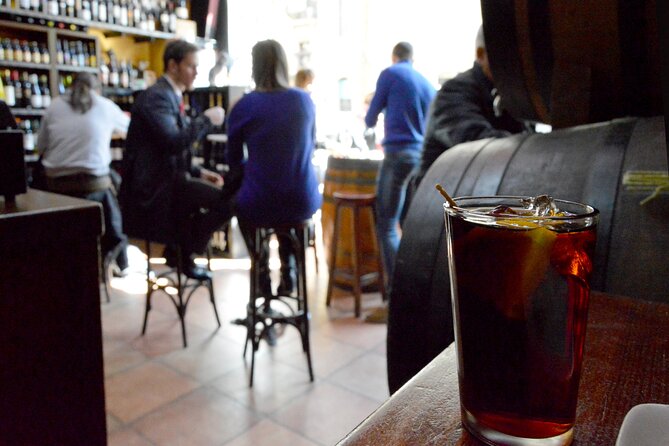
The final stretch in L’Eixample is the heart of the tour’s name: the traditional afternoon vermut ritual. This part is built around vermut hour, when drinks and tapas arrive in a specific style, chilled and lightly garnished.
Here’s what makes it memorable: vermut is served chilled with only an olive as garnish. You’re also told about the soda siphon (the classic pressurized bottle people use for spritzes). That’s a detail you rarely see described clearly in guidebooks, but it shows up in how the bar serves people.
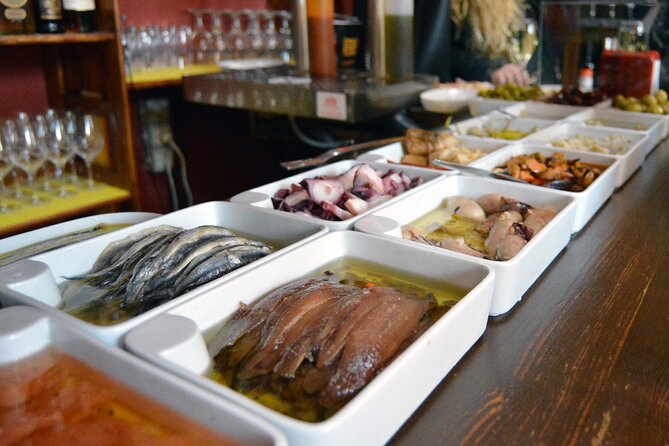
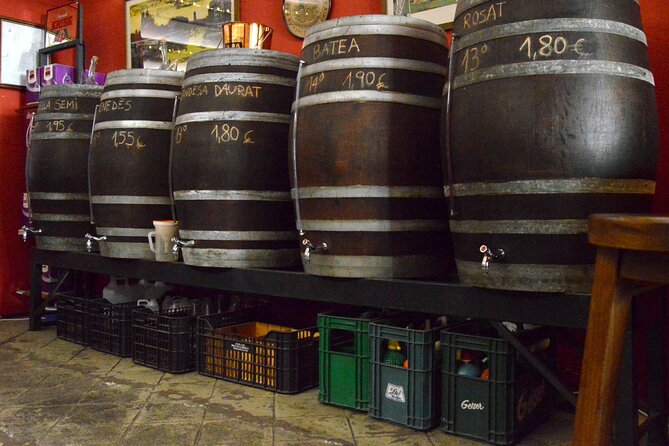
Then there are the tapas that pair with the vermut—small, timed choices rather than a single big meal. Past reviewers mention a “modern wine bar” finish where vermut and purchasing from barrels came into play, and that matches the general feeling: the tour can flow from traditional to contemporary without losing the theme.
A practical mindset for this section: you’re at the point where your senses are fully awake, but you also need to pace. If you’ve already had carajillo earlier, you might not want to go full throttle with vermut. The good news is that vermut and tapas are easy to sample—think of it as a series of bites, not a single gulp-and-go.
The Drinks and Bites You’re Likely to Remember
This walk is designed around tastings that represent daily Catalan drinking culture, not just “try random appetizers.” The exact menu can vary by stop, but the structure is consistent: coffee spirit early, a historical context break, bites around community and markets, and then vermut hour with olive garnish and soda siphon.
From the reviews you can also infer some standout items:
- Gildas are specifically called out by one guest as a favorite. These are a classic bar snack in the Basque/Catalan orbit, typically pickled and briny—exactly the kind of thing that cuts through alcohol and keeps you hungry for the next pairing.
- Some past guests highlight a variety of bodegas—old and new, traditional and modern—so you get a comparison, not one theme parked in one time period.
- Several reviewers praise staff warmth at the bars and restaurants you visit, which matters because bodega culture is social. A guide can open doors, but the vibe comes from how you’re welcomed.
If you’re picky, tell your guide your priorities early. One review mentions adapting tastings for a pescatarian diet, which suggests they try to make the experience work for you rather than forcing you to sit out tastings.
Price and Value: What You Get for About $160
At $160 per person for roughly 4 hours, the price only feels fair if you care about two things: access and interpretation. You’re paying for a route that you’d struggle to assemble yourself quickly—especially the specific sequence and the mix of bodegas, market flow, and neighborhood context.
The “value” here is not just food and drink quantity. It’s the guidance that turns tastings into understanding. Reviews repeatedly mention guides who teach the history of Barcelona and Catalonia areas, and even offer map explanations to help you see the city beyond the stops. That turns a bar crawl into a way of reading the city.
Also, the group size helps justify it. A max of 7 travelers means fewer people share the guide’s attention, which is one reason the experience tends to feel personal in feedback.
If you’re the type of traveler who already knows Barcelona deeply and plans every bar, it might be less urgent. But if you want a smart starting point for your trip—especially your first night—this kind of guided route often pays off fast.
What the Best Guides Do Differently (Ivan, Pam, Paola, Senem)
A lot of food tours say they’re “informative.” This one seems to deliver that part in a practical way. Multiple reviews mention guides:
- Ivan: praised for being educated about more than food—architecture, city planning, and deeper city context.
- Pamela (Pam): praised for carefully explaining history and giving insight into food and wine, plus making stops feel easy and friendly.
- Paola: praised for generosity with time, strong knowledge of the local food scene and other Spanish regions, and adapting tastings for a pescatarian diet.
- Senem: praised for friendliness and for taking guests to places they would likely pass by alone, while encouraging local-style tasting habits like vermouth and coffee tweaks.
That pattern matters. Great guides don’t just list items. They teach you how to order, what to notice, and how to connect it to the neighborhood you’re walking through.
If you’re traveling with someone who gets bored with explanations, don’t worry. The tour still moves and keeps tastings coming. The history is there to make the drinking and eating feel purposeful.
Who This Barcelona Bodega Tour Suits Best
This is a strong match if you:
- want a first-night activity that helps you find your bearings and choose better bars later
- like walking between neighborhoods more than sitting in one place
- enjoy food-and-drink culture with cultural context, not just tasting
- want a small group setting where you can ask questions and adapt choices
It may be less ideal if you:
- want a strictly non-alcohol experience (the structure includes alcohol-forward tastings)
- dislike neighborhood walking, even if the pace is guided and paced with stops
Also, if you’re escaping a short visit—like a cruise day—this kind of route can feel efficient because it gives you several “micro-views” of Barcelona without needing a full itinerary of attractions.
Should You Book This Bodega Barcelona Barrio Tradition Tour?
Yes, if you want Barcelona through its bodegas and neighborhood rhythm. The small group size, the drink-and-tapas structure, and the way guides connect food to local identity make it more than a checklist. It’s also a smart way to learn what to look for on your own later—especially how vermut hour works, how markets fit into daily routines, and how El Raval and Sant Antoni feel different even when the theme stays the same.
Book it when you can enjoy a few tastings and don’t mind that the experience leans toward traditional drinking culture. If that sounds like your kind of evening, you’ll likely come away with more than full plates—you’ll leave with a better map of how locals actually spend time.
FAQ
How long is the bodega tour?
It lasts about 4 hours.
What does it cost?
The price is $160.00 per person.
Where does the tour start?
The tour starts at Mercat de Sant Antoni, Eixample, 08015 Barcelona, Spain.
Where does the tour end?
The activity ends back at the meeting point.
What language is the tour offered in?
The tour is offered in English.
How many people are in the group?
The tour has a maximum of 7 travelers.
Will I receive a ticket on my phone?
Yes, it uses a mobile ticket.
Is the tour family-friendly or suitable for most travelers?
The tour states that most travelers can participate.
Is alcohol included?
The route includes tastings such as carajillo (coffee with Catalan brandy) and a traditional vermut hour, which means alcohol is part of the experience.
Is free cancellation available?
Yes. You can cancel for a full refund up to 24 hours in advance.