REVIEW · BARCELONA
Barcelona: Gaudí Segway Tour
Book on GetYourGuide →Operated by Barcelona Segwayday · Bookable on GetYourGuide
Gaudí by Segway is a fun equation. This 2.5-hour ride strings together the city’s most famous Gaudí sights with smart stops in between, so you spend less time wrestling with traffic on foot and more time actually seeing Barcelona. I especially like how the tour balances classic architecture with quick picture moments, from the pop-art Barcelona Face near the harbor to the big “almost finished” look of Sagrada Família from the outside.
Two things I’d highlight if you’re deciding whether this is worth your time: you get Segway PTi2 training and guided practice (so you’re not just thrown onto moving pavement), and you cover multiple neighborhoods with a guide’s route that keeps you moving while still slowing down for viewpoints. One drawback to consider: the experience depends a lot on how the day’s timing goes, and one past guest noted a 25-minute late start that cut into tour time.
The vibe is simple: you’re learning the city’s design ideas while gliding. You’ll feel it most at the edges of places like Passeig de Gràcia, where Gaudí’s buildings turn straight city blocks into something theatrical.
In This Review
- Key points worth knowing before you go
- From Plaça de la Mercè to the Segway: getting comfortable fast
- Gothic Quarter to Port Vell: harbor photos and quick city bearings
- Parc de la Ciutadella: riding past Gaudí’s teacher’s legacy
- Eixample and Passeig de Gràcia: a boulevard made for architecture lovers
- Sagrada Família exterior glide: seeing the “almost finished” miracle
- Arc de Triomf and the ride back: Olympics-era Barcelona in one final stop
- Price and value: what $83 buys in time, access, and guidance
- Who should book, and who should skip
- My booking advice: worth it for Gaudí fans who like momentum
- FAQ
- How long is the Barcelona Gaudí Segway Tour?
- How much does the tour cost?
- Where does the tour meet?
- What landmarks do you see?
- Are entrance tickets included?
- What’s included in the price besides the tour guide?
- What languages are the guides?
- What’s the minimum age to ride?
- Is there a weight limit?
- Is the tour refundable if I change plans?
Key points worth knowing before you go
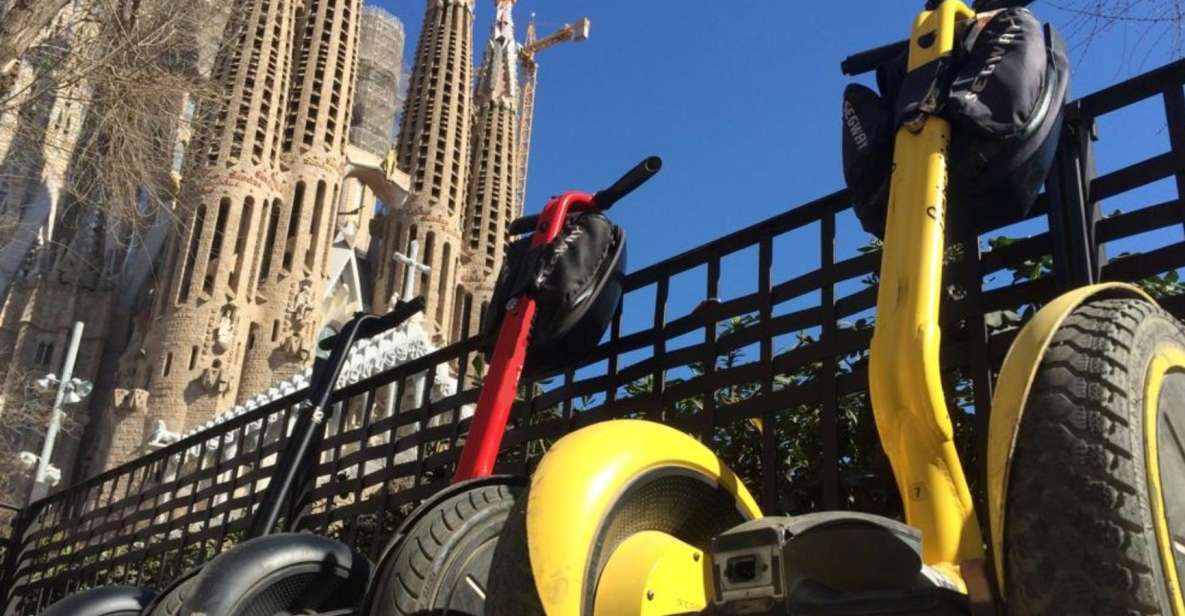
- Real Segway time, not just a short demo, with the guide focused on keeping you safe
- A route that connects Gothic Quarter → Port Vell → Ciutadella → Eixample → Sagrada Família exterior
- Stops geared for photos, including the Barcelona Face and exterior views of major façades
- Small groups capped at 6 people per guide (bigger groups get an extra guide at no extra cost)
- You’ll see Arc de Triomf at the end, a nice contrast to Gaudí’s world
- Entrance tickets are not included, since the Sagrada Família focus is exterior viewing
From Plaça de la Mercè to the Segway: getting comfortable fast
This tour starts in the Gothic Quarter area, and meeting is easy if you know the transit point. If you’re taxiing, the best drop off is Plaça de la Mercé, about a 3-minute walk to the meeting spot. If you’re using the metro, head to Drassanes on the Green Line, roughly a 5-minute walk away.
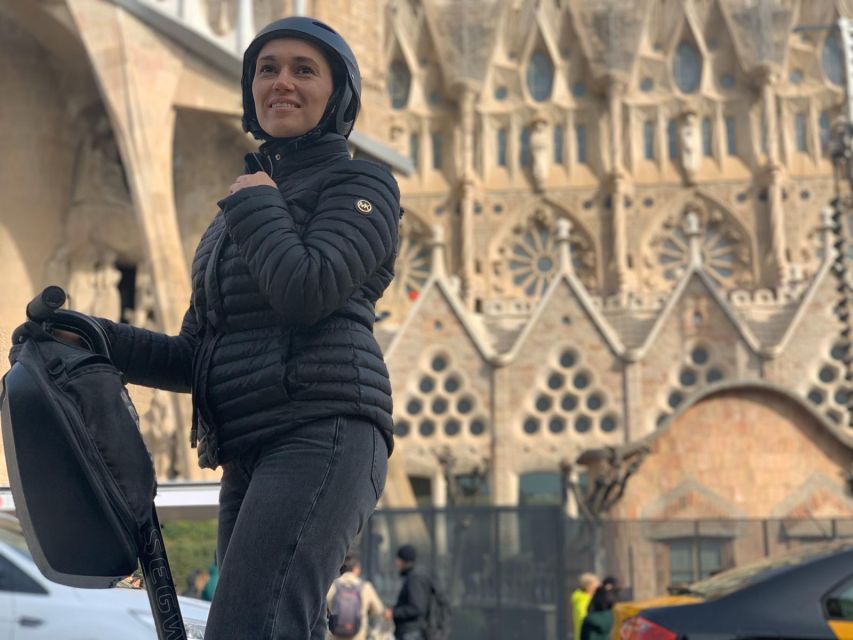
Right away, you’ll fit your helmet and get set up on the Segway PTi2. For me, this matters because Segway tours can fall into two camps: either you’re guided carefully until you feel steady, or you’re expected to “figure it out” mid-ride. The better version is what you’re aiming for here. In the feedback, several guides were praised for safety and for making sure people feel confident before moving deeper into traffic.
You should wear comfortable clothes. That’s not a throwaway line. Barcelona sidewalks can be uneven, and you’ll want clothes that handle a few stops, quick turns, and the occasional pause for photos. Also, don’t pack like you’re heading to a hike: luggage storage is included, but the Segway isn’t the time for bulky bags.
One practical tip: arrive on time. One review mentioned a late start and said the guide didn’t apologize, which is a reminder that timing can affect how much explanation and how many stops you feel you get.
You can also read our reviews of more tours and experiences in Barcelona.



Gothic Quarter to Port Vell: harbor photos and quick city bearings
Once you’re rolling, the route begins in the Gothic Quarter and heads toward Port Vell, Barcelona’s historic harbor area. This is a smart warm-up segment. You start close to the old-city feel, then shift toward the waterfront vibe without wasting time.
At Port Vell, you’ll get the chance to stop for a picture with Barcelona Face, a pop art monument tied to the 1992 Olympic Games theme of celebrating the city. I like this kind of stop because it’s not just a “look at a building” moment. It’s a quick way to orient yourself to where you are in Barcelona’s story: old stone, then modern-era pride.
This segment also tends to set the tone for the rest of the day. When the guide is responsive about photo stops, the tour feels more personal. One guest specifically said the guide asked if they wanted to stop for pictures, which is exactly how it should feel on a ride like this. If you’re the type who likes photos but hates feeling rushed, pay attention to how the guide handles those requests early.
Parc de la Ciutadella: riding past Gaudí’s teacher’s legacy
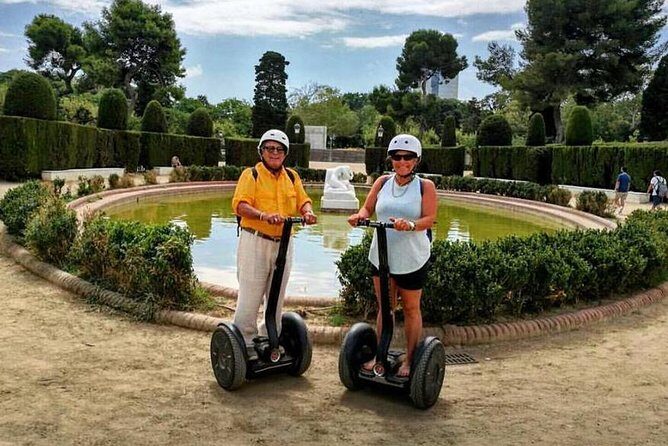
Next you’ll glide through Parc de la Ciutadella, Barcelona’s oldest and one of its most popular parks. Even if you’re not a park person, this stop works because it gives you a visual reset from streets and façades.
The park is connected to architect Josep Fontserè, one of Gaudí’s teachers. That link is valuable. Gaudí gets treated like a lone genius, but your eyes work better when you understand the influences. Seeing the park as part of a bigger design lineage helps you read Barcelona differently, even if you only catch bits of architecture while riding.
Also, parks are where Segway tours shine. You can move at a calmer pace, learn the rhythm of control, and enjoy open sightlines. You’ll likely get those “oh, this city is bigger than I thought” moments when you can look across paths and trees rather than just forward at buildings.
The only caution: parks can still have pedestrians, and you’ll want to stay alert and follow the guide’s pace. Safety is part of the product here, and multiple reviews praised guides for that.
Eixample and Passeig de Gràcia: a boulevard made for architecture lovers
After the park, you’ll move into Eixample, one of Barcelona’s most iconic neighborhoods. Eixample is where the city’s grid makes sense, and that’s the perfect contrast to Gaudí’s more organic ideas. Seeing those two design approaches close together makes the city feel less random.
Then comes Passeig de Gràcia, the famous boulevard where Gaudí’s buildings line up like a live lesson. This is where the tour earns its keep. You’re not just hearing “Gaudí is important.” You’re seeing why he became unavoidable: façade design that turns a street into a gallery.
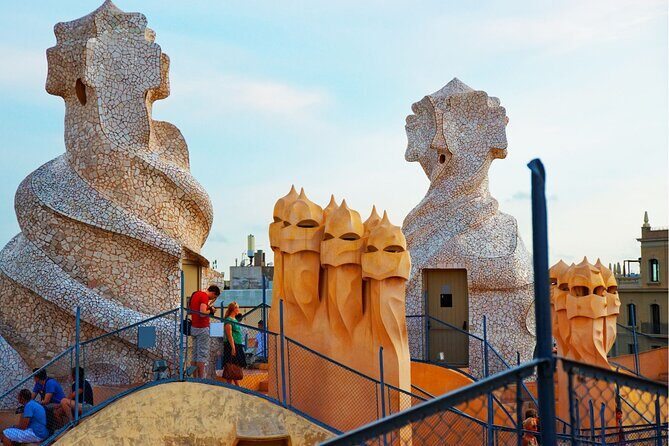
On this stretch, you’ll spot the unique exteriors associated with Casa Batlló and Casa Milà (La Pedrera). The tour’s framing matters: these stops are about recognizing façades and architectural character as you glide past, not about long ticket lines.
Here’s a practical way to get more out of it: watch for the details your eyes normally skip. On these façades, it’s easy to focus on the obvious curves or shapes and miss how the building’s rhythm and materials tell a story. Your guide can help you pick those out, and the better guides in the feedback were praised for making the learning feel practical rather than a lecture.
If you’re sensitive to explanations varying from guide to guide, keep expectations flexible. One review complained there wasn’t much explanation during the visit, so you may want to proactively ask a question if you’re curious about a specific façade element.
Sagrada Família exterior glide: seeing the “almost finished” miracle
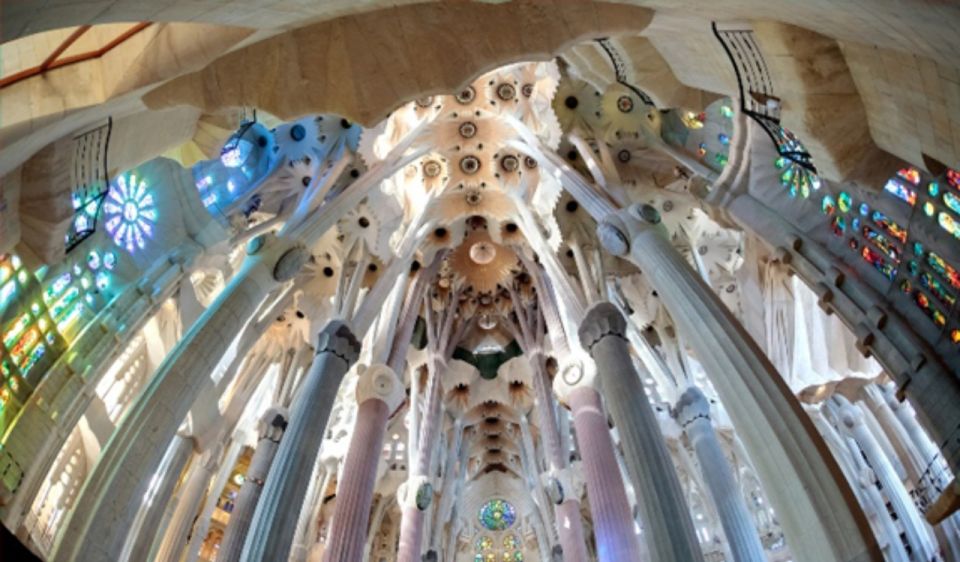
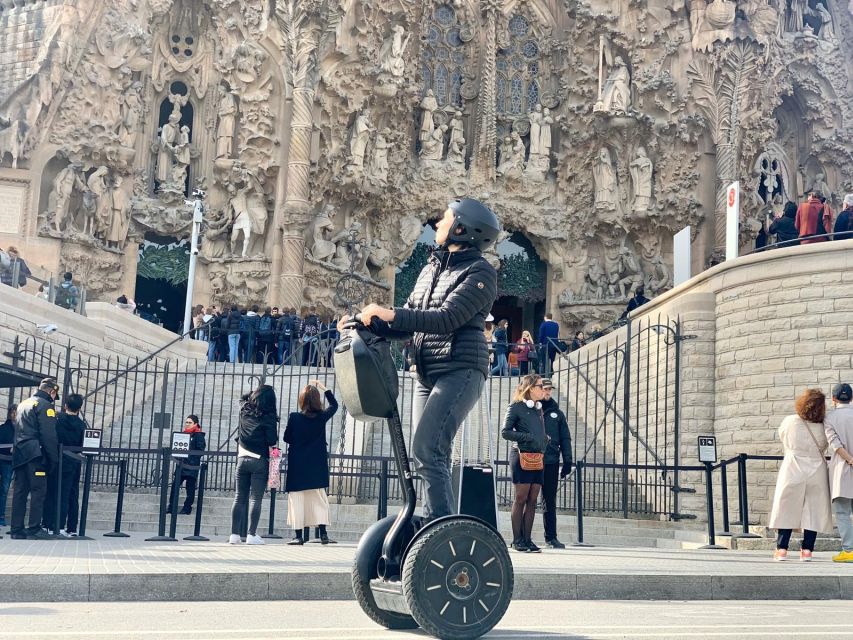
Sagrada Família is the big name, and the tour approaches it the right way for most people: you glide around its exterior and learn about the architecture and history as you go.
Even without entering, you can get a lot from a good exterior loop. Why? Because Sagrada Família’s design is meant to be read from angles. From the outside, you start connecting motifs across façades and imagining how the planned elements will complete the whole concept.
The tour’s description even calls out that it’s an almost finished masterpiece. That timing is part of what makes it so captivating. You’re not just seeing a static monument; you’re seeing a construction story still unfolding, which changes how it feels compared to buildings that reached their final form long ago.
A key value point: this tour turns Sagrada Família from a one-stop “arrival problem” into part of a moving route. Instead of spending your entire day locked into one location, you get context from the streets and neighborhoods around it.
One thing to note for planning: entrance tickets are not included. Since the focus here is exterior viewing, you likely won’t need tickets for the tour itself. But if you want to go inside later (and many people do), plan that as a separate add-on after the ride.





Arc de Triomf and the ride back: Olympics-era Barcelona in one final stop
On your way toward the finish, you’ll continue along Passeig Lluís Companys and admire the Arc de Triomf of Barcelona. This is a useful contrast to Gaudí. Arc de Triomf feels more monumental and ceremonial, tied to a different chapter of Barcelona’s identity.
You also get a logical end-point: returning to the Gothic Quarter after seeing a sweeping arc of the city’s architectural personality. The last stretch tends to be when you feel how much ground you covered. If the earlier portions felt too short, the ending can help you see the full shape of the day.
If you’re the type who wants a closing photo, this is a good moment. Arc de Triomf offers clean angles and a big-frame composition that works well even if you’re not a pro photographer.
Price and value: what $83 buys in time, access, and guidance
At $83 per person for 2.5 hours, you’re paying for more than movement. You’re paying for:
- a guided route that connects neighborhoods efficiently,
- Segway equipment (Segway PTi2 and helmet),
- professional guidance plus insurance,
- and luggage storage to make the day easier.
That’s the value side. The main “cost” side is what you’re not getting: entrance tickets are not included, and the sights are mostly about exterior viewing and street-level architecture.
So who gets good value? You’ll feel it if you:
- want to cover several major landmarks without long transfers,
- enjoy street-level architecture and don’t need to spend hours inside big-ticket sites,
- and like the idea of learning while moving.
Who might feel the price is less impressive? If you mostly want interior access or deep time at one site, a Segway exterior route may not match your style. In that case, you might pair this ride with separate museum or cathedral entry plans.
Also remember the group size rule: there’s a maximum of 6 people per guide, and bigger groups get an extra guide at no extra cost. That’s a real quality factor. Smaller groups usually mean you get more attention, clearer instructions, and quicker help if you’re still adjusting your balance.
Who should book, and who should skip
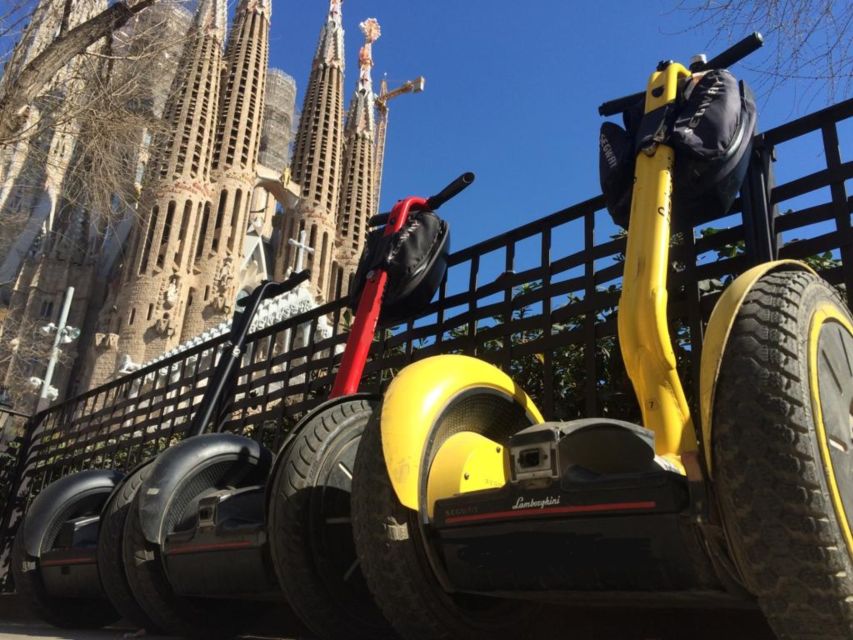
This tour is geared toward riders who can physically and comfortably handle a Segway.
Here are the key limits you should respect:
- The Segway minimum age is 16. Children under 16 may join on an e-bike instead.
- It’s not suitable for children under 13.
- Not suitable if you’re heavier than 265 pounds (120 kg).
- It’s not suitable for pregnant women.
- It’s not suitable for people with mobility impairments.
If those points work for you, you’ll probably enjoy the experience. It’s especially good for adults who like architecture, want a fun way to cover distances, and prefer a guided route with photo opportunities built in.
If you’re unsure, think about this: would you rather spend the day on a vehicle that requires quick balance and focus, or would you rather walk and take your time at each stop? That choice matters more than people realize.
My booking advice: worth it for Gaudí fans who like momentum
My take: book this Gaudí Segway tour if you want a single morning or afternoon that stitches together Barcelona’s signature architecture into one coherent ride. You get a practical “how to see the city” format, you’ll likely come away with clearer bearings, and the payoff at places like Sagrada Família and Passeig de Gràcia is exactly the kind of visual learning that works best when you’re not stuck in one location.
It’s also a good choice if you care about guide quality. The strongest feedback is consistent: guides like Paolo, Carlos, and Natasha were praised for helping people learn the Segway and for making the tour enjoyable and safe. Some guests also liked that the guide asked about stopping for pictures, which is a small detail that can make the whole day feel more tailored.
Just go in with two realistic expectations:
- timing can affect how much explanation you get,
- and the tour is about exterior viewing and street-level context rather than ticketed interior time.
FAQ
How long is the Barcelona Gaudí Segway Tour?
The tour lasts 2.5 hours.
How much does the tour cost?
The price is $83 per person.
Where does the tour meet?
If you’re arriving by taxi, use Plaça de la Mercé. If you’re using the metro, the nearest stop is Drassanes (Green Line).
What landmarks do you see?
You’ll see Sagrada Família (exterior), the Eixample district and Passeig de Gràcia façades, Casa Batlló and Casa Milà, and the Arc de Triomf.
Are entrance tickets included?
No. Entrance tickets are not included.
What’s included in the price besides the tour guide?
You get the Segway PTi2, a helmet, professional guide, insurance, and luggage storage.
What languages are the guides?
The live tour guide is available in English, Russian, Spanish, German, and French.
What’s the minimum age to ride?
The minimum age to ride a Segway is 16. Children under 16 may join on an e-bike instead.
Is there a weight limit?
Yes. It’s not suitable for people over 264 lbs (120 kg), and the tour notes a limit of 265 pounds.
Is the tour refundable if I change plans?
Yes. You can cancel up to 24 hours in advance for a full refund.