Barcelona by Segway beats walking fast. It’s interesting because you get a quick training session and then float through key areas like the Gothic Quarter and Parc de la Ciutadella without spending your day in slow museum lines. I especially like the hands-on setup (helmet, training, water) and the value of seeing a lot in a short time. One thing to plan for: the Segway has age and weight limits, so families with younger kids may need the smaller electric bikes.
The route is built for people who want big sights, clear context, and smooth movement. I also like that the tour runs in all weather with raincoats, so a gray day doesn’t automatically wreck your plans. The only “watch out” is that it’s a fast-moving sightseeing format, so it’s not a slow wander where you linger in every chapel or shop.
In This Review
- Key highlights you should know
- Getting going: the Segway training and Carrer del Correu Vell check-in
- Roman Wall to Port Vell: the harbor loop that gives you quick orientation
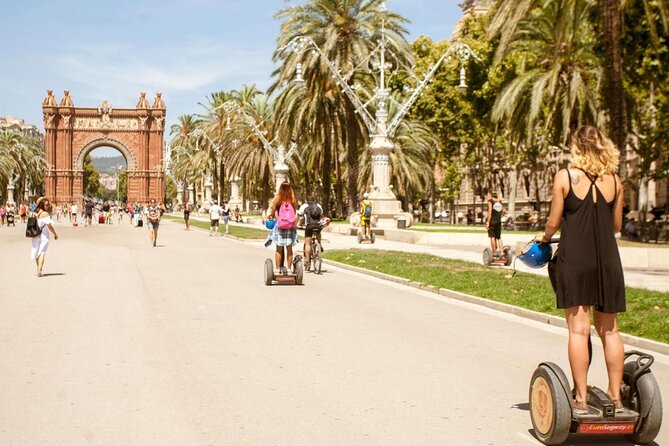
- Ciutadella Park and the Arc de Triomf: where the 1888 fair still shows up
- The park’s architectural highlights: glasshouses, modernist dragons, and “Picasso vibes”
- From park to streets: Passeig de Lluís Companys and the shortcut feel
- El Born and Santa Maria del Mar: Gothic beauty without museum time
- Estació de França, sea walls, and the Gothic Quarter’s big-face moments
- Columbus to Port Vell again: why the stop spacing works
- Barceloneta and Sant Sebastià: beach time on rails (with sea views)
- Olympic Village to Nova Icària: a modern Barcelona finish
- Price and time: why $35 works when you have limited hours
- Who this Segway loop is best for (and who should skip it)
- Practical booking advice: make the weather and your shoes work
- Should you book this Barcelona Segway tour?
- FAQ
- Do you need to know how to ride a Segway before the tour?
- What is the meeting point and does the tour return to it?
- How old do you have to be to ride the Segway?
- Is there a weight limit for the Segway?
- What’s included in the price?
- What if it rains in Barcelona?
- Can I cancel for a refund?
Key highlights you should know
- Easy first-time setup with required helmet and step-by-step Segway practice
- Big-sights route that strings together Roman-era walls, Gothic streets, and park landmarks
- Ciutadella Park classics tied to the 1888 World Fair (Arc de Triomf and the greenhouses)
- Harbor-to-beach stretch along Port Vell and Barceloneta instead of staying inland
- Small group size (max 18) that helps the guide keep an eye on everyone
Getting going: the Segway training and Carrer del Correu Vell check-in
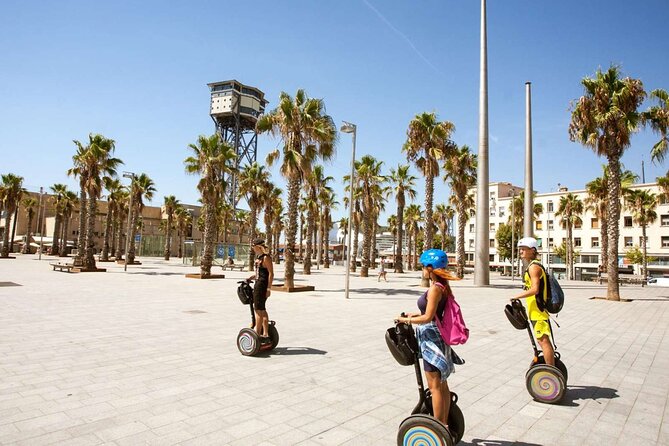
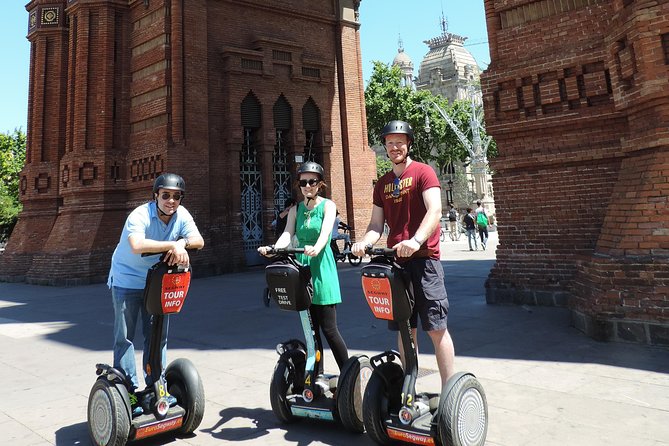
Your tour starts at Carrer del Correu Vell, 6 in Ciutat Vella. Plan to arrive a bit early, because you’ll check in, get your helmet (sizes provided), and do a short training session before you hit the streets.
This is a tour built for motion without stress. You’ll practice controlling the Segway in a supervised way until it clicks, and that matters, because Barcelona streets can be full of surprises—pedestrians, bikes, tour groups, and those sudden narrow lanes. Once you’re comfortable, you’ll be guided through the city at a pace that feels like sightseeing, not cardio.
One small practical note: the Segway has a minimum weight (45 kg / 100 lbs) and a maximum (117 kg / 260 lbs). Also, local rules require at least 16 years old to ride a Segway. If you’re traveling with younger kids (minimum tour age is 12), you’ll use the electric bicycles designed for them, and the tour price stays the same.
Roman Wall to Port Vell: the harbor loop that gives you quick orientation
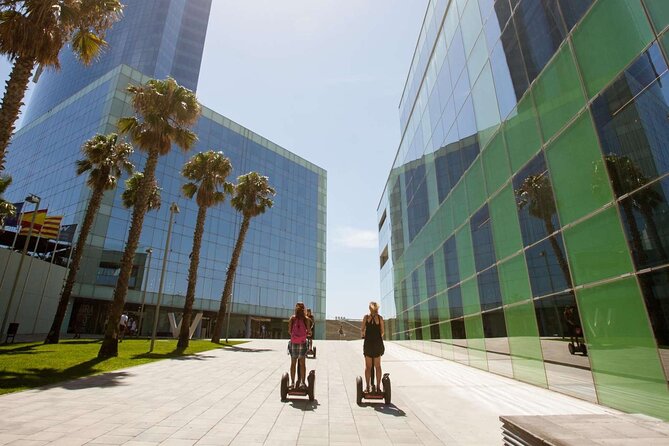
You begin near the old Roman Wall area and head toward Port Vell, Barcelona’s historic old harbor. This is a smart opening move, because it’s an instant “map lesson.” You’re not just seeing buildings; you’re learning how the city’s different eras connect—Roman walls, medieval quarters, and today’s marina energy.
As you roll toward the waterfront, you’ll also get a feel for how Segways work well in Barcelona’s transportation mix. It’s not magic, but the city is set up so riders can glide through areas with bike access and smoother paths than you might expect.
Port Vell is also where you get the shift from stone-and-streets to sea-and-promenade. The harbor area is redeveloped into a lively leisure zone with places like Maremagnum and the Barcelona Aquarium nearby. Even if you skip ticketed stops, you’ll still get that classic Barcelona “sea breeze” moment while the guide keeps moving the group.
Ciutadella Park and the Arc de Triomf: where the 1888 fair still shows up
After the harbor start, the tour pulls you into Parc de la Ciutadella, Barcelona’s big green center. The park is the botanical-garden style getaway that feels like a different city once you’re inside it. It’s also where a lot of the tour’s stops make sense, because many highlights are clustered and ride-friendly.
One major anchor here is Arc de Triomf, the monumental gateway built for the first World Fair in Spain. It’s the kind of structure you’d normally walk up to and spend ten minutes admiring. On this tour, you get the same payoff plus context, so you understand why it looks the way it does and what period it represents.
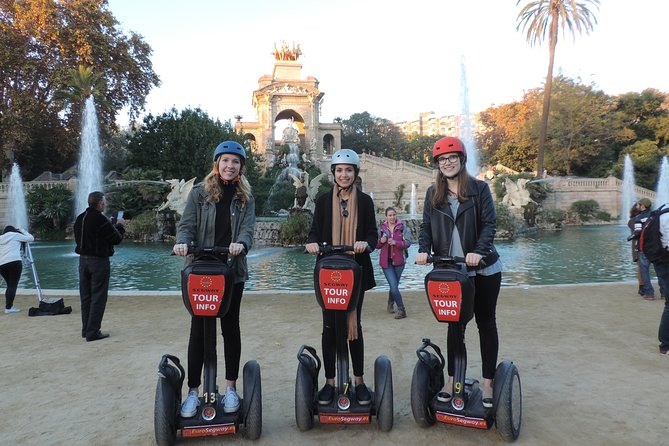
Then you flow past the Cascada monumental, the standout fountain feature in the park. The guide’s job is to keep you from just taking photos and to add quick facts that make the fountain feel like part of a bigger park story.
Right nearby, you’ll also see the Parliament of Catalonia, with its red-and-gold neoclassical look. It’s quick to glance at from the Segway, but it’s memorable because it’s one of those buildings that signals power and history in a single visual punch.
The park’s architectural highlights: glasshouses, modernist dragons, and “Picasso vibes”
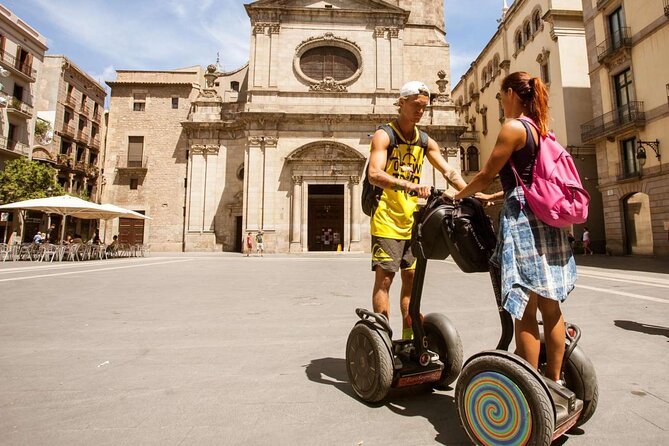
Ciutadella Park isn’t only about greenery. It’s loaded with architecture, and this tour uses that reality well by moving you between points with minimal backtracking.
You’ll pass the Modernist Castell dels Tres Dragons (Castel of the Three Dragons). It’s a striking red-brick structure designed by Lluís Domènech i Montaner for the 1888 Universal Exhibition, and later it housed the Zoology Museum. That mix—exhibition purpose, later reuse, modernist style wrapped in castle-like shapes—is the kind of detail that makes the stop feel more than just scenic.
Next comes the park’s iron-and-glass greenhouse world. You’ll see the Hivernacle del Parc de la Ciutadella and the Umbráculo del Parque de la Ciutadella, both tied to the late 19th-century exhibition era. These buildings are basically a lesson in how industrial materials became part of “pretty public spaces.” If you like architecture, this is where your photos will actually tell a story.
Other quick cultural stops keep the park from feeling like one long green blur. You’ll also roll by the Monument Homenatge a Picasso (created in 1983), plus fountains and sculptures like the Stork and the Fox Fountain, inspired by a fable. Even the quieter corners matter here because the route is intentionally packed with moments you’d otherwise miss if you only did a casual walk.
From park to streets: Passeig de Lluís Companys and the shortcut feel
As you move through the park edges, you’ll also get Passeig de Lluís Companys, a grand ceremonial promenade connecting Arc de Triomf with the park. This section is a nice break between “big buildings” and “park details.” It feels like a transition road that keeps your bearings and helps you understand how the tour is stitching the city together.
Then the tour shifts again into the older parts of Barcelona, where your Segway training starts paying off. The guide helps manage the group through busier areas without turning the ride into a chaotic rush.
If you’re the type who gets tired of repeating routes, this is a good style choice. You’re not doing one slow rectangle. You’re hitting a connected loop that makes sense, even if you don’t know the neighborhood names yet.
El Born and Santa Maria del Mar: Gothic beauty without museum time
In the El Born area, the tour includes El Born Centre de Cultura i Memòria, a restored 19th-century market building that preserves archaeological remains from the 1700s city. You don’t need to plan extra museum tickets for this moment, because the experience is designed as a sightseeing-focused ride. The stop gives you context and a chance to orient before you continue.
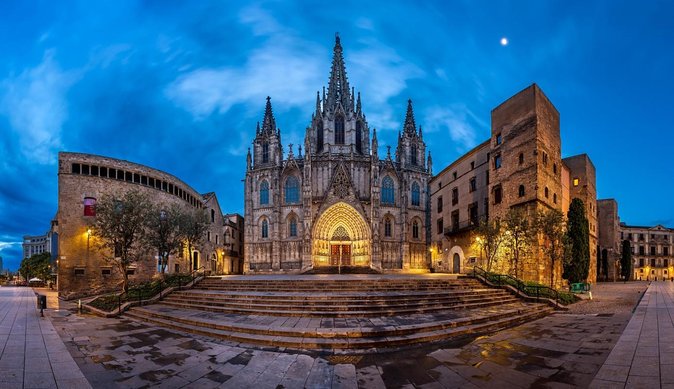
A highlight here is Basílica de Santa Maria del Mar, a gorgeous 14th-century Catalan Gothic church. The important part for you is not just the building’s looks. It’s the feeling of proportion and light in a space that’s calmer than the surrounding streets. Even with a quick stop, the church interior is often the kind of place where you wish you had “one more” hour—so it’s worth arriving with a mindset of short and sweet rather than long and lingering.
If you’re hoping to do church-hopping all day, this route won’t replace that. But if you want the big visual hits with time left for dinner plans, it’s a strong fit.
Estació de França, sea walls, and the Gothic Quarter’s big-face moments
Barcelona’s older quarters and transport landmarks mix well in this tour. You’ll pass Estació de França, an early 20th-century train station with iron-and-glass roofing and marble details. It’s one of those “wait, that’s gorgeous” stops that feels more like an architectural sightseeing bonus than a transit stop.
Then you’ll move toward Baluard de Migdia and Muralla de Mar, remnants of city walls from the 17th century near the waterfront. These fortifications add a layer you can’t get from modern streets alone. Instead of just admiring buildings, you understand why Barcelona needed walls in the first place.
Back in the Gothic Quarter area, you’ll also see Casa Llotja de Mar, a 14th-century merchants’ exchange. And you’ll pass Correus, the Old Post Office building, known for an early 20th-century mix of modernist and classical elements with ornate façades.
This is also where you’ll spot a modern pop-art contrast: La Cara de Barcelona, the big sculptural head by Roy Lichtenstein. It’s a fun reminder that Barcelona isn’t only medieval stone. It also loves bold color and playful public art.
Columbus to Port Vell again: why the stop spacing works
You’ll roll by Plaça de la Mercè, tied to Barcelona’s patron saint, La Mercè, and connect through to the Monument a Colom (Monument to Columbus). This monument was erected for the 1888 Universal Exhibition and features a towering 60-meter-high column with Columbus pointing toward the sea.
After that, you return toward Port Vell and pick up more harbor views. The second time around is useful. The first harbor moment helps you understand the geography. The later harbor and monument moments help you see how the city “faces the sea,” not just travels near it.
There’s also a chance to see the Museu d’Història de Catalunya area. Admission isn’t included, so you’re not locked into museum time. That’s how this tour protects your schedule: lots of context, fewer paid entrances.
Barceloneta and Sant Sebastià: beach time on rails (with sea views)
Now you get the payoff many people book for: the Segway route pushes you to the beach strip without forcing you to walk from stop to stop.
You’ll ride into Barceloneta, Barcelona’s most famous beach neighborhood. The area is known for its narrow streets, colorful buildings, and seafood-food energy right off the promenade. Along the way, you’ll see Torre del Rellotge, the historic clock tower from maritime facilities that once served as a timekeeper for sailors and fishermen.
You’ll also stop by Platja de la Barceloneta and Platja de Sant Sebastià, both popular for golden sand and calm-water swimming vibes. If you come in summer, you’ll feel the beach pull instantly. If you come in shoulder season, it still works because you can enjoy the sea breeze and views even without a towel plan.
You might also pass viewpoint areas like the Mirador del Mediterrani at the end of the Barceloneta promenade, and modern touches like the Edifici Mirador that give you that “this neighborhood is still evolving” feeling.
Olympic Village to Nova Icària: a modern Barcelona finish
The tour continues into the Vila Olímpica del Poblenou, built for the 1992 Olympic Games. This part is where the city’s look changes again: wider avenues, modern buildings, and that post-Olympics marina leisure vibe.
You’ll pass Plaça dels Campions, created for the Olympics and designed to celebrate athletic achievements. It’s an easy stop to appreciate because the place is made for open space and photos.
Then the route heads toward Platja de la Nova Icària, a popular beach near the Port Olímpic area. This is where you get the contrast to Barceloneta’s classic old-harbor feel—Nova Icària often feels a bit more spread out and relaxed for a beach day.
You’ll also catch public art like the David & Goliath sculpture, a dramatic scene that’s easy to spot and fun to photograph, especially if your group wants something less “serious stone” and more “modern story.”
Price and time: why $35 works when you have limited hours
At $35 per person, this is positioned as a short sightseeing win. The key value is not just transport. It’s time saved.
You’re not paying museum entrance fees because the tour is designed to show you sights fast and keep the focus on outdoor landmarks and key buildings. That matters if you only have a couple days in Barcelona and you still want time to eat well and wander at your own speed later.
The duration is listed as 1 to 3 hours, so you can match it to your schedule. If you’re doing a tight first-night plan, the shorter end is great for getting bearings. If you want more stops, aim for the longer option.
Also, the tour includes bottled water, a helmet (mandatory and provided in all sizes), and raincoats if the weather turns. That’s small, but it’s practical, especially in a city where weather can change quickly.
Who this Segway loop is best for (and who should skip it)
This tour is a solid choice for first-time visitors who want to understand Barcelona’s main zones—old streets, park big-hitters, and the harbor-to-beach feel—without spending hours walking uphill or crossing town slowly.
It also fits families, with one important rule: Segway riding is 16+, while younger kids can ride the electric bicycles if they meet the minimum tour age. The tour is also set up for groups up to 18 people, which helps keep the experience organized.
You might want to consider other options if you want a museum-heavy day, because this tour avoids most entrance tickets and is focused on outdoor sights. And if you’re uncomfortable with riding equipment, treat the training session as part of the “real experience,” not a formality.
Practical booking advice: make the weather and your shoes work
The tour operates in all weather conditions, and you get raincoats for bad weather. I’d still bring your own if you’re picky about comfort, because raincoats are helpful but they’re not magic dry-proof gear.
Wear comfortable shoes and keep clothing practical. You’ll be on and off sometimes for quick stops, and you’ll move through areas where a slick sole can be annoying.
One more tip: route changes can happen due to interferences outside the operator’s control. That’s normal for city tours. The bigger points—Ciutadella, major squares, harbor views—are still the focus.
Should you book this Barcelona Segway tour?
I think it’s worth booking if you want a quick, guided route that hits the city’s key visual themes: Gothic Quarter feel, monumental park landmarks, and the harbor-to-beach line.
It’s also a good “starter tour” when you only have a night or two, because you’ll leave with a stronger sense of where everything is. And the guide quality seems to matter a lot here—names like Pablo, Philippe, Phil, Carlos, Lucas, David, and Nuno show up in praise for patience and clear instruction.
I’d skip it only if you want long, unhurried time in interiors and museums. This tour is built to move. If you enjoy momentum with context, you’ll likely have a great time.
FAQ
Do you need to know how to ride a Segway before the tour?
No. You’ll start with a short training session and get help from your guide before you ride around the city.
What is the meeting point and does the tour return to it?
The tour starts at Carrer del Correu Vell, 6, Ciutat Vella, 08002 Barcelona and ends back at the same meeting point.
How old do you have to be to ride the Segway?
The minimum age to participate in the tour is 12, but local laws require 16+ to ride a Segway. Younger participants use electric bicycles designed for children.
Is there a weight limit for the Segway?
Yes. The minimum weight is 45 kg (100 lbs) and the maximum is 117 kg (260 lbs).
What’s included in the price?
Included are a helmet (mandatory, free rental), bottled water, raincoats (if bad weather), and a guide/instructor.
What if it rains in Barcelona?
The tour runs in all weather conditions. Raincoats are provided, but it’s still a good idea to dress appropriately.
Can I cancel for a refund?
Yes. Cancellation is free, and you can cancel up to 24 hours in advance for a full refund.