REVIEW · BARCELONA
The Timeless Beauty of Barcelona’s Gothic and Born Quarters
Book on GetYourGuide →Operated by Luca BCN · Bookable on GetYourGuide
Barcelona’s old streets have a way of pulling you in fast. This guided walk threads you through the Gothic Quarter and El Born with a local, story-first approach, and you’ll see major landmarks plus the smaller details that make the city feel lived-in. I like that the tour is run as a one-person show with a steady, no-fuss plan, and I also like the focus on Catalan heroes and legends—Santa Eulalia, San Jordi, Wilfred the Hairy, and el Caganer—tied to real stone and real places. At $14 per person, it’s also a strong value if you want context without spending all day.
My main caution: the streets are narrow and the pacing is very much up to the guide on the day, so if you want a hushed, ultra-academic tone or extra time at every stop, this might feel a bit brisk. Also, it’s not suitable for wheelchair users or mobility impairments, since you’ll be walking through historic lanes and tight crossings.
In This Review
- Key things you’ll notice on this tour
- Starting at Pl. de Sant Jaume: how the walk gets its pace
- Gothic Quarter storytelling at Placa Sant Felip Neri and nearby lanes
- Bishop’s Bridge and the Cathedral area: when legends point to real architecture
- Temple of Augustus and Barcino: the Roman layer most people miss
- The Ancient Synagogue site and the lost medieval Jewish Quarter
- Santa Maria del Mar and the Cathedral del Mar: why this place hits
- El Born and La Ribera: artisan shops, tapas streets, and Catalan quirks
- How to get the most out of a 2-hour walk like this
- Who should book this Gothic Quarter and El Born walk
- Should you book this 2-hour Gothic Quarter and El Born tour?
- FAQ
- FAQ
- How long is the tour?
- How much does it cost?
- Where do I meet the guide?
- Where does the tour end?
- Which language is the tour in?
- What is included in the price?
- Is food or drinks included?
- Is this tour suitable for wheelchair users or limited mobility?
- What should I bring?
- Is the tour canceled for bad weather?
- Is free cancellation available?
Key things you’ll notice on this tour
- One guide, full attention: every walk is run by Luca BCN, so you’re not passed to another person midway
- Roman-to-Gothic timeline: you’ll catch Barcino’s Roman footprint with the Temple of Augustus before the medieval big hitters
- Catalan culture through stories: you’ll hear about resistance during the Franco era and local saints and symbols
- Jewish heritage in the middle of today: the route includes the area tied to an ancient synagogue and the lost medieval Jewish Quarter
- El Born’s Ribera vibe: artisan shops, tapas area energy, and side streets that feel proper Barcelona
Starting at Pl. de Sant Jaume: how the walk gets its pace
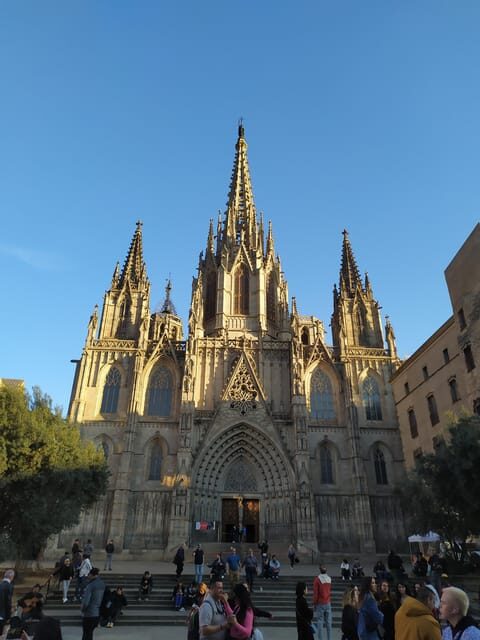
You’ll meet your guide in front of a Starbucks in the Sant Jaume area, the practical kind of meeting point that helps you stay oriented when you’re already wandering. From there, the tour moves on foot and keeps things tight: enough time to hear the stories, enough time to look up, and enough time to photograph without turning the whole walk into a slow crawl.
What makes this approach work is the way Barcelona’s architecture is layered. You’re not just ticking off names like Barcelona Cathedral or Santa Maria del Mar. You’re walking through street patterns and sightlines that explain why the Gothic Quarter feels like a maze and why El Born has its own rhythm. I like that you’re given a sense of what to notice—gargoyles, plazas where people have gathered for centuries, and the small civic details that often get ignored.
Wear comfortable shoes. The route is considered a moderate walking experience, and the Gothic Quarter lanes don’t do you favors. If you’re sensitive to heat, bring water and sunscreen. If weather is unpredictable, plan for it—this tour doesn’t want you relying on an umbrella as a crutch.
You can also read our reviews of more tours and experiences in Barcelona.
Gothic Quarter storytelling at Placa Sant Felip Neri and nearby lanes
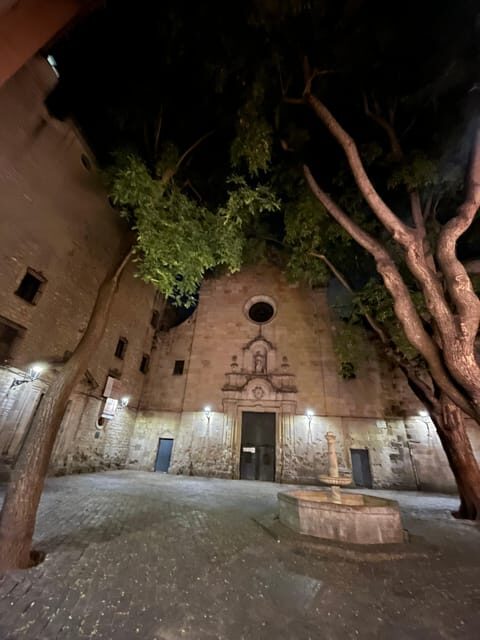
One of the first emotional pivots is Plaça Sant Felip Neri, a square tied to Barcelona’s darker 20th-century chapter. You’ll hear about heroic resistance against Franco’s uprising during the Spanish Civil War. Even if you know the headlines, the value here is how the guide connects politics to place—how a square becomes a stage where ordinary people make history.
From there, you’ll move through the tight Gothic streets where locals live side-by-side with tapas bars and medieval stonework. This is where your camera gets real work. Look for the carved features and the way buildings pinch the sky into narrow strips. Those shapes help you understand why Gothic Quarter streets feel more intimate than they do practical.
A good thing about this section is that it doesn’t treat Gothic architecture like a museum display. The guide’s storytelling makes the area feel like a living neighborhood. A possible drawback: if you prefer quietly delivered explanations, be aware that some guests could find the guide’s presentation style more energetic than soft and academic.
Bishop’s Bridge and the Cathedral area: when legends point to real architecture
Bishop’s Bridge is a short stop, but it’s a useful one for learning how Barcelona stitches different parts of the Gothic landscape together. The point isn’t just the bridge itself—it’s what it helps you notice next: how the cathedral zone functions like the backbone of the quarter.
Near the cathedral area, you’ll hear the stories behind figures that feel almost symbolic in Catalonia, including local heroes like Santa Eulalia and San Jordi. The guide also ties these tales to the way people use religious and civic spaces. It’s the kind of explanation that makes you look up at a facade differently, because now you’re seeing not just design, but meaning.
Barcelona Cathedral is one of the bigger anchors on this walk, and it’s worth giving it more than a passing glance. Stand still long enough to study the stone mood and the vertical lines. In a neighborhood like this, your eyes need a moment to reset from street level to full-height details. You’ll also get practical help on what’s worth photographing without turning every corner into a photo session that eats your time.
Temple of Augustus and Barcino: the Roman layer most people miss
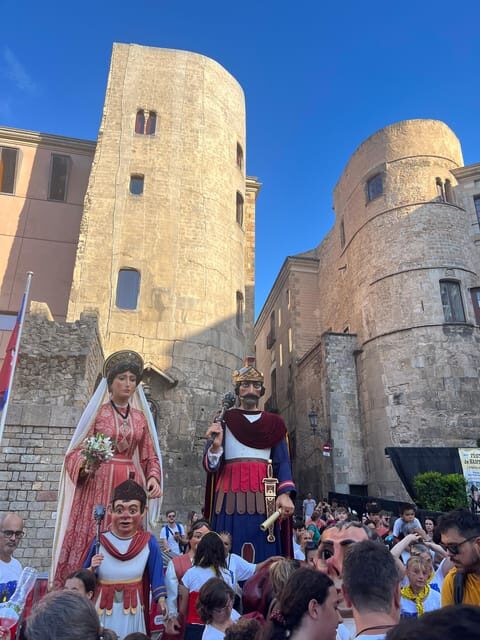
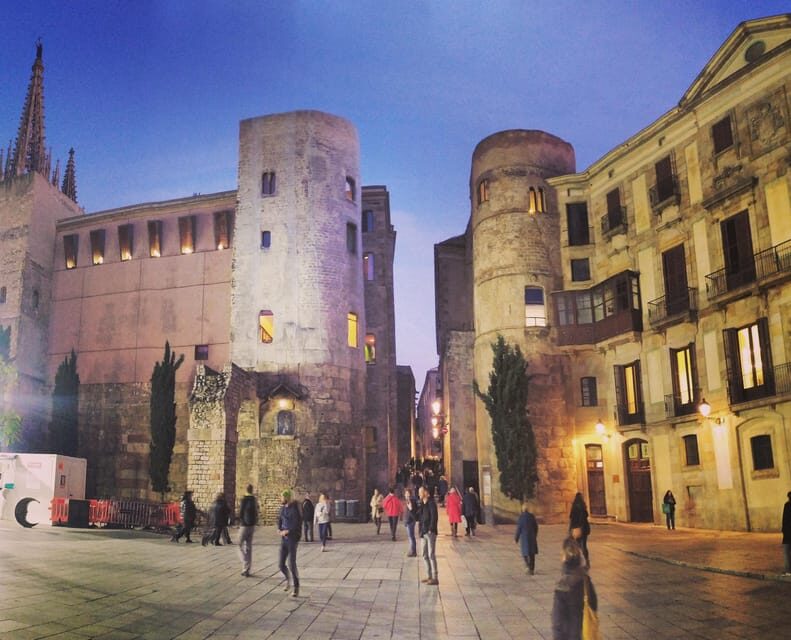
One of my favorite parts of the route is the stop at the Temple of Augustus. You’ll see what remains tied to the ancient Roman city of Barcino—Barcelona’s older identity before the medieval Gothic Quarter grew into its current form.
Why this matters: it stops you from thinking of Barcelona as only medieval and modern. The guide frames it so you understand that the city’s history is literally under your feet, and that the later neighborhoods didn’t appear on blank ground. Even if you’re not a Roman-history person, the story tends to click because the architecture is right there.
This section is also great for photographs that feel less postcard and more authentic. Roman traces inside a medieval fabric give you contrast in your shots: different eras sharing the same street geometry. Take a minute here, because once you keep walking, it becomes harder to appreciate how much continuity the city has.
The Ancient Synagogue site and the lost medieval Jewish Quarter
The tour includes a stop connected to an ancient synagogue and the area tied to the lost medieval Jewish Quarter. You’ll also hear it described as the oldest synagogue in Europe in the context of this historic lineage.
This stop works best if you let the guide’s narrative do its job: show you that the Gothic Quarter isn’t only Christian grandeur. It includes Jewish heritage that was once part of everyday life and later changed through time. The practical value is that you’ll know what you’re looking at, even if you can’t tell everything by sight alone.
If you’re interested in cultural history, this is the segment that tends to make people stop and think. The city’s layers aren’t just architectural. They’re human stories—community life, disruption, and what survives. Bring an extra bit of attention here, because the site’s importance comes through explanation as much as through visuals.




Santa Maria del Mar and the Cathedral del Mar: why this place hits
Your walk finishes at Basílica de Santa Maria del Mar, also described during the route as the Cathedral del Mar and referred to as the spiritual people’s temple of Barcelona since the 14th century. This is the kind of church that rewards a slower look, even if your tour schedule is moving.
The guide also connects the building to popular culture today, including how it has been made famous through books and Netflix. Whether or not you’ve seen the adaptations, that connection helps you feel why this cathedral matters beyond the local neighborhood. It’s both a place of faith and a visual symbol that got pulled into modern storytelling.
What I like here is the feeling of scale. Santa Maria del Mar doesn’t just impress you because it’s large. It impresses because it feels tied to real people’s lives. That’s exactly what the guide’s framing is aiming for—turning the cathedral from a headline into a lived space.
If you want photos, this is the place to use them intentionally. Step back enough to capture the facade lines, then move closer for detail. And if the crowd is heavy at the end of the tour, don’t panic—Barcelona’s layout lets you find angles even with limited space.
El Born and La Ribera: artisan shops, tapas streets, and Catalan quirks
Between the cathedral zone and the final stretch, you’ll get into El Born, also referred to as Barri de La Ribera. This is where the walk shifts from big historic statements into everyday neighborhood charm—artisan shops, side streets, and some of the best bars and restaurants in the city.
This part is less about monuments and more about feeling the local temperament. You’ll get more of the Catalan culture angle here: their passions and their peculiarities. That matters because it changes how you interpret what you see. Instead of treating El Born like a generic trendy district, you start noticing the identity behind it.
You’ll also hear about local culture symbols like el Caganer, a figure that might be unfamiliar if you haven’t encountered Catalonia’s holiday traditions. The value of a guided walk is that you’re not forced to Google in the middle of the street. The guide gives you a small meaning bundle so you can walk on with context.
One practical tip for this neighborhood: keep your belongings close. The streets around tapas spots and busy pedestrian lanes can attract pickpockets, and you’ll be moving through areas where people stop and talk with bags and phones out.
How to get the most out of a 2-hour walk like this
This tour is timed for a focused 2 hours, which is ideal if you want a first-pass orientation in Barcelona’s older districts. You’ll cover enough sights to connect the Gothic Quarter to El Born, but it’s still short enough that you can keep exploring afterward at your own pace.
To get the most from it, do this:
- Save your stamina for the story moments. Stand still when the guide cues you, even for 30 seconds.
- Keep your camera ready, but don’t lock into taking every picture. A few good shots beat a memory full of near-duplicates.
- Hydrate. Barcelona can go from pleasant to hot fast, and you’ll be walking through shade-poor lanes at times.
Group experience also matters. Since this is a one-person operation, you’re likely to get more continuity in tone and pacing. Still, delivery style can be personal—if you like quiet detail and long pauses, you might want to pair this with extra self-guided time.
Who should book this Gothic Quarter and El Born walk
This works best if you’re:
- In Barcelona for a short time and want a history-and-culture route without cramming
- Interested in how Roman roots connect to medieval Barcelona
- The kind of traveler who likes stories about local heroes and legends, not just dates
- You want a practical introduction to Catalan culture, including symbols and historical resistance
You may want a different option if:
- You need wheelchair accessibility or have mobility limitations, since the route uses narrow historic streets
- You dislike energetic narration or you need a very slow pace with lots of repetition at each stop
- You prefer food included in the price (this tour doesn’t include meals or drinks)
Should you book this 2-hour Gothic Quarter and El Born tour?
If you want value, this one makes a lot of sense. At $14 per person for a guided walking tour that covers the Gothic Quarter, El Born, Roman traces, and key cathedral time, you’re paying for context and street-level storytelling more than for a long list of entrances. It’s also reasonably short, which is a plus when you’re trying to fit Barcelona into a realistic itinerary.
My call: book it if you like your sightseeing with stories attached. Bring comfortable shoes, water, and a camera, and plan to take a little time afterward to linger near Santa Maria del Mar and explore El Born at your own pace.
FAQ
FAQ
How long is the tour?
The tour duration is 2 hours.
How much does it cost?
The price is $14 per person.
Where do I meet the guide?
Meet your guide in front of Starbucks.
Where does the tour end?
The tour finishes at Basílica de Santa Maria del Mar.
Which language is the tour in?
The tour is in English.
What is included in the price?
You get a local guide and a walking tour of the Gothic Quarter, El Born district, and more.
Is food or drinks included?
No. Food and drinks are not included.
Is this tour suitable for wheelchair users or limited mobility?
No. It is not suitable for those with mobility impairments or wheelchair users due to the historic narrow streets.
What should I bring?
Bring comfortable shoes, a camera, sunscreen, and water.
Is the tour canceled for bad weather?
The tour says you should be prepared for any weather conditions, bringing sunscreen and water for hot days and a jacket or umbrella for cooler or rainy days.
Is free cancellation available?
Yes. You can cancel up to 24 hours in advance for a full refund.