REVIEW · BARCELONA
Authentic Premium Paella & Sangria in a Stunning Location
Book on GetYourGuide →Operated by Foodies Xp · Bookable on GetYourGuide
That smoky paella aroma gets you fast.
This 2.5-hour class in Catalonia focuses on authentic paella technique and sangria basics in a setting that feels more like a local hangout than a tourist factory. You’ll cook together, then eat what you make, with an easygoing rooftop vibe and real explanations behind the flavors.
I love the hands-on format, especially when the chef walks you through the steps (and why the bottom turns crisp). I also like that you’ll taste a full meal: seafood paella, salad, tomato bread, Catalan cream, and drinks.
One thing to consider: the meeting point is in an industrial building, so if you dislike finding places on your own, you’ll want to follow the taxi address closely and arrive a few minutes early.
In This Review
- Key things that make this class worth your time
- A rooftop paella class that actually teaches technique
- Finding the place: C/ Badajoz 115, 08018
- Welcome drinks and the first flavor boost: Spanish Pan Tomaquet
- Hands-on seafood paella: what you’ll actually cook
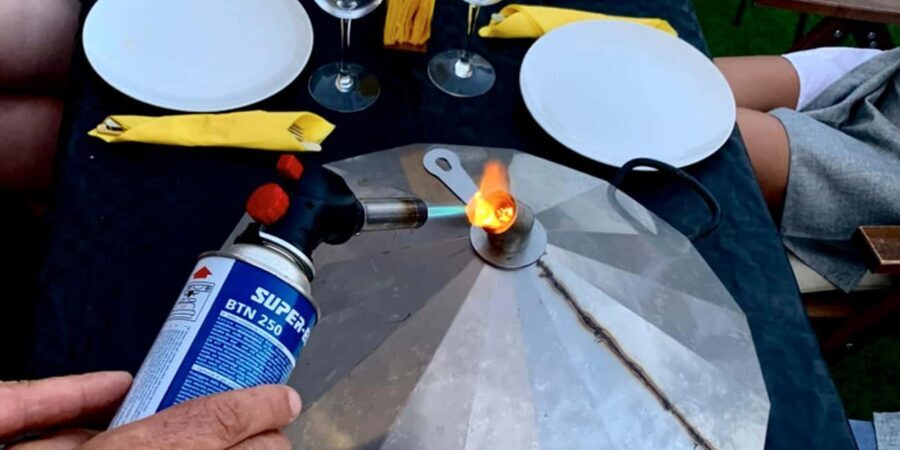
- The Vulcano trick: smoky aroma without guesswork
- Crisp bottom rice: the part people love to taste
- Sangria like a pro: fruit, wine, and timing
- The meal that follows: salad, paella, Catalan cream, and dessert
- Pricing and value: is $79 per person a fair deal?
- Who this class is for (and who should skip it)
- A note on the instructors and atmosphere
- Should you book this paella and sangria masterclass?
- FAQ
- What’s the price per person?
- How long is the paella and sangria experience?
- Where do we meet in Barcelona?
- What language is the class taught in?
- What’s included in the meal?
- Do you get to make the food yourself?
- What paella ingredients are used?
- What drink options are provided?
- Is there a cancellation option?
Key things that make this class worth your time
- Vulcano smokiness: a custom aluminium “hat” plus torched rosemary twigs for extra aroma on the paella
- Crisp rice lesson: you’ll learn why the bottom layer turns crunchy and how to time it
- True seafood paella: bombs rice with prawns, muscles, and squid in seafood broth
- Sangria you can repeat: a clear, step-by-step way to build flavor
- Rooftop meal setting: outdoor space plus a relaxed atmosphere, even when the weather is cool
- Small-group feel: enough attention for questions, not just a long lecture
A rooftop paella class that actually teaches technique
If you only do Barcelona food by walking to the next tapas bar, you’ll miss the how. This class is built around process: the heat, the timing, and the little moves that keep paella from turning into yellow rice mush.
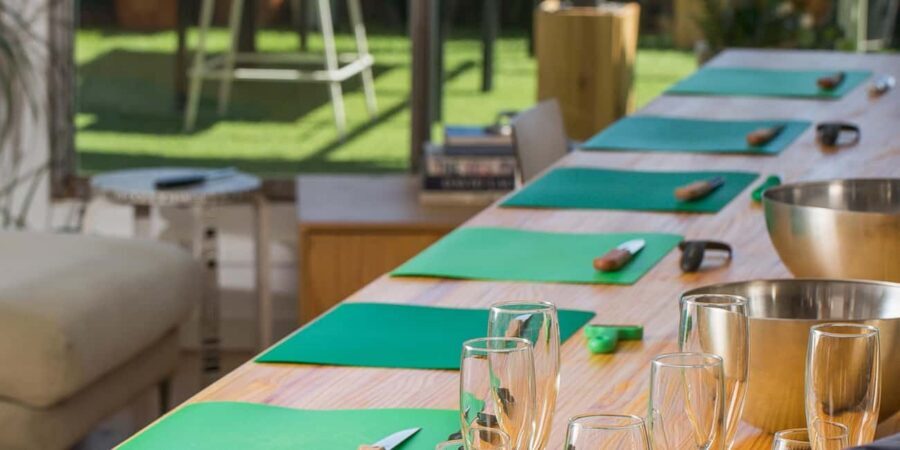
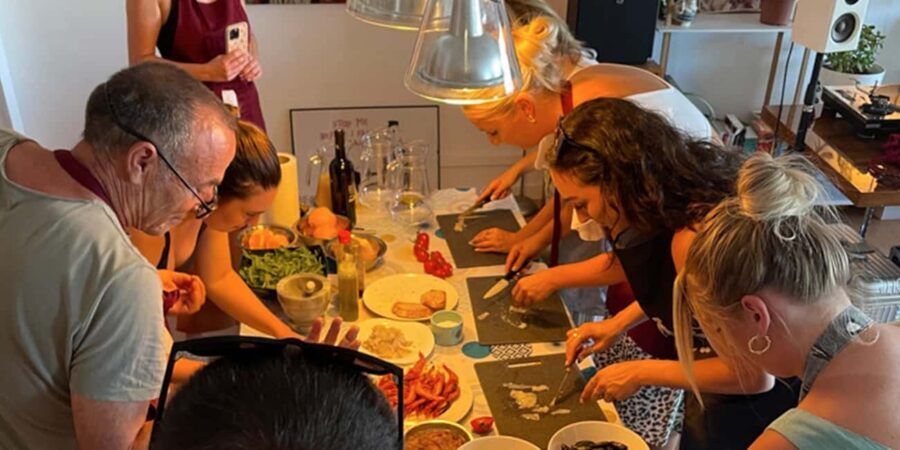
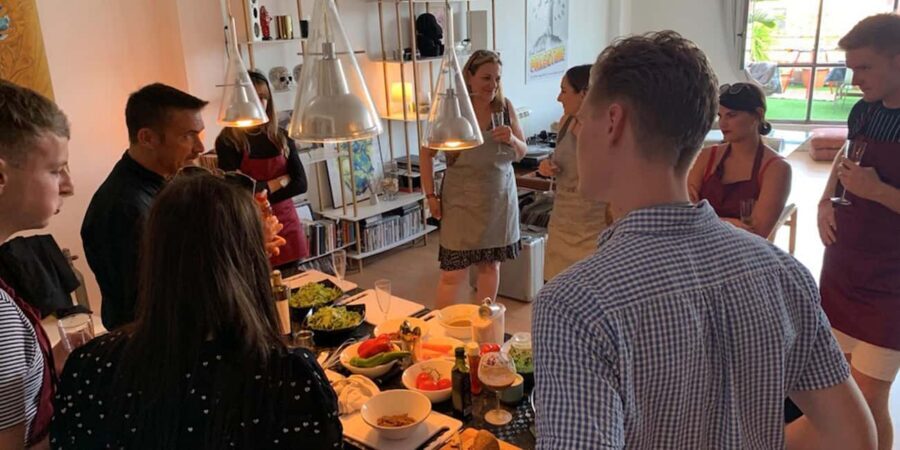
The location helps. The experience happens in a loft-style space with a rooftop and an outdoor balcony, and there’s music in the background. It’s not quiet and formal. It’s the kind of place where you can focus on cooking without feeling like you’re stuck in a demo theater.
The big promise here is authenticity. Not fake rustic. Real Mediterranean comfort food, taught in a way that makes sense. Paella gets iconic for a reason: it’s not fancy plating. It’s rhythm. You add things in the right order, and you respect the heat.
And yes, sangria matters too. The chef approach is practical: you’ll learn what to mix, what tastes good together, and how to avoid the one-note version that tastes like straight juice.
You can also read our reviews of more tours and experiences in Barcelona.



Finding the place: C/ Badajoz 115, 08018
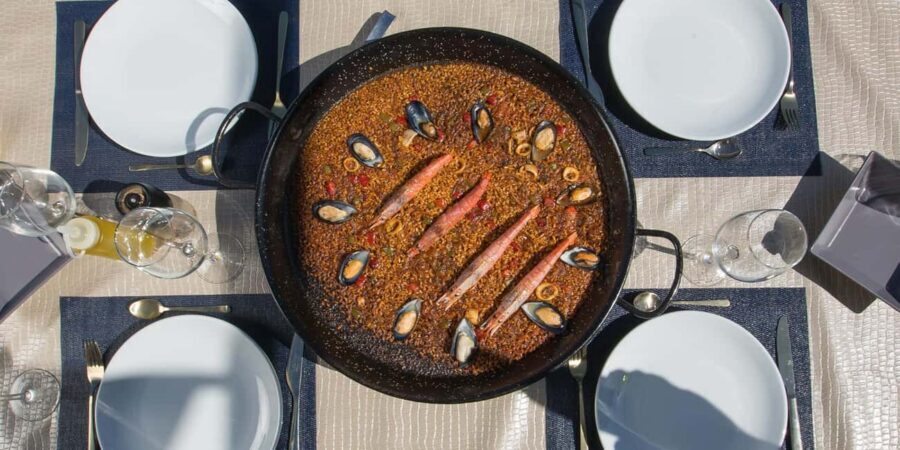
Logistics are simple, but you still need to be precise. You’re met at the door of the building about five minutes before the start. The space is in an industrial building, and that’s why it’s smart to plan for easy navigation.
If you’re taking a taxi, tell the driver to leave you at C/ BADAJOZ 115, CP 08018. Then go right to the meeting point door. Arriving a touch early helps, because you don’t want to waste your first minutes figuring out where the entrance is.
This is also one of those classes where the group usually moves as one. If you arrive late, you may miss the early prep and mixing. So I’d rather you show up early than try to “beat the crowd.”
Welcome drinks and the first flavor boost: Spanish Pan Tomaquet
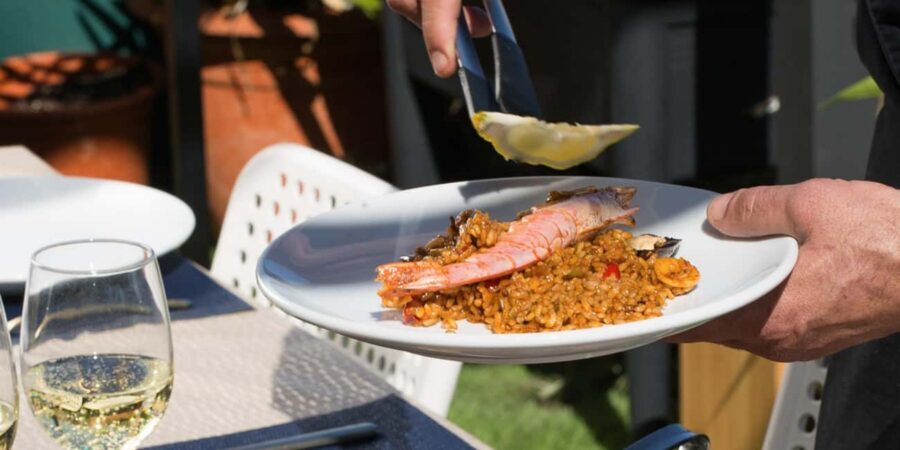
Right when you arrive, you get a welcome drink. Depending on the flow of your session, you’ll also have a cava glass during the experience. It’s a nice way to settle in while the chef handles equipment and stations.
Then you start with Spanish pan tomaquet, the tomato bread that people eat across Catalonia with olive oil and tomato. It’s simple, but it matters. The goal is to get your palate awake for what comes next. If you’re used to garlic bread or bruschetta, this is the cleaner, more olive-oil-forward style.
You’ll also get a Mediterranean salad with cherry tomatoes and balsamic vinaigrette. Think of it as your cool, acidic reset between sipping and cooking. It also helps you understand how the meal balances: warm rice and smoky aroma, then fresh bite.
Hands-on seafood paella: what you’ll actually cook
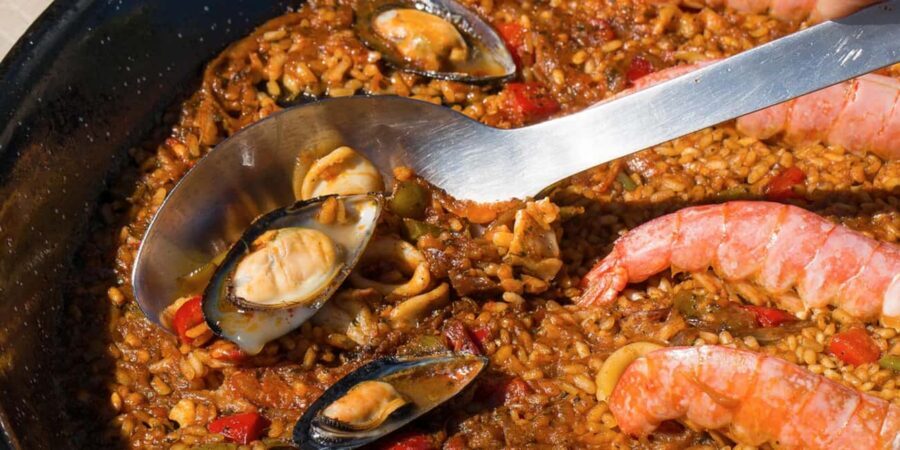
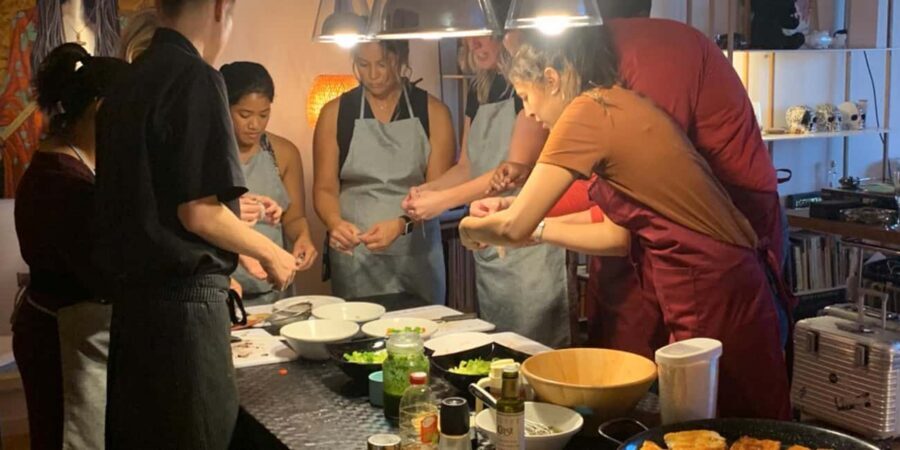
This class is not just watching someone stir a pan. You’re part of the workflow. That means you learn by doing, and you can ask questions while your hands are busy.
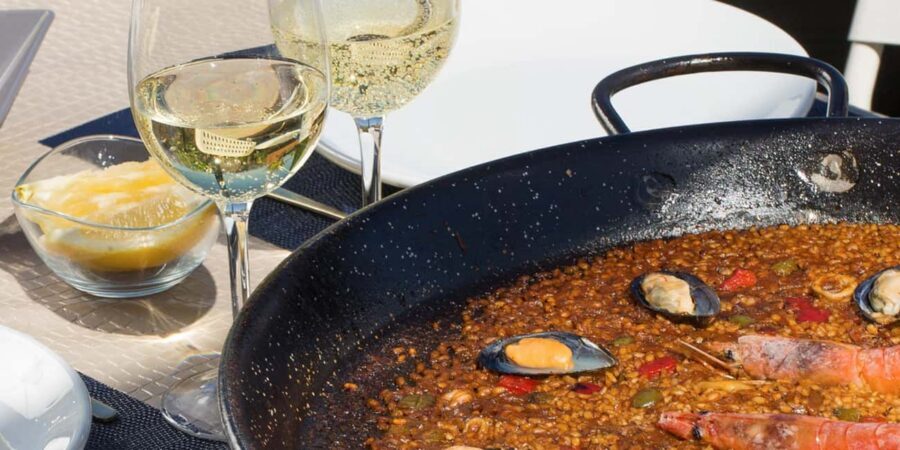
The paella itself is seafood-based, made with bombs rice, prawns, muscles, and squid in seafood broth. These details matter because paella rice is built for soaking up flavor without turning into paste.
Here’s what I like about the way the class is structured: you don’t just get ingredients. You learn the logic. Paella is timing-heavy. The chef explains what’s happening and why, so you’re not guessing when things should be cooked down or when the pan needs attention.
The Vulcano trick: smoky aroma without guesswork
One of the signature moments is the Vulcano method. It’s described as a custom-made aluminium “hat” that covers the paella for a few minutes, while torched rosemary twigs add smoke and aroma.
In plain terms, you’re getting an extra layer of fragrance and warmth. It’s not about turning paella into a barbecue. It’s about building a nose-first flavor that makes the whole pan feel deeper.
And because it’s explained, it’s easier to replicate later. You’ll understand the “when” and “why,” not just the gimmick.





Crisp bottom rice: the part people love to taste
Paella has a secret weapon: the crisp bottom layer. You might hear it called by different names, but the idea is the same. When heat concentrates near the base, the rice forms a thin, crunchy layer.
What’s great here is that you learn why the crisp texture happens. Timing is everything, and the chef’s tips help you avoid two extremes: undercooked rice that stays soft, or too much heat that goes from crunchy to burnt.
This is the part that makes paella feel special. Anyone can cook “rice in a pan.” Not everyone can get that contrast of tender top and crisp bottom.
Sangria like a pro: fruit, wine, and timing
Sangria gets treated like a shortcut at many places. You’ll get a pitcher of sweet red and hope for the best. This class takes a different route: you learn how to build it properly.
You’ll be taught how to make sangria step by step. The goal is balance. You want it to taste fruity, yes, but also drinkable and not cloying. You’ll learn what goes in, how flavors combine, and how long it helps to sit so everything plays together.
Even better, the class connects sangria to the meal. When you’re eating seafood paella, you want a drink that refreshes rather than fights the flavors. A well-built sangria does that job.
And during the experience you’ll have drink options. The inclusions state 2 wine glasses or sangria or water/soft drinks. So if you don’t want wine, you still have choices.
The meal that follows: salad, paella, Catalan cream, and dessert
This is a full food arc, not a snack-and-go.
First you’ll eat what you cooked: the seafood paella with bombs rice, prawns, muscles, and squid. The flavor is where the class earns its keep. You can taste the broth, the seafood, and the smoky note from the Vulcano method.
Then you’ll move into dessert:
- Catalan cream (a classic sweet with a custard base)
- and a very famous dessert in Spain (the exact dessert name isn’t specified in the information you provided, but you can count on a well-known Spanish sweet)
I like that the desserts aren’t an afterthought. Paella ends, sure. But the sweet ending makes the whole experience feel complete, like a proper meal rather than a cooking workshop where you leave hungry.
Pricing and value: is $79 per person a fair deal?
At $79 per person, the headline value comes from how much you get for 2.5 hours: hands-on cooking, a seafood paella you can’t easily recreate without the right rice and timing, tomato bread, salad, Catalan cream, and multiple drink options including cava.
This is also a class where you get teaching time. The instruction is offered in English, Spanish, Italian, and Portuguese, so you’re not stuck with a language barrier if you’re not fluent in Spanish.
There’s another value factor that matters: attention. The teaching format includes an interactive pace, and the setup encourages questions. That’s not guaranteed everywhere, but it’s clearly part of how this experience runs.
If you’re the type of person who enjoys cooking and wants a repeatable result, the price starts to make sense. If you just want to eat without effort, it might feel like paying for instruction you won’t use. For the hands-on crowd, it’s a strong deal.
Who this class is for (and who should skip it)
This is perfect if:
- you want authentic Spanish food beyond the tourist version
- you enjoy cooking with guidance, not just sampling
- you want something social and fun that still teaches technique
- you care about details like why paella gets crispy at the bottom
It might not fit you if:
- you’re short on time and need a quick meal
- you hate cooking stations or interacting during classes
- you want a totally quiet, museum-style experience
One more practical note: if you have dietary needs, you may find accommodations. One example in the provided info mentions gluten-free bread being offered. That’s helpful, but it’s still smart to ask ahead so you know what will work for your specific needs.
A note on the instructors and atmosphere
The instructors go by different names in the provided info, including Chef Tommy, Martin, Martino, and Valerio. What stays consistent is the tone: friendly, hands-on teaching, and plenty of tips.
Chef Tommy is specifically highlighted as an engaging instructor who explains both the paella steps and the reasons behind the results, including the crisp rice texture. That kind of explanation is what turns a fun class into one you can repeat at home.
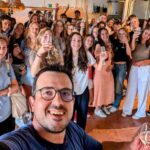
The atmosphere also gets a lot of credit. The rooftop setting, outdoor balcony, and even the music help keep energy up. And you’re not stuck indoors while the meal cooks, which is a real perk in Barcelona’s changing weather.
Should you book this paella and sangria masterclass?
I’d book it if you want a memorable Barcelona-style food experience with actual technique, not just a plate of paella and a souvenir photo. The class gives you seafood paella, sangria training, and the kind of signature flavor tricks you can’t easily guess on your own.
I’d hesitate only if you’re the type who wants zero cooking involvement or you’re arriving without time to find the industrial building meeting point. If that’s you, plan to get there early and treat it like a class, not a casual dinner.
If you do book, go in hungry, ask questions, and pay attention to the “why,” especially around crisp rice and the smoke-aroma method. That’s where your money turns into real food knowledge.
FAQ
What’s the price per person?
The price is $79 per person.
How long is the paella and sangria experience?
It lasts 2.5 hours.
Where do we meet in Barcelona?
You’ll be received in the door of the building about five minutes before the start. The taxi drop-off address is C/ BADAJOZ 115, CP 08018.
What language is the class taught in?
The instructor offers English, Spanish, Italian, and Portuguese.
What’s included in the meal?
Included items are Spanish pan tomaquet (tomato bread), a Mediterranean salad with cherry tomatoes and balsamic vinaigrette, seafood paella, Catalan cream, and another famous Spanish dessert. Drinks include a welcome drink, 1 cava glass, and additional wine glasses or sangria or water/soft drinks as listed.
Do you get to make the food yourself?
Yes. It’s described as hands-on, and you’ll cook as part of the class rather than only watching.
What paella ingredients are used?
The seafood paella uses bombs rice with prawns, muscles, and squid with seafood broth.
What drink options are provided?
You’ll receive a welcome drink, a cava glass, and then 2 wine glasses or sangria or water/soft drinks, depending on what’s offered during your session.
Is there a cancellation option?
Yes. Free cancellation is offered up to 24 hours in advance for a full refund.