REVIEW · BARCELONA
Barcelona Panoramic Walking Tour – private tour
Book on Viator →Operated by The Barcelona Feeling · Bookable on Viator
Montjuïc is more fun with a plan. This private walking tour strings together the hill’s big architectural and historical touchpoints, then finishes in a local pinchos neighborhood—so you get panoramic viewpoints without feeling like you’re sprinting with strangers.
I like that it stays private, meaning your guide runs the pacing and you can pause for photos and questions. I also like the mix of stops: Bauhaus-era design, World Fair 1929 context, Olympic-era history, and a proper neighborhood dinner stop on Calle Blai. The one real drawback: this is moderate walking with some steep uphill sections, and it’s not a fit if you can’t comfortably walk about 5 miles on uneven ground.
If you’re lucky enough to get a guide like Christian (one guest specifically praised his explanations), you’ll get the kind of details that make monuments click fast—like what to notice at the German Pavilion’s four columns and the flag.
In This Review
- Key highlights at a glance
- Why this private route makes Barcelona feel smaller
- Starting at the German Pavilion: what to notice right away
- Magic Fountain hill climb: views, escalators, and smart pacing
- Museu Nacional d’Art de Catalunya: why it fits this tour
- Lluís Companys Olympic Stadium and the Alternative People’s Games
- Cemetery to castle: the hill’s layered role
- Cementerio de Montjuïc: a quieter kind of stop
- Montjuïc Castle: watch tower to fortress
- Calle Blai and pinchos: ending where the locals eat
- Price and value: what you’re really paying for
- What to expect on foot: fitness and comfort matters here
- Timing, meeting point, and how to make the most of the start
- Should you book this private panoramic walking tour?
- FAQ
- How long is the Barcelona Panoramic Walking Tour?
- Is this tour private?
- Where does the tour start and end?
- What kind of walking level is required?
- Are attraction tickets included?
- What if the weather is bad?
Key highlights at a glance
- Private pacing so you don’t have to keep up with a crowd
- German Pavilion (1929) with Bauhaus design that’s easier to understand with a local guide
- Magic Fountain viewpoints reached with local escalators and photo-friendly stops
- Olympic Stadium context including the Alternative People’s Games as a protest event
- Montjuïc hill history from cemetery to castle, explained as a watch tower and fortress
- Calle Blai pinchos to end in the real rhythm of Poble Sec, not just another viewpoint
Why this private route makes Barcelona feel smaller
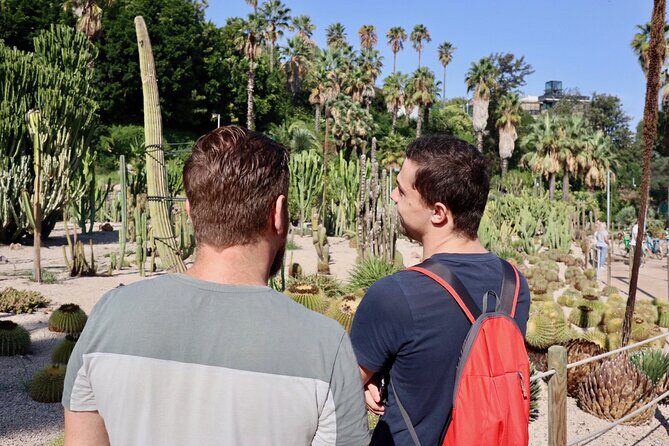
This tour is built for two things: getting your bearings fast and letting you roam without the usual group chaos. You’ll cover major Montjuïc landmarks in about 3 hours, but you’re not locked into a fixed herd tempo. That matters on a hilly route, where the difference between “manageable” and “miserable” can be one extra stop, one slower pace, or one well-timed rest.
The route also has a nice balance. You start with the 1929 World Fair design language and the meaning behind it, then you move up the hill for views, and you close in a neighborhood that feels like Barcelona locals actually hang out. The result is less checklist tourism and more “here’s how this city got shaped.”
There’s also value in how many stops are free. Everything on the hill is listed as free entry for the tour stops except the opening German Pavilion, where admission tickets are not included. That helps your money go to a guide and experience, not a pile of entry fees.
You can also read our reviews of more walking tours in Barcelona



Starting at the German Pavilion: what to notice right away
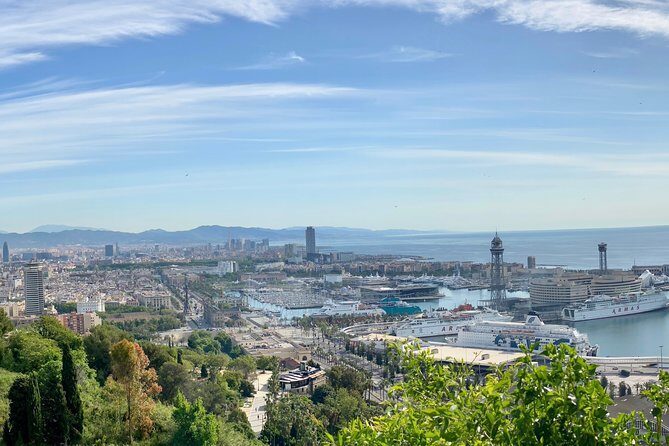
You begin at the German Pavilion of the World Fair of 1929. Even if you’re not a self-proclaimed architecture person, this stop is worth it because the building’s Bauhaus design makes it stand out instantly—and your guide helps you read it without needing a textbook.
Look for structure and symbolism, not just a pretty facade. One strong review praised Christian’s ability to explain the pavilion’s four columns and the flag, and that’s the kind of “small but important” interpretation that changes how you see a monument. Instead of walking past details, you start noticing how the design communicates ideas.
One practical note: admission for the German Pavilion is not included in the tour. If you’re trying to budget tight, this is the one stop where you might need to plan for a ticket.
Magic Fountain hill climb: views, escalators, and smart pacing
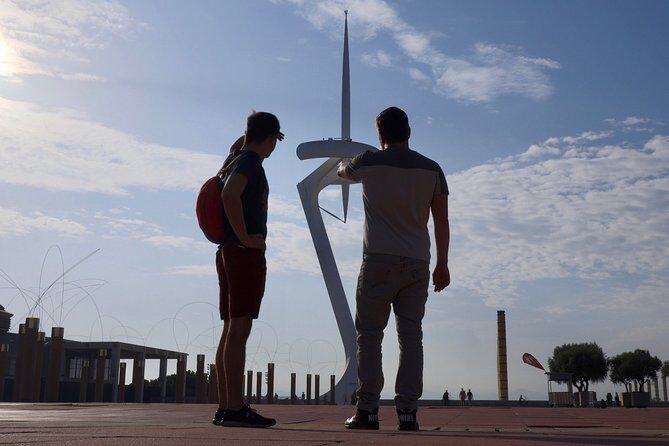
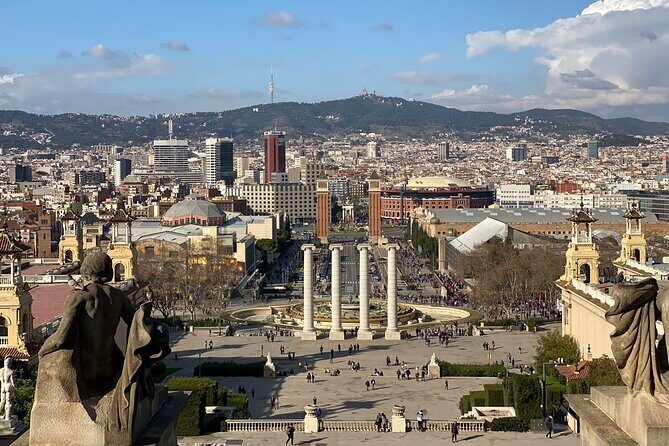
From the pavilion area you climb toward the Magic Fountain, using local escalators for the first stretch. That’s a very practical choice. On Montjuïc, saving your legs early helps you enjoy the later viewpoints instead of just surviving them.
This is where the tour leans into Barcelona’s “lookouts and angles” style sightseeing. As you move up, you’ll get viewpoints that are clearly meant for photography. The guide also connects what you’re seeing back to the World Fair of 1929, so the hill isn’t just scenic—it’s storied.
If you tend to over-plan photos on vacation, you’ll appreciate how this portion gives built-in moments for shooting. If you under-plan and end up with blurry “someday I’ll get a good photo” regrets, this route still gives you chances to slow down and compose.
Museu Nacional d’Art de Catalunya: why it fits this tour
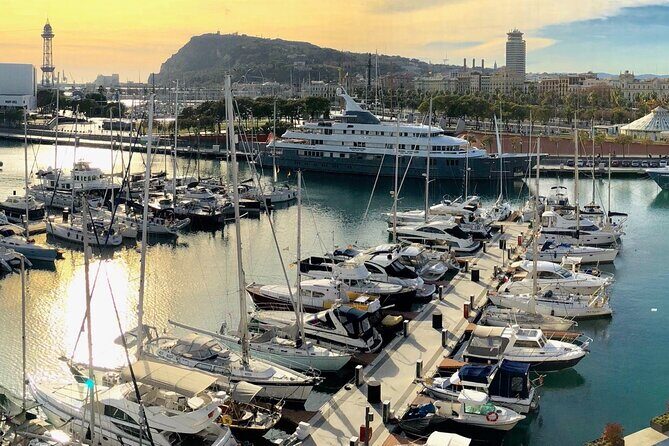
Next you head to the Museu Nacional d’Art de Catalunya area. The key thing here isn’t only the museum name—it’s the setting. You’ll cross the World Fair grounds from 1929, so your guide can explain how the fair shaped the space around you.
The stop is listed as free for the tour experience, which is a big plus. You may not get the full museum visit without an additional plan, but you will get the sense of how the area was designed and why it matters.
This stop works especially well if you like connecting design and place. Montjuïc can feel like separate scenes if you visit casually. With a guide, it starts reading like one bigger story.
Lluís Companys Olympic Stadium and the Alternative People’s Games
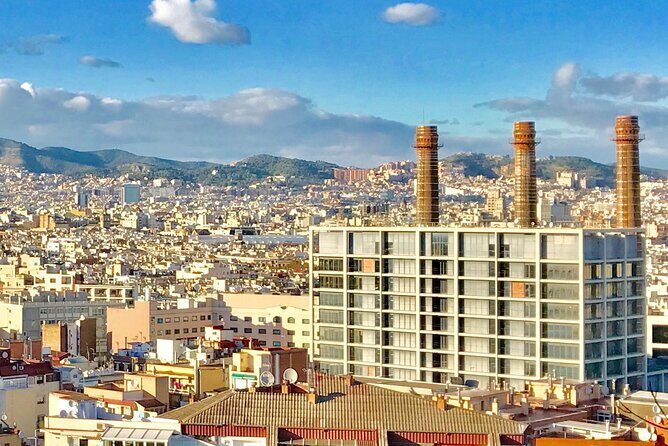
Then you move to Lluís Companys Olympic Stadium. The reason this stop isn’t just “sports architecture” is the historical framing. You’ll learn about the Olympic Games of 1992, but the more unusual and memorable element is the mention of the Alternative People’s Game of 1936—a protest event against the Nazi Games in Germany.
That contrast is the whole point. Sports can look neutral from far away, but history rarely is. With a guide handling the connections, it becomes easier to see the stadium as something bigger than a venue.
The tour also gives you time here—about 20 minutes—which is long enough to take in the site, absorb the story, and ask questions without rushing. Admission at this stop is listed as free.
You can also read our reviews of more private tours in Barcelona


Cemetery to castle: the hill’s layered role
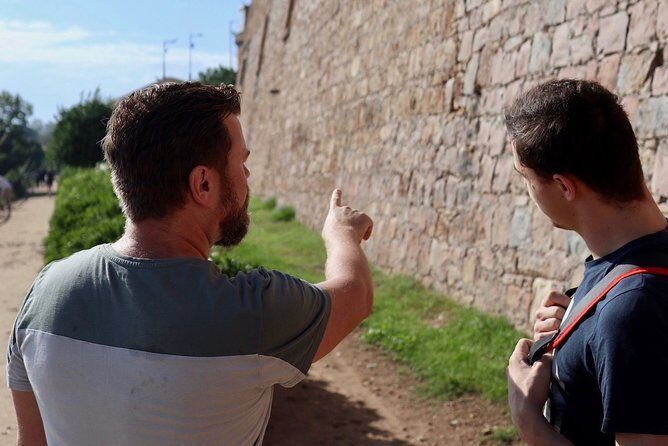
Montjuïc is not only about views and postcards. It’s also about memory, control, and survival—especially once you reach the areas tied to the cemetery and fortifications.
Cementerio de Montjuïc: a quieter kind of stop
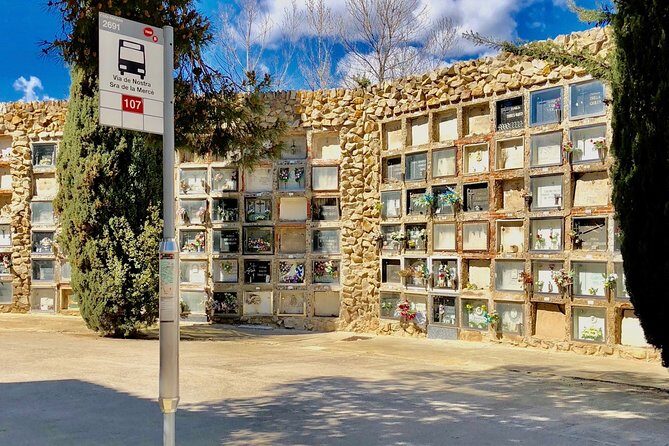
At the Cementerio de Montjuïc, you get a glimpse of Barcelona’s famous graveyard. It’s a short stop (about 10 minutes), but even that brief window can change the tone of the tour. The cemetery makes the hill feel human, not just monumental.
Because it’s listed as free, it’s also one of the easiest stops to include without adding cost. If you like your sightseeing with some gravity, this is a good place to slow down slightly.
Montjuïc Castle: watch tower to fortress
After the cemetery, you reach Montjuïc Castle. Here the guide’s job really matters: you’ll learn about the hill’s importance as a natural watch tower and how it became fortified across both medieval and civil war periods.
That “watch tower” idea is a smart way to connect geography with history. You can stand somewhere higher, see farther, and immediately understand why control mattered here. It also makes the climb feel purposeful, not just effort for a view.
This stop is listed as free for the tour experience. It’s also one of those places where the views do double duty: scenery now, and context for why the castle existed in the first place.
Calle Blai and pinchos: ending where the locals eat
By the time you get to Calle Blai, the tour has done its big hill work and is ready to switch gears. Calle Blai is described as a chaotic layout in a multicultural neighborhood, and it’s tied directly to pinchos bars—a tapas-style ritual that became fashionable.
This ending is smart for several reasons. First, it gives you a post-tour plan right away. Second, it’s a different side of Barcelona than you’ve been walking through all morning/afternoon. You’re not just looking at the city; you’re stepping into how people actually spend time—food, conversation, and casual wandering.
Even if you don’t stop for a full meal, the neighborhood feel is worth the walk. This is where the tour stops being “history with stairs” and becomes “here’s where to go next.”
Price and value: what you’re really paying for
The price is $107.25 per person for a private 3-hour walking experience. At first glance, that can feel steep—until you break down what’s included and what’s free.
Key value drivers:
- Private guiding instead of shared group instruction. You’re paying for time, tailoring, and the ability to ask questions as you go.
- Many stops are free for the tour experience (Magic Fountain, Museu Nacional area, Olympic Stadium, cemetery, castle, and Calle Blai). That keeps your total day cost from ballooning.
- The tour covers a high-effort hill route. The guide handles the flow, and you’re guided to the right areas rather than guessing where to go next.
The one ticket exception is the German Pavilion, where admission tickets are not included. If you’re the kind of traveler who likes to control costs, this is where you’ll want to check your preferences early.
Also, the average booking lead time is 88 days. That hints the tour has steady demand. If your dates are fixed around busy weeks, book earlier rather than later so you don’t end up with a “next available” time that doesn’t match your schedule.
What to expect on foot: fitness and comfort matters here
This is not a flat stroll. The tour is listed for travelers with moderate physical fitness, with some partly very steep ground, and a minimum walking comfort of about 5 miles. There’s also a minimum age of 12 because of the length of walk and uphill sections.
If you can walk 5 miles comfortably and you’re fine with uneven, sloped streets, you’ll likely be comfortable with the plan—especially since the climb to the Magic Fountain uses local escalators for at least part of the way.
If you have mobility limitations or you’re likely to struggle on steep grades, skip this one. You’ll spend the tour fighting the terrain instead of enjoying the sights.
Timing, meeting point, and how to make the most of the start
The tour begins at Av. de Francesc Ferrer i Guàrdia, 7, Sants-Montjuïc, 08038 Barcelona and ends at Carrer de Blai, Sants-Montjuïc, 08004 Barcelona in the Poble Sec area.
Because the end is near the green metro line, it’s easy to connect to the rest of your day. That’s useful if you want to grab lunch after the walking part or plan a museum visit later.
Near public transportation at both ends also helps, because Montjuïc is the kind of place where getting there “once” is easy, but getting around without a plan can get tiring. This tour gives you a built-in path.
Should you book this private panoramic walking tour?
Book it if you want:
- a private way to see Montjuïc without chasing anyone’s pace
- a guide who can explain the meanings behind key sites, not just point them out
- panoramic viewpoints plus a local food-focused finish on Calle Blai
- a route where many stops are free, so your day stays good value
Consider skipping (or swapping to a lighter day) if you:
- can’t comfortably walk about 5 miles on partly steep ground
- need a fully flat itinerary
- are mainly interested in indoor museum time (this tour is more about outdoor sites and context)
And one last practical check: this experience requires good weather. If weather turns, you’ll need to be flexible—plan for a reschedule or a refund option rather than assuming the day will play out exactly as planned.
If you’re game for uphill walking and you like learning the stories behind the city’s landmarks, this is an efficient, satisfying way to see Barcelona from the hill and then land in a neighborhood where the evening plans start making sense.
FAQ
How long is the Barcelona Panoramic Walking Tour?
It’s listed as about 3 hours.
Is this tour private?
Yes. It’s a private tour/activity, and only your group participates.
Where does the tour start and end?
It starts at Av. de Francesc Ferrer i Guàrdia, 7, Sants-Montjuïc, 08038 Barcelona, and ends at Carrer de Blai in the Poble Sec area.
What kind of walking level is required?
You’ll need a moderate physical fitness level and the ability to walk at least 5 miles on partly very steep ground.
Are attraction tickets included?
Admission is not included for the Barcelona Pavilion at the start. The other listed stops are marked as free for the tour experience.
What if the weather is bad?
This experience requires good weather. If it’s canceled due to poor weather, you’ll be offered a different date or a full refund.