REVIEW · BARCELONA
Barcelona: City Sightseeing Hop-On Hop-Off Bus Tour
Book on GetYourGuide →Operated by City Sightseeing Europe · Bookable on GetYourGuide
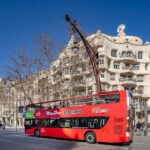
Two routes, one easy way around. The Barcelona City Sightseeing Hop-On Hop-Off Bus Tour turns a spread-out city into something you can actually manage, with open-top double-decker rides, 38 stops, and 24 or 48 hours to hop on and off. You pick your rhythm: hop out for the Gothic Quarter vibe, swing by the Picasso area, then reboard when you’re done wandering.
I especially like the way the tour spotlights Sagrada Família, including audio guidance and a stop that sets you up for great views. Your main watch-out is timing: the first bus leaves at 9:00am and the last run leaves at 7:00pm from Stop 1, so if you stay out late you may need a taxi.
In This Review
- Key Points to Know Before You Ride
- Getting Oriented: How the 24-48 Hour Bus Ticket Works
- Red Line: Plaça de Catalunya to Sagrada Família and the City’s South
- Blue Line: Modernist Stops, Park Güell, and the Futbol Club Barcelona Detour
- Spotlight Stops That Actually Matter: Sagrada Família, Picasso Sites, Park Güell, La Rambla
- Timing Tips for Smooth Hops and Less-Frustrating Photos
- Comfort and Tech: Audio Headphones, Wi‑Fi, and Rain-Proofing
- Price and Value: Why This $39 Pass Can Work
- Should You Book This Barcelona Hop-On Hop-Off Bus Tour?
Key Points to Know Before You Ride
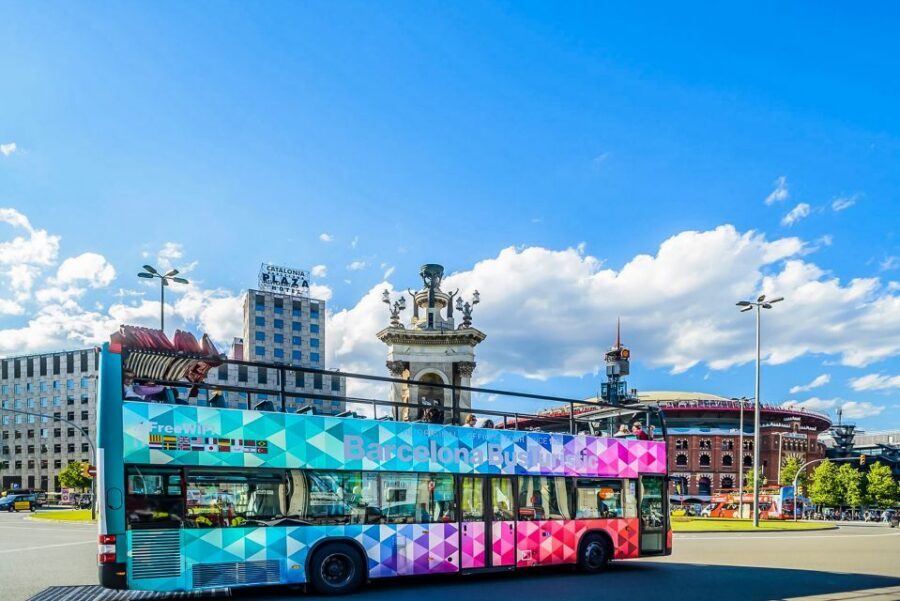
- Two routes, 38 stops across Barcelona, so you can build your own mini-itinerary.
- Open-top double-decker buses with audio in 16 languages and headphones.
- Sagrada Família gets special attention, and you’ll have photo-friendly access when you get off.
- Red Line stretches from downtown to beaches, including Port Olímpic and seaside stops.
- Blue Line connects modernist sites and includes a stop at Futbol Club Barcelona for football fans.
- Frequent buses (every 20 minutes, with faster runs in busy periods) make it practical for jump-off sightseeing.
Getting Oriented: How the 24-48 Hour Bus Ticket Works
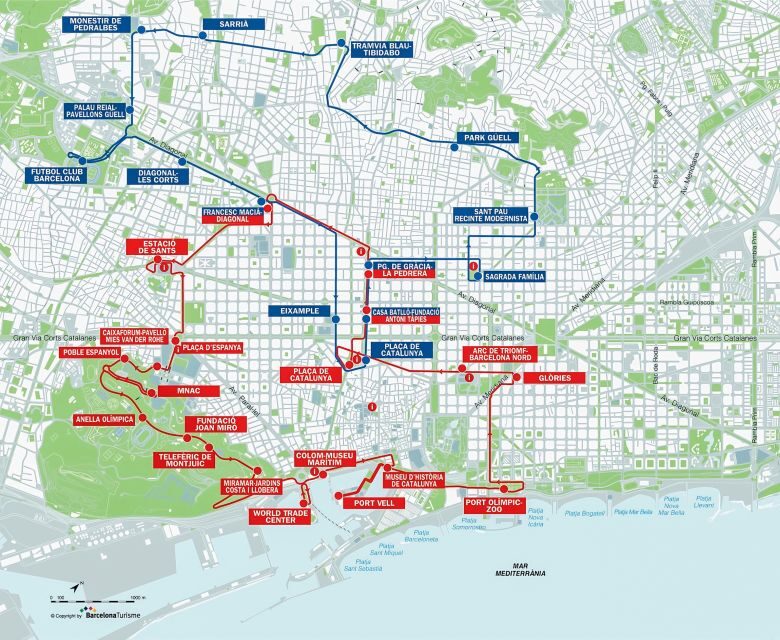
This is a hop-on hop-off bus, so you’re not locked into one scripted “one-and-done” ride. You get 24 or 48 hours, and the buses follow two routes so you can stitch together neighborhoods that would otherwise take way too much planning.
The tour loop is listed at 120 minutes, but your real day won’t be that neat. You’ll likely spend time walking around the stops you care about, then coming back on another bus. Plan on using it to set direction and pace, not to see everything in one hour.
Buses depart from Stop 1 starting at 9am and the last bus departs at 7pm. That last detail matters more than it sounds. If you’re mid-sightseeing when things close down, you might discover that the service stops when you’re not where you planned to be.
You can also read our reviews of more city tours in Barcelona

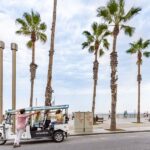
Red Line: Plaça de Catalunya to Sagrada Família and the City’s South

If you want the widest spread, the Red Line is your friend. It starts near the center at Plaça de Catalunya, then pushes outward in a way that helps you understand how Barcelona is laid out: core first, then architecture and museums, then Montjuïc-area stops, then the waterfront and beaches.
Here’s how the big “why get off” moments usually look along the Red Line:
Plaça de Catalunya
This is the smart starting point. It’s central, so you can use it as your reset button if you get off, get lost, then want to reboard easily.
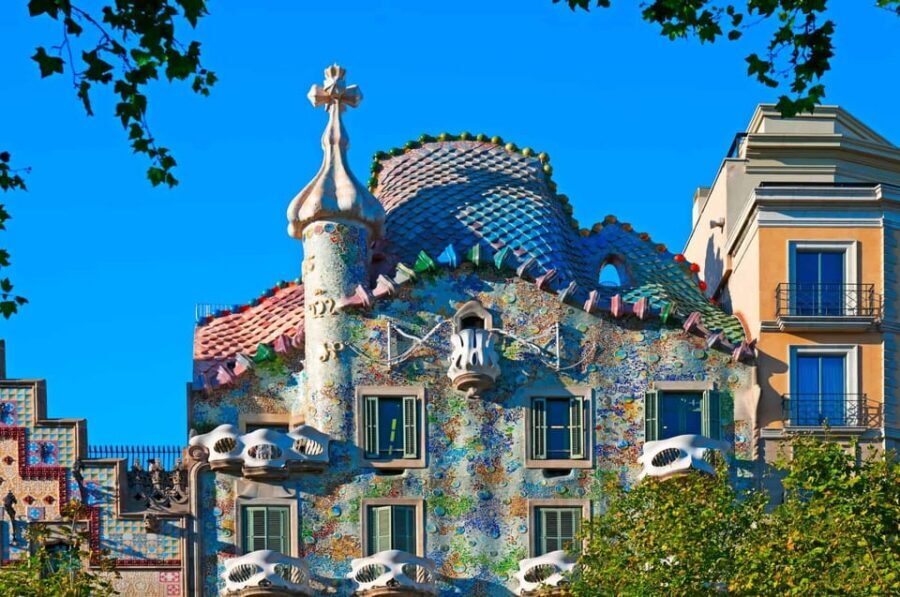
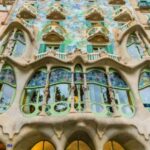
Casa Batlló – Fundació Antoni Tàpies and Eixample
These stops are there for you if you like architecture and design in motion. You’re in the part of town where Barcelona feels more planned and straight-line, which is a nice contrast to the older streets you’ll see later.
Estacio de Sants and Plaça d’Espanya
Think of these as “get your bearings” stops. If you’re using trains or planning future transit, being oriented around major hubs makes the rest of your stay easier.
CaixaForum – Pavello Mies Van der Rohe
This is a good option for people who like modern design details. The stop name alone tells you it’s tied to a specific architectural landmark, so you’re not guessing what you’re close to.
Poble Espanyol and Museu Nacional d’Art de Catalunya
If you want a museum-focused break or a curated “destination-within-a-day,” these stops are worth targeting. They also help break up your day so you’re not just on the bus the whole time.
Anella Olimpica and Fundació Joan Miró
These add a cultural rhythm—sport and art—especially useful if you’re traveling with teens or anyone who gets restless when sightseeing turns too slow.
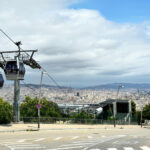
Teleferic de Montjuic and Miramar – Jardins Costa i Llobera
These are part of the Montjuïc-area cluster. Even if you don’t plan long walks, they’re handy for getting up toward viewpoints and gardens without committing to a big uphill trek immediately.
World Trade Center and Colom – La Rambla
This is where the tour starts to feel more “city street” and less “museum roll call.” Colom – La Rambla sets you up to walk along La Rambla, where you’ll find lots of places to eat and drink, plus that iconic Barcelona energy.
Museu d’Historia de Catalunya, Port Olimpic, and beach stops
You’ve got Port Olimpic, then Platja del Bogatell, Platja Nova Mar Bella, and onward. If you want a “sun and sea” chunk of your sightseeing day, the Red Line is built for that. The bonus is that it lets you take breaks away from crowds without having to figure out local transport.
Forum, Parc Diagonal Mar, Poblenou, and Torre Glories
These feel like the Barcelona of expansion and newer districts. They’re useful if you want variety and don’t want the whole trip to be medieval old town only.
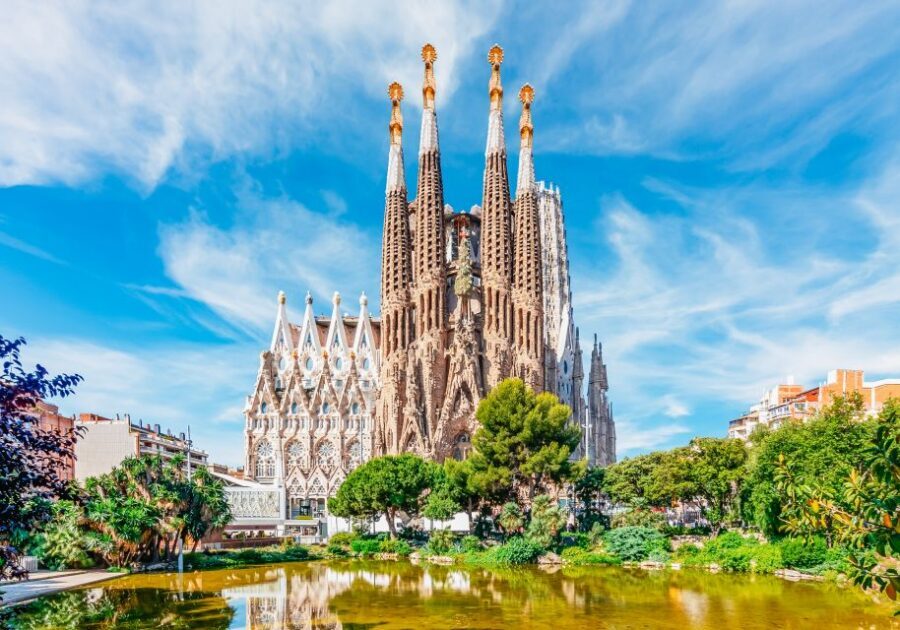
Sagrada Familia and Arc De Triomf
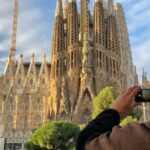
This is the payoff part of the route. The tour highlights Sagrada Família as the largest Roman Catholic church in the world, and it’s one of the key sights you’ll want to plan a stop around. You’ll also end up at Arc De Triomf, which works well for photos and a last-leg stroll.
Blue Line: Modernist Stops, Park Güell, and the Futbol Club Barcelona Detour

The Blue Line is great when you want a tighter set of signature stops, especially if your priority is the modernist side of the city plus the football connection.
It begins again at Plaça de Catalunya, then follows a line that includes several highly recognizable names.
Casa Batlló – Fundació Antoni Tapies
Yes, it shows up on both routes. That redundancy can be useful: you can ride the route that matches your day’s timing without worrying you missed this area.
Passeig de Gracia – La Pedrera and Sant Pau Recinte Modernista
These are your modernist targets. If your travel style is “see the main icons without hours of navigation,” these stops do a lot of work for you.
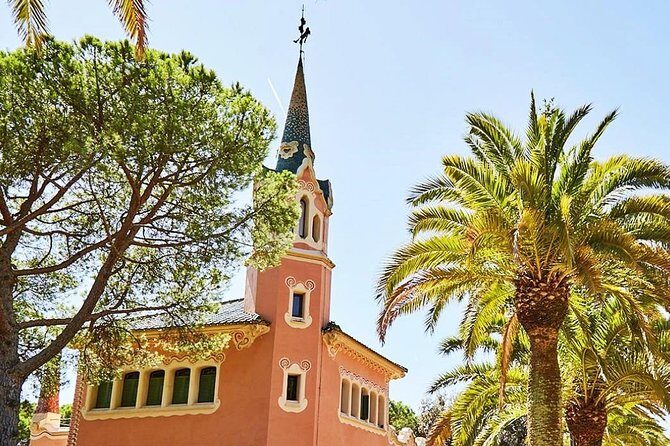
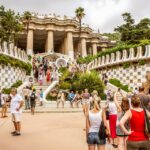
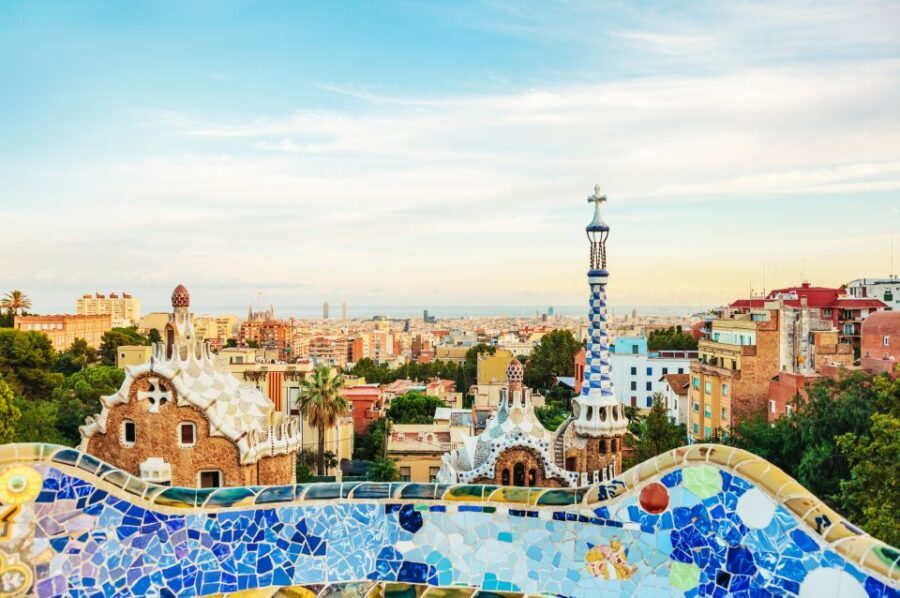
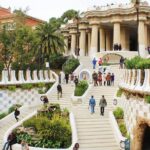
Park Guell
This is a big reason people take the Blue Line. One practical note: the stop can leave you a distance from the park, so expect walking that can feel steep. If you’re traveling with kids, older adults, or anyone who doesn’t love uphill slogs, it’s worth building extra time into your plan.
Tramvia Blau – Tibidabo and Sarria
These add a different slice of Barcelona farther out. They’re ideal if you want the ride to feel like a tour of distinct zones, not just a loop around the core.
Monestir de Pedralbes and Palau Reial – Pavellons Guell
If you like historic or landmark architecture, these stops help you build that theme. They also break up your day so you’re not stuck in one kind of scenery.
Futbol Club Barcelona
For football fans, this is the key Blue Line stop. If your goal is getting to Camp Nou / Futbol Club Barcelona area with minimal fuss, this route gives you a direct hop-off option.
Diagonal – Les Corts, Francesc Macia – Diagonal, Eixample, and Sant Antoni
These bring you back toward central neighborhoods. They’re useful for ending your sightseeing day with food, shopping, or simply an easier walk back to where you’re staying.
Spotlight Stops That Actually Matter: Sagrada Família, Picasso Sites, Park Güell, La Rambla
A lot of hop-on hop-off tours feel like a list of street names. This one works better when you plan around a few anchor stops, then let the rest of the route support those.
Sagrada Família: your main icon stop
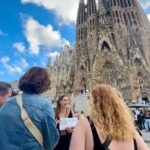
The tour explicitly focuses on Sagrada Família, calling it the largest Roman Catholic church in the world. You also get audio support through your headphones, which helps you understand why people keep stopping right where you will. In real-world use, the stop area is behind the basilica, and that’s a big help for photos.
Picasso Museum area
The tour includes a stop for the Picasso Museum, and it’s positioned as one of the largest collections of Picasso’s artwork anywhere. Even if you don’t go inside, the bus stop makes it easy to turn “I heard about it” into “I know where it is.”
Gothic Quarter
The highlight includes getting into the medieval streets of the Gothic Quarter. This is exactly the kind of area where audio plus easy hopping off helps, because it’s easy to waste time getting turned around on foot if you don’t have a plan.
La Rambla for nightlife and easy people-watching
Colom – La Rambla sets you up to walk down La Rambla, described as one of the city’s liveliest strips with bars and eateries. This is also a smart “evening reset” stop, since you can do daylight sightseeing and then switch to casual wandering for dinner.
Park Guell reality check
If you’re heading to Park Guell, remember the practical note about walking distance from the bus. It can be a long, steep uphill walk from the drop-off point. Build time, wear good shoes, and don’t assume it’s a gate-to-gate experience.
Timing Tips for Smooth Hops and Less-Frustrating Photos
The bus route is designed around frequent departures—listed as every 20 minutes, with the operator also noting that exclusive buses can run more often in busy periods so you avoid long waits. That’s a big deal in Barcelona, where crowds can turn “quick hop-off” into “why is this taking so long.”
Still, a few timing realities can trip you up:
Top-deck photo frustration is real
Open-top buses are great for views, but if the bus is moving quickly past certain angles, you may feel rushed. Plan on grabbing photos when the bus slows for a stop, not while it’s in transit between stops.
Stops are short
A common rhythm is: hop off, take a few photos, and reboard before the next bus cycles through. Keep an eye on the onboard map so you don’t miss the exact place you wanted. Also, if you’re on the upper deck, give yourself time to move down and back up without lagging behind the crowd.
Last-bus timing can surprise you
The last bus departs at 7pm from Stop 1. That means even if you’re not at Stop 1 yet, the day can still end on you. If you want a dinner or a late museum, I’d treat the bus as your afternoon tool and then switch plans before 6:00.




Comfort and Tech: Audio Headphones, Wi‑Fi, and Rain-Proofing
This tour includes audio commentary in 16 languages with headphones, plus free Wi‑Fi and a city map. For many people, that’s the real value: you get enough context to understand what you’re seeing without buying a guidebook you’ll barely open.
Audio quality varies in practice
Your headphones are provided on site, but some people find the audio can cut out. If you rely on it heavily, consider bringing your own headphones as a backup.
Wi‑Fi is included, but not always reliable
Free Wi‑Fi is part of the inclusions, but there can be times when it’s not working across every bus. For navigation, your best bet is still the map and stop signs.
It gets hot. Dress like it’s hot
One theme from real use: upper-deck comfort depends on the day. In very warm weather, buses can feel warm if air conditioning isn’t doing much. I’d plan lightweight clothing, water, and a schedule that includes shaded stops when possible.
Rain happens, and the roof may close
You may find the buses handle light rain by closing the roof automatically. That’s a relief if you’re trying to keep the tour going without sprinting between covered and uncovered areas.
No smoking, no pets
The tour does not allow pets and does not allow smoking, so keep that in mind if you’re traveling with family members who need extra planning.
Price and Value: Why This $39 Pass Can Work
At around $39 per person, this tour isn’t trying to be the cheapest way to move across town. It’s trying to be the easiest way to cover lots of major sights with minimal stress. For many visitors, that’s worth it—especially when you’re only in Barcelona for a short window.
Here’s when it feels like a good deal:
- You want two routes worth of coverage in one trip, not just one neighborhood.
- You want the bus to act like your orientation tool on day one, then your walking plans make more sense later.
- You don’t want to spend time figuring out buses and metro connections between far-flung stops.
Here’s when it may feel pricey:
- If you only care about one small area, you might get more mileage from walking plus metro.
- If you’re the type who only rides once and never hops off, you’re paying for flexibility you may not use.
A practical strategy that matches how this tour is built
Do the Blue Line first if you want the modernist icons early, then do the Red Line for the broader spread toward the waterfront and beaches. Or flip it if your schedule demands it—just don’t wait until the last day and hope the timing works out.
Should You Book This Barcelona Hop-On Hop-Off Bus Tour?
Book it if you want a low-effort way to see the big landmarks like Sagrada Família, and you like the idea of hopping into neighborhoods when you feel like it. This works especially well for families, first-time visitors, and anyone who’s trying to make limited time count without turning the trip into a logistics project.
Skip or reconsider if you already have a clear, efficient plan for the exact sights you want and you’re comfortable navigating on your own. Also think twice if you know you’ll want to keep sightseeing after 7pm, because the service ending time can force a last-minute plan change.
If you want a tool that helps you get oriented fast and then choose what to see deeper, this is one of the more practical hop-on hop-off options in Barcelona.