REVIEW · BARCELONA
Barcelona: Art Nouveau & Gaudí Tour
Book on GetYourGuide →Operated by Barcelona Dragon Tours · Bookable on GetYourGuide
Barcelona’s Modernism story moves fast.
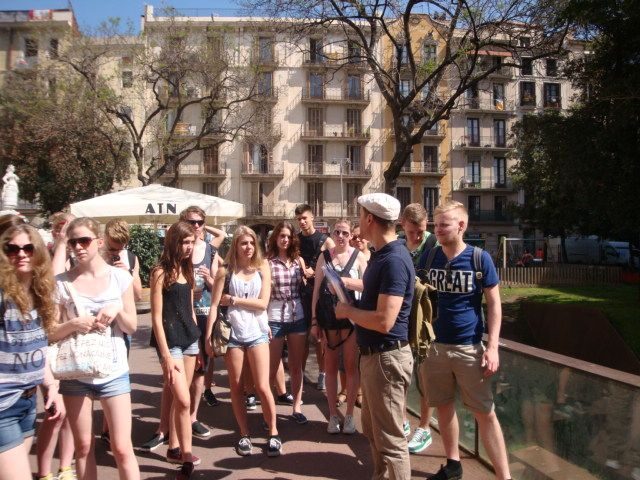
This walking tour through Eixample is interesting because it doesn’t treat buildings like pretty objects. It links the neighborhood’s rise after the city walls came down (1854) to the politics of autonomy and the wealth of the industrialists who wanted their status stamped in stone. I love the way the route centers on the Golden Square and the finely detailed Catalan Modernism you can spot right on the street. I also love the guide-driven storytelling, with past guides like Hannes and Johannes using clear connections between local events, political pressure, and what architects built in response. One drawback to consider: it’s a relaxed walk in real weather, including strong rain, wind, and sun, so you’ll want the right gear.
You also don’t have to be an architecture expert to enjoy it. The tour is built for people who like context: why Eixample exists, why those palaces cluster where they do, and what makes Gaudí’s look of Barcelona feel both theatrical and practical. The exteriors-only approach means you get lots of street-level viewing and photo time, but you also won’t be doing lots of museum-style interior wandering. If you’re hoping for ticketed entry buildings, plan on that being a downside because entry fees aren’t included.
In This Review
- Key Highlights You’ll Actually Feel on the Walk
- Entering Eixample: Where Barcelona Expanded After the Walls Fell
- Why the Golden Square Feels Like a Concentration of Status
- The Real Value: A Guide Who Connects Dates to Facades
- Eixample’s Grid Utopia and the Idea of a “Perfect City”
- Passeig de Gràcia: Trencadís, Luck Shards, and the Block of Discord
- Gaudí’s Hour: String Tricks, Star Ceilings, and Sagrada Família Plans
- The Tour’s Outside-Only Approach (Mostly) and Why That’s Good News
- Weather, Timing, and How to Make the Most of 3.5 Hours
- Price and Value: $212 for up to 4, Plus a Subway Ticket
- Who This Tour Fits Best (and Who Might Want Something Else)
- Should You Book Barcelona: Art Nouveau & Gaudí Tour?
- FAQ
- Where does the tour meet?
- How long is the tour?
- What languages is the guide available in?
- Is the tour private or group-based?
- Is a subway ticket included?
- Are entry fees included?
- What’s the weather plan for this walking tour?
- Is the tour accessible for wheelchairs?
Key Highlights You’ll Actually Feel on the Walk
- Eixample’s “city expansion” origin: 1854, walls torn down, and the grid taking shape between the old city and Gràcia
- Golden Square Modernism concentration: palaces and houses designed by the era’s top Catalan architects
- A politics-meets-architecture storyline: how Barcelona’s relationship with Madrid shaped what locals could and couldn’t do
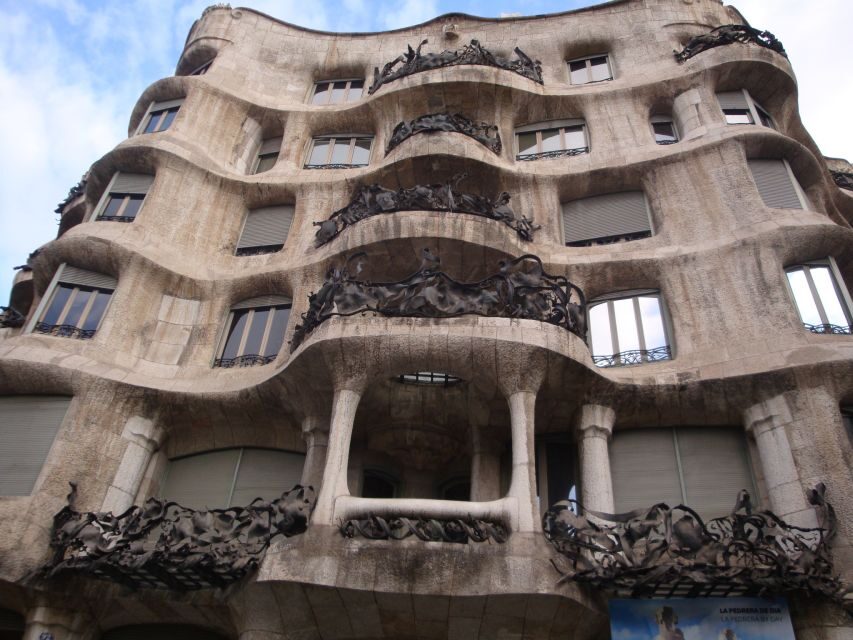
- Passeig de Gràcia details you can spot: trencadís shards, luck-themed design talk, and the block of discord
- Gaudí-focused moments: from string tricks and starry ceiling talk to Sagrada Família references from outside
Entering Eixample: Where Barcelona Expanded After the Walls Fell
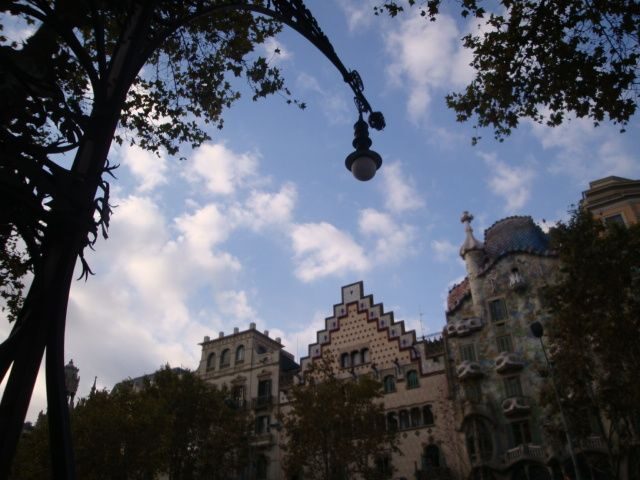
Eixample starts as a planning idea, not a postcard. The area takes its name from the basic fact that the city expanded outward, especially after the 1854 tearing down of the old walls. Standing on these wide streets, you can feel why the neighborhood became perfect canvas for grand ideas: once you stop building only inside cramped medieval boundaries, you can start designing space to impress.
What I like about this tour’s setup is how quickly it gives you a framework. Before you even get lost in facades, you get the political and social tension behind the architecture. Barcelona, in the 1800s, was pushing for autonomy and shared decision-making, but the central government in Madrid resisted. Locals had limits unless they had money. And the people who did have money used that leverage in the most visible way they could: commissioning buildings that looked like permanent declarations.
That’s why this walk can feel like a time machine. You’re not just seeing style. You’re seeing power and frustration turned into stone, ceramic, and glass.
You can also read our reviews of more tours and experiences in Barcelona.

Why the Golden Square Feels Like a Concentration of Status
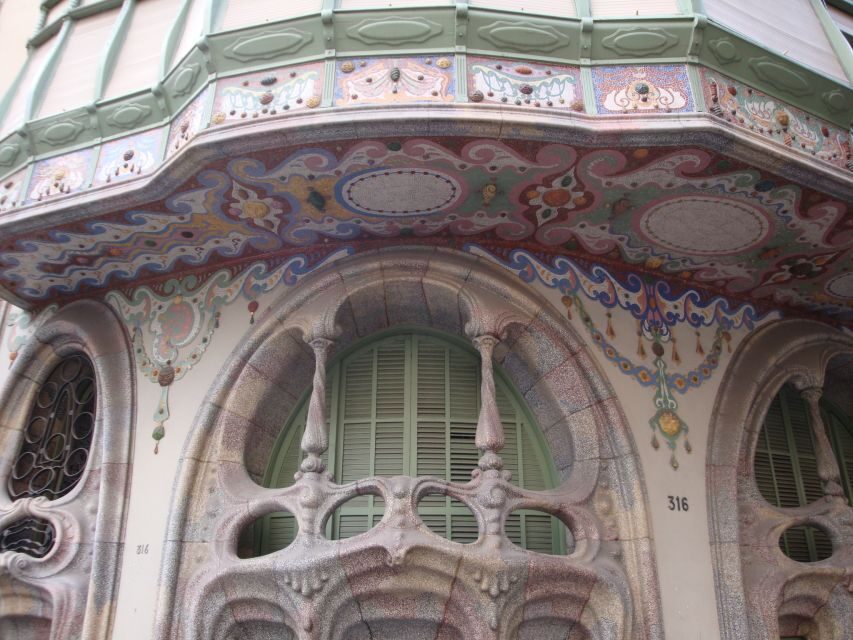
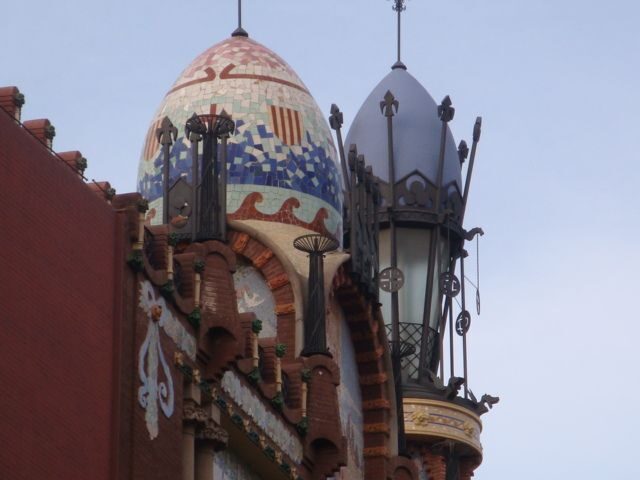
Eixample proper is often called the Golden Square, and that name matters. This is where the industrialists, aristocrats, and the Catalans who had made their fortunes abroad (often referred to as Indianos) built city palaces when they had both wealth and serious ambition.
A lot of architecture tours stop at style labels. This one goes further by explaining what the buildings were doing culturally. The tour frames Catalan Modernism (starting around 1885) as a broader cultural movement, not just a new set of decorative habits. It spills into literature and visual arts, and that’s why you see symbolism working on multiple levels: not only how a building looks, but what it’s trying to say.
You’ll also get at least one example of how meaning is built into materials. The tour highlights how Domènech i Montaner’s work can turn Catalan folk song into architecture, using an allegory concept made out of stone. Even if you can’t step inside (the program is largely exteriors), you still get the sense that these weren’t random wealthy commissions. They were projects built to carry identity.
The Real Value: A Guide Who Connects Dates to Facades
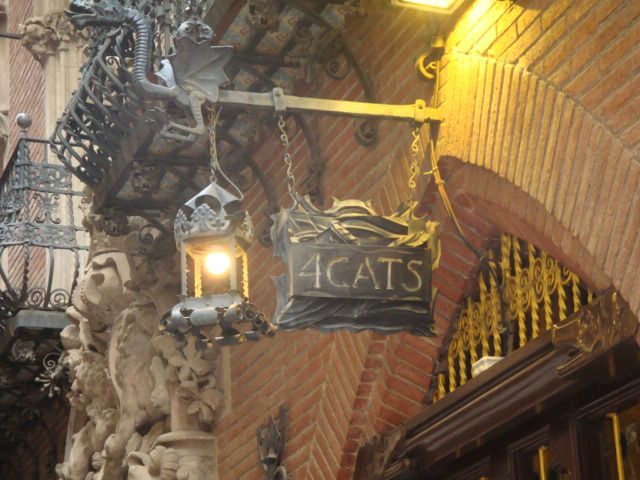
The best tours answer the same question: why should I care? This one does it through the guide’s storytelling. In the reviews, guides like Hannes and Johannes come up again and again for having deep knowledge and for making it usable on the street. The consistent theme is connections, not memorization.
Instead of teaching Modernism like a textbook, the guide uses “what happened next” logic: war impacts, restrictions, opportunities, and cultural shifts. You’ll hear how 1714 and the long aftermath show up in the city’s mood. You’ll also hear how Barcelona’s cleanup and reinvention phases fed into major events and building ambitions, including the period around the Barcelona World’s Fair.
That matters because architecture is slow. Stories help you read it fast. When you know the political pressure and the social ladder behind a facade, details start behaving differently. Corners stop being decorative and start being messages. Curves stop being just aesthetics and start being choices made in a specific moment.
Eixample’s Grid Utopia and the Idea of a “Perfect City”
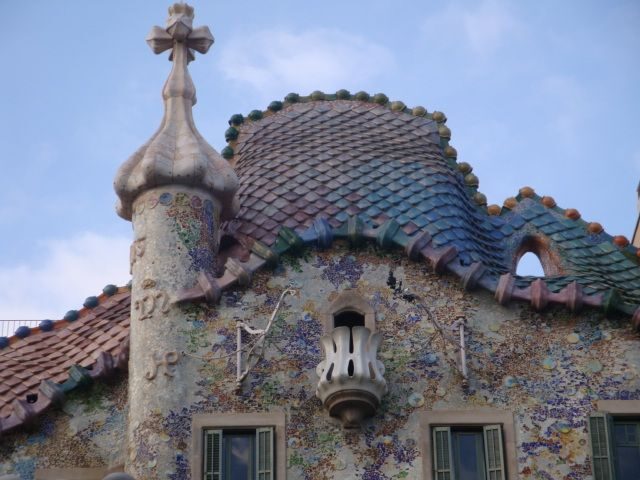
At some point, you’ll hear about Ildefons Cerdà and the utopia of the perfect city. This isn’t just an abstract map lesson. It’s the explanation for why Eixample looks the way it does, and why it became such an easy stage for Modernism to spread.
The grid isn’t neutral. It’s what allows a “show” to happen across long sight lines and wide corners. That’s where the tour’s casual pace helps. You get time to actually look up and along, so you can see how a building design plays with the street’s geometry. Corner façades, especially, become easier to interpret when your route lets you pause and compare.
And yes, you’ll likely notice corners you’ve walked past before without understanding the context. This is the moment where the neighborhood stops being a location and starts being a story you can read.
Passeig de Gràcia: Trencadís, Luck Shards, and the Block of Discord
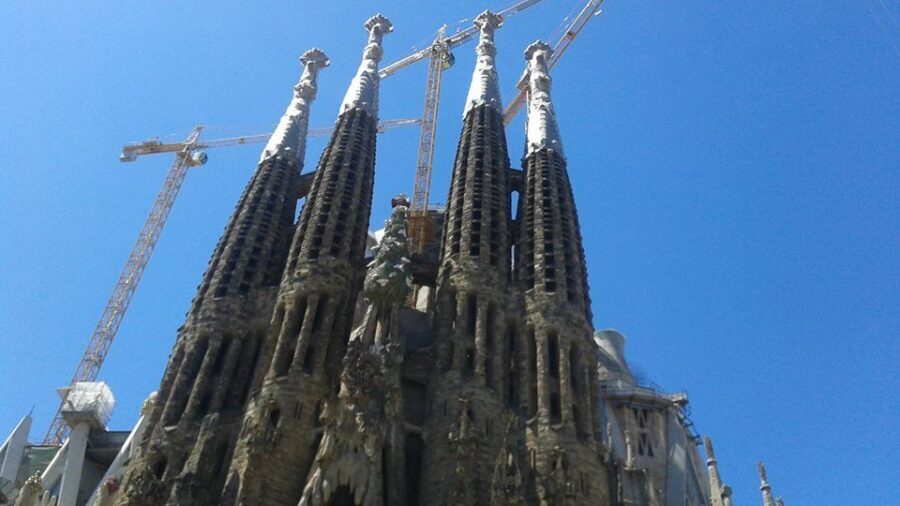
If Eixample is the stage, Passeig de Gràcia is where it gets dramatic. The tour specifically calls out Passeig de Gràcia and its signature trencadís, the mosaic look made from shards. When you hear the tour’s explanation about how shards can bring luck and meaning, the decorative pattern turns from pretty texture into a clue.
Then comes the block of discord. The tour frames it as a place where three stars appear in the story, and where style clashes in one compact area. Even if you don’t memorize every name on sight, you’ll understand the idea: this is where architects pushed against each other, and the results are still visible from the sidewalk.
One practical tip for this section: slow down. These are not buildings you “skim.” If you let the guide pull you forward too fast, you’ll miss the exact reason these facades became famous. The tour is relaxed by design, so use that to your advantage and take a minute to compare details across the three fronts.




Gaudí’s Hour: String Tricks, Star Ceilings, and Sagrada Família Plans
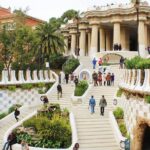
Gaudí takes over the imagination of the tour. The highlights point to a few distinct Gaudí-linked ideas: a trick with string, talk about a war of stars on a ceiling, and references to Sagrada Família including Gaudí’s lost plans.
You might think this would require an interior visit. It doesn’t. Because the program keeps you in the streets and squares, it leans on outside viewing and guided explanation. That’s a smart choice for most people, since entry tickets and long museum schedules can derail a 3.5-hour plan.
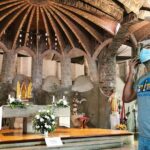
What you get instead is a “why it looks like this” experience. When the guide explains how Gaudí approached structure and form (the string trick is one of those talking points that turns engineering into a story), you start seeing the logic behind the drama. And when you hear about star-related ceiling ideas, it reframes the ornament: it’s not only for effect, it’s part of a larger design language.
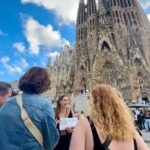
The Sagrada Família angle is also useful even from outside. The tour sets you up to see the basilica not as a single monument, but as a long-running project shaped by lost ideas, changing priorities, and Gaudí’s ongoing influence. That makes the exterior feel more specific and less like a distant landmark.
The Tour’s Outside-Only Approach (Mostly) and Why That’s Good News
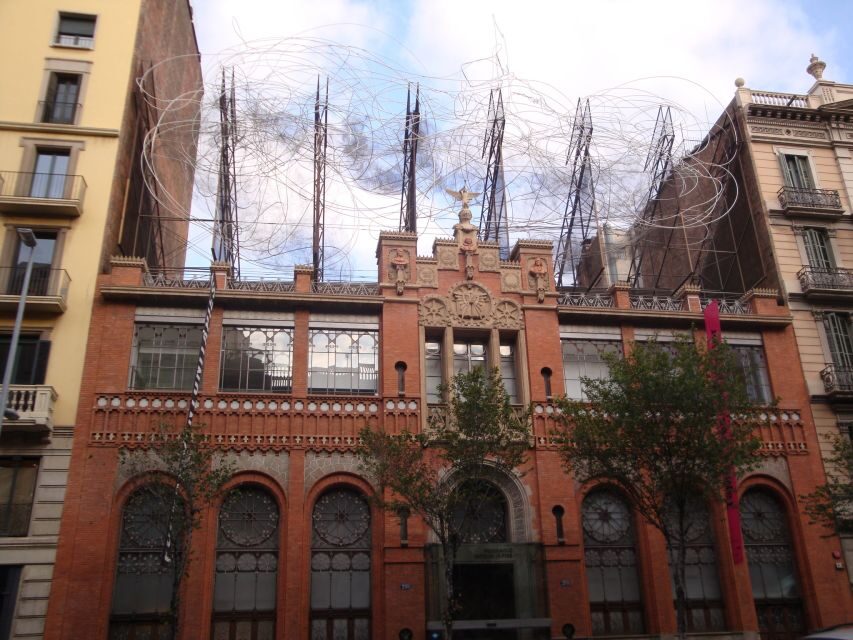
The plan sticks to streets and squares so you get close to the neighborhood’s real character. You admire monuments from their exteriors, and museum visits or interior exploration are not part of the program, with only a couple of exceptions.
This can be a drawback if you want inside access. But it’s also the reason the tour stays efficient. In 3.5 hours, you can’t do deep interior tickets and still cover the full narrative arc through Modernism’s key zones. The outside approach lets the guide do what they do best: connect events to visible features without dragging you from one lineup to another.
It also supports the “secret side of a multi-facetted metropolis” angle. You’re seeing Barcelona as lived-in space, not just as curated exhibits. The Golden Square palaces are beautiful, but they’re also just buildings you walk past. That’s where the contrasts become meaningful.
Weather, Timing, and How to Make the Most of 3.5 Hours
This is a 3-weather walk. The tour runs in sun, rain, and wind, even strong showers. That’s not a small detail. If you show up unprepared, the experience becomes stressful instead of fun.
Pack like a local: a hat for sun, sunglasses, sunscreen, and a thin coat or jacket for winter months. Bring water if you tend to get dry. The good news is the pace is relaxed, with time for photos and bathroom breaks.
Duration matters here. Three and a half hours is long enough to get context and see multiple key zones, but short enough that the guide has to stay focused. That’s where the storytelling quality really shows. The reviews point to guides who keep everything moving without needing to stop and look things up mid-sentence. When a guide can connect the political and architectural dots instantly, you don’t lose momentum.
You’ll also get a subway (U-Bahn) ticket included. That’s practical because it helps you reduce transit time and stay on schedule, especially if the meeting point isn’t exactly where the best opening viewing starts.
Price and Value: $212 for up to 4, Plus a Subway Ticket
The price is $212 per group up to 4 people, for about 3.5 hours. That structure changes how you should think about value.
If you travel as two people, this can be a solid deal compared with per-person pricing, because you’re splitting the cost of a private-group, story-rich guide. If you’re four, it gets even easier to justify: you’re buying fewer compromises than standard group tours, while still getting the guide’s full attention and a route tuned to walking time.
The inclusion of the U-Bahn ticket helps too. Even a small transit saving feels meaningful when you’re doing a compact tour. The only thing you should budget separately is entry fees, because those aren’t included.
In short: this is priced like a private experience, and the best value comes when you can fill the group capacity.
Who This Tour Fits Best (and Who Might Want Something Else)
This tour is best for you if you like architecture with context. If you enjoy history that explains design decisions, you’ll probably have a great time. It’s also a good fit for travelers who want a German-language or English-language guide with structured explanations, not just a casual walk with facts thrown in.
It’s also a strong choice if you’re the type who likes pausing for photos but doesn’t want a full museum schedule. Exteriors and street-level viewing are the core.
If your top priority is interior visits to multiple landmark buildings, you might find this less satisfying. The program focuses on outside viewing and guided storytelling, not extensive ticketed entry.
Should You Book Barcelona: Art Nouveau & Gaudí Tour?
Yes, if you want Modernism explained in a way you can see immediately. I’d book it when your schedule is tight and you want a coherent narrative through Eixample’s Golden Square, Passeig de Gràcia, and Gaudí’s world. The guide quality is the real strength here, especially when the storytelling connects local politics, cultural movements, and what’s visible on the street.
I’d think twice if bad weather would ruin your day or if you’re specifically chasing interior access. This tour is built to keep going in rain and wind, and it mostly stays outside.
FAQ
Where does the tour meet?
It meets at Plaza de Urquinaona, in front of the Theater Borrás.
How long is the tour?
The tour lasts about 3.5 hours.
What languages is the guide available in?
The live guide offers German and English.
Is the tour private or group-based?
It’s a private group.
Is a subway ticket included?
Yes. A U-Bahn (subway) ticket is included.
Are entry fees included?
No. Entry fees are not included.
What’s the weather plan for this walking tour?
It runs in sun, rain, and wind, including strong showers.
Is the tour accessible for wheelchairs?
Yes, it’s wheelchair accessible.