REVIEW · BARCELONA
3-Hour Private Guided Walking Tour of Barcelona
Book on Viator →Operated by THIBAUT PAKIRY, UNIPESSOAL LDA · Bookable on Viator
Three hours can feel like a week.
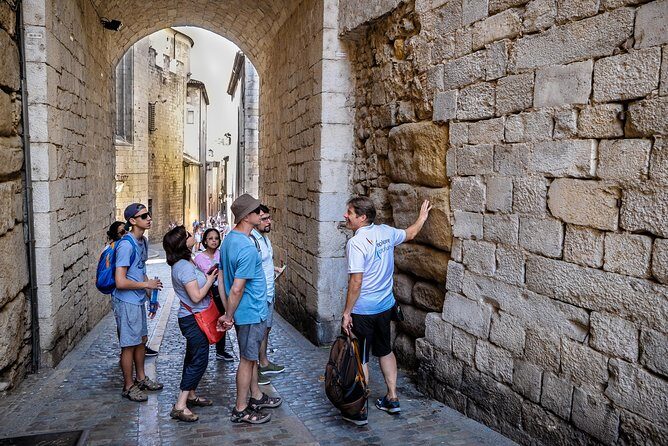
This private guided walk is a smart way to get your bearings in Barcelona’s historic center, with a route that blends headline sights with quieter pauses. I like the off-the-tour-bus feel you get when the guide points out small details, and I like that the tour is set up for real conversations in a private group (up to 15). Guides you may hear about in this format include Valérie and Julie, and the approach is flexible—architecture, street life, and even food and shopping can fit the mood.
You should know one thing up front: it’s a steady walking morning. Between stone streets, plazas, and multiple churches, it’s not the kind of tour where you can totally drift along slowly—good shoes matter. Also, the Antic Hospital de la Santa Creu stop has admission ticket not included, so you’ll want to plan for that extra cost if you care about going inside.
In This Review
- Key highlights worth centering
- Why this 3-hour private walk feels like a shortcut
- Starting at Lamaro Hotel: where your orientation clicks
- From the Cathedral to Casa de l’Ardiaca: Gothic beauty with a side of quiet
- Plaça Sant Felip Neri and the Civil War story you can’t un-know
- Basilica de Santa Maria del Pi: the sweet spot between famous and personal
- Antic Hospital de la Santa Creu and the Raval twist with Gaudí
- La Rambla and Plaça Reial: seeing the famous without getting swallowed
- Plaça de Sant Jaume and Plaça del Rei: the power heart in stone
- El Born’s big church moment: Santa Maria del Mar
- Mercado de Santa Caterina: your practical Barcelona food education
- The modernist finish: when the Old Town shows its 1900s side
- Price and value: $194.75 per group, not per person
- Best fit: who will enjoy this tour the most
- Should you book it?
- FAQ
- How long is the private walking tour?
- What’s the price?
- Where does the tour start?
- Is the tour private?
- Is admission included?
- Do I need to print anything, or is it a mobile ticket?
- Can I travel with a service animal?
- What if I need to cancel?
Key highlights worth centering
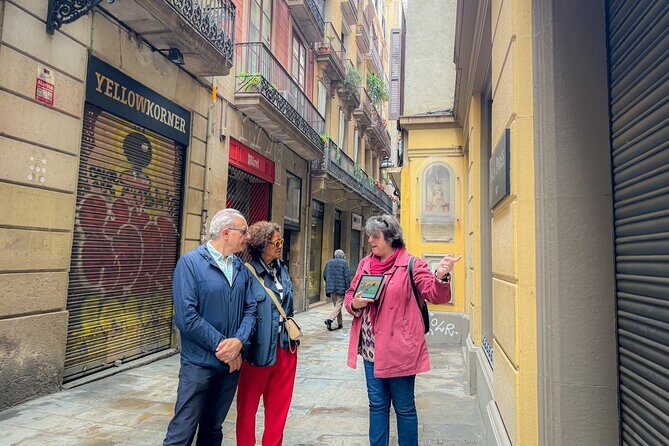
- Private tour for up to 15: only your group, so questions and pace stay practical
- Gothic Quarter + El Born + El Raval: you cover big “old Barcelona” zones in one loop
- Civil War context at Plaça Sant Felip Neri and history you can actually point to
- El Call focus in Barri Gòtic: the old Jewish quarter gets real attention
- Gaudí’s connection at Antic Hospital de la Santa Creu: a surprising tie-in beyond the usual landmarks
- Market time at Mercado de Santa Caterina: food culture without turning it into a food tour detour
Why this 3-hour private walk feels like a shortcut
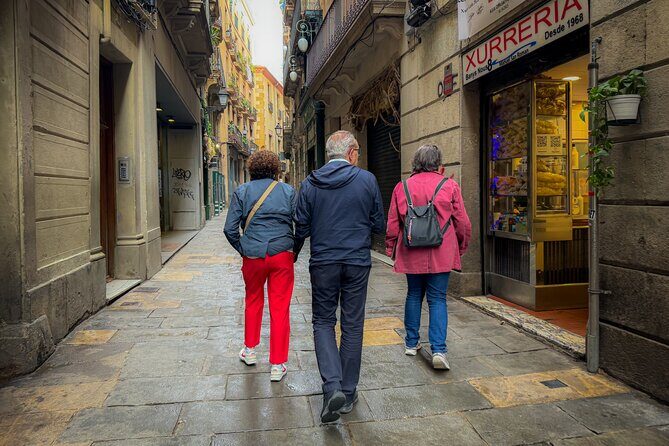
Barcelona can be overwhelming fast. Streets curve, buildings stack, and suddenly you’re staring at details you didn’t even know to look for. This tour helps you skip the guessing game by bundling together the parts of the city that most visitors want, then adding the bits that make those sights click.
The best part is how it’s designed for a group. With a private setup (up to 15), the guide can adjust on the fly. One family might want heavier architecture notes. Another might want more street scenes and practical dining ideas. The tone stays friendly and conversational, which matters when you’re dealing with a city where “just looking” can turn into standing there for an hour.
Also, three hours is a sweet spot. Long enough to feel like you covered real ground. Short enough that you still have energy afterward for museums, tapas, or just wandering.
You can also read our reviews of more walking tours in Barcelona



Starting at Lamaro Hotel: where your orientation clicks
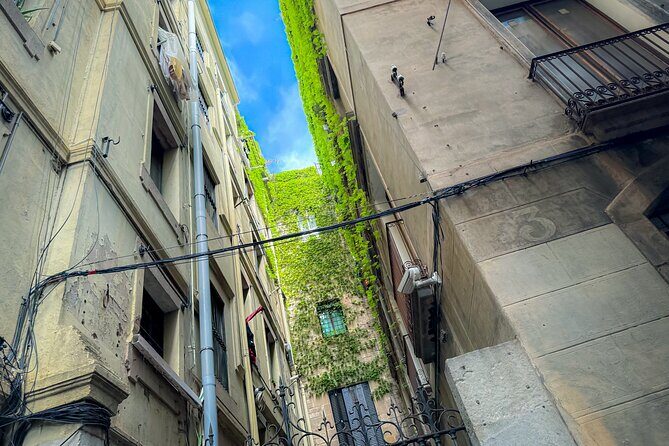
The walk starts at Lamaro Hotel Barcelona on Av. de la Catedral in Ciutat Vella, and it ends back at the same meeting point. That round-trip structure is underrated. You’re not stuck figuring out a second location at the end when your feet are tired and the light is changing.
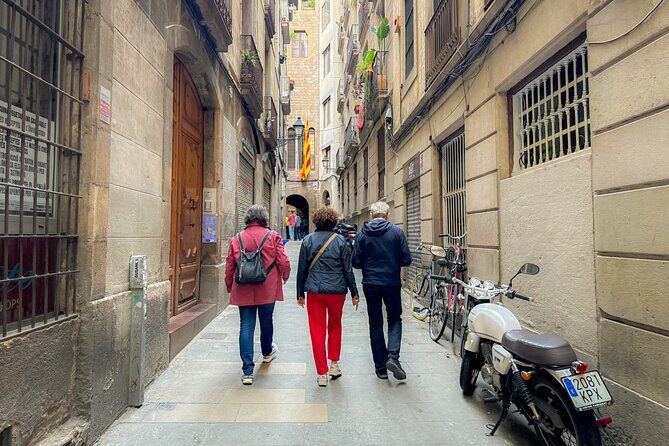
Because you begin in the Old Town, you immediately step into the Gothic Quarter atmosphere. It’s ideal for getting “how Barcelona works” in your head: where plazas connect, how the street grid opens into courtyards, and why certain churches and squares act like anchors.
This start also pairs well with the fact that several stops have free admission tickets. You’re not constantly paying to get into buildings just to keep the day moving. Instead, you can spend your time listening—then decide later whether you want to return on your own.
From the Cathedral to Casa de l’Ardiaca: Gothic beauty with a side of quiet
Stop 1: Barcelona Cathedral
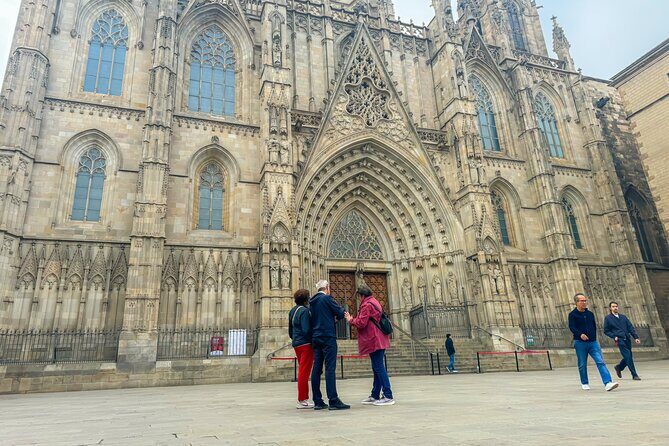
The day kicks off at the Cathedral of Barcelona, a major gateway into the Gothic Quarter. This is the kind of place where people rush photos and miss the story in the stone. A good guide helps you see the building as a framework for the neighborhood around it. Even if you’ve seen Gothic architecture before, the Cathedral’s role as a landmark is hard to ignore once you know what you’re looking for.
A practical note: the tour lists admission ticket free at this stop. That’s a nice value perk. It also means you can focus on the exterior feel and the “why it matters” explanation without feeling like the clock is tied to ticket lines.
Stop 2: Casa de l’Ardiaca
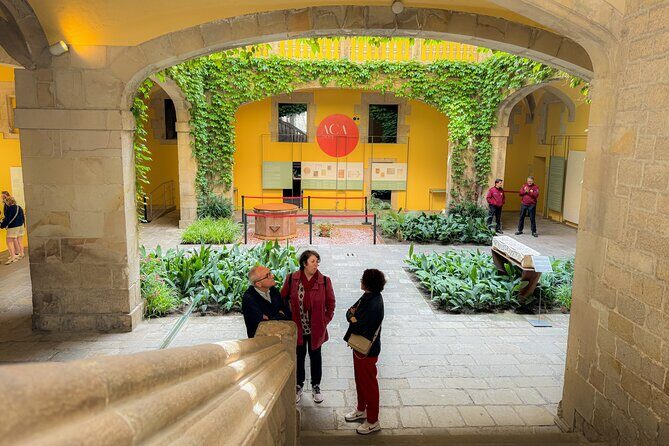
Next is Casa de l’Ardiaca, a smaller monument that many people miss because it’s not as famous as the big churches. The highlight here is the sense of discovery: the guide takes you to a secret patio and points out what makes this kind of space so Barcelona. It’s a reminder that the city isn’t only about grand facades. It’s also about hidden courtyards that turn noise into a whisper.
What to watch for: with stops like this, don’t treat it like a quick photo stop. Pause, look up, then let your guide tell you what you’re seeing. This is where the tour starts to feel like “locals know the shortcut,” not “another monument parade.”
Plaça Sant Felip Neri and the Civil War story you can’t un-know
Stop 3: Plaça Sant Felip Neri
Plaça Sant Felip Neri is a small plaza, but the guide’s focus makes it bigger than it looks. The tour specifically addresses testimony of the Civil War in Barcelona. That changes the vibe. Suddenly, you’re not just admiring old architecture. You’re reading the city like a document.
This is one of the reasons I like this tour for first-timers. It gives context fast—so you can later recognize why buildings, streets, and neighborhoods aren’t neutral. They have memory.
Stop 4: Barri Gòtic (Gothic Quarter), with a focus on El Call
Now you shift deeper into Barri Gòtic and the guide zooms in on El Call, the old Jewish quarter. This is not just “we’re in the Gothic Quarter” sightseeing. It’s targeted storytelling about a specific part of Barcelona’s past, centered right in the heart of the old city.
If you care about history, this is a strong moment. It’s also a good moment for questions, because your guide can point out street-level clues you’d never connect on your own.
Basilica de Santa Maria del Pi: the sweet spot between famous and personal
Stop 5: Basilica de Santa Maria del Pi
In the Gothic district, the basilica and its nearby medieval square offer a different feeling than the Cathedral. The Cathedral is the headline. This is the place where you slow down and notice the rhythm of daily life around sacred space.
The tour frames it as a charming medieval square and uses the basilica to teach you what to look for. It’s a nice break from “big monument fatigue.” You end up leaving with a more personal sense of the neighborhood rather than only a list of famous names.
Admissions here are listed as free, so the value stays high. It also gives you a moment to breathe before you move into the darker, more surprising Raval-side connection.
You can also read our reviews of more guided tours in Barcelona




Antic Hospital de la Santa Creu and the Raval twist with Gaudí
Stop 6: Antic Hospital de la Santa Creu (Raval)
The Raval district changes the atmosphere. The tour leans into that shift by stopping at the Antic Hospital de la Santa Creu, where Antoni Gaudí died. That’s a major emotional and historical connection for anyone who loves Gaudí’s buildings—especially because it’s not the usual “see a famous façade” route.
Important detail: admission at this stop is not included. So treat it as optional depending on what you want most from the day. If you love Gaudí, it’s worth planning for. If your priority is keeping things simple and low-cost, you can still benefit from the context from the guide even if you don’t go inside.
Why this stop works: it turns Gaudí from a “modernist architect you’ve seen on postcards” into a person with a life and a place in the city’s fabric. That’s the kind of connection that stays after you leave Barcelona.
La Rambla and Plaça Reial: seeing the famous without getting swallowed
Stop 7: La Rambla
La Rambla can be a bit of a circus if you’re not careful. This tour tries to give it structure by focusing on the facade details of a theater on the Rambla, then walking the boulevard with more intention than just passing through.
The result is better than you might expect: you notice architecture instead of just crowds. The guide’s job here is to keep you oriented in a place where it’s easy to get distracted.
Stop 8: Plaça Reial
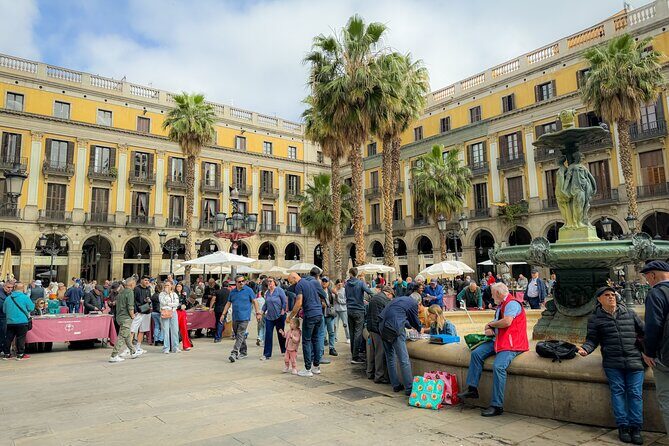
Then comes Plaça Reial, a large rectangular square known as a festive hangout. Again, the difference is in how you experience it. It’s not just “nice square.” It becomes a place to understand how public spaces work in Barcelona—how they invite people to gather, linger, and watch the street flow.
This is also a decent point to hydrate and reset before heading to the political core of the city.
Plaça de Sant Jaume and Plaça del Rei: the power heart in stone
Stop 9: Plaça de Sant Jaume
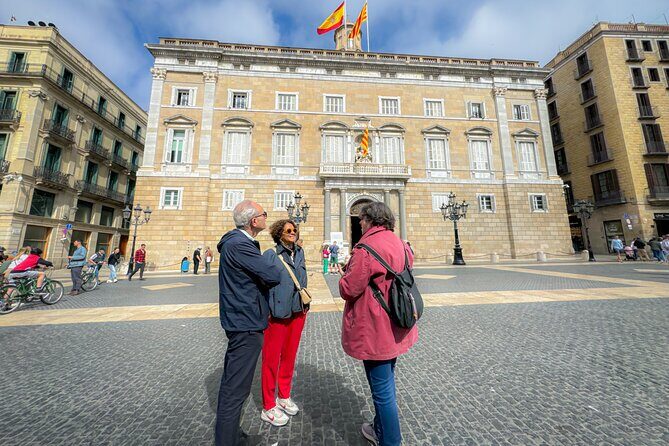
Plaça de Sant Jaume is described as the administrative and political heart of Barcelona. That’s the kind of line that can sound dry until you see it in context. When you stand there with a guide explaining what these spaces have done historically, you start to understand how Barcelona organizes power—physically—around plazas and formal buildings.
This stop is useful even if you’re not a political history person. Knowing where the city’s decision-making lived helps you make sense of what you see later.
Stop 10: Plaça del Rei
Plaça del Rei shifts the focus to magnificent details in Catalan Gothic style. Here, the tour is about training your eye. If you’ve ever walked past ornate buildings thinking, It’s pretty, but so what? this kind of explanation helps you answer that question.
You’re basically learning a local visual language. Once you do, the whole neighborhood starts to look smarter.
El Born’s big church moment: Santa Maria del Mar
Stop 11: Basilica de Santa Maria del Mar
In the El Born district, you hit another key Catalan Gothic masterpiece. Santa Maria del Mar is the kind of church people remember even when they can’t immediately name every detail.
The tour frames it as a masterpiece and helps you understand why it matters in the Born neighborhood context. If you love churches, it’s a highlight. If you don’t usually stop for churches, it’s still worth it because the setting and design tend to do more than impress. They tell you about the neighborhood’s identity.
Admission is listed as free, which keeps the pacing stress-free. You can spend time inside or nearby without turning it into a cost-problem.
Mercado de Santa Caterina: your practical Barcelona food education
Stop 12: Mercado de Santa Caterina
Then you get a stroll through the authentic market in the Sainte-Catherine district. This is one of the most practical parts of the day. You see how Barcelona feeds itself and how daily commerce feels in the historic center.
This is not presented as a formal tasting event. It’s a chance to walk, browse, and understand that local food culture doesn’t only happen at restaurants. Markets are part of the city’s routine.
If you want real value after the walking, ask your guide what to buy if you want to bring something back to your rental or what nearby area is good for a meal later. Tours like this are at their best when they end with choices you can use right away.
The modernist finish: when the Old Town shows its 1900s side
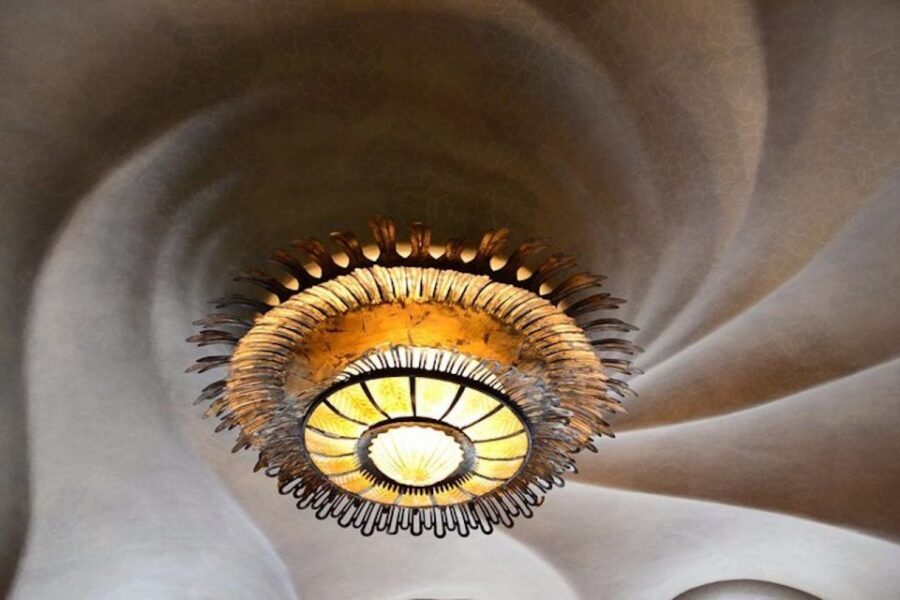
The tour concludes with artistic and historical details of a modernist gem in the Old Town for about 15 minutes. The exact building name isn’t specified here, but the intent is clear: you should finish with a shift in style, so Barcelona doesn’t feel stuck in medieval time.
Modernism is a big part of Barcelona’s identity. Ending with it helps your brain connect the dots between centuries. It’s also a good “final impression” strategy: rather than ending on another church, you end on something that changes your visual expectations.
And yes, one helpful detail from the same tour format is that the ending tends to include a practical break. When you’ve been on your feet for hours, that matters more than you expect.
Price and value: $194.75 per group, not per person
At $194.75 per group (up to 15) for about 3 hours, the math can be surprisingly friendly—especially if you’re traveling with family or friends who want the same route. This is the kind of price that becomes a better deal the more people split the cost.
What you’re really paying for isn’t just the walk. You’re paying for:
- a guide to translate what you’re seeing into meaning
- a route that covers multiple major districts
- a private format that lets you ask questions and adjust pace
- free admission stops sprinkled through the day
If you’re a single traveler, it may feel steep compared with a basic group tour. If you’re 3–10 people, it often starts to look like the smart money choice, because you’re not just paying for “standing with a guide.” You’re buying time, context, and a calmer experience.
Best fit: who will enjoy this tour the most
This works well if you:
- want a first-time orientation through Gothic Quarter, El Born, and El Raval
- like architecture and city history, but don’t want it delivered like a lecture
- appreciate off-the-main-route corners and stories tied to specific places
- are traveling as a small family or mixed group and want flexibility in pacing and interests
It may feel less perfect if you:
- hate walking and plazas and want an almost stop-and-stare tour
- only care about one or two famous sites and would rather spend more time in a museum than on streets
- strongly prefer fully included admissions everywhere (since Antic Hospital has admission not included)
Should you book it?
Yes, I’d book it if you want the best kind of Barcelona souvenir: an understanding of what you’re seeing. The mix of major sights plus the quieter, more contextual stops (El Call, Civil War testimony, the Gaudí connection in the Raval) is exactly how you turn “I saw it” into “I get it.”
If you’re planning a tight schedule, this tour also buys you momentum. After it, you’ll wander more confidently, choose better meals, and recognize details you’d otherwise miss.
If you’re still deciding, consider your group size. With the per-group price model, sharing cost with even a few people can make this a very reasonable way to get a lot of Barcelona in three focused hours.
FAQ
How long is the private walking tour?
The tour is about 3 hours.
What’s the price?
It costs $194.75 per group, up to 15 people.
Where does the tour start?
You meet at Lamaro Hotel Barcelona, Av. de la Catedral, 7, Ciutat Vella, 08002 Barcelona, Spain.
Is the tour private?
Yes. It’s a private tour/activity, and only your group participates.
Is admission included?
Many stops list admission ticket free. Antic Hospital de la Santa Creu lists admission ticket not included.
Do I need to print anything, or is it a mobile ticket?
It uses a mobile ticket.
Can I travel with a service animal?
Yes, service animals are allowed.
What if I need to cancel?
Free cancellation is available up to 24 hours in advance for a full refund.