REVIEW · BARCELONA
Barcelona & Gaudi. Regular Tour
Book on Viator →Operated by Barcelona Architecture Walks · Bookable on Viator
Gaudí hits different when you’re walking the blocks. This tour traces the Modernist thinking behind the buildings, led by practicing architects who connect Gaudí’s ideas to big cultural shifts, from social concerns to religious obsession on the Modernism Route. I love the way the guide turns stone and ornament into clear arguments about art, politics, and belief. One catch: you see the famous façades, but you don’t go inside the buildings.
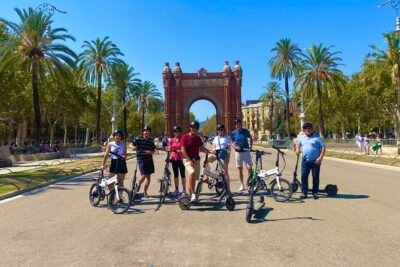
The other thing I really like is the group size. With a maximum of 20 people, you actually get time to ask questions and get answers that fit what you’re looking at, not just a rush to the next stop. And since it’s a walking route, the pace feels built for paying attention to details at street level.
In This Review
- Key things I’d plan around
- A Modernism Walk That Explains the Why, Not Just the What
- Starting in Eixample: Where the Blocks Matter
- Casa Milà (La Pedrera): Modernist Drama You Can Read on the Façade
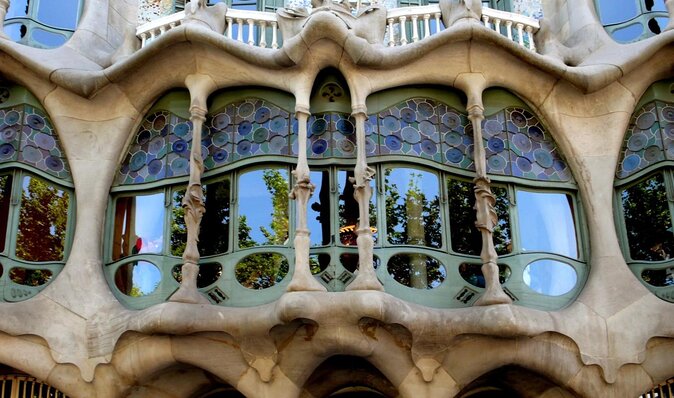
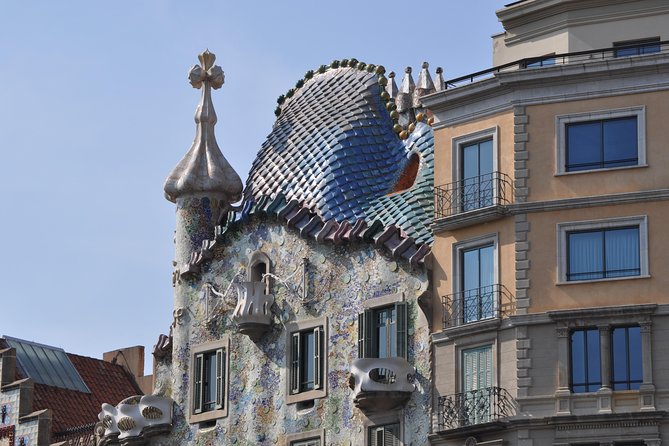
- Casa Batlló: When Gaudí Turns a Building Into an Argument
- Casa Calvet and the Value of Contrasts
- La Mansana de la Discordia: Seeing a Whole Block as a History Lesson
- The Big Ideas Part: From Colònia Güell to Sagrada Família
- Fundació Antoni Tàpies: Modern Art After Modernism
- Why the Guide’s Background Matters Here
- What You Get For $54.44: Value Without Interior Tickets
- Practical Comfort: Pace, Weather, and Getting There
- Who This Barcelona & Gaudí Tour Is Best For
- Should You Book This One?
- FAQ
- How long is the Barcelona & Gaudí Regular Tour?
- What language is the tour offered in, and do you need a printed ticket?
- How big is the group?
- Do you go inside Casa Milà, Casa Batlló, or the other buildings?
- Where is the meeting point?
- What is the cancellation policy?
- What if the weather is bad?
Key things I’d plan around
- Architect-led storytelling that links Gaudí to broader ideas the usual sightseeing tours skip
- No-interior visits, so you spend time on what you can see from outside
- Landmark trio in Eixample: Casa Milà, Casa Batlló, and Casa Calvet on one smooth route
- La Mansana de la Discordia area with side looks at other Modernist houses and courtyards
- Fundació Antoni Tàpies as a smart ending that bridges Modernism to modern art
- Small group limit (20) for better conversation and fewer picture-line bottlenecks
A Modernism Walk That Explains the Why, Not Just the What
This Barcelona experience is built for people who want more than photos. Yes, you’ll see major Gaudí stops like Casa Milà and Casa Batlló, but the real payoff is the framing: what Modernism meant, where it came from, and why Gaudí’s work became so intense.
The guide walks you along a storyline of shifts in taste and ideology—how styles change when society changes. You’ll hear about eclecticism and the end of modernism, plus the dramatic political and intellectual backdrop that surrounded the period.
And it’s taught in a way that stays practical. Instead of floating through eras like a museum audio track, the tour keeps pointing you back to what’s on the street in front of you.
You can also read our reviews of more tours and experiences in Barcelona.

Starting in Eixample: Where the Blocks Matter
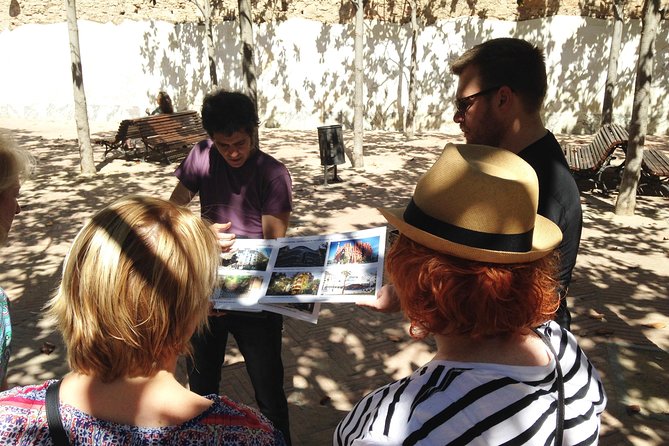
You’ll meet in the Eixample area at Monument al Llibre, on Gran Via de les Corts Catalanes (634). The start time is 10:30am, and you’re set up for a roughly 3-hour walk.
Why Eixample matters here: these buildings aren’t isolated masterpieces. They sit inside a grid, among other architects’ visions, and the tour treats that like part of the lesson. You’ll get the sense of how Modernism shows up as a conversation across the neighborhood—different minds, different styles, sharing the same urban stage.
Also, since the tour is near public transportation, you don’t need to turn your day into logistics math. Just plan to arrive a little early so you can settle in.
Casa Milà (La Pedrera): Modernist Drama You Can Read on the Façade
Your first stop is Casa Milà (La Pedrera). Even without going inside, this is the kind of building that sets the tone. The exterior is where you can start noticing the tour’s main theme: Modernism isn’t only decoration—it’s philosophy expressed in form.
This is also where the guide’s architect perspective starts to click. You’re not just being told what the building is famous for; you’re being taught how to interpret it in context.
If you’re the type who likes to understand why an architect made a choice, this start works well. If you only care about interiors, you’ll want to remember this is an exterior-forward walk.
Casa Batlló: When Gaudí Turns a Building Into an Argument
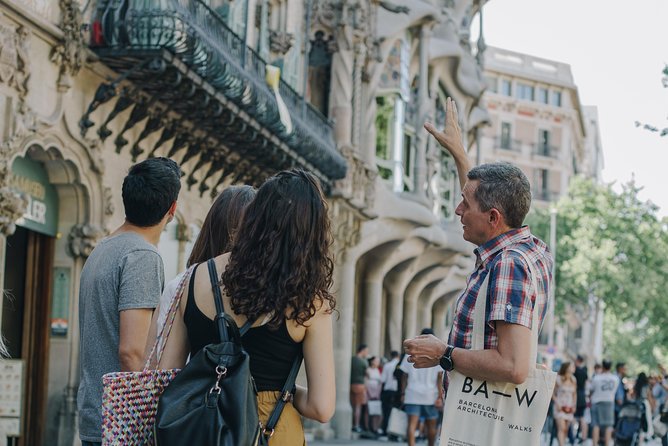
Next up is Casa Batlló. This is another stop where the payoff comes from interpretation, not checklists. The guide uses what you see outside to explain how Gaudí’s path evolves—moving toward a more spiritual, absorbed creative mode.
You’ll also hear how the tour connects Gaudí to the bigger arc of Modernism. That includes the shift away from earlier ideals and into the later worldview that shaped his work.
What I like about this part is the balance: the tour doesn’t reduce Gaudí to a single label. It treats him as a thinker shaped by time and tension, not just a name on a postcard.
Casa Calvet and the Value of Contrasts

After Batlló, you’ll head to Casa Calvet. This stop is useful because it brings contrast into the route. Modernism wasn’t one uniform style—architects experimented, competed, and expressed different ideas even when working in the same city.
That matters if your mind keeps asking: how can all these buildings belong to the same era and still feel so different? This is where you start getting answers that go beyond style labels.
You’ll leave each stop with something you can carry forward to the next one—an understanding of patterns in the design language and the social logic behind it.





La Mansana de la Discordia: Seeing a Whole Block as a History Lesson
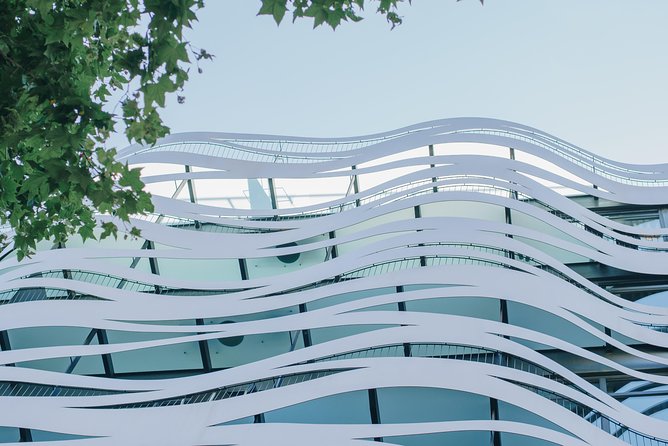
One of the most fun parts of the walk is the area around La Mansana de la Discordia. The tour keeps you focused on the way neighboring houses create a kind of dialogue.
Along the route, you’ll also get side looks connected to other architects and buildings such as Casa Lleó Morera by Domènech i Montaner, and Casa Amatller by Puig i Cadafalch. You’ll also see hints of Eixample courtyards that most people rush past.
Even though you’re not going inside anything, these glimpses help you understand why the Eixample blocks feel like stages for different creative visions. It’s less about one perfect façade and more about how the neighborhood reads as a set of competing ideas.
The Big Ideas Part: From Colònia Güell to Sagrada Família
A smart feature of this tour is how it handles Gaudí’s evolution. You won’t just hear about buildings as icons—you’ll hear about shifts in meaning.
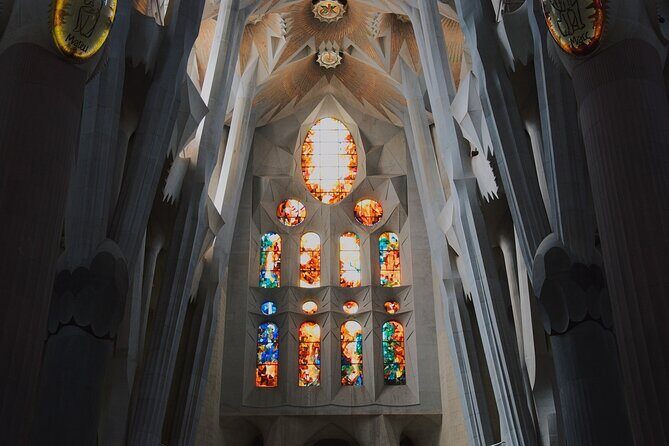
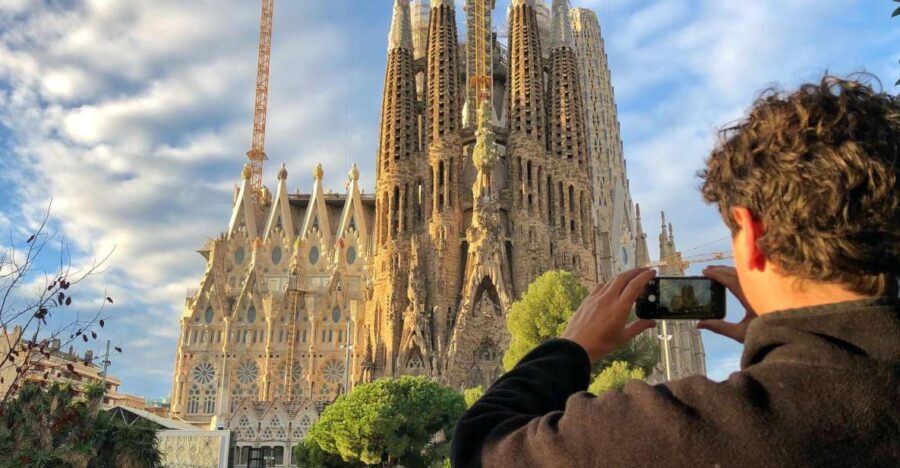
The guide talks about the Crypt of Colony Güell and the Sagrada Família as part of the storyline, using them to show Gaudí’s move from human concerns into a total absorption with the divine. It’s a big arc, and the tour’s structure helps you keep it straight.
You’ll also cover concepts that sound like they belong in a lecture—utopian socialism, positivist materialism, the intellectual bourgeoisie, the Spanish Civil War, anarchism, beatification, and deliquescent surfaces. Don’t worry if all of that feels heavy at first. The guide’s job is to make it connect back to what you’re seeing.
Fundació Antoni Tàpies: Modern Art After Modernism
To end, the tour includes Fundació Antoni Tapies (the Antoni Tàpies Foundation). This is a good pivot. The experience doesn’t stop at Gaudí-as-a-monument. It helps you carry the Modernism conversation forward into modern art.
Ending here also gives you a moment to slow down mentally. You’ve spent hours building a framework for what Modernism meant. Then you get a reminder that the story doesn’t end with one architect or one decade.
If you like finishing a walking tour with a cultural stop that broadens your view, you’ll appreciate this choice.
Why the Guide’s Background Matters Here
This is led by practicing architects, and that shows. I love how the explanations stay specific, and how the guide connects design details to larger arguments instead of treating architecture as pure style.
The reviews also highlight something you can feel right away if you’ve ever sat through a boring tour: the guide’s delivery. In the examples I’m drawing from, Pia stood out for accuracy, range, compassion, and a sense of humor that keeps complicated ideas from feeling stiff.
So if you want a tour that can discuss Modernism in social and intellectual terms without losing the plot, this is the format to choose.
What You Get For $54.44: Value Without Interior Tickets
At $54.44 per person for around 3 hours, this isn’t a budget gamble. It’s priced like an instructor-led, architect-driven walking experience focused on interpretation.
Here’s where the value comes from:
- You’re paying for expertise that turns façades into context.
- The route hits major Gaudí stops plus additional Modernist references in the Eixample.
- The small group size (up to 20) makes it easier to get answers.
And because the tour doesn’t go inside buildings, you’re not paying the premium that usually comes with timed entry. Instead, you’re buying time and guidance for exterior viewing.
If you’re hoping to spend the day inside famous interiors, then you may want a different kind of tour. But if you want to understand what you’re seeing, this price-to-experience ratio makes sense.
Practical Comfort: Pace, Weather, and Getting There
The tour is designed as a walking circuit, so comfortable shoes matter. You’re out for about 3 hours, and the experience depends on good weather. If weather turns bad, the plan is to offer a different date or a full refund.
Since it’s near public transportation and you’ll start at a clear meeting point in Eixample, you can fit it into a Barcelona itinerary without needing a car or extra transfers.
One more small point: the confirmation happens at booking, and the tour uses a mobile ticket. That’s handy for keeping your day simple.
Who This Barcelona & Gaudí Tour Is Best For
This one is ideal if you:
- Want Modernist architecture explained in context, not just described
- Like walking tours with room for questions
- Enjoy architect-level discussions tied to real historical events and ideas
- Prefer seeing buildings from the outside with expert commentary
It may be less ideal if you:
- Really want interior visits or guided building interiors
- Prefer quick sightseeing over interpretation and historical framing
- Don’t want to hear about broader political and intellectual topics
Should You Book This One?
I’d book it if your goal is understanding Gaudí and Barcelona Modernism as a connected story. The best part isn’t any single façade—it’s the way the route stitches ideas together: Gaudí’s evolution, the end of modernism, and the social and political forces surrounding it.
But go into it knowing the format: no interiors. If you want to spend time inside Casa Milà or Casa Batlló, this tour won’t replace that.
If you want the street-level education version of Barcelona architecture, this is a strong choice.
FAQ
How long is the Barcelona & Gaudí Regular Tour?
It runs for about 3 hours.
What language is the tour offered in, and do you need a printed ticket?
The tour is offered in English, and you’ll have a mobile ticket.
How big is the group?
The tour has a maximum group size of 20 travelers.
Do you go inside Casa Milà, Casa Batlló, or the other buildings?
No. The tour does not go inside the buildings.
Where is the meeting point?
The meeting point is Monument al Llibre, Gran Via de les Corts Catalanes, 634, L’Eixample, 08007 Barcelona, Spain.
What is the cancellation policy?
Free cancellation is available. You can cancel up to 24 hours in advance for a full refund.
What if the weather is bad?
The experience requires good weather. If it’s canceled due to poor weather, you’ll be offered a different date or a full refund.