REVIEW · BARCELONA
Barcelona Gothic Quarter Walking Tour
Book on Viator →Operated by Turisme de Barcelona · Bookable on Viator
Medieval Barcelona, minus the guesswork. This 2-hour walking tour takes you through the Barri Gòtic, then points you toward the Roman Temple d’August and the medieval power center of Plaça del Rei. I love the small-group size and the clear mix of Roman and medieval sights. One possible drawback: if you want nonstop walking and a very tight route, you might feel the tour lingers longer around the cathedral area.
Meeting at Pla de la Seu 2 puts you right at the edge of the old-town core, and you finish back there. The guides—names like Alberto, Pilar, Alex, David, and others come up—are the difference-maker, with an earpiece setup that helps you hear clearly while you’re moving. Start times depend on the language you book, and you’ll get a mobile ticket after confirmation.
It’s $33.26 per person, and the value isn’t just the itinerary—it’s the time with a local guide in a part of town that can feel like a maze. The main site stops list free admission, so you’re mostly paying for guidance and pacing. Wear grippy shoes; these lanes are full of short turns, uneven footing, and plenty of photo angles, rain or shine.
In This Review
- Key highlights worth your attention
- Starting at Pla de la Seu: your anchor point in the Barri Gòtic maze
- The Barri Gòtic in real time: squares, medieval corners, and stories you can’t easily spot
- What to watch for while you’re walking
- Temple d’August: the Roman layer that feels like it’s built into the neighborhood
- Plaça del Rei and Santa Agata: medieval power at street level
- Guides, pacing, and how you’ll actually hear the story
- Price and value: what $33.26 buys you in the Gothic Quarter
- Practical tips to make the walk comfortable (and photogenic)
- Who this tour is best for (and who should think twice)
- Should you book this Barcelona Gothic Quarter walking tour?
- FAQ
- How long is the Barcelona Gothic Quarter walking tour?
- Where do I meet the tour, and do I return to the same place?
- Is the tour offered in English, and do start times vary?
- Will I get a mobile ticket?
- Is admission included for the Temple d’August stop and other sights?
- What group size should I expect?
- Is food and drink included?
- Are service animals allowed?
- Is the booking refundable if I cancel?
Key highlights worth your attention
- Barri Gòtic walking route for first-timers with a guide to help you read the streets and squares
- Temple d’August stop focused on one of the best-preserved Roman relics in Barcelona
- Plaça del Rei + Santa Agata brings medieval architecture into street-level context
- Small group limit (up to 20) for a more manageable, hear-the-guide experience
- Earpiece support so you can follow along even when you’re not at the front
Starting at Pla de la Seu: your anchor point in the Barri Gòtic maze

The whole experience starts at Pla de la Seu, 2, in Ciutat Vella. This is a smart choice because it puts you near the Gothic Quarter action without forcing you to wander first and hope you find the right alley.
You’ll walk the route with your local guide and end back at the same meeting point about two hours after departure. That matters more than it sounds: once you’re in this part of Barcelona, it’s easy to lose time and direction on your own. With a set finish point, you can plan your next stop—lunch, a museum, or just wandering with your bearings.
The tour is offered in English, and the operator sets your start time based on which language you choose. You’ll also use a mobile ticket, which is handy when you’re juggling bags, phones, and museum lines.
You can also read our reviews of more tours and experiences in Barcelona.



The Barri Gòtic in real time: squares, medieval corners, and stories you can’t easily spot
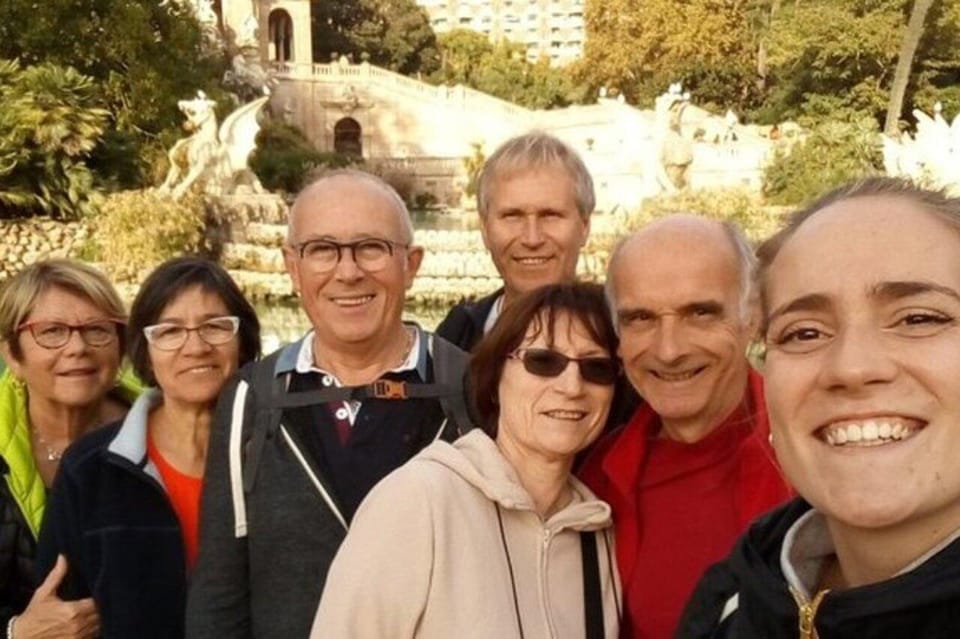
The first leg is the Barri Gòtic itself—its streets, squares, and older buildings—explained with history and people-focused anecdotes. This is where the tour earns its keep. Without a guide, you can still admire the architecture, but you’ll usually miss why certain blocks matter and how layers of the city connect.
You’ll see major stops along the way, including Plaça del Rei (more on that next) and a guided path that’s meant to connect the area rather than treat it like a checklist. Some people love how compact the route feels and how it helps you understand what you’re looking at on the spot.
A fair caution: one negative note mentioned that the group spent more time than expected around the cathedral area and that the path felt less structured. That doesn’t mean it will happen to you, but it’s worth knowing your own style. If you prefer faster movement and minimal stopping, ask your guide early what they’re prioritizing and whether you’ll have more short walk segments or longer pauses at each major point.
What to watch for while you’re walking
I like using the first stop to train my eyes. You’ll move through tight medieval streets where doors, arches, and square layouts can look similar if you’re not paying attention. Your guide’s job is to point out what’s worth noticing and why—so you don’t leave with photos only, but with names and context too.
Temple d’August: the Roman layer that feels like it’s built into the neighborhood
After the medieval streets, you’ll reach MUHBA Temple d’August. The big reason this stop is so memorable is simple: it’s presented as one of the city’s last remaining Roman relics, and it’s treated as a living part of the area rather than a distant museum exhibit.
You’re not just hearing about Roman Barcelona in theory. You’re standing in a place that the tour frames as a contrast to the medieval buildings around it. That shift helps a lot if you want Barcelona’s history to feel like a timeline instead of separate attractions.
This stop is listed with free admission in the tour information, which is a nice cost-saver. Even if you don’t plan to spend every minute reading signage, being guided here makes the experience more than just a quick glance.
If you’re the type who likes “how did this city change” stories, the Temple d’August stop is the anchor. It turns the Gothic Quarter from a pretty maze into a place where different eras overlap in the same walk.
Plaça del Rei and Santa Agata: medieval power at street level
Plaça del Rei is next, and this is one of the tour’s most visual sections. It’s the kind of place where buildings and arches tell you who held power and what mattered at the time—especially when you learn what to look for as you arrive.
The tour also includes the Palatine chapel of Santa Agata. That detail is worth it because it gives you a specific named landmark, not just a generic “church moment.” A guided explanation helps you understand what this chapel is and why it gets folded into the larger medieval story of the area.
One more useful detail: some stops in this neighborhood can include elements that are replicas of earlier originals. That’s not a deal-breaker; it just means you should listen for what’s original versus what’s re-created. A good guide will point that out in plain language so you don’t feel like you’re being shown something slightly different than you expected.
Plaça del Rei is also where you can take photographs without feeling like you’re fighting traffic. You’ll still be in the old city core, but the way the guide times your arrival can help keep the walk comfortable.





Guides, pacing, and how you’ll actually hear the story

This tour runs with a local guide, and the biggest theme that shows up again and again is how much the guide affects the experience. Names like Alberto and Pilar come up with frequent praise, and people also mention guides such as Alex, David, Feliciano, and Geordi (George).
What I like about this setup is that it’s not just “look at this building.” Guides use storytelling and practical signposting—pointing out details you’d likely miss if you wandered on your own. Some guides are also described as using handy visuals to connect what you’re seeing now with what used to be there.
Pacing is part of the value too. One positive note highlights that the route works well for nearly everyone, including families, and that the tour can be kept from dragging. Another mention says the guide used an earpiece so the whole group could hear clearly, which is a real quality-of-life factor in a busy historic area.
Your main pacing question to ask yourself is how you handle longer pauses. If you’re sensitive to standing still too long, be ready to use the “cathedral area” time for photos, quick observations, and a short break. If you love architecture and prefer slow looking, this part should feel like time well spent.
Price and value: what $33.26 buys you in the Gothic Quarter

At $33.26 per person for about two hours, this tour is priced like a guide-led walking experience—so you’re paying for direction, interpretation, and time saved. The value gets better because the listed site admissions for stops like Temple d’August are shown as free, meaning you’re not stacking extra entrance fees on top.
Also, the group size matters. With a max of 20 travelers, the tour is small enough for the guide to manage the pace and enough people around for a lively feel—without turning into a full-on crowd crush.
One practical note: food and drinks aren’t included. That’s normal for a walking tour, but it affects how you should plan your day. If you want a coffee break, save it for after the tour (or plan to pause on your own nearby). Several people mention a good stopping point for local coffee/food, but treat it as optional—your ticket doesn’t come with a meal.
Net-net: if you’re visiting for the first time or you want to understand the Gothic Quarter fast, paying for a guide here is usually a smart use of time. If you hate walking tours with lots of standing, you might prefer a shorter self-guided loop instead.
Practical tips to make the walk comfortable (and photogenic)
- Wear solid shoes. The Gothic Quarter’s streets are made for exploring, not for flip-flop decision-making.
- Bring water. The tour is around two hours, but you’ll still feel it under sun and stone.
- Plan for a slower “look time.” Some stops include cathedral-area moments and chapel details, so expect some standing.
- Use the earpiece if it’s provided. If your guide uses one, keep it in place so you don’t miss key context.
- Rain-ready layer helps. One account notes the guide still ran despite rain, which is a good reminder that you should dress for weather and not just sunshine.
Who this tour is best for (and who should think twice)
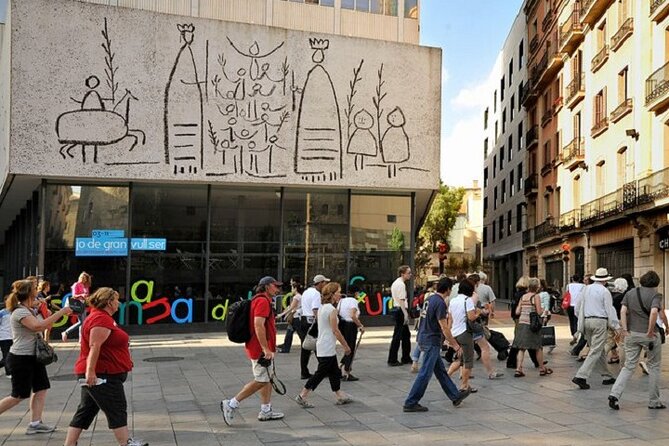
This is a strong fit for first-time visitors who want to understand what they’re seeing in the Gothic Quarter without getting lost. It’s also ideal if you’re on a tight schedule and you’d rather spend two hours learning than spending two hours circling the same square.
It’s a good choice for people who like architecture plus story. If you want the Roman-to-medieval contrast to make sense, Temple d’August and Plaça del Rei give you that “layers of the city” feeling in one walk.
If you’re the type who hates any chance of the guide spending extra time at major sites, this might not be your favorite style. There’s enough focus on landmarks like the cathedral area that you should treat this as a guided sightseeing walk, not a pure speed-walk.
Should you book this Barcelona Gothic Quarter walking tour?
I’d book it if you want a guided, two-hour orientation to the Barri Gòtic with named highlights—Temple d’August and Plaça del Rei—plus a guide who uses clear storytelling and (often) an earpiece so you can actually follow. At $33.26 with free admission listed for key stops, it’s a fairly efficient way to buy context without stacking extra costs.
I’d think twice if you’re very particular about pacing and you can’t stand spending extra time at the cathedral area. In that case, message or ask the guide what the route focus will be so you know what you’re signing up for in real terms.
If you fit the “I want to understand this part of Barcelona fast” category, this one is a solid yes.
FAQ
How long is the Barcelona Gothic Quarter walking tour?
The tour lasts about 2 hours.
Where do I meet the tour, and do I return to the same place?
You meet at Pla de la Seu, 2, Ciutat Vella, 08002 Barcelona, Spain. The tour ends back at the original meeting point.
Is the tour offered in English, and do start times vary?
The tour is offered in English, and the start time depends on the language you choose.
Will I get a mobile ticket?
Yes, the tour provides a mobile ticket.
Is admission included for the Temple d’August stop and other sights?
The information for the stops lists admission as free, including the Temple d’August and the other listed sites.
What group size should I expect?
The tour has a maximum of 20 travelers.
Is food and drink included?
No. Food and drinks aren’t included unless something is specified by the tour.
Are service animals allowed?
Yes, service animals are allowed.
Is the booking refundable if I cancel?
No. The experience is non-refundable and cannot be changed for any reason.