REVIEW · BARCELONA
Barcelona: Montjuïc Guided Segway Tour
Book on GetYourGuide →Operated by Euro Segway · Bookable on GetYourGuide
Segway panoramas land fast. I like that this tour pairs Montjuïc Castle views with quick photo stops across the city, and I also like the hands-on feel of the Segway lesson and test drive before you start moving. One catch: if you’re nervous about balancing on a moving device, the early training phase may feel like extra time.
You’ll start in the Gothic Quarter area and roll past the Old Port, then switch gears as the route climbs into parks and viewpoints on Montjuïc. Along the way you get a real sense of Barcelona’s contrast: medieval streets and modern architecture, then wide open sky above the city.
Plan on 2 to 3 hours outside, mostly outdoors, so bring comfortable shoes and expect some stairs or slopes in the area even with Segway time. This isn’t suitable for kids under 16, pregnant women, or anyone outside the 35–125 kg weight range, and you must not show up intoxicated.
In This Review
- Key things to know before you go
- Getting Started on Carrer del Correu Vell: lesson, helmets, and momentum
- From the Gothic Quarter area to the Old Port: city views before the climb
- The Roman Wall, El Cap de Barcelona, and Mirador de Colom: fast history with picture-perfect angles
- Parc de Montjuïc and the Hotel Miramar cable car area: nature breaks with city payoffs
- Mid-mountain sculpture and design stops: Piscina Municipal, parabòlic reflector, and Monument a la Sardana
- Miradors leading to the big moment: Mirador Montjüic and Mirador de Montjuic
- Montjuïc Castle: the 17th-century fortress and the 173-meter viewpoint payoff
- Olympic landmarks on Montjuïc: Lluís Companys Stadium, Palau Sant Jordi, Anella Olímpica
- MNAC (Museu Nacional d’Art de Catalunya) and the look back at the city center
- How long the tour really feels: 2 to 3 hours with lots of short stops
- Price and value at $76: what you’re paying for besides scenery
- Who this Montjuïc Segway tour suits best
- Should you book the Barcelona Montjuïc Guided Segway Tour?
- FAQ
- How long is the Barcelona Montjuïc Guided Segway Tour?
- Where does the tour start and end?
- What’s included in the price?
- What languages are the guides available in?
- Is this tour suitable for children?
- What about weight and pregnancy limits?
- Does the tour run in the rain?
Key things to know before you go
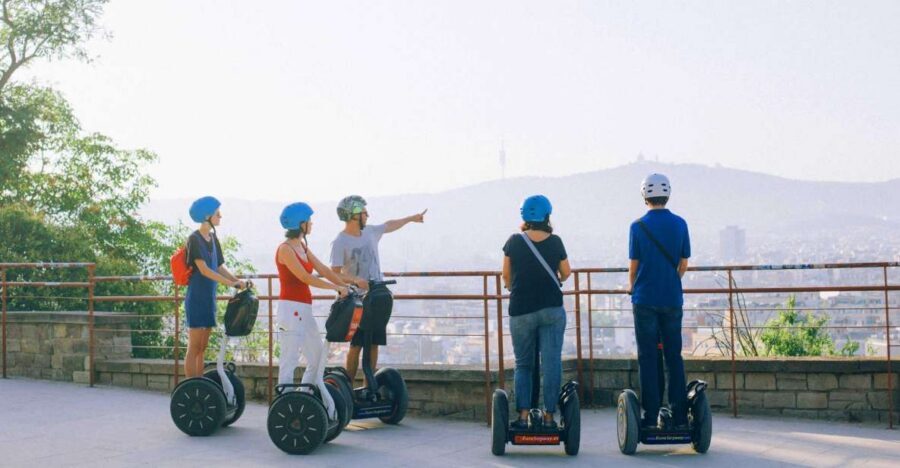
- Segway confidence first: You get a driving lesson and a test drive before the sightseeing starts
- Panoramas at multiple levels: You’ll stop at lots of miradors, not just one big lookout
- 17th-century fortress time: Montjuïc Castle is the main high point
- Olympic-era architecture stops: Lluís Companys Olympic Stadium and Palau Sant Jordi are part of the route
- Art museum viewpoint stop: Museu Nacional d’Art de Catalunya (MNAC) is included for a city-center moment
Getting Started on Carrer del Correu Vell: lesson, helmets, and momentum
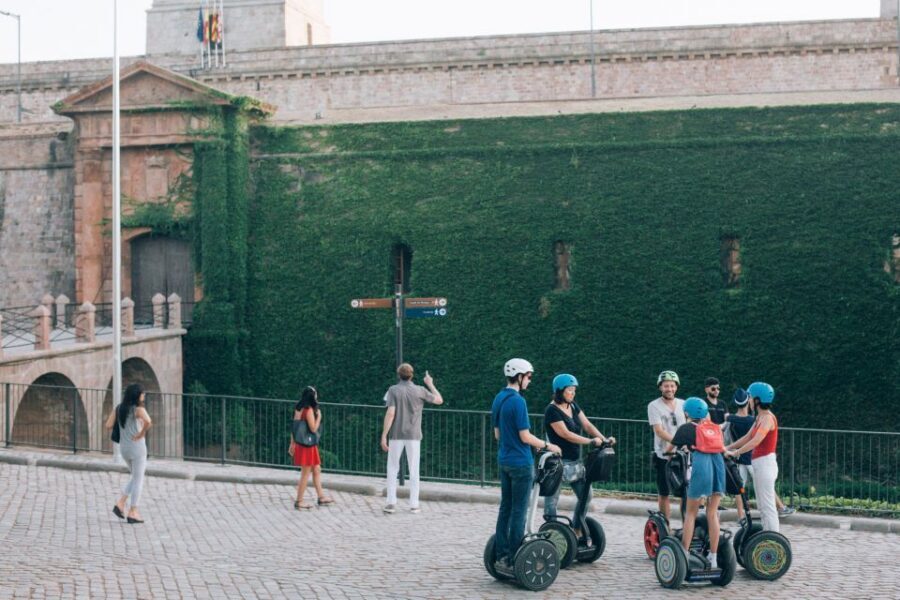
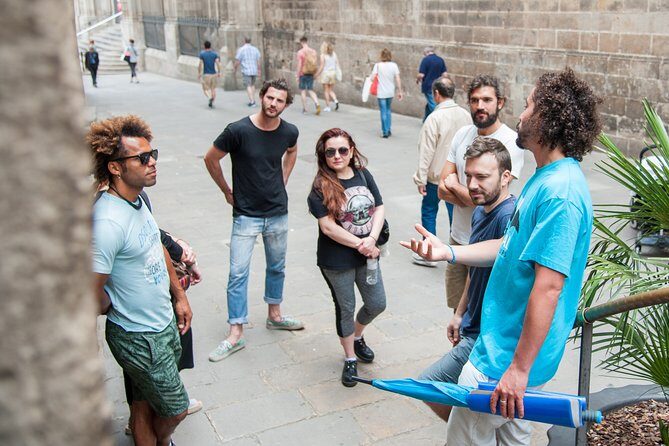
The tour kicks off at Carrer del Correu Vell, 6, right in the city. That matters because you’re not commuting far to begin your adventure. Once you arrive, the process is simple: you’re geared up with a helmet, and you get a Segway driving lesson plus a short test drive.
I like this approach because it keeps your sightseeing time from turning into a wobble-fest. You’ll be practicing basic control while the guide is watching, so when you roll out to the first real stops, you can focus on where you’re going instead of how you’re balancing.
There’s also a safety briefing at Plaça dels Traginers that runs about 15 minutes. The practical point here: assume you’ll spend at least some time learning the feel of the Segway, especially if you’ve never tried one.
If rain pops up, you’ll be given raincoats. That’s not glamorous, but it’s smart for a hill route where slippery pavement would otherwise slow you down.
You can also read our reviews of more guided tours in Barcelona


From the Gothic Quarter area to the Old Port: city views before the climb
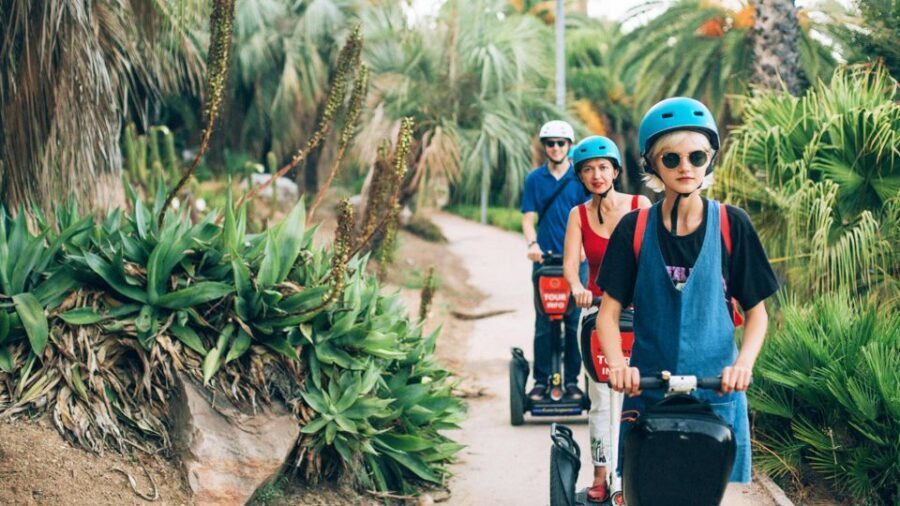
This tour doesn’t start with nature. It starts with the city energy. You pass by the seaside of the Old Port, and the route is designed to ease you from dense streets into wide views.
That transition is one of the best parts for first-time visitors: you get Barcelona’s “layers” without needing to map everything yourself. Early on, you’ll be moving through the areas that help explain why the city looks the way it does—medieval core streets nearby, then bigger avenues and modern construction farther out.
From there, you head toward the Montjuïc side of the city and your viewpoint stops begin.
One note for pacing: you’re on Segway, so you’ll cover ground faster than walking. That’s great for seeing more in 2 to 3 hours, but it also means you’ll want to be ready to pause quickly for photos and then keep going. If you like long, linger-in-one-place moments, this format may feel a bit scheduled.
The Roman Wall, El Cap de Barcelona, and Mirador de Colom: fast history with picture-perfect angles
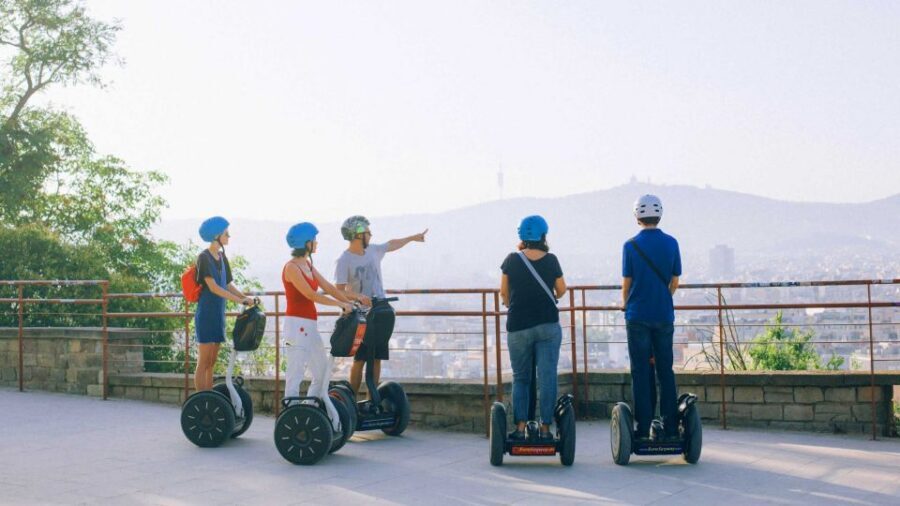
As you work your way into the Montjuïc approach, you’ll hit a sequence of stops that function like a viewpoint “setup” for the big high points.
At the Roman Wall stop, you get a photo stop with a guided explanation. Even without a long museum-style visit, this kind of stop helps you place what you’re seeing. It’s a quick way to connect the hill with the older layers of the city.
Then you’re at El Cap de Barcelona, another short photo-and-guide moment. Stops like this are basically the tour’s camera-friendly way of helping you orient your eyes. You start learning what direction things are, how the coastline sits, and where the urban grid turns into hillside.
Mirador de Colom is the next key viewpoint stop. This is one of those spots where the guide’s context can make the view feel bigger and more meaningful. You’re seeing Barcelona from an angle most people only catch from a single viewpoint, not a whole chain.
The practical upside: you’ll take photos from a variety of angles, so you’re not stuck with one view that’s slightly awkward for your timing or your camera position.
Parc de Montjuïc and the Hotel Miramar cable car area: nature breaks with city payoffs
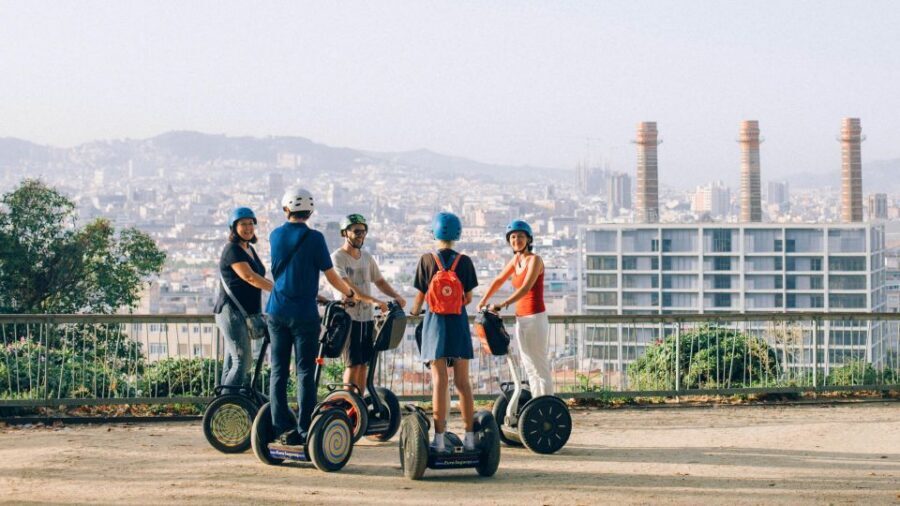
Once you’re deeper into Montjuïc, the tour shifts into park mode. Parc de Montjuïc is where the atmosphere changes. You trade street noise for more open air, more greenery, and more space to look out over the water and city.
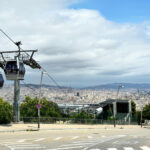
You’ll also reach the square of Hotel Miramar and the cable car station, which is described as being made especially for the Universale EXPO 1929. Even if you don’t take the cable car ride itself, the stop helps you connect Montjuïc to a specific moment in Barcelona’s modern story—how the city used big events to reshape its image.
Mirador de Miramar follows, with a dedicated photo stop and guided time. This is the kind of stop where it’s worth taking a step back from your camera. Look first, then shoot. The view isn’t just pretty; it’s useful. You’re seeing how the ports and coastline relate to the city core, so later, when you’re standing higher at Montjuïc Castle, the city pattern makes more sense.
Expect fountains, parks, and gardens along these stretches. That’s part of what makes the whole day feel like more than just a “points on a map” tour. It also keeps the ride from becoming too repetitive.
Mid-mountain sculpture and design stops: Piscina Municipal, parabòlic reflector, and Monument a la Sardana
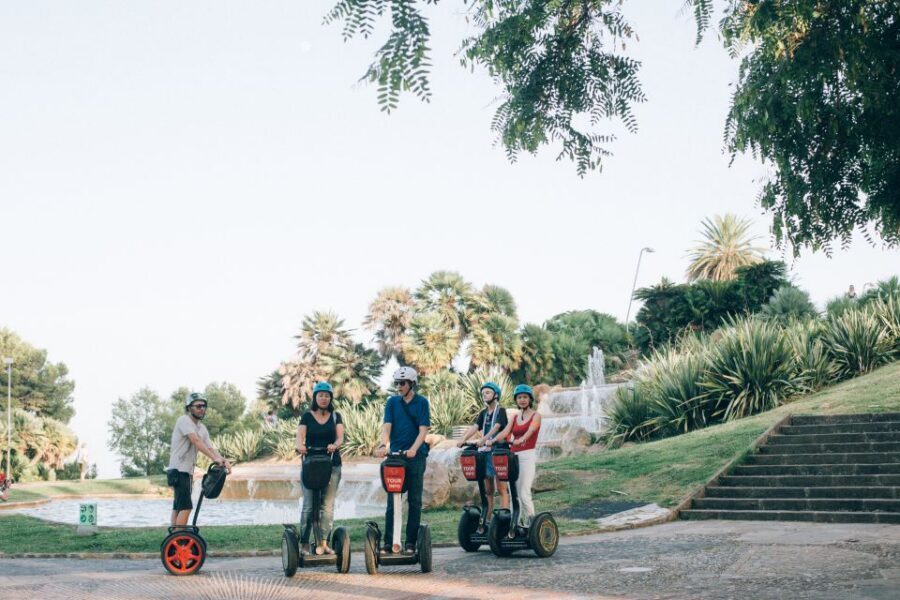
In the middle of the route, you’ll find stops that feel different from the pure sightseeing viewpoints: Piscina Municipal de Montjuïc, Reflector parabòlic, and Monument a la Sardana.
These are quick photo and guided moments, not long visits. So what you get from them is context and orientation, not deep architectural study.
That said, this is where the tour earns its modern twist. You’re on a hill famous for older fortifications, but you’re also moving through spaces connected to later design and public works. The Reflector parabòlic stop, for example, is likely the kind of thing you would ignore if you were walking alone. With a guide, it becomes a clue.
The Monument a la Sardana is similar: you get a moment to learn what it represents and why it belongs on Montjuïc. Even if you’re not a cultural history specialist, it helps you see the hill as a living public space rather than a single attraction.
If you tend to skip side stops on tours, keep an open mind here. These are short stops, but they help make the whole route feel intentional.



Miradors leading to the big moment: Mirador Montjüic and Mirador de Montjuic
Before Montjuïc Castle, you’ll pass through additional mirador stops, including Mirador Montjüic and Mirador de Montjuic. These are key because they act like “practice” for the final panorama.
If you’re the type who wants your first big view to feel perfect, these earlier lookouts set you up. You’ll notice angles, learn which parts of the harbor you’re looking at, and get your bearings for the highest point.
Also, these are good times to check your own comfort. If the slope or the height feels like too much, you can pause mentally for a minute here rather than waiting until the castle.
The best part is that you don’t lose momentum. The tour keeps moving while still giving you enough viewpoint time to get photos you’ll actually like.
Montjuïc Castle: the 17th-century fortress and the 173-meter viewpoint payoff
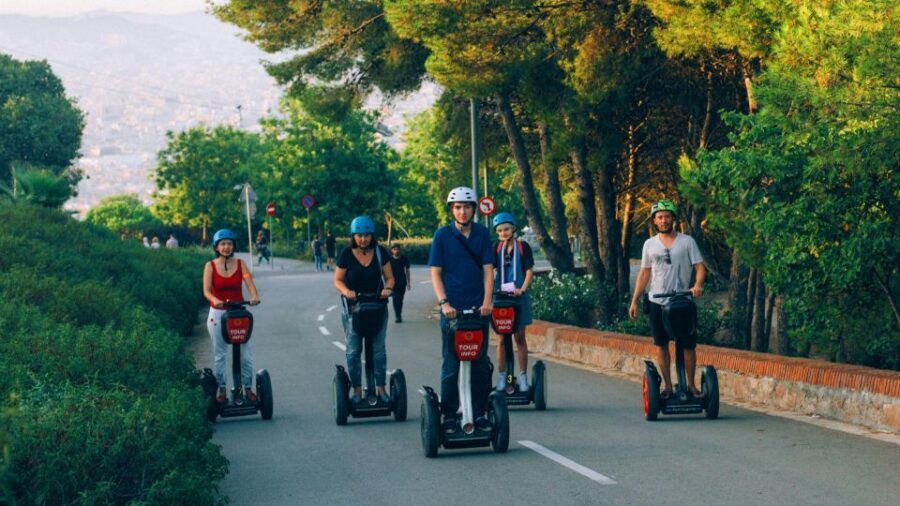
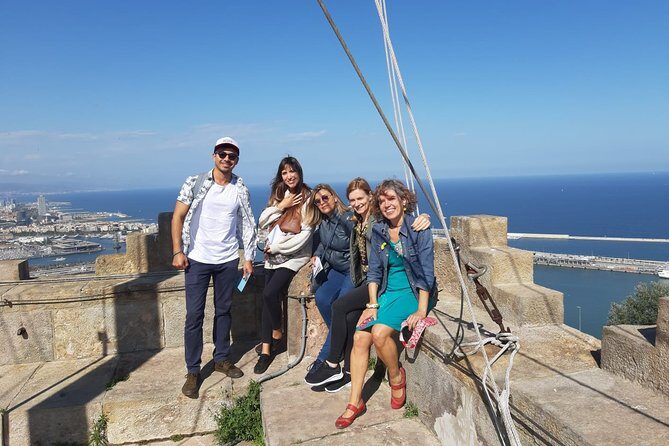
Montjuïc Castle is the headline stop at the top area. It’s described as a fortress from the 17th century, sitting about 173 meters above the sea. That height matters, because you’re not just seeing the city—you’re seeing how the city sits within the coastline and the port.
The photo stop and guided time here are about making the view legible. You should be able to pick out the coastline, the port area, and the city’s structure. If you’ve walked Barcelona before without a strong view, this is the kind of stop that helps your brain “square up” the geography.
This is also the moment where the Segway makes sense. You’re reaching an overlook that would be time-consuming on foot. You still get stops to stretch your legs, but you don’t need to sweat through the toughest climbs to get to the best panorama.
Drawback to consider: because you’re at the top and it’s a fortified area, it can feel more exposed. If you’re sensitive to wind or cold, plan for that.
Olympic landmarks on Montjuïc: Lluís Companys Stadium, Palau Sant Jordi, Anella Olímpica
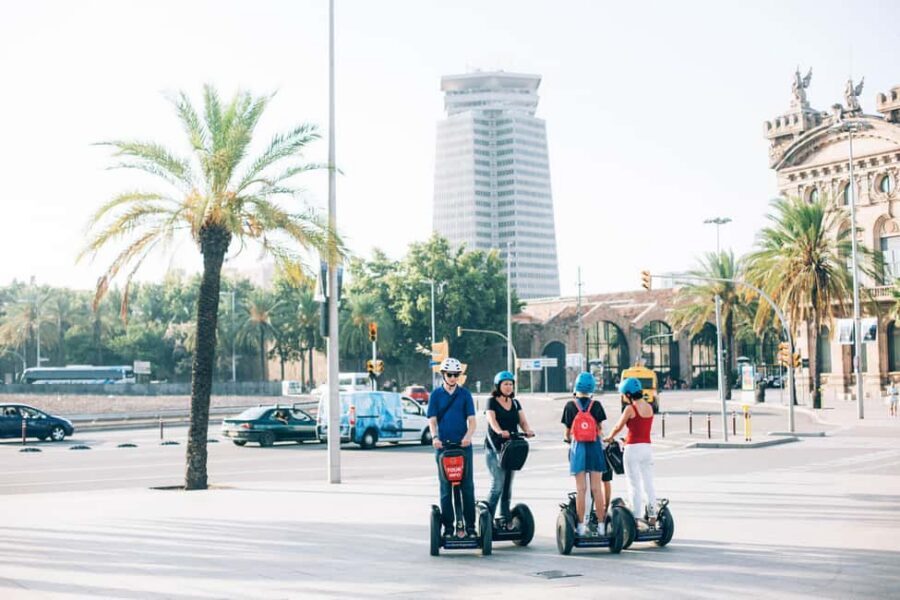
After the castle views, the tour shifts into Barcelona’s more modern athletic and event spaces. You’ll stop at Lluís Companys Olympic Stadium and then Palau Sant Jordi. These are short photo stops with guided context, but they’re still meaningful.
Here’s why I think these stops are worth it: Montjuïc isn’t just a hill with viewpoints. It’s also a reminder of how Barcelona rebranded itself using major sporting and event architecture.
The route then includes Montjuïc Communications Tower, Anella Olimpica, and Canvi, each with a quick guided photo stop. These stops help you see the hill as a campus of different eras. You get a view of how the city planned spaces for future use, not just for one moment.
One small practical tip: with multiple quick photo stops in a row, it helps to have your camera ready before you arrive at the viewpoint. You don’t want to be fumbling with settings while the group is rolling forward.
MNAC (Museu Nacional d’Art de Catalunya) and the look back at the city center
The last major “big context” stop is Museu Nacional d’Art de Catalunya, often shortened to MNAC. The tour describes this as time to visit while also getting a look at the center of the city.
I like that the route ends with a cultural landmark rather than another generic viewpoint. It gives you a sense of how the city’s modern public spaces and institutions fit into the overall skyline and hillside geography.
Even if you don’t go deep into museum galleries during this tour format, the inclusion works like a finishing touch. It turns your Montjuïc time from pure scenery into something with a city identity layer.
How long the tour really feels: 2 to 3 hours with lots of short stops
The tour is listed as 2 to 3 hours depending on starting times. In practice, it feels like a sequence of steady riding punctuated by short guided photo stops. That rhythm is exactly what makes it work.
You’re getting:
- multiple miradors (not one)
- a fortress highlight (Montjuïc Castle)
- Olympic-era architecture stops (several)
- and an MNAC stop that connects the hill back to the city
Because the stops are generally measured in minutes, the tour keeps you moving. That’s ideal if you want a strong overview day without sacrificing your evening plans.
If you’re someone who loves slow wandering, long explanations, and lots of “just one more photo” time, you may feel a bit pushed for pace. But if you show up ready to follow instructions and keep rolling, you’ll likely feel like you got your money’s worth.
Price and value at $76: what you’re paying for besides scenery
At $76 per person, you’re paying for three main things: guided interpretation, Segway transport, and structured viewpoint access.
If you tried to recreate this route alone, you’d likely spend more time getting to the viewpoints and dealing with hill logistics. The Segway lesson and the guide’s steering remove friction. You also get many named stops rather than a vague plan of climb, look, and return.
This isn’t a bargain if you just want one panorama. But it’s strong value if your goal is to see a lot of Montjuïc highlights in a single morning or afternoon without tiring out.
It also earns points for the included gear: helmets, raincoats if needed, and a small bottle of water. Those are small add-ons, but on a hill route they make a difference.
Who this Montjuïc Segway tour suits best
This tour fits best if you:
- want a guided orientation to Barcelona from above
- enjoy photo stops at several miradors
- like the mix of historic and modern landmarks on one route
- don’t want to spend half your day climbing on foot
It’s not for you if you:
- need a very slow, strolling pace
- are pregnant or under 16
- fall outside the 35–125 kg weight range
- aren’t comfortable learning a new device (you can’t skip the lesson and safety briefing)
Language is another plus: the guide is available in Spanish, English, French, and Russian, and private group options are offered. That flexibility helps if you want quieter pacing or a smaller group feel.
Should you book the Barcelona Montjuïc Guided Segway Tour?
I think you should book it if you want a high-impact Montjuïc overview with just enough structure to get the best angles—Roman Wall context early, repeated miradors, a real fortress payoff at Montjuïc Castle, then Olympic-era landmarks before finishing at MNAC. It’s a smart choice for a short stay where you want views and meaning, not just a checklist.
Skip it if you’re hoping for a long, in-depth museum-style experience or if the idea of balancing on a Segway makes you uneasy. Also, if you prefer pure walking with no short photo stops, a classic walking tour might fit you better.
If your plan is flexible and you’re comfortable with the basics, this is one of the easier ways to see why Montjuïc feels like its own world while still staying connected to the city below.
FAQ
How long is the Barcelona Montjuïc Guided Segway Tour?
The tour lasts about 2 to 3 hours. Starting times vary, so you’ll want to check availability for the schedule.
Where does the tour start and end?
It starts at Carrer del Correu Vell, 6, 08002 Barcelona, Spain, and ends back at the same meeting point.
What’s included in the price?
You get a segway driving lesson and test drive, a live guide, helmets, raincoats in case of rain, and a small bottle of water.
What languages are the guides available in?
The live guide is available in Spanish, English, French, and Russian.
Is this tour suitable for children?
No. It’s not suitable for children under 16.
What about weight and pregnancy limits?
It’s not suitable for pregnant women. There are also weight limits: not suitable for people under 77 lbs (35 kg) or over 275 lbs (125 kg).
Does the tour run in the rain?
Raincoats are included if it rains, so you can still go even when the weather turns.