REVIEW · BARCELONA
Barcelona Montjuic Three-Hour Bike Tour
Book on GetYourGuide →Operated by Born Bike Tours Barcelona · Bookable on GetYourGuide
That hilltop view is worth the pedal. This 3-hour guided bike tour takes you from the port area up toward Montjuïc, layering Barcelona’s architecture, Olympic-era landmarks, and postcard views of the Mediterranean into one ride. It’s a smart way to get your bearings fast if you’re short on time.
I especially like the way the route mixes major sights with neighborhoods that feel local, from the Raval area (with the Columbus Monument) to the Port Vell waterfront at the end. The other big win is the guiding: helmets on, drink in hand, and a guide steering you along a safe, simple route designed to avoid heavy traffic. One thing to think about: this isn’t an e-bike tour, so you may not reach the very top of Montjuïc all the way to the castle area.
In This Review
- Key Takeaways Before You Ride
- Montjuïc by bike: the practical way to see more
- The 3-hour route: port air, Raval, and the 1929 legacy
- Plaza de Espana and the climb up Avinguda de la Reina Maria Cristina
- Olympic ring views, Palau Sant Jordi, and Olympic Stadium
- Joan Miró Foundation rest break and the Miramar viewpoint
- Magic Fountain on a bike tour: what you’re really getting
- What you get for $42: value, included gear, and comfort
- Pacing and power: what you should expect on the uphill
- Family-friendly details: helmets, child seats, and a learning vibe
- Languages and guiding quality: what to look for
- Weather and rain jackets: riding in real Barcelona conditions
- Who this bike tour suits best
- Should you book this Barcelona Montjuïc bike tour?
- FAQ
- How long is the Barcelona Montjuïc bike tour?
- How much does it cost?
- What’s included in the price?
- What languages are offered?
- When does the tour run?
- Will the tour run in rain?
- How many people are required for the tour to operate?
Key Takeaways Before You Ride
- 3 hours with a lot of variety: port air, Raval, fountains, squares, Olympic venues, viewpoints.
- Guides handle the route: you ride, they keep things organized and safe.
- Great for first-time orientation: you’ll leave with a mental map of Barcelona.
- Not an e-bike climb to the top: expect effort and know the highest points may be limited.
- Multiple languages on the schedule: Spanish, Italian, Catalan, French, English.
- Family-friendly basics: helmets included, child seats available if desired.
Montjuïc by bike: the practical way to see more
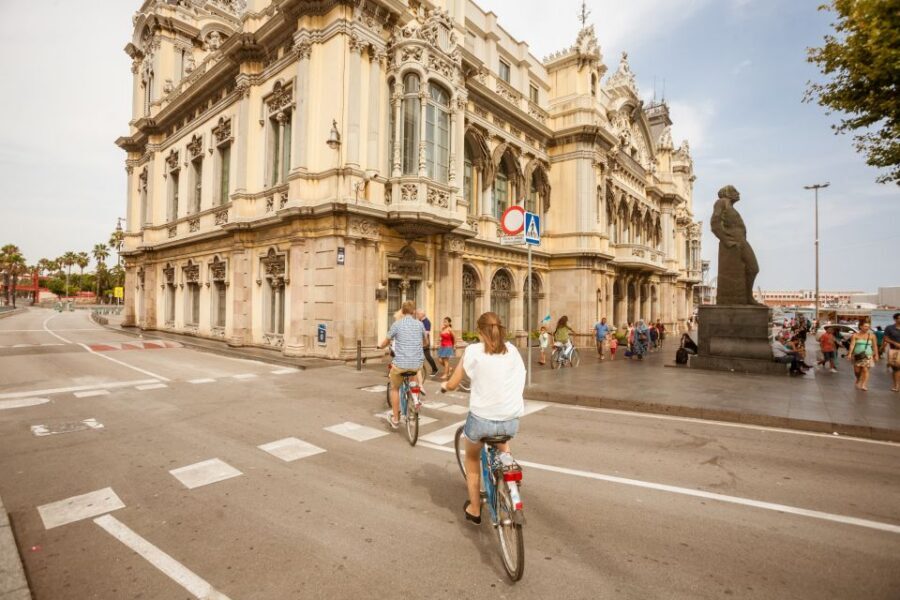
Montjuïc can feel like a whole day if you’re piecing it together by bus and walking. On a bike, you trade that stress for momentum. You cover distance faster, and you get the kind of sweeping angles that are hard to get when you’re stuck on footpaths.
What really makes this tour work is the balance. You’re not just grinding uphill for views. You get context as you go—universal exhibition-era references, landmark squares, and Olympic architecture—so the sights mean something instead of being random stops you take photos at.
For $42 per person, the value comes from what’s bundled: bike rental, helmets, a guide, and a drink. That’s not just convenience; it’s also fewer logistics you have to solve after a travel day. You’re basically paying for a guided route plus the gear.
You can also read our reviews of more cycling tours in Barcelona
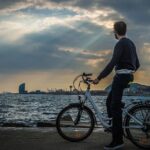
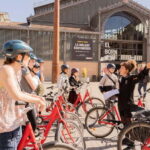
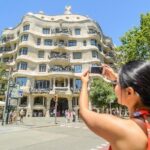
The 3-hour route: port air, Raval, and the 1929 legacy
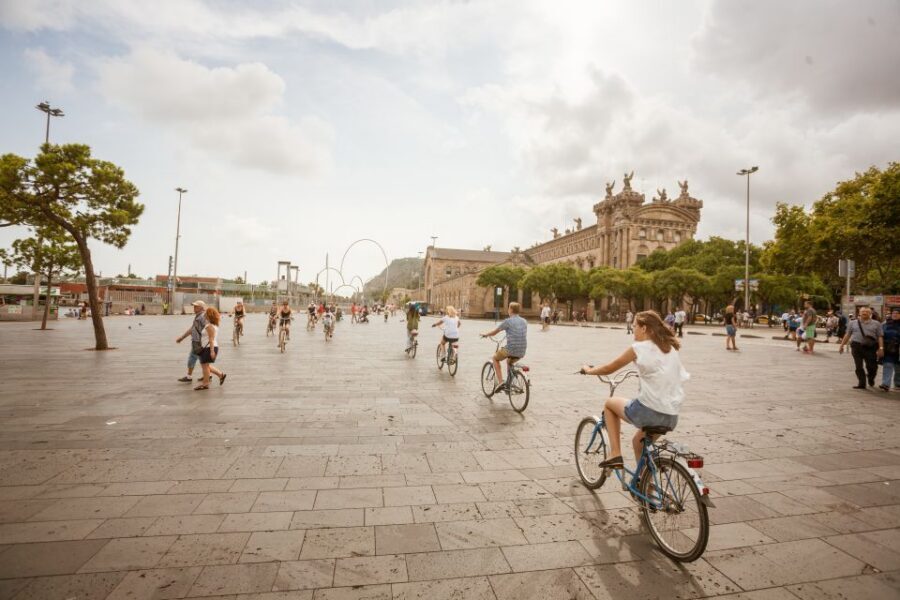
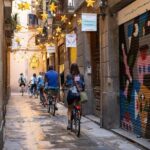
You begin near the port, which is a nice touch. Starting at sea level helps you warm up before the climb and gives you that ocean air vibe right away. Then the ride moves into the Raval neighborhood area, where you’ll encounter the Columbus Monument—a reference point that connects this part of Barcelona to the broader story of exploration and world fairs.
Raval is also where Barcelona’s layers show up: you’re not just looking at monuments; you’re moving through the city’s everyday streets. That matters because Montjuïc can sometimes feel like a separate world. This approach keeps it connected to the real city.
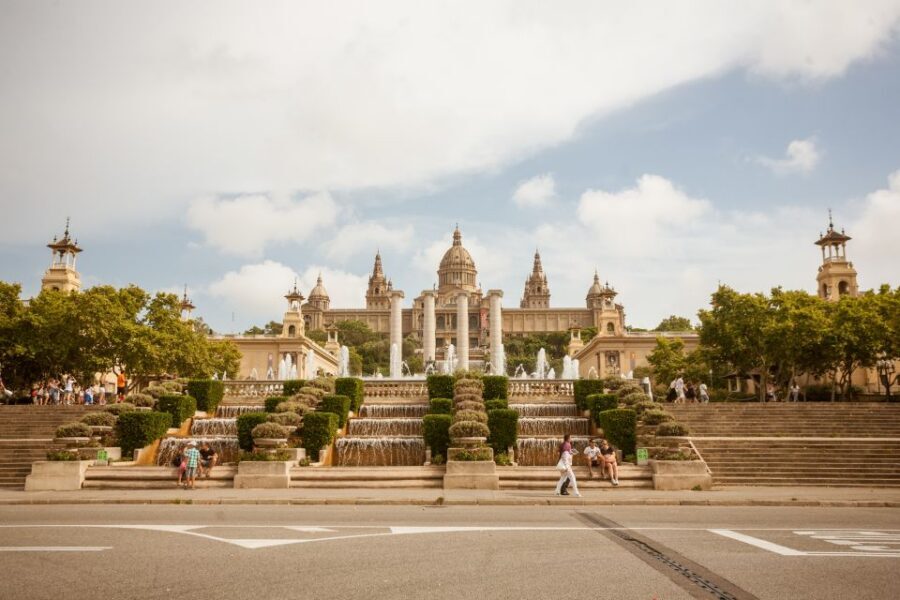
You’ll also head toward the Magic Fountain display. This is the moment built around lights and water, and it’s the kind of stop that breaks up the ride so you’re not only thinking about pedals and road edges. It’s also the sort of sight that works well for families because it’s visual and easy to enjoy without needing a long explanation.
Plaza de Espana and the climb up Avinguda de la Reina Maria Cristina
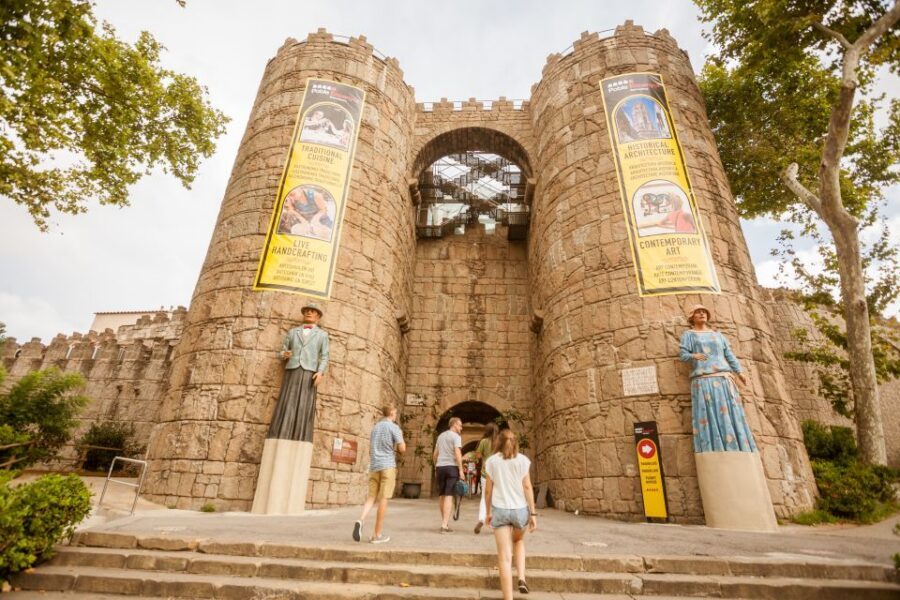
From there, you’ll reach Plaza de Espana, one of Barcelona’s bigger, more formal squares. It’s the kind of space that makes you notice proportions—wide views, statues, and landmark towers. The ride includes the Venetian Towers and statues by Miquel Blay, which helps you place what you’re seeing in the city’s design language.
Then you head up Avinguda de la Reina Maria Cristina. This is a useful segment because it mixes classic and modern architectural styles as the grade increases. In other words, you’re not only climbing; you’re also watching how the city changes its tone as you go.
If you’re the type who likes structure and order in your sightseeing, this portion is a good fit. It’s a guided “move through the city” section, not a long stand-still tour.
Olympic ring views, Palau Sant Jordi, and Olympic Stadium
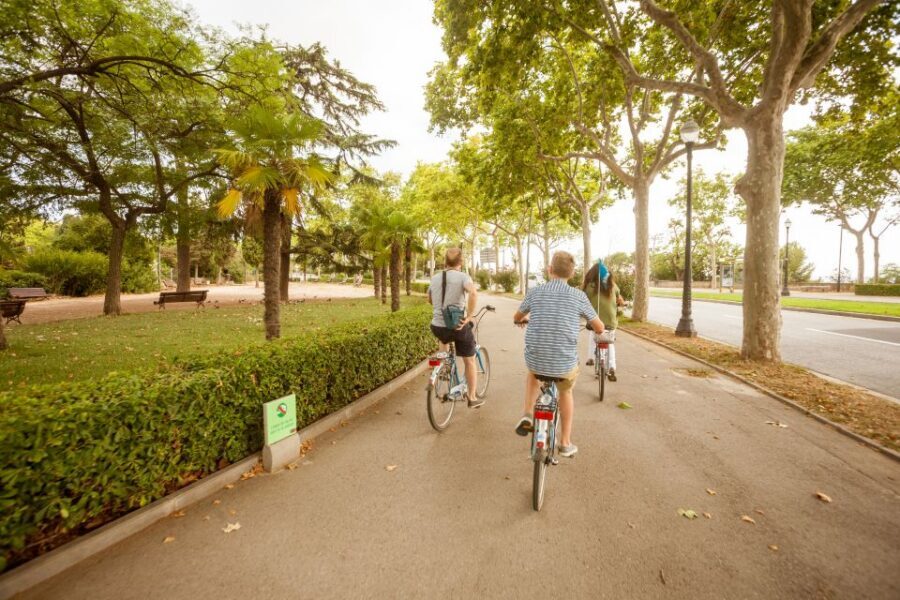
As you climb higher, the tour brings in the Olympic era. You’ll see the Olympic ring, Palau Sant Jordi, and the Olympic Stadium along the way up. Even if you don’t consider yourself a sports-history person, these buildings are visually distinct, and they help you understand why Montjuïc has that special role in Barcelona’s identity.
This is also a practical cycling moment. The scenery changes enough to keep your attention, but the route is still guided and designed to feel manageable. You’re climbing with a sense of purpose—every turn connects to another recognizably “Barcelona” landmark.
Just remember: since this is not an e-bike tour, you’ll want to bring the right energy for a real uphill ride. The tour is built for fun and safety, but it’s still cycling.
Joan Miró Foundation rest break and the Miramar viewpoint
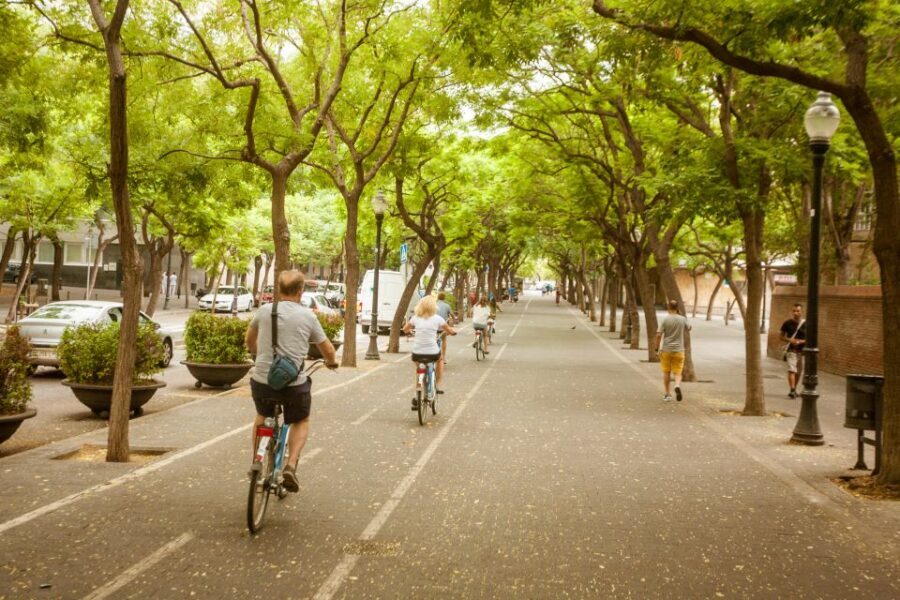
One of my favorite styles of touring is a built-in reset. Here, you get a chance to rest at the Joan Miró Foundation, which is a smart pause during a ride that’s doing a lot of visual work.
After that, you descend toward Miramar, a viewpoint where you can take in Barcelona and the Mediterranean Sea. This is the kind of finish that makes the climb feel “earned.” You’re not just seeing a monument; you’re seeing the city as a whole—coastline, districts, and the sense of how Barcelona sits against water.
If you hate dragging your day out until sunset, this segment is a good compromise. You’ll get a big-view moment without turning the trip into an all-day marathon.
You can also read our reviews of more tours and experiences in Barcelona
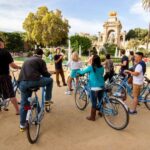
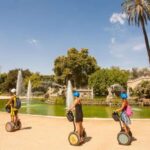
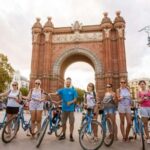
Magic Fountain on a bike tour: what you’re really getting
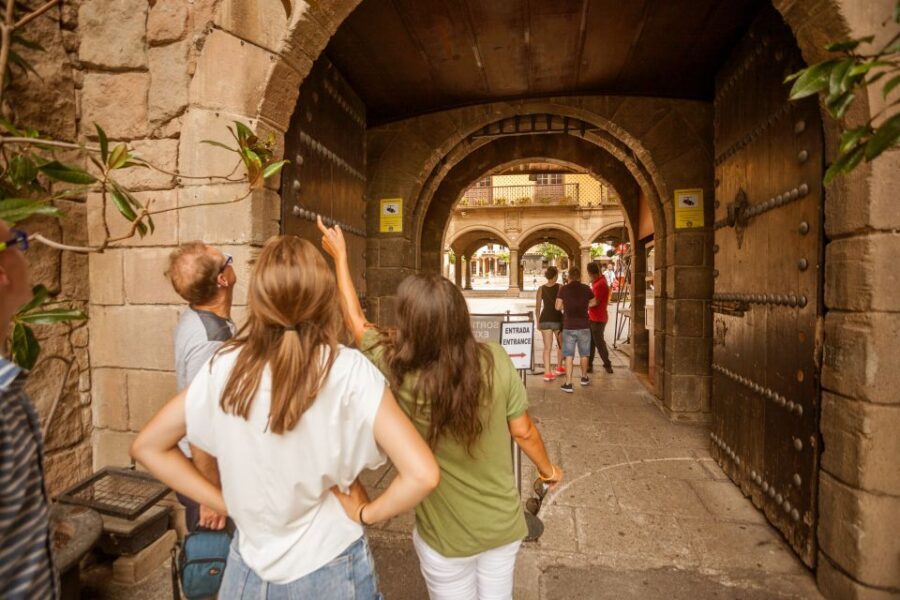
The Magic Fountain highlight is described as a stunning display using lights and water. In practical terms, that means it’s built for instant impact—good for first-time visitors and good for families because it doesn’t require deep historical homework.
The best way to think about it is as a visual break inside an otherwise “movement-heavy” ride. You’re cycling through architecture and neighborhoods, then you stop and let the show-type element do its job. That rhythm helps keep the whole tour relaxing, not just scenic.
What you get for $42: value, included gear, and comfort
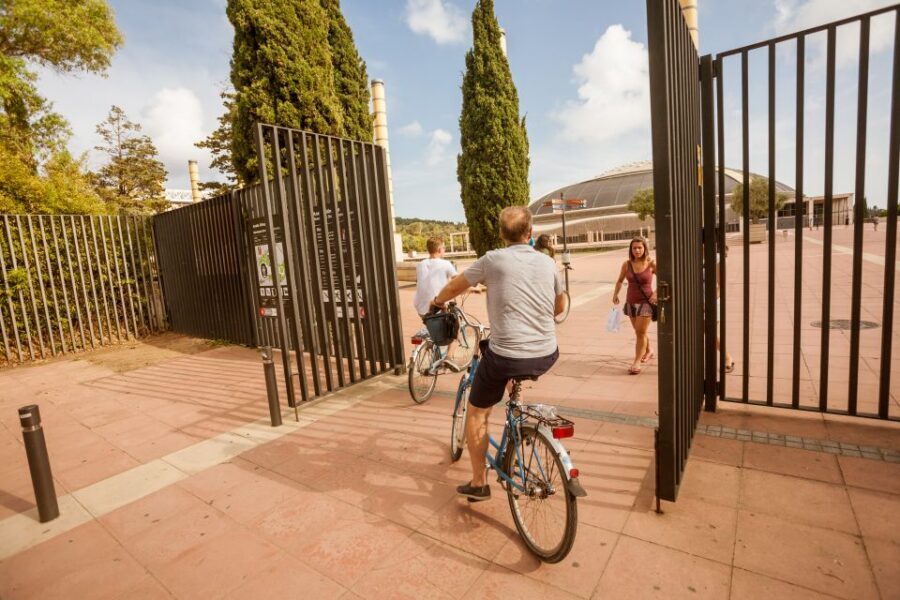
Let’s talk value, because $42 can be a great deal or a questionable one depending on what’s included. Here, you’re not paying extra for the essentials. The tour includes:
- Bike rental
- Helmets
- Tour guide
- A drink
- Child-seats if desired
Those basics matter. Helmets mean you’re not worrying about gear in advance. A bike rental means you can travel light. And the drink is a small thing, but it’s welcome during a ride that involves some effort.
Also, the tour runs on a set schedule: you’ll see daily departures at 11am and 4pm. That helps you plan your day around it, especially if you’re trying to stack activities efficiently.
Pacing and power: what you should expect on the uphill
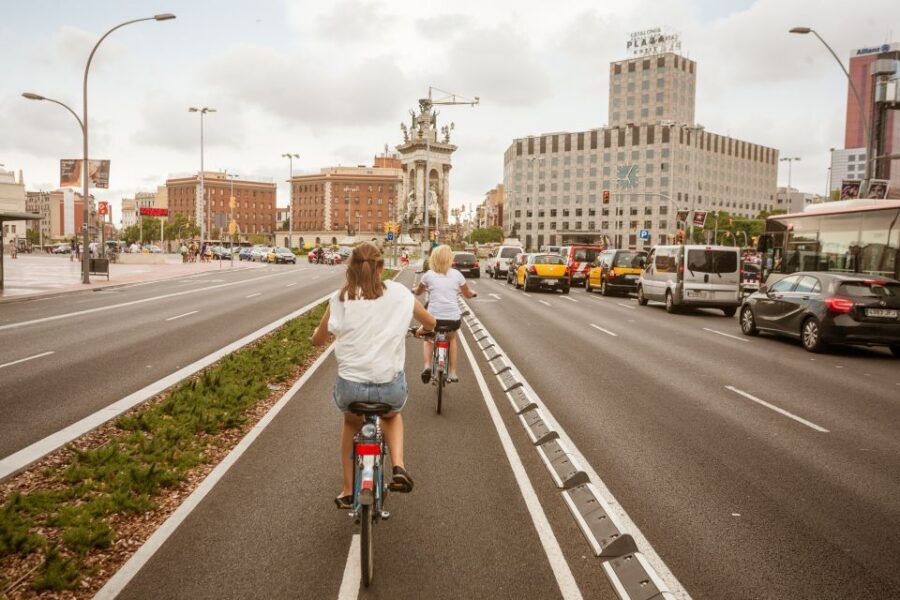
One detail worth flagging: this ride isn’t going all the way to the top castle area because the bikes are not electric. Translation: you’ll feel the hill. You don’t have to be an athlete, but you shouldn’t treat this as “easy cruising.”
The route is designed to stay safe and fun, with simple routes without traffic, so you’re not white-knuckling it around busy streets. Still, if you’re sensitive to steep grades, choose your expectations accordingly. Think “good workout with great payoff,” not “gentle sightseeing.”
If you’re traveling with teens or an active family, this is often a good way to turn sightseeing into something hands-on. If you’re bringing someone who struggles with any kind of uphill effort, you might want to assess readiness before committing.
Family-friendly details: helmets, child seats, and a learning vibe
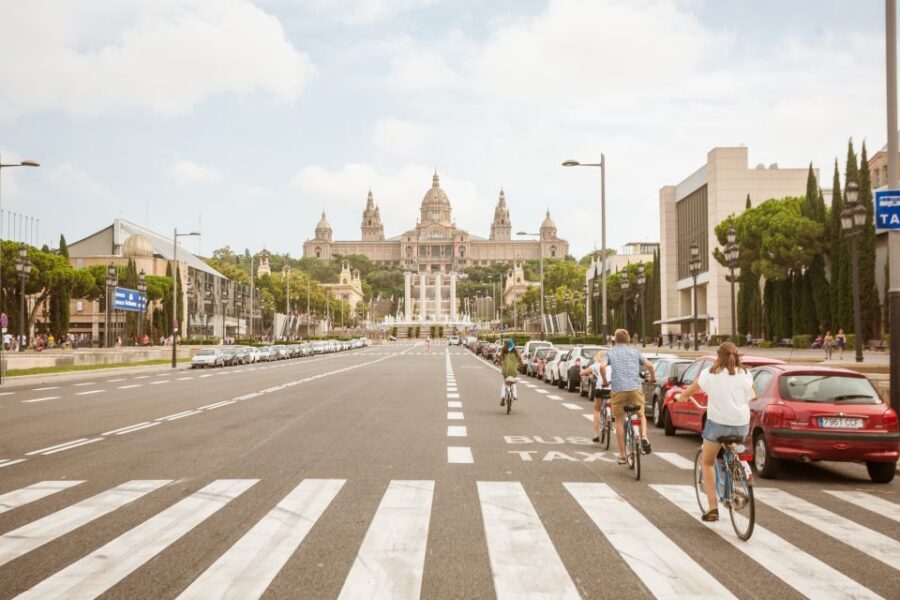
A lot of people book this kind of tour to keep the day interesting for everyone in the group. The setup here supports that. Helmets are included, and child seats are available if desired, which can make a difference when you’re traveling with younger kids.
The guiding style also seems geared toward making Barcelona make sense. One of the most praised experiences is learning along the way with an enthusiastic guide. If you pick a departure with an English or family-friendly language option, it helps a lot—especially when kids want answers, not just scenery.
The “safe route” promise is key for families too. You’re not stuck navigating complex intersections while trying to explain what you’re seeing.
Languages and guiding quality: what to look for
You can join in multiple languages: Spanish, Italian, Catalan, French, and English. That’s a big deal in Barcelona because a guide can make the difference between a ride that’s fun-but-vague and a ride that gives you real insight.
The overall guiding quality seems strong, with named guides like Elisa and Dani showing up in positive experiences. At the same time, there’s also a clear caution: if you’re counting on French specifically, make sure you’re comfortable if communication doesn’t land smoothly in the moment. In one case, the guide had difficulty explaining in French and the group ended up continuing in English.
That’s not something you can fully control as a customer, but it’s worth keeping in mind if language precision is a top priority for your group.
Weather and rain jackets: riding in real Barcelona conditions
Barcelona weather can switch fast, so it’s helpful that the tour runs in any weather. Rain jackets are supplied, and the tour expects you to adapt.
In practical terms, that means your plan should include a little flexibility in how you dress. Since you’re on a bike, you’ll feel rain more than you would standing still. But the provided rain gear takes some pressure off.
Also, arrive early enough to settle in. You’ll want to be there 10 minutes before the start so the whole group gets rolling without stress.
Who this bike tour suits best
This is a good fit if you want a strong “highlights and overview” day. You’ll see a lot of Barcelona’s personality in a short time: sea-level start, neighborhood flavor in Raval, the set-piece Magic Fountain area, formal Barcelona at Plaza de Espana, Olympic landmarks, and then the wide Miramar view over city and coast.
It’s especially suitable for:
- First-time visitors who want a mental map of Barcelona quickly
- Families who want variety plus a guided learning layer
- Travelers who like scenic rides more than long museum time
- People who prefer a structured route with safe, low-traffic cycling
Should you book this Barcelona Montjuïc bike tour?
If you want maximum scenery per hour and you’re comfortable with a real uphill ride, I’d say this is a strong booking. The price-to-inclusions ratio is solid, and the itinerary hits multiple “must-see” moments in one smooth sequence, including views of the Mediterranean Sea from Miramar.
Skip it or reconsider if your group has limited biking comfort, especially with the note that the ride isn’t designed to reach the highest castle area on non-electric bikes. And if your group needs French at a high precision level, it’s worth choosing the language carefully and keeping expectations flexible.
FAQ
How long is the Barcelona Montjuïc bike tour?
The tour lasts 3 hours.
How much does it cost?
It costs $42 per person.
What’s included in the price?
The tour includes bike rental, a tour guide, a drink, helmets, and child seats if desired.
What languages are offered?
The live tour guide is available in Spanish, Italian, Catalan, French, and English.
When does the tour run?
Tours run daily at 11am and 4pm, except on December 25–26 and January 1.
Will the tour run in rain?
Yes. The tour leaves in any weather, and rain jackets are supplied.
How many people are required for the tour to operate?
The tour needs a minimum of 4 people to run.