REVIEW · BARCELONA
Barcelona: Olympic Segway Tour
Book on GetYourGuide →Operated by City Tours on Bike-eBike-Segway · Bookable on GetYourGuide
Barcelona moves fast, but this slows you down. The route mixes classic Old Town sights with the seafront and the 1992 Olympic harbor, so you get a side-by-side view of how Barcelona looks now. I like that the tour is built for first-time riders: you start with a short coaching and test, then you quietly float through major landmarks instead of dodging them on foot.
Two things I really like are the modern Segway fleet and the way the guide ties places together, from Parc de la Ciutadella to Port Vell. You also get small-group attention (2 to 6 people per guide), which matters when you’re learning balance and steering. One possible drawback: Segways aren’t for everyone, and the tour is not suitable for pregnancy, people with mobility impairments, or anyone who’s sensitive to motion.
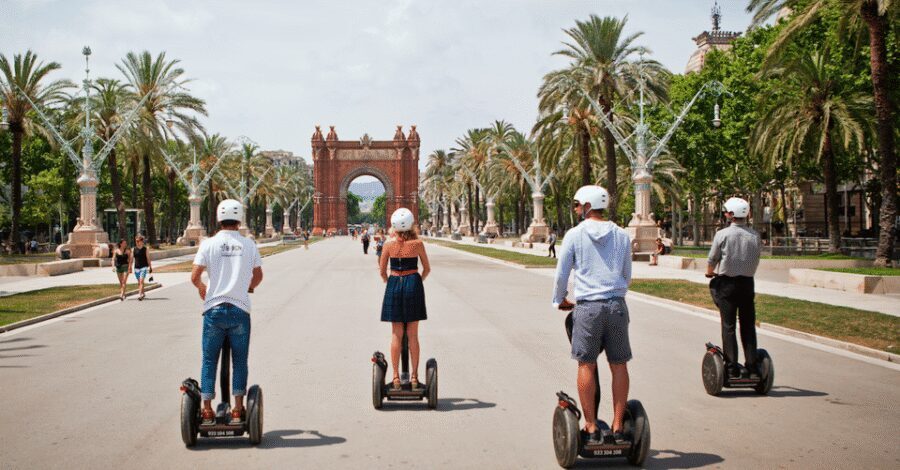
Training + Olympic waterfront = a strong first-time combo. The start is at the Arc de Triomf area in Eixample, then you roll through Ciutadella Park, cross into the Old Port zone, and end up near the Vila Olímpica. If you’re hoping for a super-deep walking tour, this is more about efficient sightseeing and viewpoints—fast, fun, and photo-friendly—rather than long, slow time in one place.
In This Review
- Key highlights worth prioritizing
- Where this 1.5-hour Segway route really takes you
- Meeting at Arc de Triomf (and why the location matters)
- Getting comfortable fast: the Segway i2 training that sets the tone
- Who should think twice about the ride
- Parc de la Ciutadella: the green break before the harbor
- Old Town through Born and the “why these buildings matter” stops
- Port Vell and the maritime transition to the Olympics
- La Barceloneta: the seaside atmosphere break you’ll remember
- Group size, pacing, and what “small group” means here
- Price and value: what $52 buys you in real terms
- Languages and guide style: you want clarity, not chaos
- Practical tips for getting the most from the experience
- Should you book the Barcelona Olympic Segway Tour?
- FAQ
- How long is the Barcelona Olympic Segway Tour?
- Where do I meet the guide?
- What’s the nearest metro station?
- Is there a minimum age to ride?
- How big are the groups?
- What languages are available?
- What’s included in the price?
- Who should avoid this tour?
Key highlights worth prioritizing
- Modern Segways with a training session so you can actually enjoy the ride, not just survive it
- Arc de Triomf to Parc de la Ciutadella with a calm green break and iconic fountains
- Port Vell viewpoints that give you the maritime feel of Barcelona’s old harbor area
- 1992 Olympic zone (Vila Olímpica + Port Olímpic) for the contrast between old city and modern waterfront
- Stops around Born and La Barceloneta for the historic lanes and the seaside atmosphere
Where this 1.5-hour Segway route really takes you
This is a compact tour, designed for getting oriented in a short slice of time. In about 90 minutes, you travel from the Arc de Triomf side of the city into Ciutadella Park, then down toward Port Vell and the Olympic waterfront, ending back near the starting area.
You should think of it as two visual storylines moving in parallel. One storyline is Barcelona’s older fabric—Roman ruins and medieval palaces are part of what you’re pointed toward as you go through the historic center. The other storyline is Barcelona by the water—Port Vell and the Vila Olímpica give you the modern waterfront you see in photos, but from street level, with constant perspective changes as the harbor opens up.
The value here is time efficiency. You’re not choosing between Old Town and the seafront—you get both, and you move between them without the usual logistics headache of taxis or multiple rides.
You can also read our reviews of more tours and experiences in Barcelona.



Meeting at Arc de Triomf (and why the location matters)
You meet at Passeig de Lluís Companys, 10, right by the Arc de Triomf landmark. That’s a smart base because it’s a clear, easy-to-find anchor point rather than a vague pickup somewhere deep in a neighborhood.
Metro is straightforward: take Line L1 to Arc de Triomf, exit, then walk about 3 minutes along Passeig de Lluís Companys toward Passeig de Sant Joan. If you’re coming by bus, lines 39, 40, 51, and H14 stop near Arc de Triomf, and it’s also about a 3-minute walk to No. 10.
Why I like this meeting choice: it puts you in the right mood immediately. You’re starting near a monumental entrance to the city, then you transition into parkland and down toward the harbor. That pacing makes it easier to remember what you saw later.
Getting comfortable fast: the Segway i2 training that sets the tone
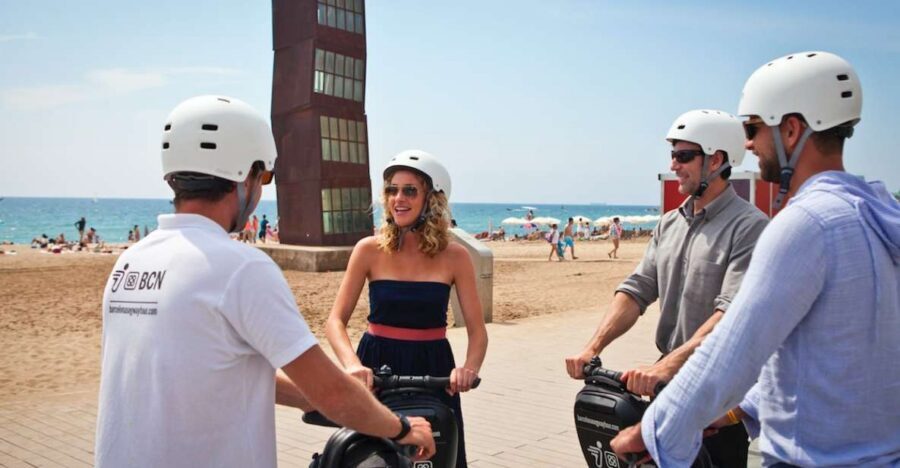
Before you roll, you get a training session and a safety briefing, plus a short moment to practice. The tour includes the Segway i2, a helmet, and safety equipment, and you’re covered by insurance as part of the experience.
For first-time riders, the best part is the structure: you don’t just jump on and hope. You start with instructions, then a test run, then you head out as a group with a guide. In the feedback I read, that teaching pace shows up as a key strength—people call out patient help during the learning stage.
One name comes up often in positive notes: Maria is described as patient and supportive while you get the hang of it. Another guiding presence that’s praised is Pier, especially for making the first Segway experience enjoyable and easy. There’s also mention of Stéfan, with compliments tied to explanations and taking time for photos.
Who should think twice about the ride
The constraints are clear, so pay attention. You must be at least 16 years old to ride a Segway, and there are height and weight limits (110 cm minimum and 264 lbs / 120 kg maximum). The tour is also not suitable for motion sickness, and it doesn’t work for people with mobility impairments. If any of those apply, you’ll be better off looking for an alternative format.
Parc de la Ciutadella: the green break before the harbor
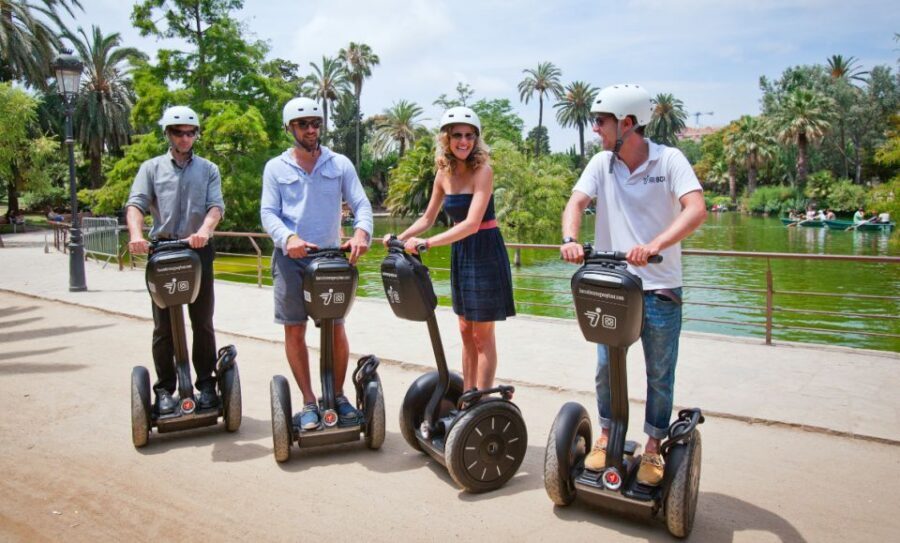
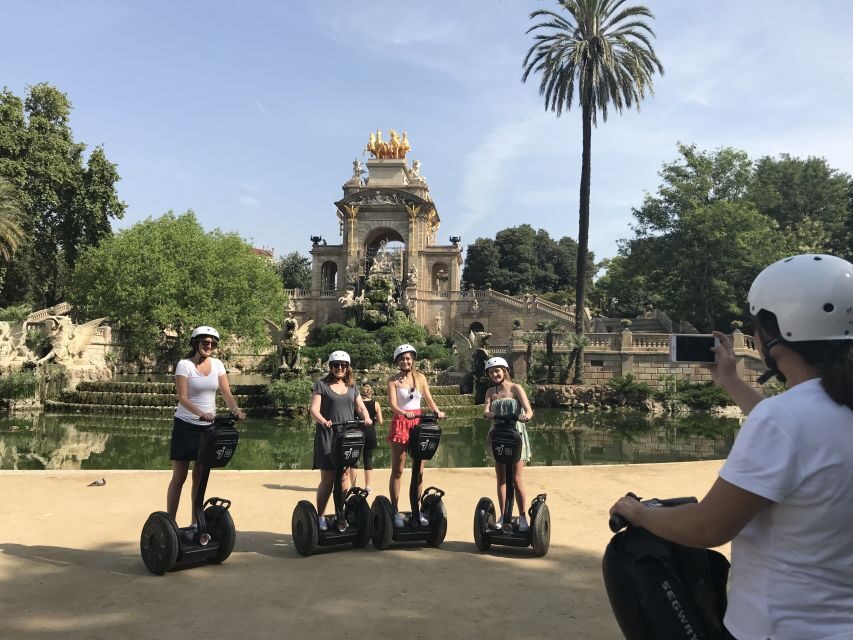
The ride begins moving through modern city streets, then you hit Parc de la Ciutadella, where everything slows down visually. You get a guided segment plus a photo stop, with time to look around and enjoy the space before moving again.
The centerpiece is the monumental Cascada fountain, credited with contributions by young Antoni Gaudí. Even if you’re not chasing architecture trivia, this stop works because it changes the entire feel of the tour: it’s open, green, and photogenic, and it gives your eyes a reset before the port areas.
This park stop is also useful strategically. It’s one of the best places to practice your riding comfort, because it’s calmer than the edges of the Old Town. The tour uses it as a transition zone—from instruction-friendly movement to more varied sightseeing.






Old Town through Born and the “why these buildings matter” stops
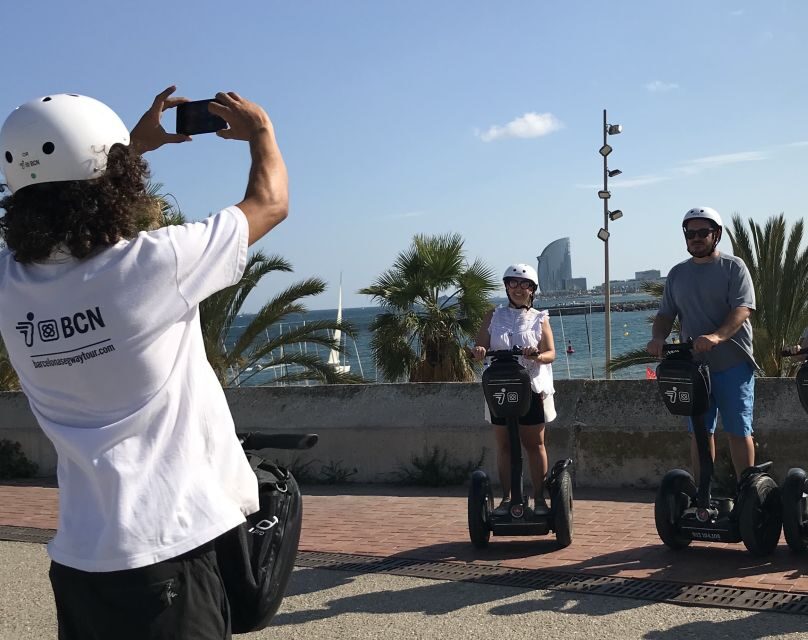
After the park, you steer toward the historic center areas, including the Born district. The itinerary includes crossing Plaça de l’Ictineo and getting an edge-of-neighborhood feel rather than sitting in one spot.
You also get pointed observations around major architectural examples. One highlighted stop is the Castle of the Three Dragons (Castillo de los Tres Dragones) by Lluís Domènech i Montaner. This matters because it represents the Modernisme style that defines much of Barcelona’s visual identity, and seeing it from the ride gives you that quick “aha” angle—like you’re moving with the city, not just reading about it.
Then there’s a notable religious landmark: St. Mary of the Sea Cathedral, with a photo stop. Even if you only take a quick look, it anchors the tour back in the historic city center rather than letting everything become strictly waterfront or strictly architectural.
A practical bonus of this style of tour: the guide doesn’t just name landmarks. The route connects Roman-era ruins and medieval palaces into the bigger story you can feel as you glide—older Barcelona is literally beside newer Barcelona in your field of view.
Port Vell and the maritime transition to the Olympics
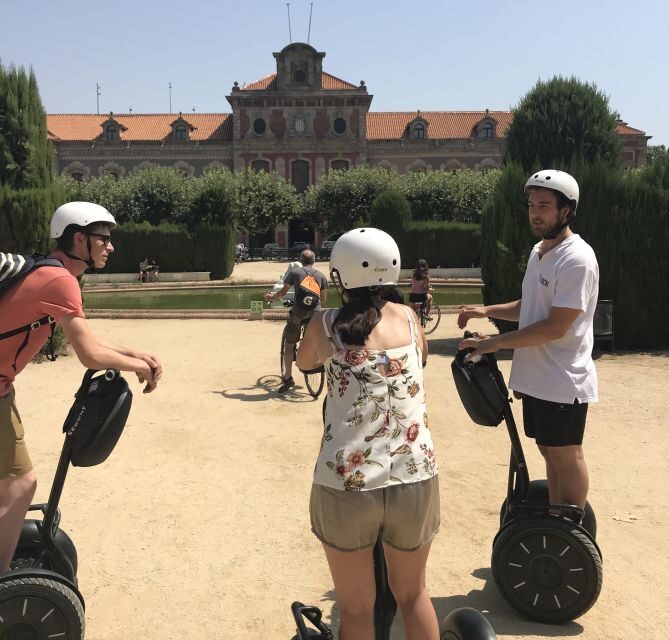
This is the core payoff for the name of the tour. You reach Port Vell, then get guided commentary and scenic riding as the old port atmosphere comes into focus.
Port Vell is one of those areas where you can stand still and take photos, but it’s even better when you’re moving slowly past the edges. You get changing perspectives—harbor views, street-to-sea sightlines, and the sense of how the city faces its water.
From there, you continue toward the Vila Olímpica, built for the 1992 Summer Olympics. You get a photo stop and guided sightseeing, and then you ride through the area to experience the modern waterfront urban design.
This contrast is the reason I’d pick this tour over a strictly Old Town Segway loop. You’re not only seeing what’s old; you’re also seeing what was rebuilt and reimagined for a major global event. It’s a fast way to understand Barcelona’s long habit of using big moments to shape city space.
La Barceloneta: the seaside atmosphere break you’ll remember
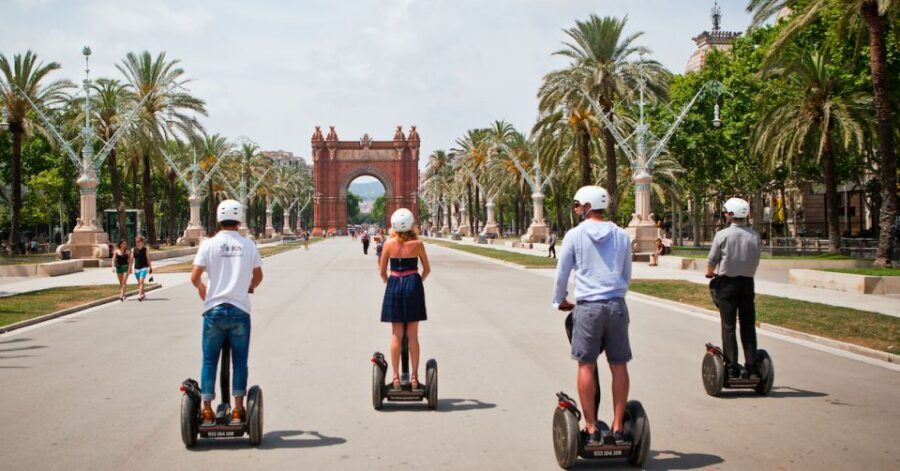
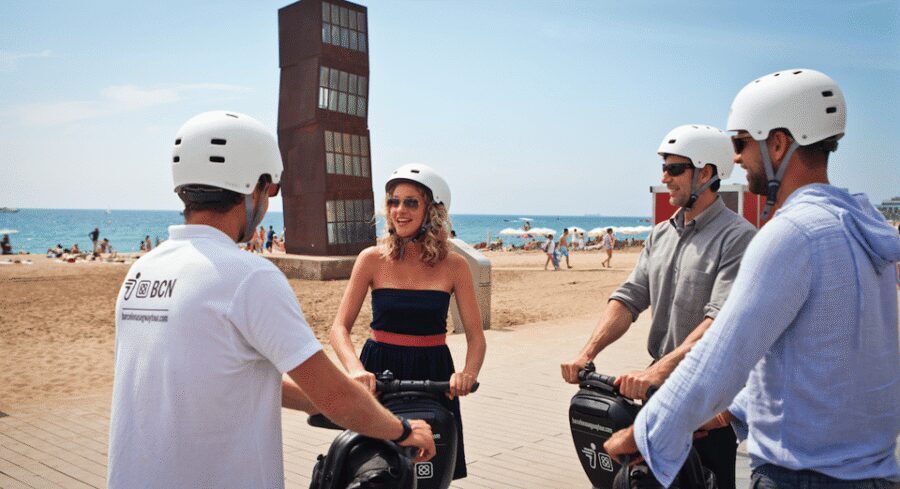
You finish up with time around La Barceloneta, including a photo stop and guided sightseeing as you pass through. The tour’s route keeps the seafront feel present, so you’re not making your last stretch a generic transfer back to the start.
This portion is where the whole tour clicks into a single mental map: the earlier park calm, the Port Vell old-harbor views, the Olympic waterfront geometry, and then the lively seaside neighborhood vibe that people associate with Barcelona.
It’s also a good point for photos, since you’ve already built comfort on the Segway. You can focus on framing the water and the city edges rather than thinking about balance.
Group size, pacing, and what “small group” means here
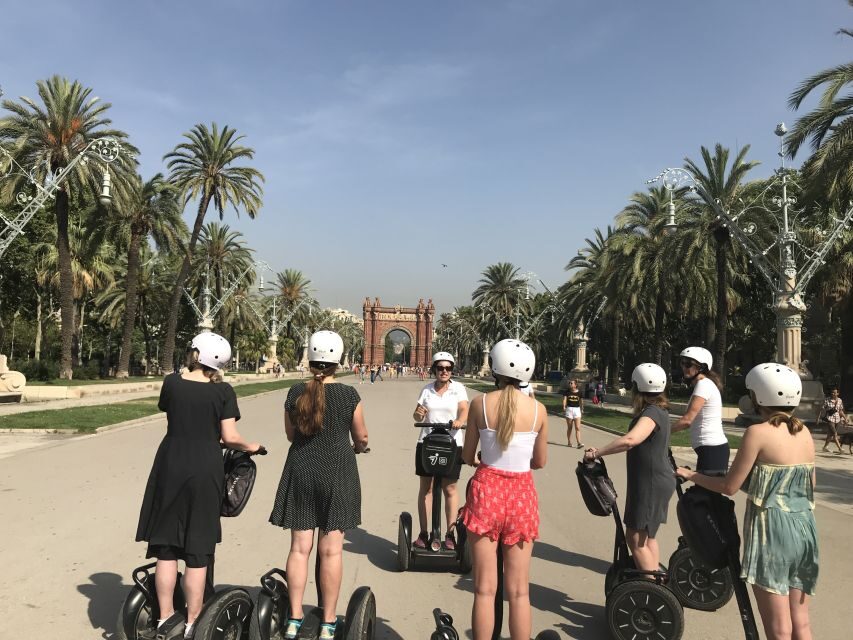
You ride in small groups of 2 to 6 people per guide, which helps you get direction and keep the tour moving smoothly. For safety reasons, larger groups get split up and accompanied by several guides—so you’re not squeezed into a huge line.
Pacing matters on a Segway tour. This one is only 1.5 hours, so you’ll cover several different zones, but you won’t feel stuck repeating the same kind of streets. You get a blend of guided segments, scenic riding, and photo stops, so the tour stays active instead of turning into a single long commute.
One specific detail I’d pay attention to: the training and safety process is part of the experience, not a small footnote. That’s why people highlight the guide’s teaching and patience so often. If you’re even slightly nervous, this format makes the difference between fun and frustration.
Price and value: what $52 buys you in real terms
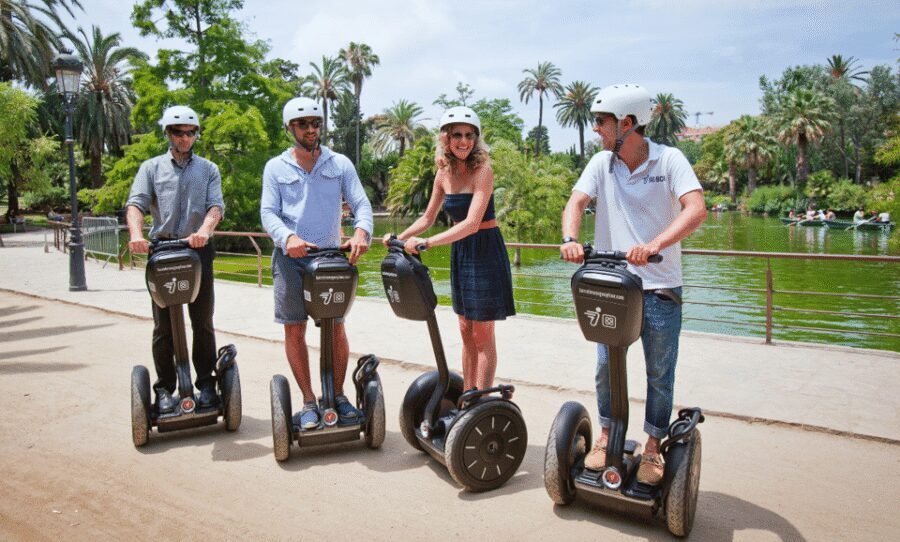
At $52 per person for about 1.5 hours, the price is easiest to judge by what’s included. You’re getting the Segway i2, a helmet, guide time, a training session, safety equipment, insurance, and one drink.
That bundle matters in Barcelona, because the “cost” of Segway tours often includes equipment and instruction. Here, you’re not paying extra for the essentials like the vehicle, helmet, and safety coverage. For many visitors, the value is that you’re buying orientation + transport in one package—less hassle, more sightseeing per hour.
My take: this is a good value if you want a guided mix of old city and waterfront and you’re comfortable riding within the stated limits. If you’re not sure about balancing, motion sensitivity, or mobility constraints, the price won’t feel like value once you’re stressed.
Languages and guide style: you want clarity, not chaos
The tour operates with a live guide in multiple languages: English, French, German, Italian, Spanish, Portuguese, Russian, and Dutch. That’s a big deal because Segway riding depends on clear instructions and quick corrections.
From the positive feedback, the common thread is patience and help during the learning phase, plus guides taking time for photos. Names you’ll see praised include Pier, Maria, and Stéfan, each tied to a similar idea: good instruction and a friendly, calm pace.
So if your goal is not just to “see places,” but to feel safe and guided while seeing them, you should be in the right mindset.
Practical tips for getting the most from the experience
1) Think of it as a first-or-last-day tour for getting bearings. One review notes doing it on the last day and then using the map of places to explore further on the next trip. Even without making it your whole itinerary, it helps you see where everything sits.
2) Focus on the transitions. The tour repeatedly shifts from park to old port to Olympic harbor. If you pay attention to those changes, you’ll remember the route better than if you treat it like a blur of stops.
3) Bring your camera mindset. Photo stops are built into the route, from Ciutadella Park to Port Vell and the Olympic zone. If you’re the type who usually forgets photos, this structure actually helps.
Should you book the Barcelona Olympic Segway Tour?
Book it if you want a guided, time-efficient way to understand Barcelona’s split personality: historic streets on one side and the Olympic waterfront on the other. The best fit is first-time visitors who like viewpoints and want their sightseeing to include both architecture stops and seaside scenery without endless walking.
Skip it if any of the listed limits apply, especially motion sickness, pregnancy, mobility impairments, or height/weight restrictions. Also skip it if you hate the idea of learning a new device, because even with training, you still need to ride safely for the whole route.
If you’re eligible and curious, this is one of those Barcelona activities that makes you feel like you’re gliding through the city’s story, not just checking off pins on a map.
FAQ
How long is the Barcelona Olympic Segway Tour?
It lasts about 1.5 hours.
Where do I meet the guide?
You meet at Passeig de Lluís Companys, 10.
What’s the nearest metro station?
Arc de Triomf (L1, red line) is the closest option, followed by about a 3-minute walk.
Is there a minimum age to ride?
Yes. You must be at least 16 years old to ride a Segway. Under 16 can join and may be provided high-end electric bikes at a discounted rate.
How big are the groups?
The tour runs in small groups of 2 to 6 people per guide. Larger groups are split for safety and guided separately.
What languages are available?
The live guide is available in English, French, German, Italian, Spanish, Portuguese, Russian, and Dutch.
What’s included in the price?
Included are the Segway i2, helmet, guide, training session, safety equipment, insurance, and 1 drink.
Who should avoid this tour?
It’s not suitable for pregnant women, people with mobility impairments, people over 264 lbs (120 kg), people under 110 cm, or anyone with motion sickness.