REVIEW · BARCELONA
Barcelona: Palau Baró de Quadras Tickets and Guided Tour
Book on GetYourGuide →Operated by Cases Singulars · Bookable on GetYourGuide
A palace you can feel in your fingertips.
The Palau del Baró de Quadras is one of Barcelona’s most charming Modernist surprises, renovated by Josep Puig i Cadafalch between 1902 and 1906 after the Baron commissioned a dramatic redesign. What makes it fun is how it mixes styles: you get Catalan Gothic vibes, but with color ceramics and hints of Islamic design influence. I really like that you get inside a private-feeling home, not just an exterior photo stop.
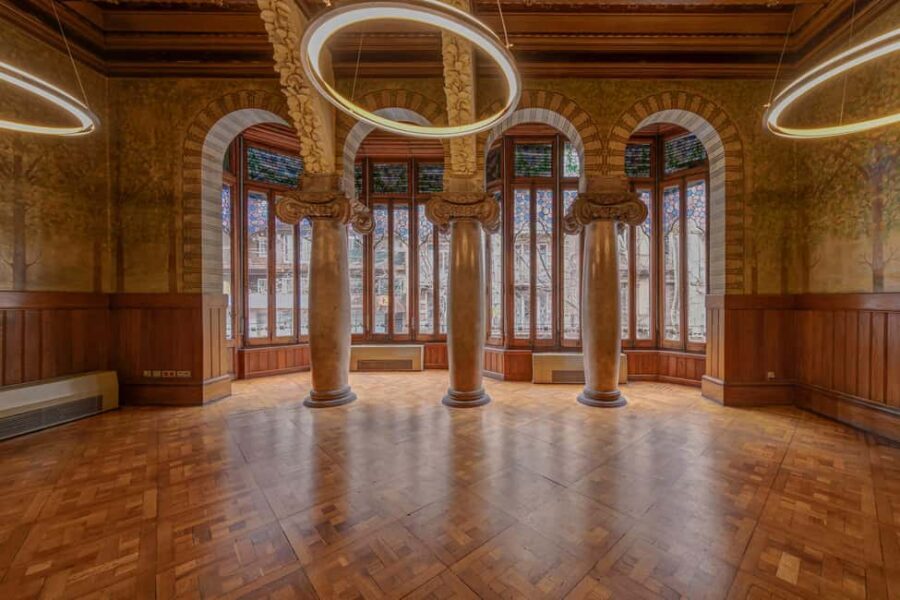
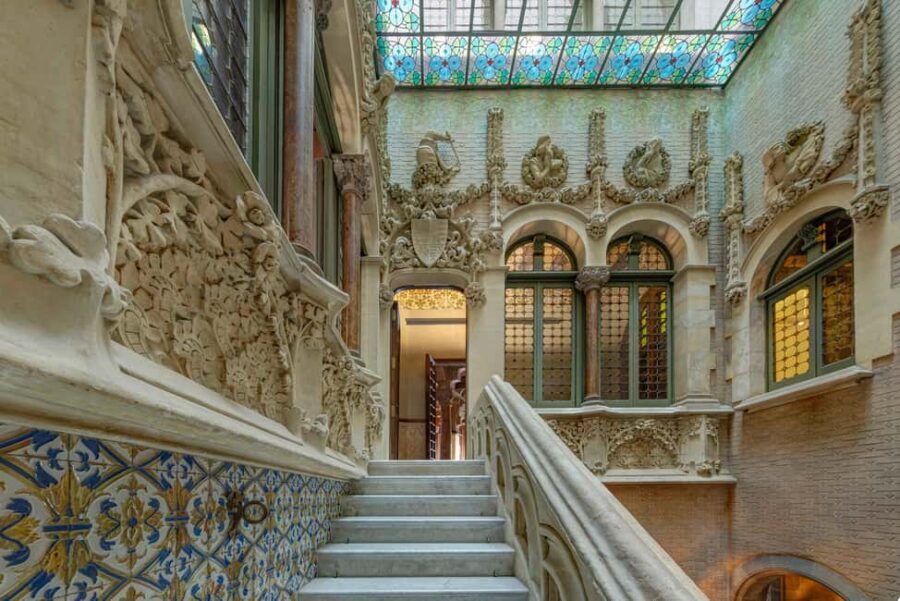
Two things I especially loved: the guided tour that puts names and symbols to what you’re seeing, and the sheer amount of surface detail—mosaics, sgraffito work, and multicolored Arabesque woodwork that makes the whole building look hand-crafted. One thing to keep in mind: the interior experience can feel more modern “display-like” than you might expect, so if you’re chasing a perfectly untouched 1900s atmosphere for photos, go in with flexible expectations.
In This Review
- Key things to know before you go
- Why Palau del Baró de Quadras is a Modernism Must-See
- What the 1-Hour Guided Tour Actually Covers
- Entering a Private Modernist Mansion Designed by Josep Puig i Cadafalch
- Gothic Looks with Color Ceramics and Islamic-Influenced Ornament
- The Interior Details to Pay Attention to: Mosaics, Sgraffito, and Woodwork
- Sculptures by Eusebi Arnau and Alfons Juyol
- Price and Value for a Barcelona Modernist Palace Ticket
- Accessibility and Practical Comfort Inside
- Who This Tour Suits Best (and Who Might Want to Pick Something Else)
- Should You Book Palau Baró de Quadras Tickets and a Guided Tour?
- FAQ
- How long is the Palau Baró de Quadras guided tour?
- Where is the Palau Baró de Quadras located?
- How much are the tickets?
- Is the tour wheelchair accessible?
- What languages are the live guides available in?
- Is there free cancellation?
- Is there a reserve now and pay later option?
- Is the meeting point fixed?
- Is the guided tour included with the ticket?
Key things to know before you go
- Puig i Cadafalch’s palace makeover (1902–1906): this is Modernism with a dramatic designer’s hand
- A guided tour for smart context: you’ll connect the motifs to the design choices
- Gothic shapes plus Islamic-influenced details: ceramics and ornament work together in a very Barcelona way
- Hands-on-looking craftsmanship: you’ll see mosaics, sgraffito, and colorful woodwork
- Sculptures that sit inside the story: art by Eusebi Arnau and Alfons Juyol is part of the design
Why Palau del Baró de Quadras is a Modernism Must-See
If you love Barcelona’s Modernisme, this place is the kind of stop that resets your expectations. Most people mentally file Modernism as curvy ironwork and big street facades. Here, you get a quieter but more intense version: a private city mansion where ornament is the main event.
The Baron de Quadras commissioned Josep Puig i Cadafalch to reform a house the Baron owned on Diagonal Avenue, and the goal was simple: make the building speak for his new title. That’s why the palace feels theatrical without being loud. Even the mix of styles makes sense once you stand there and look up: the repeated use of Gothic sculptures with color ceramics creates a strong Catalan identity, while the colorful motifs and ornament energy carry an Islamic influence.
And because it’s a guided visit, you’re not left guessing at what you’re looking at. You get the “what” and the “why,” which is the difference between seeing decoration and understanding design.
You can also read our reviews of more tours and experiences in Barcelona



What the 1-Hour Guided Tour Actually Covers
This experience is built to be efficient. It’s a 1-hour guided tour with a live guide (available in English and Spanish). That time window is ideal if you want a real interior taste of Barcelona Modernism without sacrificing half your day.
In practice, you should expect a paced walkthrough focused on the palace’s most distinctive elements. You’ll spend time inside the main spaces where the design language shows up clearly: the colorful surfaces, the textured ornament work, and the sculptural features placed where they can’t be ignored.
A helpful mental tip: don’t treat this like a museum “look everywhere fast” sprint. Treat it like a guided lesson. The guide’s job is to point out what to notice so you can actually see it, not just pass by it.
One practical note: the meeting point may vary depending on the option booked, so plan to arrive a bit early. This tour is short enough that being rushed at the start can kill the vibe.
Entering a Private Modernist Mansion Designed by Josep Puig i Cadafalch
Stepping in here feels like walking into a designer’s sketchbook that became a real building. Puig i Cadafalch’s work shows up in the way the palace balances structure with ornament: nothing feels random, and even when you’re looking at decorative pieces, there’s a sense of plan.
I like that the building’s concept is tied to a story. The Baron wanted a striking appearance that reflected his nobiliary title, and the result is this “noble theater” feeling. You can sense the intention—this wasn’t made for quick visits or casual browsing. It was made to impress.
The palace also works well if you’ve seen other Modernist stops and want to compare. Instead of iron-and-glass spectacle, you get a tactile interior world: ceramics, sculptural details, and richly patterned surfaces that make you want to slow down.
Gothic Looks with Color Ceramics and Islamic-Influenced Ornament
This is where the palace becomes genuinely interesting, not just pretty.
You’ll notice that the building can feel Gothic at first glance, thanks to repeated Gothic sculptures and a strong sense of sculptural rhythm. But the ornament doesn’t stay purely Gothic. Color ceramics and the way patterns appear across surfaces bring in an Islamic influence that makes the whole design feel more fluid and more graphic.
For you, that matters because it changes how you view the details. Instead of thinking of these motifs as separate styles fighting each other, you can start to see them as a conversation. The palette and patterning soften the Gothic seriousness, while the Gothic structure gives the decorative elements a stronger backbone.
If you’re the type who likes to photograph, this mixed-style approach also gives you more angles. One moment you’re shooting sculpture-like stone or relief work; the next you’re catching color ceramics or patterned woodwork that looks almost geometric.
The Interior Details to Pay Attention to: Mosaics, Sgraffito, and Woodwork
The standout experience here is the surface detail. Even in a short one-hour visit, the palace gives you enough visual texture that you’ll leave feeling like you learned how to see Modernism up close.
Here are the kinds of elements you’ll be drawn to:
- Mosaics: these give the walls and floors that extra layer of pattern, helping the design feel both intricate and intentional
- Sgraffito work: you’ll likely notice how the building uses texture to create depth, not just color on top of color
- Multicolored Arabesque woodwork: this adds warmth and movement, almost like the room’s design includes its own color rhythm
The guide matters here. Without context, it’s easy to see decoration as decoration. With a guide, you can connect why certain patterns appear where they do, and how the different materials work together visually.
Also, because this is a private palace setting, the viewing can feel more “living space” than “big open gallery.” Just be ready for rooms that can feel busy if there are modern elements present. In at least one experience shared by a visitor, modern objects inside reduced the sense of stepping back in time. That doesn’t mean it’s bad—but it’s worth mentally planning for an interior that may not look like a perfectly staged historic re-creation.
You can also read our reviews of more guided tours in Barcelona





Sculptures by Eusebi Arnau and Alfons Juyol
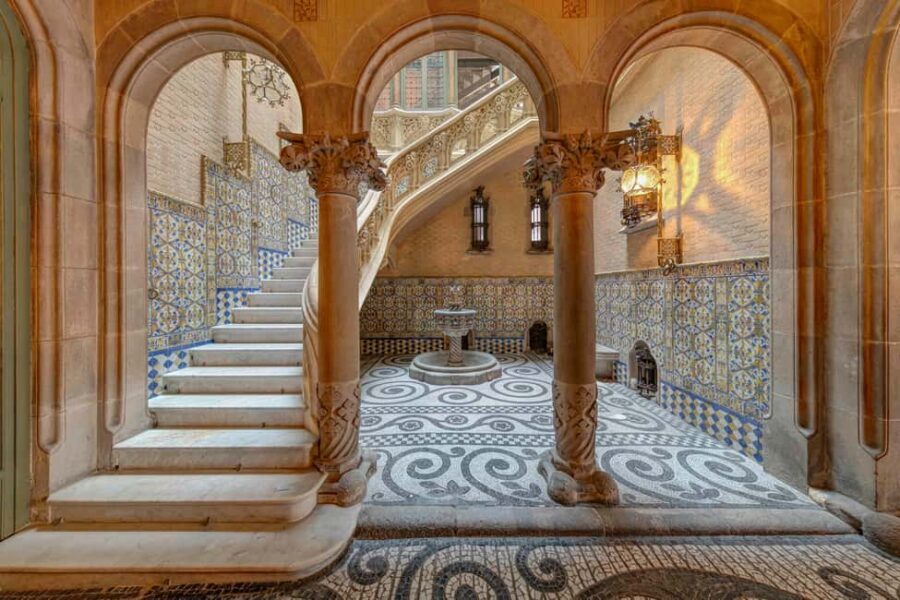
The palace doesn’t treat sculpture as a random extra. Sculptures by Eusebi Arnau and Alfons Juyol are integrated into the overall personality of the building.
What you should try to do during your visit is look at sculpture in two ways:
1) as part of the palace’s “style language” (Gothic-leaning shapes and dramatic presence)
2) as a visual anchor that helps you understand how the rest of the ornament behaves around it
When sculpture is placed with intention, you don’t just notice it—you start to feel how the room is composed. That’s often the difference between a building that looks impressive in photos and one that actually makes sense when you walk through it.
If you enjoy design more than big monuments, this is one of the stops in Barcelona that rewards attention. You’re not just ticking off Modernism—you’re learning how the whole look is constructed.
Price and Value for a Barcelona Modernist Palace Ticket
At $22 per person for a 1-hour guided tour, this is one of the easier “value decisions” for Barcelona architecture lovers.
Here’s how I think about the cost in plain terms: you’re paying for access to an interior palace experience plus a live guide. In other words, you’re not just buying a doorway. You’re buying interpretation of the details—materials, motifs, sculptures—so you’re more likely to leave with a clearer understanding.
The tour’s short duration is also part of the value. One hour fits into a real itinerary without forcing you into an all-day commitment. That matters if you’re also doing Gaudí sites, Gothic Quarter walks, and beach or tapas plans.
If you’re on a tight schedule, this kind of focused architecture stop can be more satisfying than a longer, less guided “wander and hope” visit.
Accessibility and Practical Comfort Inside
Good news if you need it: the tour is wheelchair accessible. For a Barcelona Modernism interior, that’s a meaningful plus because older buildings can be tricky.
Still, as with any historic interior, you’ll want to go in ready for slower, careful walking in tighter areas. The good thing is that the visit is guided and timed to one hour, so you’re not stuck trying to figure out the space on your own.
Who This Tour Suits Best (and Who Might Want to Pick Something Else)
This tour fits you if:
- you love Modernism and want a more detailed, interior-focused stop
- you enjoy learning the story behind motifs and materials
- you want a compact visit that still feels substantial
It might be less ideal if:
- you’re chasing a perfectly untouched, museum-style “back in time” atmosphere for photos
- you expect every room to feel spacious and airy, like a grand public monument
And there’s a simple strategy here: if your priority is photography, ask yourself whether you want “architecture details” photos or “dramatic empty historic rooms” photos. The palace is strong on the first.
Should You Book Palau Baró de Quadras Tickets and a Guided Tour?
Yes—if you’re the kind of traveler who likes to learn what you’re looking at, this is a great use of time in Barcelona. The price is reasonable for a guided interior experience, and the palace’s design mix—Gothic-inspired sculpture energy with color ceramics and Islamic-influenced patterns—gives you plenty to notice.
Book it if you want a focused taste of Puig i Cadafalch’s work, including the mosaics, sgraffito, Arabesque woodwork, and sculptures by Eusebi Arnau and Alfons Juyol. Just go in with a bit of realism about the interior atmosphere: you may encounter modern objects that can slightly reduce the old-world feel and affect photo vibes.
If you want, tell me your travel dates and what other Barcelona architecture stops you’re doing, and I’ll help you place this one-hour visit in the best spot on your day.
FAQ
How long is the Palau Baró de Quadras guided tour?
The tour lasts 1 hour.
Where is the Palau Baró de Quadras located?
It’s in Catalonia, Spain, in Barcelona.
How much are the tickets?
The price is $22 per person.
Is the tour wheelchair accessible?
Yes, it’s wheelchair accessible.
What languages are the live guides available in?
The live tour guide is available in Spanish and English.
Is there free cancellation?
Yes. You can cancel up to 24 hours in advance for a full refund.
Is there a reserve now and pay later option?
Yes. You can reserve your spot and pay later.
Is the meeting point fixed?
The meeting point may vary depending on the option you book.
Is the guided tour included with the ticket?
Yes. The guided tour is included.