REVIEW · BARCELONA
Barcelona : Private Joan Miró Tour
Book on GetYourGuide →Operated by ICONO Barcelona · Bookable on GetYourGuide
Miró can be more fun with a guide.
This private tour at the Joan Miró Foundation on Montjuïc Hill turns a museum visit into a clear, story-driven look at how his art changed over time, from early experiments to the bold work people remember. You get skip-the-line entry, then spend two focused hours following a guided path through paintings, sculptures, and drawings.
I especially like two things: the chance to see Miró’s big-picture artistic evolution, and the way the tour can be tailored to what you care about most. One guide named Laura has stood out for being both enthusiastic and genuinely invested in explaining the collection, while still leaving breathing room to just look.
One consideration: the tour time is short, so your experience depends on how much you get out of the guide’s explanations. If you’re hoping for nonstop interpretation at every stop, start with your preferences right away and be ready to ask follow-up questions.
In This Review
- Key Things to Know Before You Go
- Private Miró Time on Montjuïc Hill: What Makes It Special
- Meeting at Fundació Joan Miró: How the 2-Hour Flow Works
- Skip-the-Line Entry: Time Saved, Focus Gained
- Inside the Collection: From Early Experiments to Surrealism
- Your Guide’s Job: Turning Labels Into a Working Map
- Barcelona Connections and Cultural Collaborations
- The Building Itself: Josep Lluís Sert’s Architecture
- Personalized Itinerary: How You Can Steer the Focus
- Price and Value for a Private Tour Up to 1
- Who This Tour Suits Best
- A Quick Heads-Up: What’s Allowed and What the Day Might Feel Like
- Should You Book This Joan Miró Private Tour?
- FAQ
- Where is the meeting point?
- How long is the tour?
- Does the tour include skip-the-line entry?
- What languages is the guide available in?
- Is flash photography allowed?
- Is the museum wheelchair accessible?
Key Things to Know Before You Go
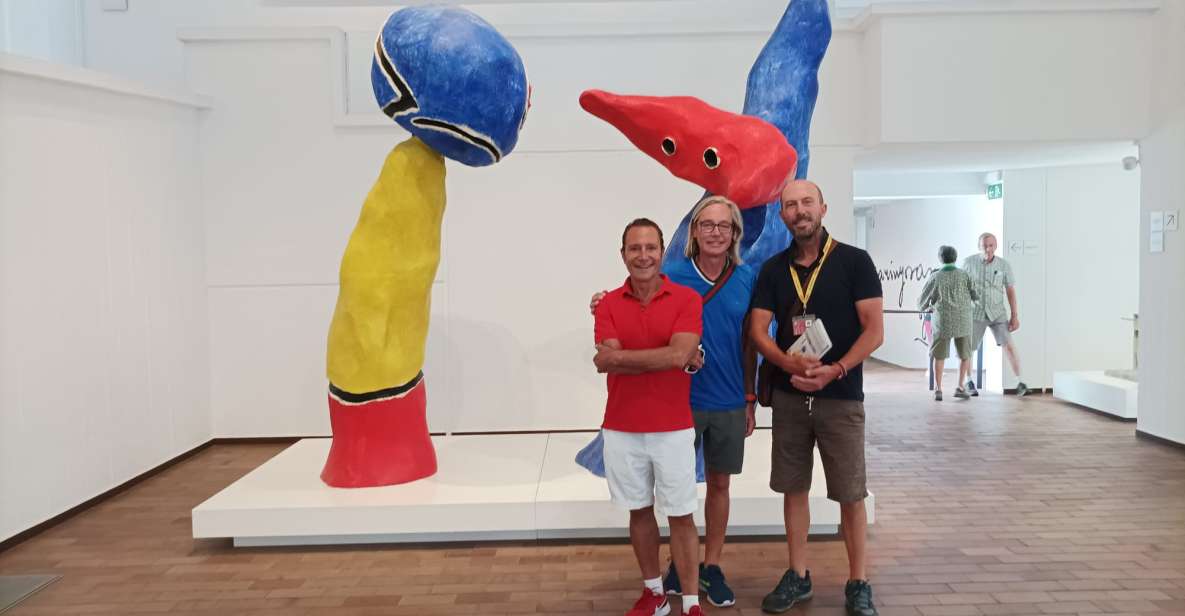
- Skip-the-line entry saves time so you can get into the art faster.
- A professional art historian guide helps you connect techniques, themes, and influences.
- A private, customized itinerary means you can steer the focus toward what you want.
- You’ll cover multiple mediums—paintings, sculptures, and drawings—without it feeling random.
- The museum building matters, including architecture by Josep Lluís Sert.
- Photography is allowed without flash, so you can capture details your memory may miss.
Private Miró Time on Montjuïc Hill: What Makes It Special
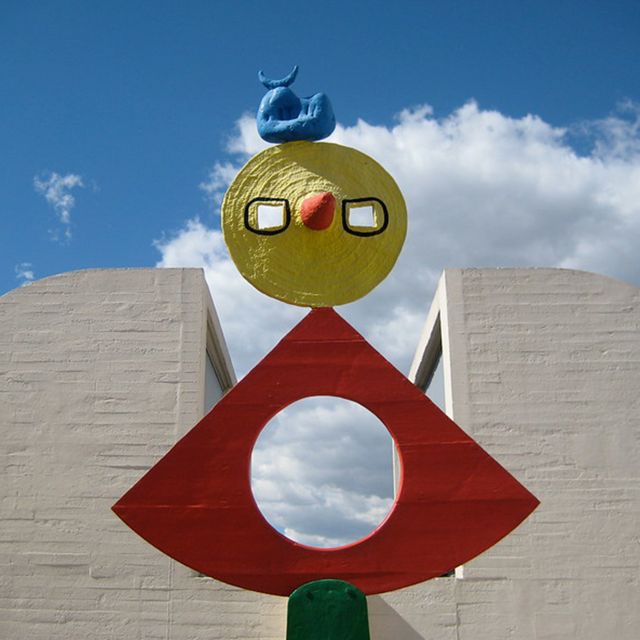
The Joan Miró Foundation sits on Montjuïc Hill, and just getting there frames the visit. The museum is not a place where you have to decode everything alone; the whole point is to give you a guided way to understand Miró’s choices—color, form, and the surrealist spark behind much of his work.
What I like about a private format is that it slows you down. Even though the tour is only two hours, you’re not bouncing through rooms with a large crowd, and you’re not stuck reading every label like it’s a homework assignment. You’re there to make sense of it.
The collection focus is another big reason this works. You’re looking at one of the largest groupings showing Miró’s artistic evolution and vision, and the guide is set up to connect the dots across years and mediums. That matters because Miró can feel playful at first glance, but the deeper story is about experimentation and constant reinvention.
You can also read our reviews of more tours and experiences in Barcelona.

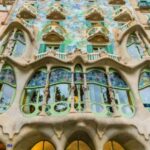

Meeting at Fundació Joan Miró: How the 2-Hour Flow Works
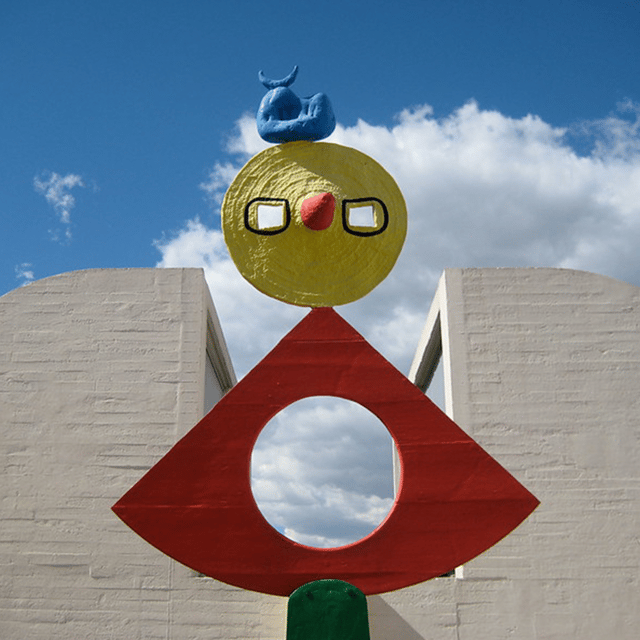
You meet at the bus stop just outside Fundació Joan Miro (08038 Barcelona). That’s helpful because you’re not hunting for an office or a hidden entrance—just use the museum area as your reference point.
From there, your tour is timed to be efficient. The total duration is two hours, which is a sweet spot if you want a high-quality overview without turning your day into a full museum marathon. You’ll spend that time inside the Foundation with a live guide leading you through key parts of the collection.
The “private group” format also changes how you’ll experience the museum. If you’re traveling with one person or even solo, your guide can adjust the pace and explanation level. That’s a practical advantage in a museum where some visitors want quick highlights and others want to understand how the work is built.
Skip-the-Line Entry: Time Saved, Focus Gained
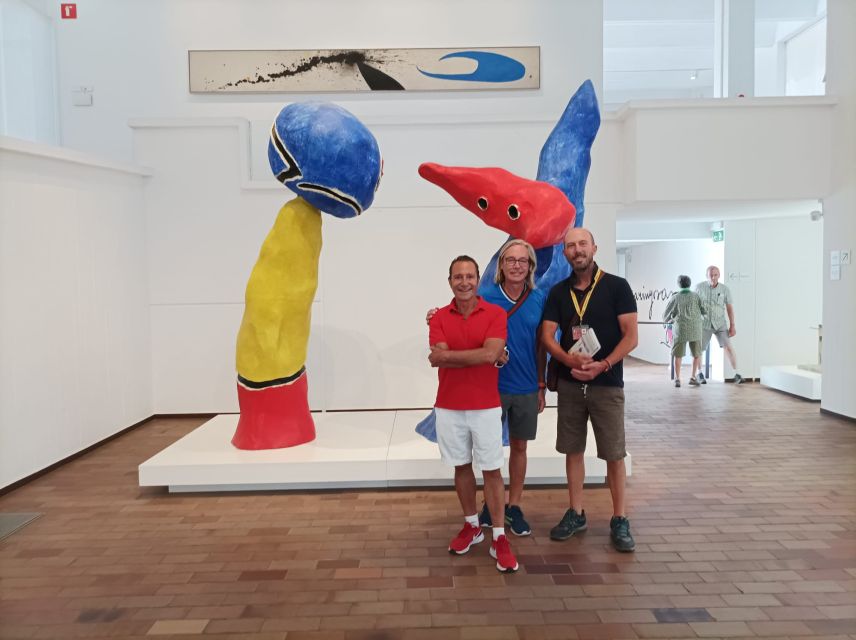
Skip-the-line ticket access is one of the clearest value wins here. Museums are popular, and Joan Miró’s name brings plenty of visitors, so cutting waiting time helps you keep your energy for looking—not waiting.
But it’s more than convenience. When you walk in without delay, you start the story while you’re fresh. A good guide can set context early—what to notice, how to connect paintings to sculpture to drawings—so you don’t feel like you’re seeing disconnected images.
If you’ve ever had a museum visit where the first hour disappears in line or navigation, you know how fast motivation can drain. This tour is built to avoid that problem so you actually get a coherent experience.
Inside the Collection: From Early Experiments to Surrealism
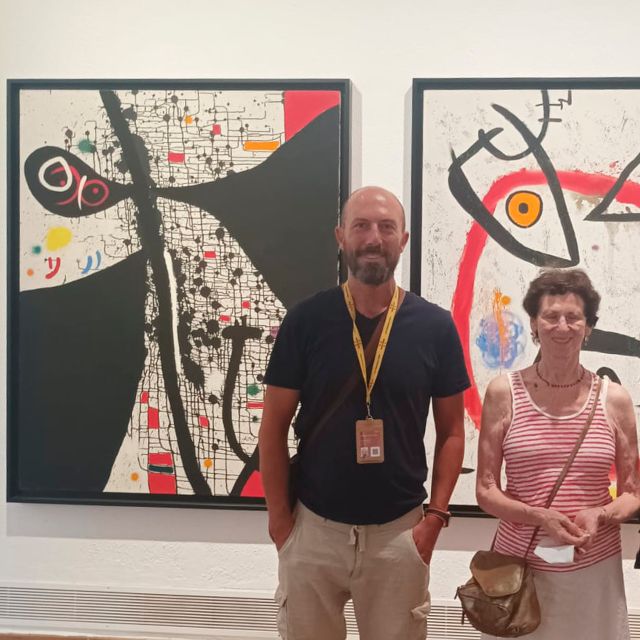
The core of the tour is learning how Miró developed his style and vision. Your guide will trace a journey through his work, from earlier experiments toward the celebrated masterpieces people come to see. Instead of treating each room as its own universe, you get a thread that helps you notice patterns.
Expect to talk through Miró’s techniques and the surrealist influences behind many of his bold choices. That’s important because without some guidance, it’s easy to treat surrealism as a vague label. A guide can show you what’s happening visually—how forms shift, how color and line carry meaning, and why his work doesn’t behave like traditional painting.
You’ll also move through multiple mediums: paintings, sculptures, and drawings. That variety is a real gift on a short tour because it prevents you from getting stuck in one visual language. Seeing the same ideas surface across different formats helps the work click.
Your Guide’s Job: Turning Labels Into a Working Map
A private tour lives or dies on communication, and this one is designed for an art historian-led explanation. That doesn’t mean it’s only academic. The best part, when it goes right, is that the guide helps you see what’s on the walls and connect it to the bigger picture.
In particular, praised guides like Laura have been noted for combining expertise with enthusiasm. That combination matters. Enthusiasm keeps you engaged; expertise keeps it from becoming a casual chat. And the idea of leaving time for appreciation is key—you shouldn’t feel rushed into information before you’ve even looked.
That said, one drawback to keep in mind is that not every guide approach matches every traveler’s preference. If you want a constant stream of interpretation, don’t hesitate to ask early. A good moment to clarify is at the start: tell your guide what you care about most—color, surrealism, technique, or Miró’s Barcelona connections—and ask them to anchor the tour there.





Barcelona Connections and Cultural Collaborations
One of the tour’s strengths is that it doesn’t treat Miró like an isolated genius. Your guide is set up to highlight his ties to Barcelona and key cultural collaborations. Even if you don’t know the details before you arrive, this context can make Miró feel more grounded in the city’s creative world.
This matters because Barcelona can pull you in many directions at once—architecture, design, food, nightlife—and it’s easy to treat art as just another stop. A guide who ties Miró back to the city helps you see the cultural pattern, not just the personal style.
You’ll also learn about Miró’s artistic evolution and vision, and that becomes especially useful once you start comparing early experiments to later, more recognizable work. The guide’s job is to help you see that progression as a logical pathway, not random stylistic jumps.
The Building Itself: Josep Lluís Sert’s Architecture
Don’t ignore the museum setting. The Joan Miró Foundation is housed in a striking building designed by Josep Lluís Sert, and the architecture shapes how you experience the art.
On a guided tour, architecture stops being just scenery. You’re more likely to notice how spaces influence viewing—where your eyes land, how you move from one perspective to another, and how the museum frames the collection. Even if you don’t become an architecture person overnight, you’ll probably leave with better spatial instincts for how the museum was meant to be experienced.
This is one reason I think the guided format works so well here. A private guide can point out what to notice in the building so you get full value from the environment, not just the artworks.
Personalized Itinerary: How You Can Steer the Focus
The tour includes a customized itinerary based on your interests. That’s not just marketing fluff. In a museum like this, different visitors walk out with different questions: some want technique and process, others want influences like surrealism, and others want to understand why Miró looks the way it does.
With a private guide, you can make the visit match your curiosity. If you like drawings, you can ask for more attention to sketch-like works and the line work. If you prefer sculptural pieces, you can ask how three-dimensional forms change the message. If you’re more interested in Barcelona’s creative scene, you can keep pulling the conversation back to local context.
This is where the private setting can feel like better value than a standard group tour. Group tours are great, but they often force everyone to follow the same tempo. Here, you get more control.
Price and Value for a Private Tour Up to 1
The price is $279 per group (up to 1) for a two-hour private tour. On paper, it sounds like a lot, but here’s how I’d judge the value.
First, you’re paying for a professional art historian guide plus skip-the-line access. That’s two concrete services: time savings and an expert explanation. Second, since the group size is essentially one person in the private group model, you’re not splitting guide attention among multiple visitors who may be at different learning levels.
So the real question isn’t just the dollar amount. It’s whether you’ll use the guide. If you like asking questions, you’re the type who pauses to look, and you want a museum visit that makes sense, this price can feel fair. If you’d rather wander with a quick self-guided overview and spend your time at your own pace, you might choose a cheaper option.
A good rule: if you’ll spend money on better seats at a show, you’ll probably appreciate paying for better seeing at a museum.
Who This Tour Suits Best
This tour is a strong fit for you if you want an art-focused experience without spending half your day getting oriented. Two hours is enough time to understand Miró’s evolution and techniques, while still short enough to pair with other Barcelona plans.
It also works well if you’re traveling with limited time. Maybe you want one major museum stop and you’d like that stop to feel structured and worthwhile. Or maybe you’ve seen parts of Miró before and now you want the missing context—why the changes happened, what influences shaped the work, and how the pieces connect.
If you’re the sort of visitor who likes lots of quiet looking with minimal talking, a private tour can still work, as long as you communicate that preference. The tour is designed to personalize, and the idea of making time to appreciate the art is part of the expectation.
A Quick Heads-Up: What’s Allowed and What the Day Might Feel Like
Photography without flash is permitted, which is useful if you want to remember details like line, color relationships, or textures. That’s especially handy after the tour, when you’re walking around Barcelona and trying to connect what you saw to what you’re seeing outside the museum.
The tour runs rain or shine. That’s a practical benefit in Barcelona, where weather can change quickly. Since the session is indoors for the main viewing, you’ll likely find the impact is mostly on how you get there and how comfortable you feel outside.
Your guide can operate in English, French, Spanish, or Catalan, so you can match your comfort level. If you’re choosing between languages, pick the one where you’ll ask questions easily—art history can be a lot better when you’re not mentally translating.
Should You Book This Joan Miró Private Tour?
Book it if you want a guided, expert-led way to understand Miró’s artistic evolution in a short time window. The skip-the-line access is a real time-saver, and the private format plus customized itinerary are the difference between seeing the collection and understanding it.
Think twice if you’re easily disappointed by tours that feel light on explanation. The best versions of this experience involve more than wall text; they connect technique, surrealist influence, and the Barcelona context in a way that makes the art feel like a coherent story. If you want that heavy interpretive layer, send your preferences early and ask questions at the start.
FAQ
Where is the meeting point?
Meet at the bus stop just outside Fundació Joan Miro, 08038 Barcelona, Spain.
How long is the tour?
The tour is 2 hours.
Does the tour include skip-the-line entry?
Yes. Skip-the-line ticket access to the Joan Miró Foundation is included.
What languages is the guide available in?
The live tour guide is available in English, French, Spanish, and Catalan.
Is flash photography allowed?
No flash photography is permitted. Non-flash photography is allowed.
Is the museum wheelchair accessible?
Yes, the museum is wheelchair accessible.
If you tell me your travel dates and what you’re most curious about—technique, surrealism, or Miró’s Barcelona ties—I can suggest how to get the most out of your two hours.