REVIEW · BARCELONA
History and culture with tapas dinner
Book on Viator →Operated by Ferran Pàmies Flack · Bookable on Viator
Barcelona tastes better with a history lesson. This tapas-and-history walk strings together Roman conquests, Arab invasions, medieval pacts, and today’s Catalan independence movement as you move through the Gothic Quarter. I especially like the small group setup and the way Ferran Pàmies Flack keeps the pace conversational instead of lecture-y.
I also love that you’re not just sightseeing first and eating later. You’re guided through iconic old-town stops and then you get the tapas dinner with snacks, alcoholic drinks, and bottled water included. One consideration: two of the three church stops are marked as admission not included, so you should expect a little extra cost if you want to go inside at each one.
In This Review
- Key things you’ll notice on this tour
- How this tapas + history walk really works in 3.5 hours
- Meeting in Ciutat Vella and why the start/end points help
- Stop 1: Santa Maria del Mar and the cathedral built by hand
- Stop 2: Barcelona Cathedral outside cues, then the inside contrast
- Stop 3: Santa Maria del Pi and the rose window story you can see
- The tapas dinner portion: what you should expect and how it helps
- Value check: is $109.97 fair for 3.5 hours with dinner?
- Ferran’s style: humor, local secrets, and answers you can use
- Who should book this tour (and who might skip it)
- Practical tips to make the most of your 3.5 hours
- Should you book this Barcelona tapas + history tour?
- FAQ
- How long is the tour?
- What’s included with the tapas dinner?
- Are entrance tickets included for the churches?
- Where do we meet and where does the tour end?
- How many people are in a group?
- Do I get a mobile ticket?
- What if the weather is bad or I need to cancel?
Key things you’ll notice on this tour
- Gothic Quarter stops become your timeline (not random photo spots)
- Tapas dinner is part of the story, not an add-on
- Roman, medieval, and modern politics get explained in plain language
- Max 9 people means more questions and fewer bottlenecks
- You finish near Pl. de Sant Jaume, handy for continuing on your own
How this tapas + history walk really works in 3.5 hours
This is a 3.5-hour experience built for one goal: helping you understand Barcelona fast, while you’re still hungry enough to care. The route uses three major churches in the old center as anchors. Instead of treating them like separate attractions, you get the sense they’re chapters in the same long story.
Ferran’s approach matters. He’s described as warm, funny, and full of good local context, and you can feel that in how he connects what you’re seeing to what came before. You’ll hear about big historical waves like Roman control and Arab rule, then zoom in on medieval agreements between kings. The most modern piece is the Catalan independence movement, brought into the conversation so the city feels alive, not locked behind marble.
The practical part is that you’ll cover enough walking to get oriented, but not so much that the food feels like a reward you’ve earned after suffering. With a max group size of 9, you also avoid the usual slow shuffle that happens when everybody crowds the guide at the same time.
You can also read our reviews of more historical tours in Barcelona


Meeting in Ciutat Vella and why the start/end points help
You start at Buzon de correos, Via Laietana 3, in Ciutat Vella. The end point is Ajuntament, Pl. de Sant Jaume 1, also in Ciutat Vella. That end location is smart: it drops you right where you can keep wandering, hop on transit, or simply enjoy the old-town squares without needing a “where do we go now?” debate.
You’ll get a mobile ticket. That sounds small, but it’s one less thing to worry about when you’re juggling church entrances and dinner. It also means you can spend your brain on the actual experience: looking at details, listening to the story, and tasting what’s served.
Also note the tour requires good weather. If it’s canceled due to poor conditions, you’ll be offered a different date or a full refund. Barcelona weather can change quickly, so check forecasts the day before and the morning of.
Stop 1: Santa Maria del Mar and the cathedral built by hand
The tour’s first major stop is Basilica de Santa Maria del Mar. This is one of those places where locals clearly care. The big point you’ll hear is that it was built by hand in difficult times, carried forward by everyday people and their commitment to create something lasting.
You’re there for about 10 minutes. That’s not enough time to “study” architecture, and that’s the point. You’re meant to get oriented—see the structure, notice the vibe, and understand why it matters before you move on. If you try to squeeze a museum-level visit into this slot, you’ll miss the story that connects the building to the city’s broader changes.
Admission isn’t included here. So if you plan to enter, budget a bit extra. Even if you choose not to, the value comes from the guide’s framing: this isn’t just a pretty church. It’s a sign of how communities organized, worked, and kept building through hardship.
Stop 2: Barcelona Cathedral outside cues, then the inside contrast
Next up is Barcelona Cathedral. You’ll first look at the outside and get a quick guided explanation of different city periods layered into the building. Then you go inside to see the contrast with the overwhelming facade.
This stop is about 20 minutes. That extra time helps because you can shift your attention from “what am I looking at?” to “why does it feel different from out here?” The outside-to-inside rhythm is useful if you’re not an architecture person. You still walk away understanding what changed over time, and why the cathedral feels like more than one era glued together.
Good news: admission here is marked free. That matters for value. When one of your three major stops has no entry cost, you’re less likely to feel like the tour budget is being chipped away by surprise ticket lines.
Stop 3: Santa Maria del Pi and the rose window story you can see
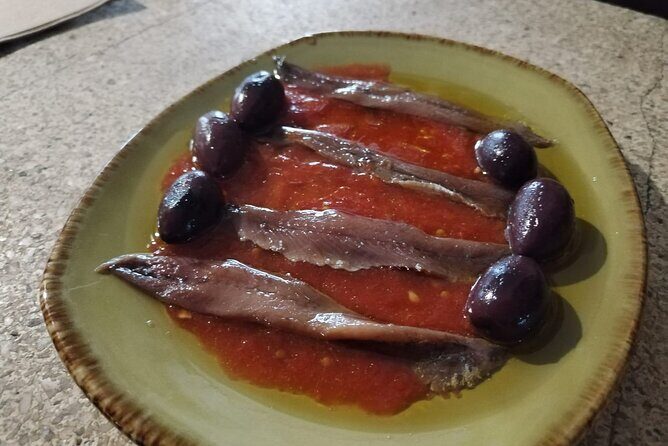
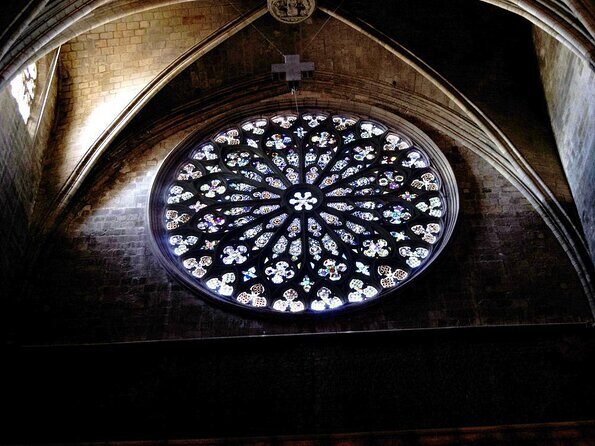
The final church stop is Basilica de Santa Maria del Pi. You’ll go through the exterior and hear what happened that led to the building of the church, including the detail that it had the largest rose window at the time.
This part is shorter, about 5 minutes. In other words, it’s a stop built for impact, not for lingering. If you love photo moments, this one can be satisfying because the rose window reference gives you something concrete to look for right away. Instead of staring randomly at stonework, you’ll know what feature the guide is highlighting and what makes it historically notable.
Admission isn’t included here either. So this is another place where you’ll need to decide whether entering is worth the extra cost for your style of travel. If you’re more into the story than the inside spaces, you can still get a lot from the exterior explanation.
You can also read our reviews of more tours and experiences in Barcelona




The tapas dinner portion: what you should expect and how it helps
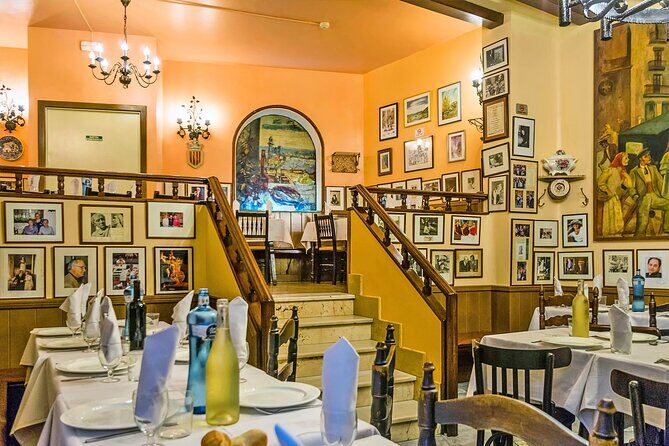
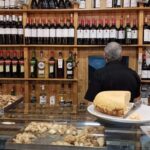
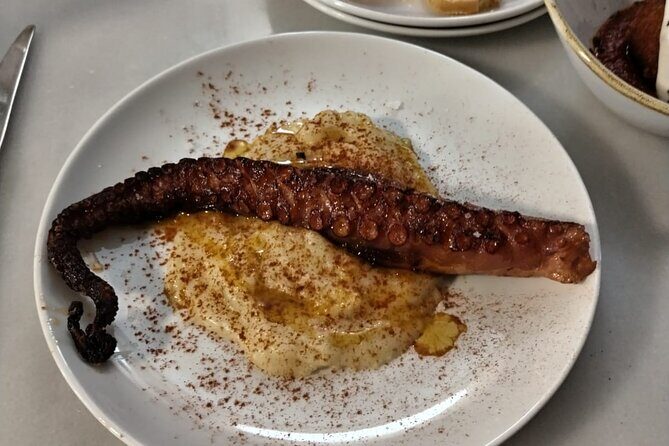
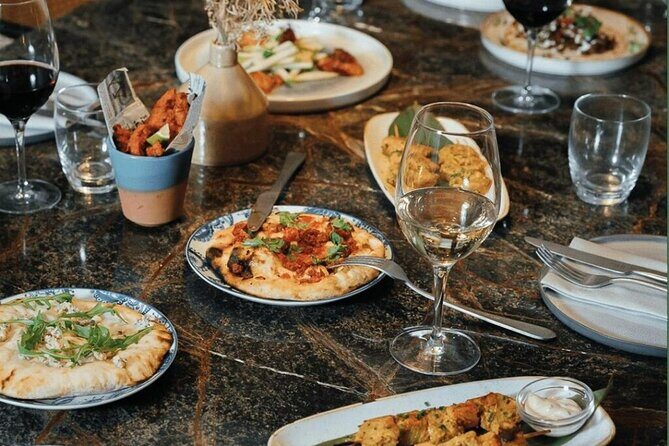
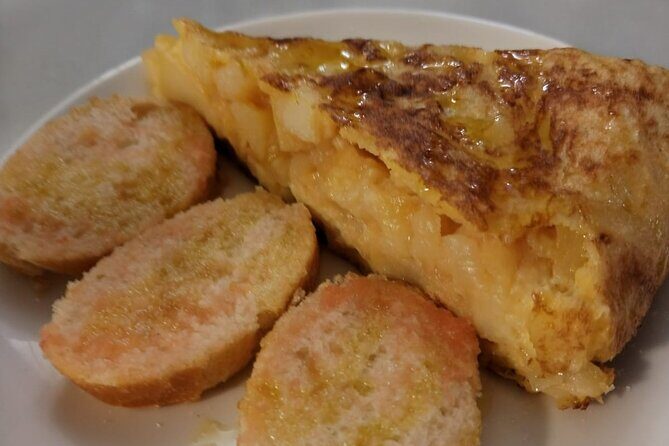
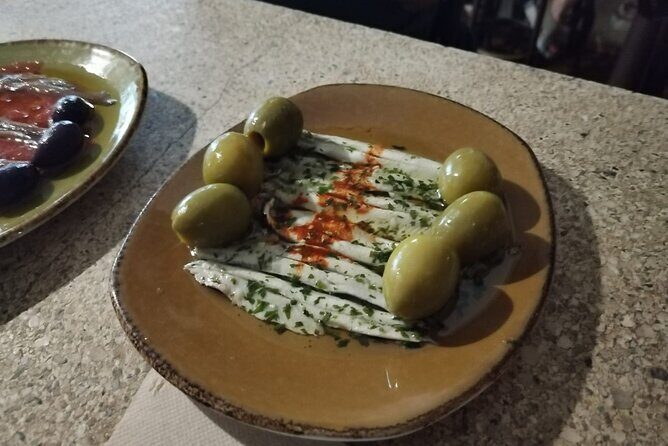
The tour is designed as a blend of food and history. That means the tasting isn’t just a reward. It’s part of how you understand the city in context. You’ll stop at iconic Barcelona establishments and eat and drink while your guide threads the historical storyline through what you’re experiencing around you.
What’s included is clear: snacks, alcoholic beverages, dinner, and bottled water. Since dinner is included, you should plan your day so you’re not eating a big lunch first. In practice, that helps you enjoy the food instead of treating it like a checklist.
The alcohol inclusion also changes the feel of the tour. It can turn the atmosphere more social, and it often makes people more willing to ask questions. I like experiences where the guide can talk without the group feeling stressed about timing, and alcohol plus a structured schedule tends to help with that.
The menu specifics aren’t listed here, so don’t show up expecting a exact dish lineup. But you can expect tapas-style eating tied to the old-town setting. If you’re curious about how a city’s daily life connects to its history, this format is a good match.
Value check: is $109.97 fair for 3.5 hours with dinner?
At $109.97 per person, this tour sits in the mid-range for a guided food + history experience. The value comes from the bundle: you’re paying for a structured route, a local guide, multiple snack-and-drink moments, and dinner plus bottled water.
Let’s do the simple math logic. If you were to book a guided walk with history content, you’d already pay a guide fee. Then add the fact that alcohol and dinner are included, and the price starts to make sense. This is especially true in central Barcelona, where a single decent meal can add up quickly.
The main thing that can affect your final “all-in” cost is church admissions. With two stops marked as admission not included (and one marked free), your total extra spend depends on whether you enter everything. Still, even with that consideration, you’re getting multiple stops and meals within one time block, which often makes this better value than piecing it together on your own.
One more value detail: the group limit is small (maximum 9). That’s not just comfort. It usually means you get better interaction, which matters if you’re traveling for both food and meaning.
Ferran’s style: humor, local secrets, and answers you can use
You’ll get more than facts. Ferran’s guiding style shows up in how he connects “what you’re seeing” to “what you should notice next.” The vibe described for him is charming and kind, with a good sense of humor and plenty of behind-the-scenes insight.
I like guides who give you practical takeaways. Here, that shows up as explanations of must-know city context—things like how different periods of control shaped the places you’re standing in front of. That’s the kind of storytelling that helps even after the tour ends. Later, when you’re walking and you see a feature on a building, you’ll often remember the historical thread that made it make sense.
There’s also a minor caution worth saying plainly. A small number of reports note a case where the guide didn’t show up. That isn’t the norm you want to bank on. If you book, it’s smart to keep an eye on the tour day details and be ready to contact the provider quickly if anything feels off.
Who should book this tour (and who might skip it)
This tour fits you best if you want three things at once:
- You’re in Barcelona for a short time and want orientation quickly.
- You like food that happens during the story, not after you’ve done the walking.
- You enjoy hearing how modern Catalan identity connects to older periods of conquest and power.
It might be less ideal if you:
- Want a long, quiet church visit where you can linger at length. Some stops are brief by design.
- Hate paying extra for entrances. Two stops are marked admission not included.
- Prefer to build your own food plan without alcohol included.
If you’re traveling alone, this kind of small-group structure can also work well because you’ll have more chances to talk rather than just stand next to strangers.
Practical tips to make the most of your 3.5 hours
A few things can help this run smoothly:
- Wear comfortable shoes. You’ll be walking between old-town stops and you’ll want your feet to agree.
- Bring a little extra money for admissions. Santa Maria del Mar and Santa Maria del Pi are marked as admission not included.
- Come hungry but not stuffed. Dinner is part of the package, so skip a heavy lunch.
- Use the weather window wisely. Since good weather matters, check the forecast and be flexible if the operator adjusts plans.
- Ask about the modern part. The Catalan independence movement is included in the talk, and it helps you understand what you’ll hear and read outside the tour.
Also, keep an eye on timing at meeting points in Ciutat Vella. It’s a dense area, and the start location is a specific spot on Via Laietana.
Should you book this Barcelona tapas + history tour?
I think it’s a strong choice if you want to get your bearings fast and you like your Barcelona with context. The combination of tapas dinner plus three Gothic Quarter churches gives you a tight timeline you can actually remember. Add in Ferran’s described humor and local storytelling, and it’s the kind of guided experience that makes the city feel less like a list and more like a living place.
Book it if:
- You’re on your first days in Barcelona and want a guided path.
- You’re comfortable with the idea that church admissions may add a bit more cost.
- You like learning history through real streets and real food.
Skip it if you want a longer standalone cathedral visit or you’d rather control every meal on your own. Otherwise, this is a good value way to eat well and learn enough to make your next walk feel smarter.
FAQ
How long is the tour?
The tour lasts about 3 hours 30 minutes.
What’s included with the tapas dinner?
The tour includes snacks, alcoholic beverages, dinner, and bottled water.
Are entrance tickets included for the churches?
Barcelona Cathedral entrance is marked free. Santa Maria del Mar and Santa Maria del Pi are marked as admission not included.
Where do we meet and where does the tour end?
You meet at Buzon de correos, Via Laietana, 3, Ciutat Vella, 08003 Barcelona. You end at Ajuntament, Pl. de Sant Jaume, 1, Ciutat Vella, 08002 Barcelona.
How many people are in a group?
The tour has a maximum of 9 travelers.
Do I get a mobile ticket?
Yes, the tour includes a mobile ticket.
What if the weather is bad or I need to cancel?
The experience requires good weather. If it’s canceled due to poor weather, you’ll be offered a different date or a full refund. You can cancel for a full refund up to 24 hours before the experience starts.