REVIEW · BARCELONA
Barcelona Private Walking Tour: Legends, Myths & Old Streets
Book on Viator →Operated by The Tipsy Tours · Bookable on Viator
In This Review
- A crowd-proof story walk through old Barcelona
- Key highlights before you go
- Why this private Gothic Quarter walk feels different
- How the tour links myths, politics, and street corners
- Stop-by-stop: what you’ll see in the Gothic Quarter and beyond
- 1) Els 4 Gats (Casa Martí area)
- 2) El Mon Neix En Cada Besada
- 3) Barcelona Cathedral
- 4) Casa de l’Ardiaca
- 5) Pont del Bisbe
- 6) Placa Sant Felip Neri
- 7) MUHBA – El Call (Jewish Quarter)
- 8) Placa de Sant Jaume
- 9) Plaça del Rei
- 10) Plaça de l’Àngel
- 11) Basilica de Santa Maria del Mar (El Born)
- The big-ticket sites: what to budget for
- Meeting point at Plaça Nova, ending at Santa Maria del Mar
- Price and value: is $178.02 per person worth it?
- What to do before and during the walk
- Who should book this, and who might want a different option
- Should you book this Barcelona private walking tour?
- FAQ
- How long is the Barcelona private walking tour?
- Is this tour private or group-based?
- What time does the tour start, and where do we meet?
- Where does the tour end?
- Which stops require paid admission?
- Does the tour include the Jewish Quarter?
- What kinds of history and themes will the guide cover?
- What should I bring for a 2-hour walking tour?
A crowd-proof story walk through old Barcelona
Barcelona’s old streets are full of plot twists. This private 2-hour walk through the Gothic Quarter and toward El Born turns famous landmarks into a connected story, with a dedicated local guide who can answer questions and match the pace to your group. One big plus is how private guidance keeps the experience calm and flexible. Another plus is the way the route links eras—Roman Barcino, the Spanish Inquisition, the Civil War, and Catalan culture—so you understand what you’re seeing instead of just snapping photos.
The only real catch to plan for: two major churches have admission not included, so you may want to budget a little extra if you want to go inside and take your time. Still, most stops are free, which makes it easier to enjoy even if you’re keeping costs tight.
Key highlights before you go
- Dedicated guide, private group: tailored pace and time for questions, not a fixed cattle-car schedule
- Legends with real locations: Pont del Bisbe myths, Santa Eulalia stories, and Civil War memories tied to actual squares
- Roman leftovers in Gothic settings: remnants of Roman walls and aqueducts near the cathedral area
- Jewish Quarter stop at MUHBA El Call: includes the ancient synagogue setting and plague-era context
- Lots of outdoor viewing: most stops are free to enter, with only certain big-ticket churches requiring admission
You can also read our reviews of more tours and experiences in Barcelona.

Why this private Gothic Quarter walk feels different

A private walking tour in Barcelona is more than a shortcut around crowds. It’s a way to decode the city while you’re standing in front of it. You get a dedicated guide and your own group only, so you’re not stuck waiting for everyone to catch up (or tuning out when the explanation doesn’t match your interests).
This one is built for a focused 2-hour stroll, which is a sweet spot. Long enough to connect themes across neighborhoods. Short enough that you can still do dinner plans the same evening.
And the timing matters. It starts at 6:00 pm, when the light can make Gothic stone feel dramatic without being the middle of the hottest part of the day. If you’re a first-timer, that early evening window helps you get your bearings. If you’re returning, it’s a way to see familiar places with new context.
How the tour links myths, politics, and street corners
What I like about this tour concept is the “story chain” approach. Instead of treating each stop like a random highlight, it connects major chapters of Catalonia and Spain into something you can walk through.
You’ll hear about:
- Roman Barcino: how Barcelona began, and how Roman infrastructure still shows up in unexpected places
- The Spanish Inquisition: not as a dry lecture, but as part of the city’s darker turning points
- The Civil War: how trauma is sometimes remembered right there in a square name or a small public space
- Catalan culture and independence: including a Catalan-themed photo-mosaic built into a modern surface
The best part is that myths aren’t treated like fairy tales. Legends like the Pont del Bisbe are explained as part of how people used to make sense of the city—through gossip, fear, hope, and symbolism.
Guides associated with this experience (like Vanesa, George, Jordan, Mariya, Tamara, Sara, Rolene, Mariah, and Jamie) are often praised for keeping the walk lively, answering questions clearly, and using humor to make heavy topics easier to follow. That’s not just entertainment. It helps you remember what you learned when you’re wandering later on your own.
Stop-by-stop: what you’ll see in the Gothic Quarter and beyond
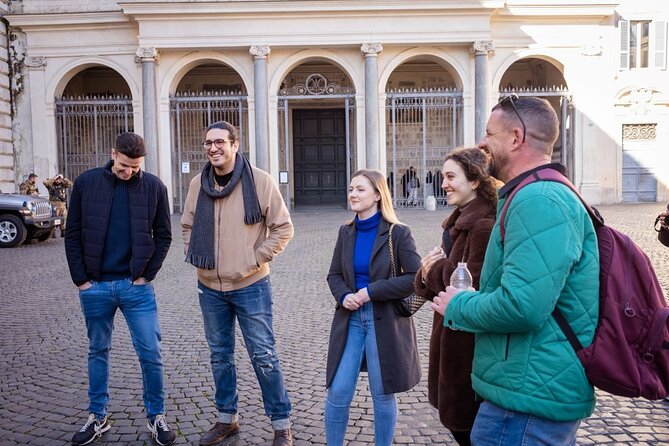
The walk is structured around short stops (about 10 minutes each), which keeps energy up and lets you keep moving. Here’s what each location adds to the story.
1) Els 4 Gats (Casa Martí area)
You start with Els 4 Gats, tied to the modernist world of Casa Martí. This isn’t just a building stop. The point is that Barcelona’s artistic identity isn’t separate from its politics or old stones—it overlaps. The restaurant’s legacy is connected to famous artists like Pablo Picasso and Antoni Gaudí, which helps set a tone: Barcelona always had culture in its DNA.
Practical note: the stop is short and marked as free admission.


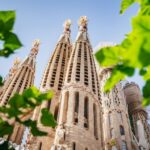


2) El Mon Neix En Cada Besada
Next comes The World Begins With a Kiss, a photo-mosaic that’s easy to miss if you’re only looking for big sights. From the street, it can look like a simple design—then the story connects it to the fight for Catalan independence and freedom. It’s a good example of how Catalan messages can be hidden in plain sight.
Practical note: this is also listed as free.
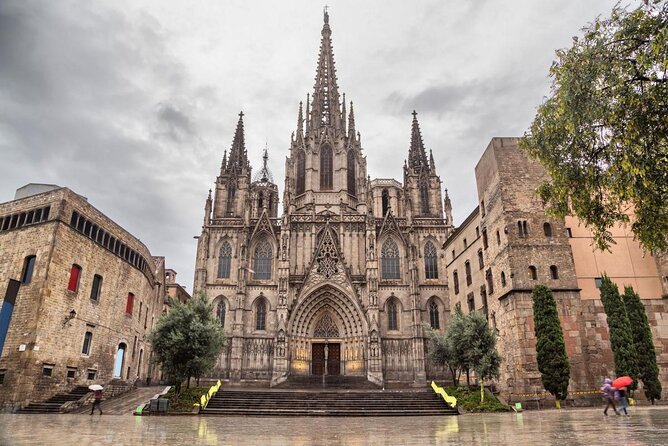
3) Barcelona Cathedral
Now you hit the emotional center of the Gothic Quarter: Barcelona Cathedral, dedicated to the city’s patron saint. The guide will tie the saint’s story to violence attributed to Romans—again, not as textbook history, but as a legend rooted in the place.
Budget note: admission for the cathedral is not included.
4) Casa de l’Ardiaca
Right by the cathedral, Casa de l’Ardiaca gives you a different kind of time travel. This tiny house setting helps you spot remnants of the Roman wall and aqueducts—proof that Roman Barcelona didn’t vanish; it got reused, covered, and quietly absorbed into later buildings.
Practical note: listed as free.
5) Pont del Bisbe
The Pont del Bisbe bridge is where Gothic architecture meets storytelling. Expect legends and the kinds of rumors people made around powerful places. Even if you don’t believe every myth (I don’t either, not blindly), the goal is to understand why the story stuck.
Practical note: free.
6) Placa Sant Felip Neri
This square is one of those “you walk past it unless you’re told to look” moments. It carries a sombre Spanish Civil War connection. Small squares in old cities often act like memory boxes—this one is designed for reflection.
Practical note: free.
7) MUHBA – El Call (Jewish Quarter)
Then you reach El Call, Barcelona’s former Jewish district, with a stop at MUHBA – El Call. This is where you’ll learn about the ancient synagogue and local legends, plus the city’s dark period during the plague. The mood shifts here, and that’s the point: the tour isn’t only romance and architecture.
Practical note: the stop is free to enter as listed.
Consideration: one common piece of feedback is that people who want more synagogue time may find the focus a bit brief. If that’s important to you, ask the guide (before you start) whether you’ll have enough time for the inside view and related details.
8) Placa de Sant Jaume
Plaça de Sant Jaume is a major political square—housing the seats of Catalan government and City Hall. This stop helps you connect the earlier independence themes to living institutions. It’s not ancient history frozen in time. It’s part of current identity.
Practical note: free.
9) Plaça del Rei
Plaça del Rei brings you to the former Royal Palace backdrop for some of Spain’s darkest chapters. This is the kind of stop where the guide’s story matters more than the stones, because the square feels peaceful until you understand what happened there.
Practical note: free.
10) Plaça de l’Àngel
This square explains how places change names and what gets remembered. Plaça de l’Àngel tells the story of the procession of Santa Eulalia and a heavenly apparition linked to the name change from a former Wheat Square. It’s the perfect stop if you like the blend of religion, art, and identity in public space.
Practical note: free.
11) Basilica de Santa Maria del Mar (El Born)
Your walk ends at Basilica de Santa Maria del Mar, in the El Born area. This is a strong finish because it ties Barcelona to its maritime history. It also gives your feet a “we made it” moment at the end of the loop.
Budget note: admission is not included.
The big-ticket sites: what to budget for

Most stops on the walk are free as listed, which is a major value factor. But two locations have admission not included:
- Barcelona Cathedral
- Basilica de Santa Maria del Mar
If you care about going inside both, you’ll want to plan extra time and money. If you mainly want the exterior and the guide’s interpretation tied to the architecture, you can keep costs down and still get the main story.
Either way, the route design helps you learn without turning the whole evening into ticket-lines and paperwork.
Meeting point at Plaça Nova, ending at Santa Maria del Mar
You start at Barcino Sculpture, Plaça Nova, 40 (Ciutat Vella) and finish at Basilica de Santa Maria del Mar, Plaça de Santa Maria, 1 (Ciutat Vella). That end point is handy: it drops you right where lots of evening dining options are clustered in El Born.
Because the tour begins at 6:00 pm and lasts about 2 hours, it’s a good fit if you’ve got dinner reservations later. You’ll also appreciate that it’s marked as near public transportation, so you can get there easily without complicated logistics.
The tour uses a mobile ticket, so you’ll want your phone charged and ready.
Price and value: is $178.02 per person worth it?
At $178.02 per person, this isn’t a bargain-bin walking tour. It’s priced like a guided experience with real planning behind it: a private group setup, a route built around meaningful stops, and a dedicated guide who can adjust pacing.
So when does it feel like a smart buy?
- If you want crowd-free, question-friendly time
- If you’re the kind of person who loves history but gets bored by lectures
- If you’re traveling with family or friends and want everyone to stay together
- If you’re doing Barcelona for the first time and want a fast way to understand the city’s “why”
For first-timers, the value is often psychological. Paying for guidance means you stop guessing and start noticing. You learn what each square is really about, so you can keep exploring later without feeling lost.
Also, the tour is on a schedule where it gets booked ahead (average booking is 34 days). If your dates are firm, it’s smart to reserve early so the evening time works with your plans.
What to do before and during the walk
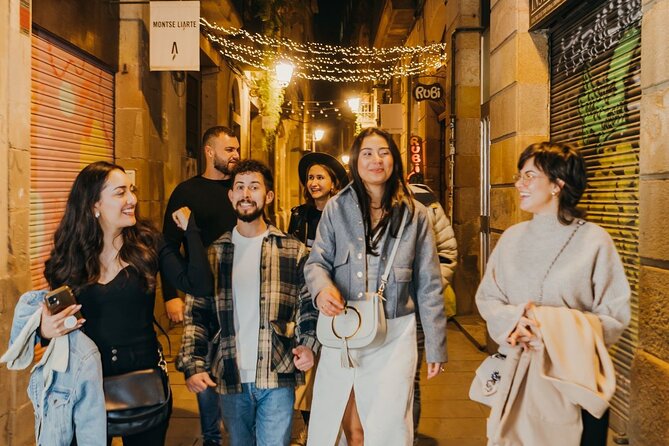
This is practical advice from what tends to make walking tours go smoothly:
- Wear good walking shoes. The Gothic Quarter can be uneven.
- Carry water and plan a small snack before you start.
- Be ready to ask questions. If something doesn’t make sense, the whole point of a private guide is that you can interrupt and get a real answer.
- If your group has different interests (architecture, politics, art, or darker history), tell the guide at the start. A good guide will steer the story so everyone gets something they care about.
And yes, the tone is often described as fun and story-driven. Expect humor alongside serious topics—especially around the Civil War and Inquisition-era references.
Who should book this, and who might want a different option
This works best for:
- Couples who want romantic old streets with real explanations
- Families who want stories that feel human, not textbook
- Friends who enjoy architecture and want a shared “aha” experience
- First-timers who need a guided orientation to the Gothic Quarter and beyond
- Return visitors who want to understand what they’ve been walking past for years
You might consider a different tour if:
- You only care about inside museum-style time at churches and want long entry visits
- You expect every stop to include major interior access (two sites require additional admission, and synagogue time may feel limited depending on how the guide manages the schedule)
For a history-with-stories walking format, though, this is exactly the kind of evening that helps Barcelona click.
Should you book this Barcelona private walking tour?
If you want Barcelona’s old streets without the chaos, this is a strong yes. The private format, the 6:00 pm timing, and the way the route connects Roman roots to Catalan identity make it a smart use of two hours.
I’d book it if you’re open to both beauty and darker chapters, and you like learning by walking. I’d think twice only if you know you want lots of inside time at major religious sites or a very long, in-depth synagogue visit. For everyone else, it’s a very practical way to turn the Gothic Quarter from scenery into understanding.
FAQ
How long is the Barcelona private walking tour?
It runs for about 2 hours.
Is this tour private or group-based?
It’s private, meaning only your group participates.
What time does the tour start, and where do we meet?
The tour starts at 6:00 pm at Barcino Sculpture, Plaça Nova, 40, Ciutat Vella.
Where does the tour end?
It ends at Basilica de Santa Maria del Mar, Plaça de Santa Maria, 1, Ciutat Vella.
Which stops require paid admission?
Admission is not included for Barcelona Cathedral and Basilica de Santa Maria del Mar. The other listed stops are marked as free.
Does the tour include the Jewish Quarter?
Yes. You’ll visit MUHBA – El Call, connected to the former Jewish district, including the area of the ancient synagogue and related stories.
What kinds of history and themes will the guide cover?
The guide covers stories tied to Roman Barcino, the Spanish Inquisition, the Civil War, and Catalan culture, plus legends connected to specific squares and bridges.
What should I bring for a 2-hour walking tour?
Bring comfortable walking shoes and water. It also helps to fuel up before you go, since you’ll be walking most of the two hours.