REVIEW · BARCELONA
Barcelona: Sagrada Familia, Modernism and Gothic Quarter
Book on Viator →Operated by Artista Tours · Bookable on Viator
Sagrada Familia sets the tone fast. This half-day tour uses the outside streets of Gaudí Barcelona and the narrow lanes of the Gothic Quarter to explain how Modernism and older Barcelona layers connect. I like that it’s structured like a story trail, with stops that turn buildings and details into clues, not just pretty facades.
Two things I especially liked: you get guided context for why Gaudí’s design choices matter, and you also step inside several historic spots in the Old Town instead of only watching from the sidewalk. Names like Anastasia, Nuria, Kristina, Christian, Caio, and Leo show up in guides who keep the group moving and the commentary engaging, which is exactly what you want on a 3-hour overview. One possible drawback to note up front: this tour does not include entry into La Sagrada Familia itself, so plan for an outside-focused experience there.
In This Review
- Key Things I Found Especially Worth Your Time
- What You’re Really Getting: A 3-Hour Barcelona Story Walk
- The Big Setup: Sagrada Familia (Outside) and Gaudí’s Meaningful Details
- Passeig de Gràcia and Modernist Barcelona in Short, Sharp Stops
- Plaza de Catalunya Break: A Breather Near the City’s Nerve Center
- Old Town Surprise: Modern Art Meets Old Streets
- Timing Question That Actually Helps: How Long Sagrada Was Built?
- Casa de l’Ardiaca: Time Travel in a Small Dose
- MUHBA Temple d’August: Roman Barcelona You Can Step Into
- The General Archive of the Crown of Aragon: Politics and Power in a Surprising Setting
- Where You End: Plaça del Rei and the History Museum Area
- Guide Performance: Why Names Like Anastasia and Christian Keep Coming Up
- How the Price Adds Up: $56.75 for a Tight, Guided Overview
- Practical Tips Before You Go
- Should You Book This Barcelona Modernism and Gothic Tour?
- FAQ
- Does this tour include entry into La Sagrada Familia?
- What attractions have admission included?
- How long is the tour?
- How many people are in the group?
- Where does the tour start and end?
- Are metro tickets included?
- What is a mobile ticket?
- Can I cancel and get a full refund?
Key Things I Found Especially Worth Your Time
- Sagrada Familia detail talk without entry: you learn what to look for while staying on the street.
- Modernism-to-Gothic contrast: Gaudí and the Gothic Quarter are explained as parts of the same city story.
- Included entries in the Old Town: Casa de l’Ardiaca plus Roman-site MUHBA Temple d’August and the General Archive of the Crown of Aragon.
- Small group feel: up to 20 people, with time for questions.
- Guides who actually answer: strong guide performance is a repeated theme, including Anastasia and Christian.
- A finish right where you can keep walking: the tour ends at Plaça del Rei in Ciutat Vella.
What You’re Really Getting: A 3-Hour Barcelona Story Walk
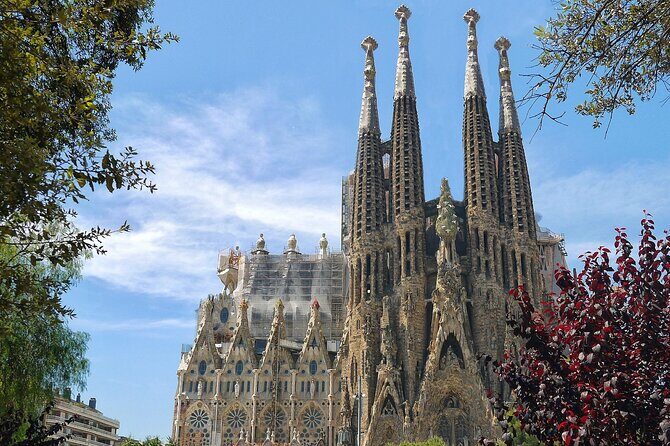
At $56.75 per person for about 3 hours, this tour is built for people who want the “how to read this city” version of Barcelona. You’re not trying to see everything; you’re learning how the city’s style changes over time, from Roman to medieval to Modernism, and how those eras show up in real streets.
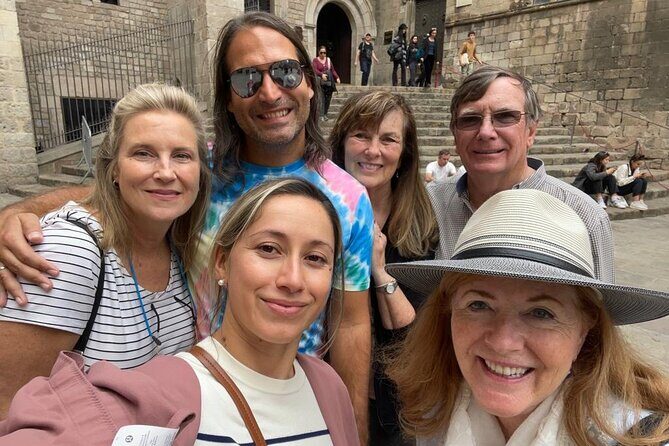
I like that the pacing is tight. You’re guided from one visual clue to the next, with short stops designed to keep momentum on a half-day schedule. And because it’s capped at 20 travelers, it doesn’t feel like you’re part of a wandering crowd.
You’ll also get a multilingual professional guide and a mobile ticket, which is handy if you hate last-minute ticket-printing. Just keep your expectations realistic: the Sagrada Familia segment is mostly a pass-by and look-up-and-learn moment, not a full cathedral visit.
You can also read our reviews of more tours and experiences in Barcelona.

The Big Setup: Sagrada Familia (Outside) and Gaudí’s Meaningful Details
The tour starts with the Sagrada Familia story, focusing on Antoni Gaudí and why the cathedral’s details are more than decoration. You’ll spend about 45 minutes here, which is long enough for a proper explanation instead of a quick photo stop.
Even without entry, this is where the tour earns its keep. Gaudí’s work is packed with symbolism, and the guide helps you connect the dots. You’ll also hear about the “why” behind design elements, so later, when you’re standing near other Modernist structures, you’ll recognize patterns instead of just admiring them.
One practical consideration: since you’re outside, you’ll be dealing with real-world street conditions like noise. A couple of negative comments note it can be hard to hear if construction or traffic noise is intense, so if you know you’re sensitive to sound, come with a calm attitude and a readiness to lean in.
Passeig de Gràcia and Modernist Barcelona in Short, Sharp Stops
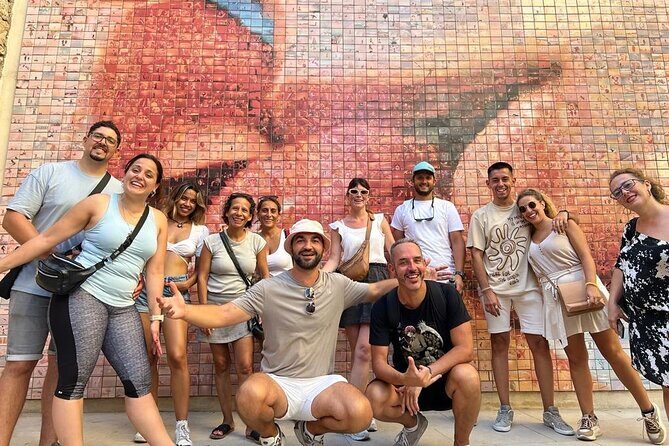
After the Gaudí setup, the tour shifts into Modernist Barcelona through the story of the most famous boulevard area: Passeig de Gràcia. You’ll get a quick introduction to the history behind what you’re seeing and why it became such an important address.
This is one of the smartest uses of time on an overview tour. Passeig de Gràcia can feel like a blur if you’re walking alone, with buildings that look cool but don’t yet mean anything. Here, you’re given context early, so later on your trip, you can recognize what style you’re looking at and what era it belongs to.
The pace stays brisk, with multiple stops around 15 minutes each at various Modernist-related viewpoints. That’s good if you want coverage, but it also means you won’t linger. If you prefer slow, deep photo time, you’ll want to schedule extra independent time back in this area afterward.
Plaza de Catalunya Break: A Breather Near the City’s Nerve Center
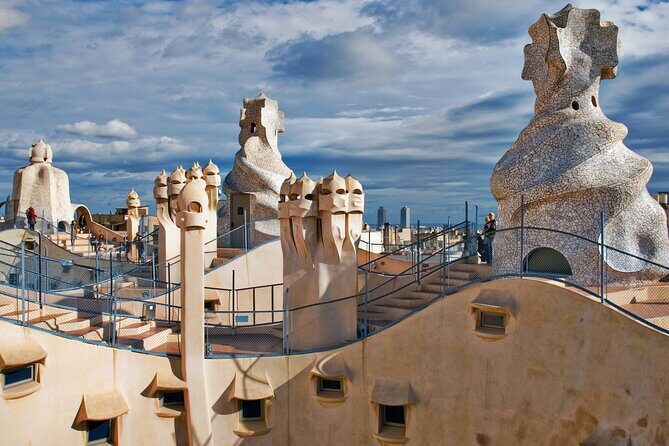
Mid-tour, you get a break near Plaza de Catalunya, the big square that acts like a hub for moving around Barcelona. The stop is about 10 minutes, and it’s time you’ll appreciate because it breaks up the walking before the Old Town gets twistier.
This is also a useful pause for a practical reason: after seeing Modernism viewpoints, you’ll reset mentally before stepping into the Gothic Quarter’s tighter lanes. When your feet and brain both get a minute to catch up, the rest of the tour lands better.
Old Town Surprise: Modern Art Meets Old Streets

Back in the Old Town, there’s a short stop that focuses on an unexpected piece of modern art tucked into older surroundings. It’s brief, about 10 minutes, but it makes a point that matters for the rest of the day: Barcelona doesn’t separate eras cleanly.
You’ll also get a guided “back to the Roman Empire” moment around 10 minutes. This is part of why the tour works as an overview. You start realizing that today’s streets sit on top of earlier worlds, and the guide keeps that timeline straight enough that you don’t feel lost.





Timing Question That Actually Helps: How Long Sagrada Was Built?
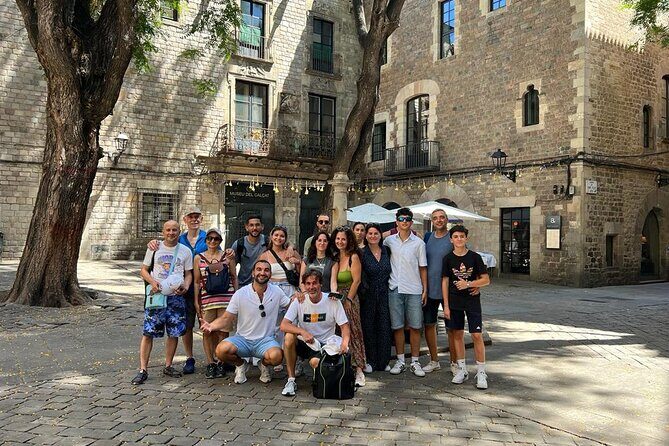
One of the stops asks a simple question: how many years do you think it took to build the cathedral. It’s short, around 10 minutes, but it’s a clever teaching device.
That kind of prompt helps you remember the real lesson: Sagrada Familia isn’t a quick project that froze in time. It’s something shaped across decades, with layers of planning and construction philosophy. The guide uses this moment to connect your observations to what you’re learning, so you leave with a mental anchor.
Casa de l’Ardiaca: Time Travel in a Small Dose
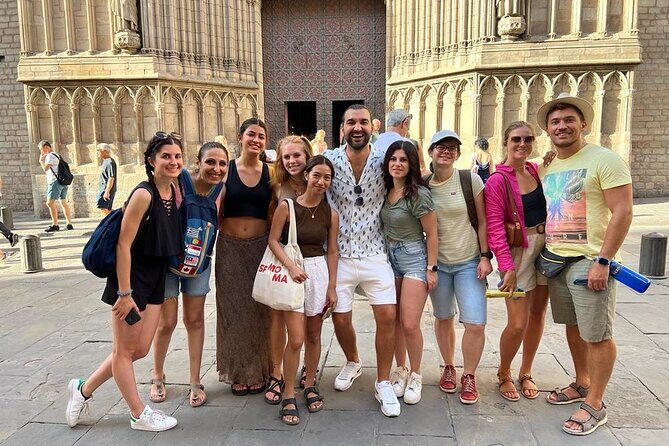
Next up is Casa de l’Ardiaca, and this is one of the included stops that feels most like stepping into another era. You’ll enter the site for about 10 minutes, and admission is included.
The tour frames it as time travel, and I get why. This is exactly the kind of place where you can’t fully understand the atmosphere just from outside. Even if you don’t want a museum marathon, this short entrance gives you texture: stone, layout, and scale that match the Gothic Quarter’s identity.
Practical tip: because it’s a short stop, move efficiently inside. Look first, then ask questions if you have them. You don’t want to spend your whole entrance trying to find the most photogenic corner.
MUHBA Temple d’August: Roman Barcelona You Can Step Into
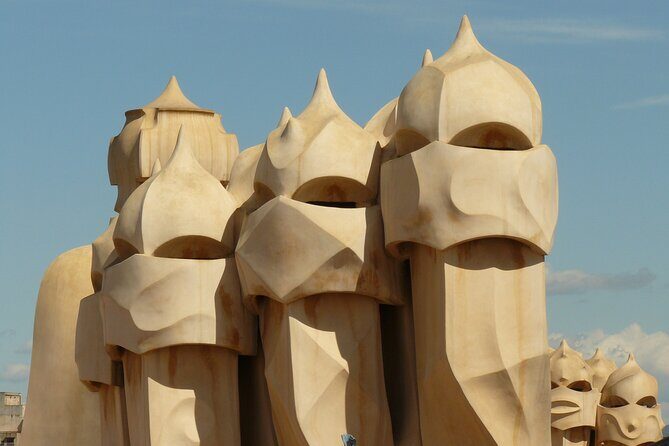
Then you jump back to the Roman era with MUHBA Temple d’August (Roman Temple of Augustus). This stop is about 5 minutes, and admission is included again.
Even with the short timing, it’s a high-impact stop because you can physically place yourself in the Roman layers you heard about earlier. The guide’s commentary is what helps you connect this site to the broader story of Barcelona as a city that kept rebuilding on itself.
If you’re the kind of traveler who loves “proof on the ground,” this is the moment. If you’re mostly there for big viewpoints, it can feel quick, but the Roman connection is why the tour includes it at all.
The General Archive of the Crown of Aragon: Politics and Power in a Surprising Setting
The final “inside” history stop is the General Archive of the Crown of Aragon, also included. It’s about 10 minutes, and the guide shares why this place matters and how important events link to the Crown of Aragon.
This is a smart choice for an overview tour because it moves beyond art and architecture into how power worked in Barcelona’s past. You don’t just see styles; you learn the political backdrop that helped shape the city’s development.
There’s one more quick segment that talks about narrow streets and labyrinth-like lanes and why they exist. That’s the kind of explanation that turns wandering into understanding.
Where You End: Plaça del Rei and the History Museum Area
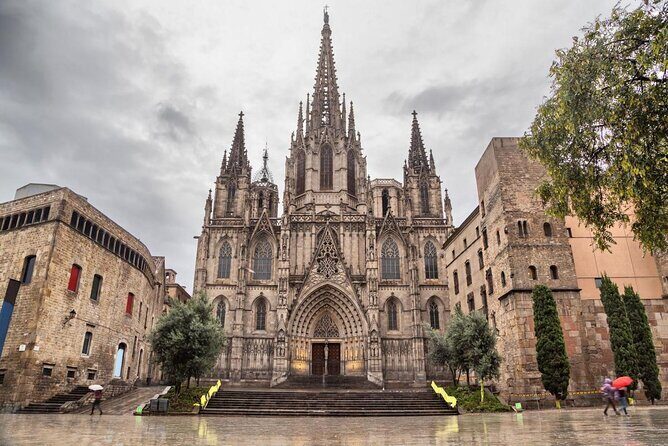
The tour finishes at Plaça del Rei, in front of the History Museum of Barcelona. You’ll get about 5 minutes of wrap-up time to transition out.
This matters because your day isn’t “reset” at the starting point. Plan to treat the end location as a launchpad. From Plaça del Rei, you’re well placed to keep exploring Ciutat Vella on foot.
One logistical note from feedback: some people found the end point confusing if they expected to return to the start. That doesn’t mean anything is wrong with the tour; it just means you should glance at the meeting/end instructions beforehand so your time stays yours.
Guide Performance: Why Names Like Anastasia and Christian Keep Coming Up
Guide quality is the heart of this kind of tour. On this one, multiple guide names appear in strong feedback: Anastasia and Christian are singled out for being friendly, enthusiastic, and strong on answering questions, while Nuria and Caio are credited with clear visuals and engaging storytelling.
Even if you don’t get the same guide, the pattern matters for your expectations. This tour works best when the guide can turn architecture into explanations you can actually remember while you’re walking.
If you’re hoping for a question-friendly format, this is one of the safer bets. The structure includes regular “why” moments, so it’s not just a lecture while people drift.
How the Price Adds Up: $56.75 for a Tight, Guided Overview
Let’s talk value, because this is where you should decide fast.
You’re paying $56.75 for:
- a multilingual professional guide
- a pass-by and explanation-focused Sagrada Familia segment (outside)
- multiple landmark stops across Modernism and the Gothic Quarter
- included admission for Casa de l’Ardiaca, MUHBA Temple d’August, and the General Archive of the Crown of Aragon
Metro tickets are not included, but the guide-led route helps you avoid wasting time figuring out how to connect the eras of the city. In other words, the price is less about entry tickets to one big draw and more about guided interpretation plus several smaller-but-meaningful sites.
If you’re going to pay separate admission prices later anyway, this tour can be a solid shortcut. If you specifically want to go inside Sagrada Familia, then this isn’t matching that goal since the tour is built around seeing the cathedral outside.
Practical Tips Before You Go
Here’s what helps you get the most from the experience without stress.
- Bring comfortable walking shoes. The tour is short, but it’s still a walking day in older streets and uneven surfaces.
- Moderate fitness is required. The tour is listed for moderate physical fitness, so pace yourself and take quick breath breaks when offered.
- Plan around short stops. Many segments are around 10–15 minutes, so you’ll learn best by watching first and asking second.
- Make sure your phone notifications are on. Some negative feedback mentions meeting point confusion when WhatsApp contact didn’t go through. You don’t want to lose time right at the start.
- Expect some outdoor noise. If you rely on hearing every word, know that you’re outside near traffic and construction at times.
Should You Book This Barcelona Modernism and Gothic Tour?
Book it if you want an efficient, guided overview that connects Gaudí’s ideas to Barcelona’s older layers. You’ll leave with a clearer timeline, a better sense of what to look for in Modernist buildings, and you’ll get included entry time at Casa de l’Ardiaca, MUHBA Temple d’August, and the Crown of Aragon archive.
Skip it (or at least adjust your expectations) if your top priority is entering Sagrada Familia. This experience is built around learning from the outside, plus the Gothic and Roman stops that make the city feel like a single long story.
If you like being guided through the “what am I looking at” moments, this tour is a strong match—especially in a small group of up to 20, where your questions have a real chance of getting answered.
FAQ
Does this tour include entry into La Sagrada Familia?
No. The tour focuses on the Sagrada Familia area with a history and detail explanation, but entry into the church is listed as not included.
What attractions have admission included?
Admission is included for Casa de l’Ardiaca, MUHBA Temple d’August, and the General Archive of the Crown of Aragon.
How long is the tour?
It runs for about 3 hours (approximately).
How many people are in the group?
The tour has a maximum of 20 travelers.
Where does the tour start and end?
It starts at Av. de Gaudí, 2, L’Eixample, 08025 Barcelona, Spain, and ends at Plaça del Rei in Ciutat Vella, in front of the History Museum of Barcelona.
Are metro tickets included?
No. Metro tickets are not included, though the tour uses public transportation proximity.
What is a mobile ticket?
You’ll receive a mobile ticket, meaning you use your phone for your ticket information at the tour.
Can I cancel and get a full refund?
Yes. Free cancellation is available up to 24 hours in advance for a full refund.