REVIEW · BARCELONA
Barcelona | StreetArt Bike Tour Moco Museum
Book on GetYourGuide →Operated by A-Bike Rental and Tours - Barcelona · Bookable on GetYourGuide
Street art looks different at bike speed. This Moco-focused street art bike tour threads together modern city art with real Barcelona street corners, plus a guided explanation of what you’re seeing and why it matters. I like that it is built for the street-art reality: the tour changes as new murals appear, so it is not just a memorized script. One catch: it is not for people who cannot ride a bike, and it is not set up for wheelchair users.
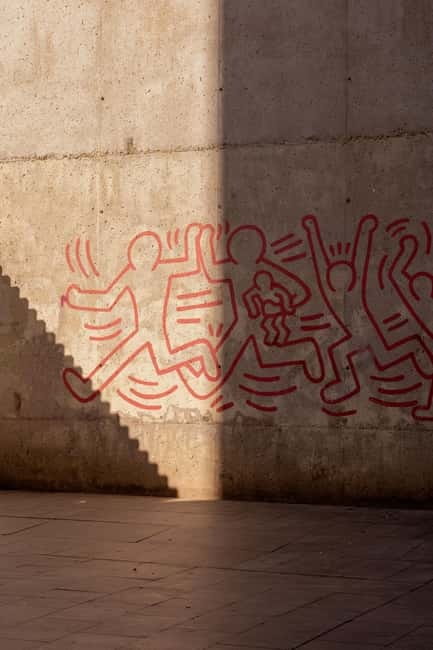
What I really enjoy is the mix of art levels, from pop-art icons like the Keith Haring mural to older graffiti references you would probably miss on your own. You get an English-speaking guide who tells the stories behind the walls, and the pace includes frequent photo stops so you’re not just rushing past color.
In This Review
- Key things you’ll notice on this Barcelona street art bike tour
- Why a Moco street art bike tour is a smart move in Barcelona
- Meeting at Carrer dels Tallers 45: the practical stuff that keeps it smooth
- The opening stretch: from El Gat de Botero and the CCCB photo stop
- MACBA and the Keith Haring moment: pop art on Barcelona walls
- Jardins de les Tres Chimeneies: old industrial setting, new art energy
- The mid-tour loop: regrouping at Carrer dels Tallers and then La Gamba
- Classic graffiti and street icons: Xupet Negre and Carrer de la Lluna
- Raval energy: Feminist wall, Space Invader, and bold messages
- Ágora Juan Andrés Benítez and the art-institutions connection
- Tres Chimeneas to the public-art highlights: Gamba, Columbus, Theatre Arnau
- Passeig de Gràcia and Casa Batlló: finishing on the big-street wow factor
- Price and value: what $34 buys you in real terms
- Who should book, and who should skip
- Should you book the Moco Street Art Bike Tour?
- FAQ
- How long is the Barcelona StreetArt Bike Tour with Moco and street art stops?
- What is the price per person?
- What time does the tour start, and where do we meet?
- Is a bike included?
- Are helmets required?
- Does the tour run in bad weather?
- Is this tour suitable for people who can’t ride a bike or for wheelchair users?
Key things you’ll notice on this Barcelona street art bike tour
- Electric-bike assist helps keep the 2.5-hour ride comfortable
- Story-led stops at places like MACBA and major mural sites
- Photo-stop rhythm means you actually get time to frame shots
- Classic graffiti + modern street art in one loop across neighborhoods
- A tour route that adapts as the street art scene shifts
- Guide tips after the tour can help you steer your evening in the right direction
Why a Moco street art bike tour is a smart move in Barcelona
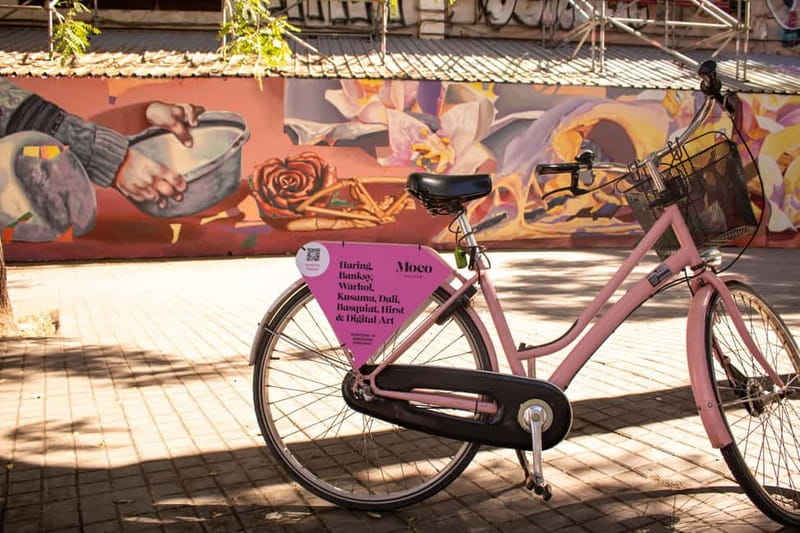
Barcelona is full of murals, stencils, stickers, and tags. The problem is you often have to know what you’re looking at before the walls start talking. This tour is set up so you do not need that insider background.
The tour’s value is not just the art names. It is the explanations you get along the way. You’ll hear the stories behind specific pieces and the messages artists are aiming for, and that changes how you see everything else once you get off the bikes.
Also, the electric assist matters. You still ride, but you are not fighting every street angle and short climb. At this duration, that difference can mean the tour feels fun instead of tiring.
You can also read our reviews of more tours and experiences in Barcelona.
Meeting at Carrer dels Tallers 45: the practical stuff that keeps it smooth
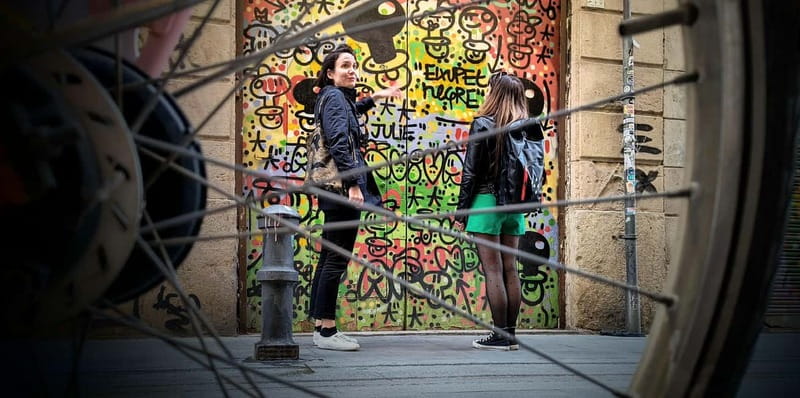
You meet at Carrer Dels Tallers 45 by a palm tree, inside the passage where the team will find you. The tour starts at 11:00 am, and you’re smart to arrive about 10 minutes early so you can check in and get rolling without stress.
Here’s what helps you enjoy it more:
- Wear sunscreen and bring a hat and sunglasses. Barcelona sun is not subtle.
- Bring a charged smartphone for photos.
- Leave headphones at home. They are not allowed.
- If you’re traveling with kids: helmets are mandatory up to age 16, and the tour provides them for free for kids. Adults can request a helmet in advance for an extra cost.
Rain is handled too. The tour runs rain or shine, and you are provided a free poncho. So yes, you still get street art time—even when the skies decide to act dramatic.
And one more detail that is genuinely useful: the tour includes a bike per person plus a handlebar bag for your stuff and a bottle of water. You’re not juggling bags while trying to line up photos.
The opening stretch: from El Gat de Botero and the CCCB photo stop
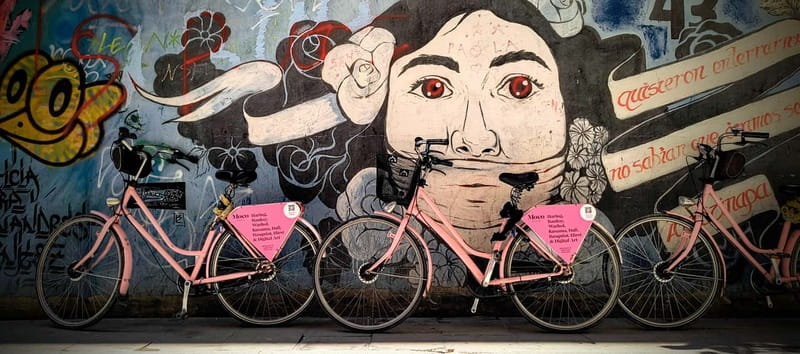
The ride starts with a quick check-in and a 5-minute safety briefing. That matters on a city bike tour because the goal is to keep the group together and moving smoothly through traffic patterns.
Stop 2 is El Gat de Botero. It is a fun warm-up: a recognizable sculpture moment that helps you shift from sightseeing mode to street-art walking-and-riding mode.
Then you roll into the Centre de Cultura Contemporània de Barcelona (CCCB). Expect a guided tour-style stop plus sightseeing and a photo moment, with electric assist kicking in for a short ride segment. This is a good place to understand the tour’s overall theme: contemporary art does not live only inside museums. It leaks out into the streets, the walls, and the neighborhoods.
MACBA and the Keith Haring moment: pop art on Barcelona walls
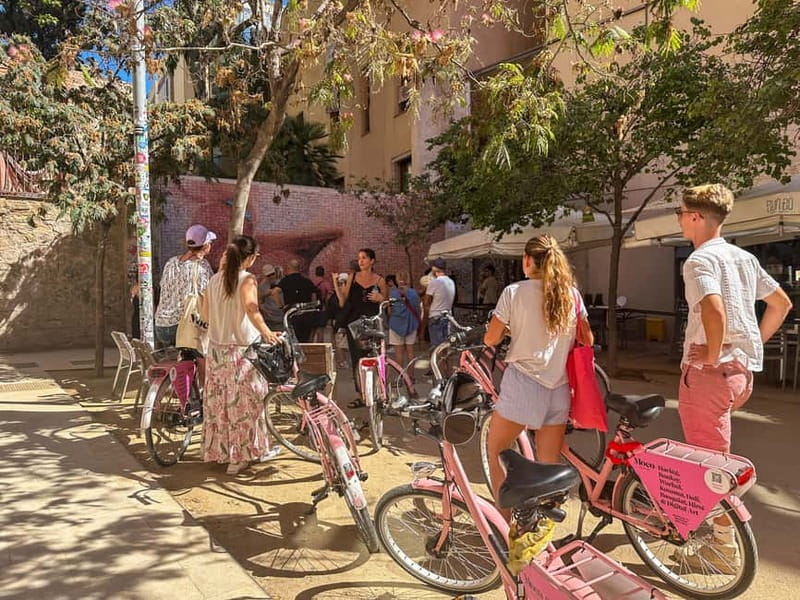
Next comes the Museu d’Art Contemporani de Barcelona (MACBA) area. This is one of the tour’s anchor points. You get a photo stop and a guided segment here, and you’ll also pass by the Keith Haring mural plus Colp One Dog.
Why this matters: Keith Haring’s work is instantly recognizable, but the story changes when a guide connects it to Barcelona’s visual language and to the broader street-art scene. You are not just spotting famous lines—you’re learning how the art is meant to land with people in public spaces.
You also get an additional mural stop at MURAL DEL SIDA (KEITH HARING). Expect another photo-focused angle and guided context. Sometimes the second stop is where you notice details you missed first time around—colors, shapes, and the way the mural sits in its corner of the city.
Jardins de les Tres Chimeneies: old industrial setting, new art energy
After the MACBA stretch, you head toward Jardins de les Tres Xemeneies (the gardens near the three chimneys). This is where the tour starts to feel like a city transformation story.
The stop includes a photo moment, guided context, sightseeing, and another short electric assist ride segment. The gardens sit in a space tied to Barcelona’s industrial past, which makes the contrast with street art feel sharper. You can see how the city repurposes old infrastructure into places where modern expression can breathe.
If you like urban texture—cracks, edges, brickwork, and the way walls age—this is one of the more visually rewarding stretches.



The mid-tour loop: regrouping at Carrer dels Tallers and then La Gamba
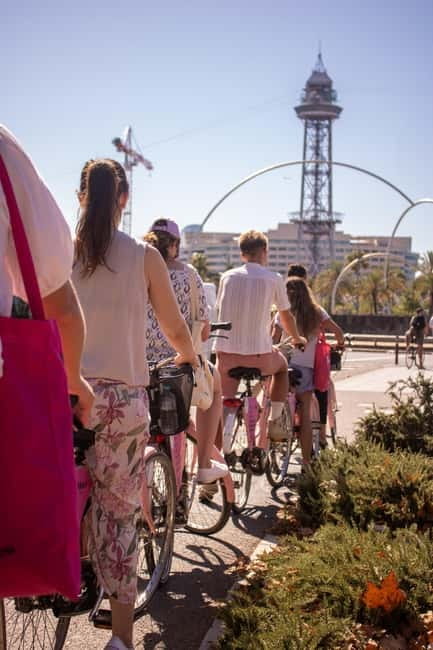
At Carrer dels Tallers, 45 you come back into the main meeting-area zone for another photo stop and guided moment. This is often where people catch their breath, grab water, and get ready for the next wave of murals and sculptures.
Then the tour heads to La Gamba. This stop is listed as a longer electric-assisted segment, so it likely takes a bit more travel time between art points. Once there, expect another photo moment and guided explanation.
Even if you think street art is mostly about walls, this stop is a reminder that public art in Barcelona also shows up as sculpture and character—comedy, attitude, and bold design included.
Classic graffiti and street icons: Xupet Negre and Carrer de la Lluna
One of the most satisfying parts of a street-art tour is when you see the city’s timeline. This tour helps you do that.
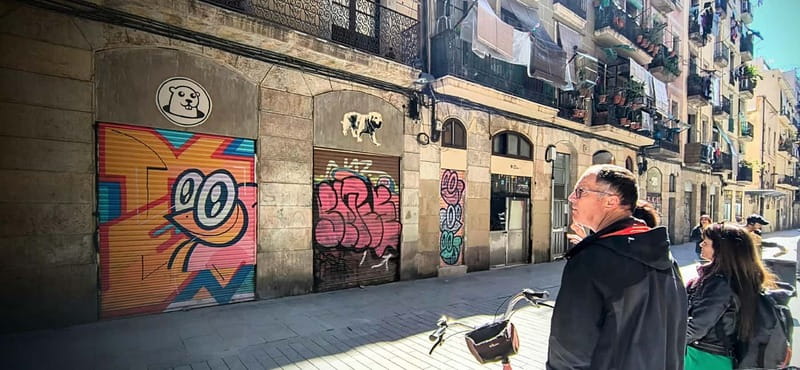
You’ll reach El Xupet Negre (Negrelab). This is highlighted as one of the city’s earliest graffiti works, which gives you a real sense of how Barcelona’s street art evolved. Seeing an early piece while the surrounding city keeps changing makes the whole street-art culture feel grounded, not random.
Then you roll through Carrer de la Lluna and other nearby streets like Carrer de la Riereta and Carrer de Sant Pau. Expect photo stops and guided context. These segments tend to work well for two reasons:
- The tour rhythm lets you spot multiple signatures and styles without feeling lost.
- The guide’s explanations keep you from treating tags like visual clutter.
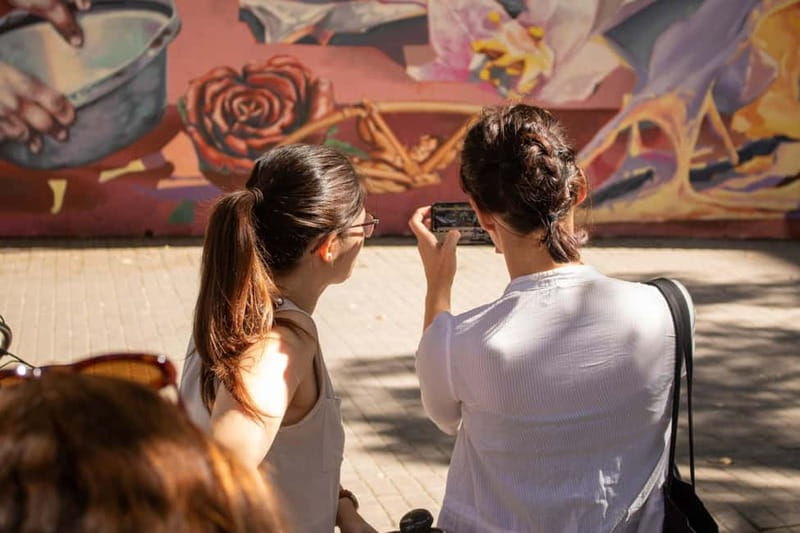
If you like taking photos, pay attention here. This is the part of the tour where small details often pop—letters, stencils, and the way artists place work in relation to doors, windows, and street corners.
Raval energy: Feminist wall, Space Invader, and bold messages
A key neighborhood section includes the Rambla del Raval, where the tour focuses on several message-driven works:
- Feminist wall
- Space Invader
- Contributions by Ana Eliza
This is where street art stops being just design and turns into commentary. The guide-led stories help you understand what each piece is aiming to communicate and why the artist chose that location.
Then you continue through Carrer de Joaquín Costa and Carrer de Ferlandina, with stops connected to works like:
- Birdie Al Awan
- Xupet Negre again as a key reference point
Even if you think you’re only there for the famous names, the early and message-heavy pieces are what help the tour feel like Barcelona rather than a street-art theme park.
Ágora Juan Andrés Benítez and the art-institutions connection
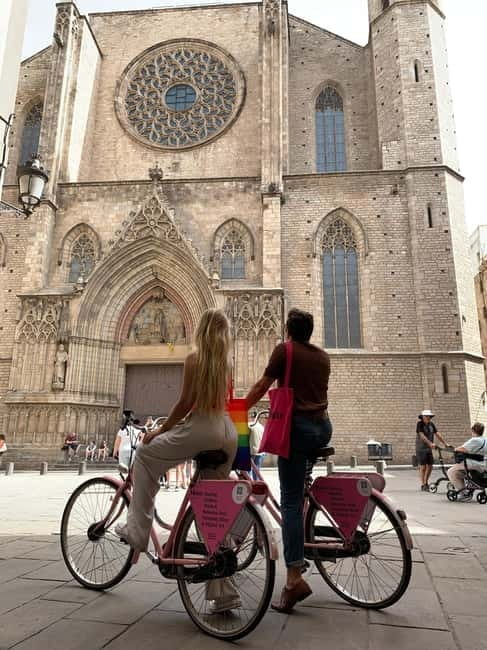
Next comes Àgora Juan Andrés Benítez, plus more city passing stops around major areas. You’ll get photo and guided elements here, with electric assist on some ride segments.
This part of the route is valuable because it links street art to the broader contemporary art ecosystem. You’re not only seeing graffiti culture; you’re seeing how contemporary expression fits into Barcelona’s art institutions and public identity.
You also pass Galería Arnau in the Av/Paral·lel area, which gives you a hint of the modern art scene beyond murals.
Tres Chimeneas to the public-art highlights: Gamba, Columbus, Theatre Arnau
As the tour moves along Av/Paral·lel, it leans into the city’s ability to remix spaces. The gardens near Tres Chimeneies and the nearby industrial feel set up the contrast for the public-art moments that follow.
On the route you’ll also see:
- Columbus Monument (photo + guided context)
- Theatre Arnau (photo stop with guided context)
- El Cap de Barcelona (photo stop)
- El mural del petó (photo + guided elements)
- Palace of Catalan Music (photo stop and guided explanation)
- Then you keep moving toward the big showcase streets
These are not just sightseeing stops. The guide’s focus on art makes these landmarks feel like parts of a single visual conversation across Barcelona: classical architecture, modern public art, and street expression all in the same day.
Passeig de Gràcia and Casa Batlló: finishing on the big-street wow factor
The endgame is a ride toward Passeig de Gràcia and the Casa Batlló area. You get bike tour movement and passing segments here, plus a photo stop at Casa Batlló.
This is a smart way to end because it snaps you back into Barcelona’s iconic visual identity. You finish with a famous building and a broad avenue context, so you can contrast what you saw on the walls earlier with what the city does at the grander scale.
Then the tour wraps back at Carrer dels Tallers, 45.
Price and value: what $34 buys you in real terms
At about $34 per person for roughly 2.5 hours, the value is in what’s included and what you avoid.
You get:
- An English-speaking guide
- A bike per person (with electric assist used during parts of the ride)
- A bottle of water
- A handlebar bag
- Picture stops built into the route
If you’ve ever tried to cobble together bike rental plus a self-guided street-art plan, you know how easy it is to waste time. Here, the route gives you structured access to specific murals and public art points, with a guide to explain the why behind what you’re seeing.
Also, the tour adapts as street art changes. That is a subtle but meaningful advantage: the city you visit is not a static museum floor.
Who should book, and who should skip
This tour is a strong fit if you:
- Like street art and want stories, not just photos
- Want to see multiple neighborhoods in one compact session
- Prefer biking over walking heat and distances
- Appreciate both famous names and lesser-known pieces (like the early graffiti reference)
It is not for you if:
- You cannot ride a bike. The tour is not suitable for people who can’t bike.
- You use a wheelchair. It is listed as not suitable for wheelchair users.
If you’re traveling with kids, it can still work well as long as they can ride. Helmets are handled, and the experience is designed to be lively and visual. Just remember: that comes down to biking ability.
Should you book the Moco Street Art Bike Tour?
I think you should book if you want a guided way to see Barcelona street art without doing research for hours. The best reason is the guide-led context—pieces like the Keith Haring mural and the early graffiti reference points give you a sense of timeline and meaning, not just color on walls.
You should also book if you like structure. This route turns a messy city full of murals into a planned loop with photo stops and enough pacing to stay comfortable.
Skip it only if biking is a problem for you. If you can ride, this is a fun, practical way to see the city’s art side in a single afternoon, with real explanations and plenty of photo-ready moments.
FAQ
How long is the Barcelona StreetArt Bike Tour with Moco and street art stops?
The tour duration is listed as 2.5 hours.
What is the price per person?
The price is listed as $34 per person.
What time does the tour start, and where do we meet?
The tour starts at 11:00 am, and the meeting point is Carrer Dels Tallers 45 (Barcelona Ciclo Tour: The passage), by the palm tree in the passage.
Is a bike included?
Yes. The experience includes 1 bike per person.
Are helmets required?
Helmets are mandatory for children up to age 16 (provided free for kids). Adults can request one in advance for an additional cost.
Does the tour run in bad weather?
Yes. It takes place rain or shine, and you are provided a free poncho.
Is this tour suitable for people who can’t ride a bike or for wheelchair users?
No. It is not suitable for people who cannot ride a bike, and it is not suitable for wheelchair users.