REVIEW · BARCELONA
The wonders of architecture 2 hours on foot in Barcelona
Book on Viator →Operated by Barcelona Autrement · Bookable on Viator
Barcelona in two hours, in color.
I love the small-group feel and how fast the guide helps you read the city’s architecture like a story. I also like the mix of medieval to Modernisme landmarks, so you don’t just see famous buildings—you learn what to look for. One thing to consider: most stops are quick exterior views, and admission tickets are not included for key sites like the cathedral and Palau de la Música.
You’ll meet in Ciutat Vella at 10:30 am and walk into the architectural heart of the city, finishing near Casa Batlló in Eixample. The tour runs about 2 hours on foot with a mobile ticket, and it caps at 10 travelers, which keeps the pace relaxed and questions easy to ask. Reviews also highlight that the guide (often mentioned as Florence) is friendly, humorous, and good at tailoring the visit to different ages and interests.
In This Review
- Key things I’d bet you’ll notice fast
- A smart 2-hour plan: reading Barcelona’s buildings without getting lost
- Meeting at Plaça de Ramon Berenguer el Gran and ending at Casa Batlló
- Stop 1: Barcelona Cathedral—details you can catch in 15 minutes
- Stop 2: Palau de la Música Catalana—myths, craft, and Catalan pride
- Plaça Catalunya—where the city flips from old to modern
- The “Champs Élysées in Barcelona” stretch—where Modernisme gets loud
- Casa Lleó i Morera—an “apple of discord” apartment house
- Casa Amatller—more personality in the same row
- Casa Batlló—Gaudí’s building and what to look for on the outside
- Price, time, and ticket reality: what $29.67 buys you
- Weather and walking comfort: plan for short stops, not long museum time
- Who should book this tour—and who might want a different option
- Should you book this architecture walk?
- FAQ
- How long is the architecture tour?
- What time does the tour start?
- Where do I meet and where does it end?
- Are entrance tickets included for the stops?
- Is there a limit on group size?
- What ticket format do I need?
- Is the tour dependent on weather?
Key things I’d bet you’ll notice fast
- A quick, readable route from medieval Barcelona Cathedral to Gaudí’s Casa Batlló without wasting time on logistics
- Modernisme in full display via the Casa Lleó i Morera, Casa Amatller, and Casa Batlló trio on the same stretch
- Catalan culture woven into architecture (including founding myths tied to the Palau de la Música Catalana stop)
- A guide who talks like a human: clear explanations, good humor, and advice for the rest of your stay
- Free and paid moments mixed well: you get one free plaza stop while other major buildings are mostly exterior unless you buy tickets yourself
A smart 2-hour plan: reading Barcelona’s buildings without getting lost
If Barcelona is your first stop in Spain, it can be tempting to load up on museums. This walk does something different. It teaches you how to look: at angles, materials, symbols, and why certain façades look the way they do.
Two hours is a sweet spot. Long enough to connect themes—medieval vs. Modernisme, old city vs. expansion—but short enough that you won’t feel wrecked by the time you reach the Eixample showpieces. And because the group stays small (maximum 10 travelers), you get more back-and-forth instead of standing at the edge of a crowd while everyone else asks questions.
The tour’s pricing—$29.67 per person—isn’t “cheap like a bus ride,” but it’s also not museum-ticket money. What you’re paying for is guided interpretation. In practice, that means you’ll get more meaning from what you see on the street than you would if you just wandered and took photos.
You can also read our reviews of more tours and experiences in Barcelona.


Meeting at Plaça de Ramon Berenguer el Gran and ending at Casa Batlló
You start at Plaça de Ramon Berenguer el Gran (Ciutat Vella) and finish at Casa Batlló, Pg. de Gràcia 43, L’Eixample. The published start time is 10:30 am, and the walking time is about 2 hours.
This matters because the route is designed to move with the city’s logic: you begin closer to the older urban fabric and drift toward Eixample’s grander, planned streets. If you’re trying to fit Barcelona into a tight itinerary, ending near Casa Batlló is handy. It’s a strong final landmark, and you can keep exploring the area right after the tour.
Also note: it’s a mobile ticket experience. That sounds minor, but it helps you avoid paper-chasing in a city where you’re already juggling maps, photos, and your next snack.
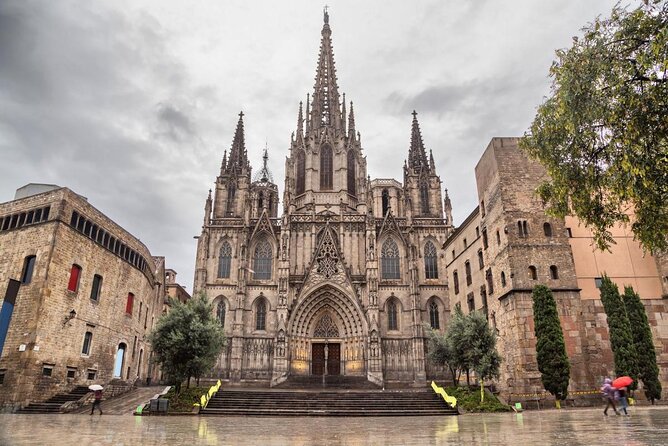
Stop 1: Barcelona Cathedral—details you can catch in 15 minutes
The first stop is the Barcelona Cathedral, and your time there is listed as 15 minutes. Admission is not included, but that doesn’t mean the stop is pointless. A cathedral like this is full of “readable” architecture: carved edges, structural forms, and the way different styles and eras overlap in one complex.
In a short visit, the trick is not trying to see everything. The guide’s job is to help you notice the most telling bits and explain the construction context—why certain features exist, and what they symbolize in the city’s story.
What I like about this kind of start: it gets your eyes tuned early. Before you hit the more playful Modernisme buildings, you learn how Barcelona used stone, geometry, and craftsmanship to communicate power and belief. It also sets up later contrast—when you see Gaudí and friends, the changes in design language feel earned, not random.
Possible drawback: with only 15 minutes, you should treat this as an exterior-focused introduction unless you choose to add cathedral admission separately.
Stop 2: Palau de la Música Catalana—myths, craft, and Catalan pride
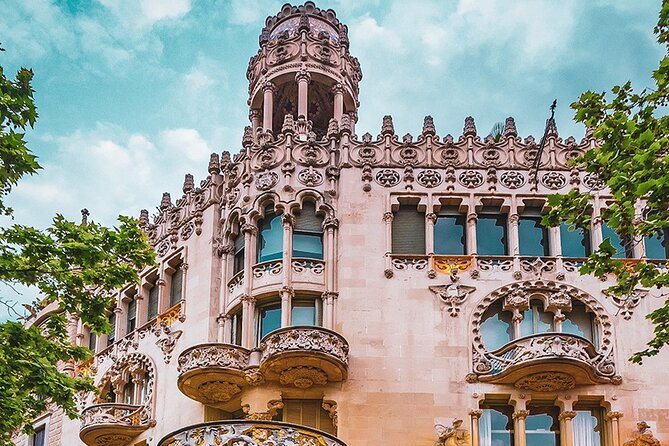
Next is the Palace of Catalan Music (listed as Palau de la Música Catalana in common usage), again with 15 minutes on the schedule and no admission included.
What makes this stop special isn’t just that it’s famous. It’s that the tour frames it through Catalan culture and the “founding myths” tied to the region’s identity. That storytelling angle matters because it changes how you look at the façade. You start seeing the building as a statement—not just a pretty shell.
Even without going inside, the architecture gives you clues: the shapes, the ornamental approach, and the sense of celebration. If you’ve ever wondered why some Catalan landmarks feel theatrical, this is one of the places where the answer starts to appear.
Consideration: because tickets aren’t included, you might not get the full interior wow-factor on this particular walk. Still, the guide’s outside explanation is useful if you want to decide later whether to come back for a ticketed visit.
Plaça Catalunya—where the city flips from old to modern
Then comes Plaça Catalunya, listed as 15 minutes, with admission free (as expected for a public square).
This stop is about transition. The tour explicitly frames it as the border between the old and the modern city. That’s a big deal because it helps you understand what you’re walking into next.
Squares like this are more than “a place to meet.” They’re a moment where the city’s rhythm changes—street widths, building styles, and the general mood of the streets. If you arrive at Eixample already thinking in terms of planned streets and big, expressive façades, the Modernisme stops later will click much faster.
What you’ll likely enjoy: having a mental reset. By the time you walk out of the square, you’re ready to look at ornament and symbolism rather than just getting from A to B.





The “Champs Élysées in Barcelona” stretch—where Modernisme gets loud
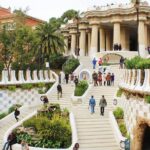
Between Plaça Catalunya and the Casa trio, the tour includes a stop dubbed the Champs Élysées in Barcelona. The exact vibe here is easy to guess once you’re near Eixample: wide views, strong commercial energy, and a stretch where façades are basically a show.
Think of this as the warm-up. You’re heading into the buildings that people most associate with Barcelona’s signature late-19th/early-20th-century style. The guide’s walkthrough here helps you connect the dots before you stand in front of the houses themselves.
Why this moment works: it teaches you to read street architecture as a group. In many cities you judge buildings one by one. In Eixample’s Modernisme corridor, the fun is in comparison—how one façade answers the next.
Casa Lleó i Morera—an “apple of discord” apartment house
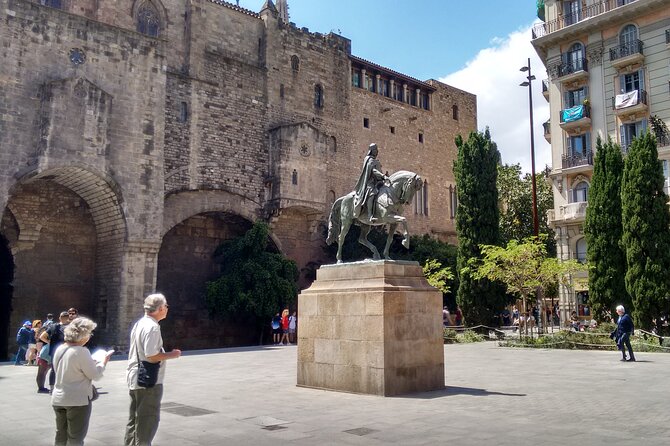
Next is Casa Lleó i Morera, a quick 10-minute stop. Admission is listed as not included.
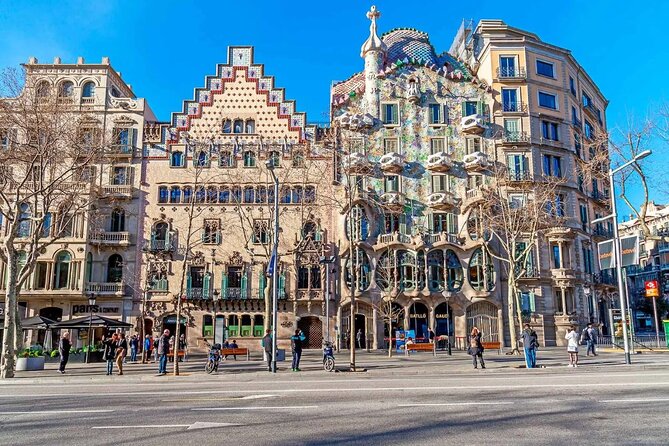
Casa Lleó i Morera is part of the famous “discord apple” set on Passeig de Gràcia (a nickname you’ll hear often because the three buildings are so visually competitive). Even in just 10 minutes, the guide can help you see how the building’s design choices fit into that rivalry—how form, color, and ornament create a specific personality.
What to do during these 10 minutes: slow down and look at edges. Modernisme façades reward attention to lines and details more than straight-on “look at the whole thing” photos. The guide’s job is to point you to the parts that communicate the building’s character.
Possible drawback: if you want a deep interior experience, this stop won’t satisfy that on its own—because admission isn’t included and time is short.
Casa Amatller—more personality in the same row
The tour then moves to Casa Amatller, another 10-minute stop, again with admission not included.
This is where the value of the guided comparison really shows. You’ll stand in a continuous architectural conversation: each building looks like it’s reacting to the others. If you’ve ever walked a street like this and felt like they were all similar, the guide’s explanation can flip that. Suddenly the differences feel obvious: choice of style elements, how decoration is handled, and what the façade seems to be “saying” in the broader Modernisme language.
Also, this is a good point to ask your guide what you should notice next. Reviews of the guide’s style describe someone who listens and adjusts—so if you’re with kids or you have specific interests (history, design, food recommendations for later), this is a decent moment to steer the conversation.
Consideration: 10 minutes can fly by. If you’re the type who likes to linger and sketch, plan for a longer solo return after the tour ends.
Casa Batlló—Gaudí’s building and what to look for on the outside
The last stop is Casa Batlló at Pg. de Gràcia 43, with 15 minutes on the schedule. Admission is not included.
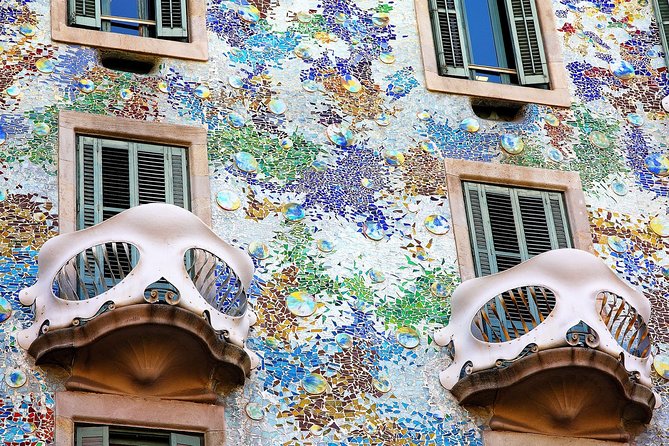
This is the big finish. Even if you don’t enter the building, Casa Batlló is a landmark you feel instantly: the façade’s color play, the sculpted feeling of the structure, and the way Gaudí’s approach makes the exterior feel alive rather than merely decorative.
On an outside-focused stop, I recommend using the guide’s prompts to learn a few “reading skills.” Look for how the building breaks up surfaces, how ornament creates movement, and how different textures work together to build a single visual story. Once you know what to watch for, Casa Batlló stops being just a photo and becomes architecture you can interpret.
Why ending here is smart: you finish at a place you can easily extend your visit. If you want to go inside later, you’re already in the right spot. And if you don’t, you still walk away with a final strong architectural impression.
Price, time, and ticket reality: what $29.67 buys you
Let’s be practical. You’re paying $29.67 for a 2-hour guided architecture walk with a mobile ticket, starting at 10:30 am and capped at 10 travelers.
What’s included is the guided interpretation and the walking route. What isn’t included is admission for several major landmarks:
- Barcelona Cathedral (admission not included)
- Palau de la Música Catalana (admission not included)
- The Casa stops (Casa Lleó i Morera, Casa Amatller, Casa Batlló) (admission not included)
So the “value math” is this: if you want a street-level, guide-led understanding of Barcelona’s architectural highlights, this tour can be a great deal. If you want interiors and ticketed rooms to be the main event, you’ll likely want to pair this walk with separate ticketed visits.
Good news: the itinerary still works even without entries. Architecture is the point. You’ll spend your time where the buildings are most visible and where a guide can point out what you’d otherwise miss.
Weather and walking comfort: plan for short stops, not long museum time
This experience requires good weather. That doesn’t mean it never runs in bad conditions, but it does mean you should take weather seriously. Short outdoor stops are great—until wind or heavy rain turns the route unpleasant.
Because you’re on foot for about 2 hours, wear shoes that won’t punish you for cobblestones and quick stop-and-start viewing. Bring a layer you can adjust. And if you’re traveling with kids or anyone who gets tired easily, the small group helps keep the pace reasonable.
Also, a real-world detail from feedback: the guide has handled rainy moments with good spirit. Still, it’s wise to treat the schedule as weather-dependent.
Who should book this tour—and who might want a different option
This is ideal if you want:
- A fast, guided introduction to Barcelona’s medieval-to-Modernisme timeline
- A route that ends near Casa Batlló, so you can continue exploring afterward
- Clear explanations in French from a guide who stays friendly and relaxed
It also fits families. Reviews mention the guide can make the experience work well across ages, with humor and explanations that don’t talk over kids.
You might want a different type of tour if you’re expecting lots of inside time. Since admissions are not included for the major stops, you won’t get full interior coverage on this exact format. In that case, you can still enjoy the walk for the exterior architecture, but you should plan separate tickets for interiors if that’s your priority.
Should you book this architecture walk?
Yes—if you like learning as you walk and you want a compact route that gives you the main architectural stories without spending a whole day in lines or museums. The best part is the way the guide helps you see connections: old stone meanings at the start, Catalan cultural storytelling at the music palace, then Modernisme drama in Eixample with the Casa trio.
I’d book it when:
- You have a tight schedule and want maximum architectural payoff
- You enjoy small-group attention (max 10 travelers)
- You’re curious about how Catalan identity shows up in buildings
I’d skip or adjust expectations when:
- You want to spend most of the time inside ticketed spaces
- You’re visiting in weather that’s likely to derail outdoor plans
If you’re on your first or second day in Barcelona, this is a strong way to get oriented fast—by learning how to look at what’s right in front of you.
FAQ
How long is the architecture tour?
It runs for about 2 hours on foot.
What time does the tour start?
The start time is listed as 10:30 am.
Where do I meet and where does it end?
You meet at Plaça de Ramon Berenguer el Gran (Ciutat Vella) and the tour ends at Casa Batlló, Pg. de Gràcia 43, L’Eixample.
Are entrance tickets included for the stops?
No. Admission tickets are not included for the Barcelona Cathedral, Palau de la Música Catalana, Casa Lleó i Morera, Casa Amatller, or Casa Batlló.
Is there a limit on group size?
Yes. The tour has a maximum of 10 travelers.
What ticket format do I need?
You use a mobile ticket.
Is the tour dependent on weather?
Yes. It requires good weather, and if it’s canceled due to poor weather, you’ll be offered a different date or a full refund.