REVIEW · BARCELONA
Build A Catalan Charcuterie Cheese Board & Wine Pairing (V/VG Options)
Book on Viator →Operated by Savour Academy · Bookable on Viator
Charcuterie night in Barcelona, minus the mess. This class teaches you how to plan and assemble a Catalan board with fresh local ingredients, then you enjoy it like a real meal. It’s followed by wine tastings and plain-English pairing guidance, all in a small group setting.
I love that it is a true hands-on, no-cooking workshop where you still learn the essentials (and leave with a board-building game plan). I also love that the wine portion isn’t random; you get specific tips for matching bottles to cured meats, cheeses, preserves, and crunch. One possible drawback: it starts at 8:00 pm, so if you prefer an early dinner, this may feel a bit late.
In This Review
- Key highlights worth showing up for
- A 2-hour Barcelona charcuterie class that turns into dinner
- Meet Savour Academy and Zara: a WSET-backed wine brain
- Building the Catalan board: embotidos, cheeses, preserves, and crunch
- Wine tastings and pairing tips you can actually use
- Vegetarian and vegan options: how to keep a board satisfying
- Small group size in a food workshop: what that means for you
- Price and value: why $106.04 per person can make sense
- Where it starts (and why timing matters)
- Who this experience suits best
- Should you book Savour Academy’s Catalan board and wine pairing?
- FAQ
- What’s included in the Barcelona charcuterie and wine pairing?
- Is it a cooking class where I cook the food?
- Can I request a vegetarian or vegan board?
- How long does the experience last?
- How big is the group?
- Where do I meet, and what time does it start?
Key highlights worth showing up for
- A no-cooking board-building workshop where you learn the structure, not just the shopping list
- Catalan flavors front and center, from embotidos to Spanish and Catalan cheeses
- Wine tastings with practical pairing tips you can use again at home
- Small group size (max 10) for a more personal, Q-and-A-friendly experience
- Vegetarian or vegan option available if you ask ahead
A 2-hour Barcelona charcuterie class that turns into dinner
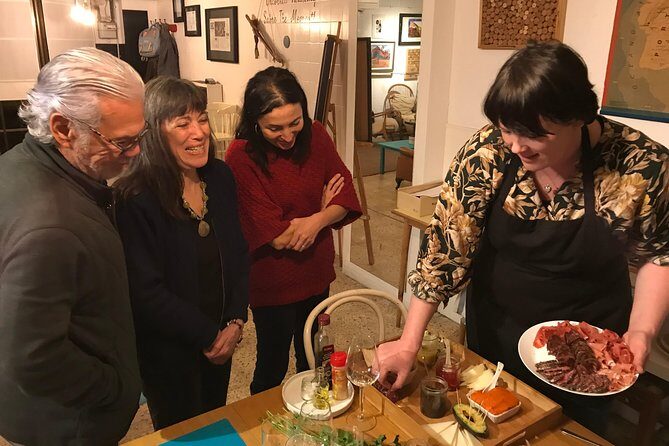
This is the kind of activity that solves two problems at once: you get a fun food experience, and you get fed. The format is simple. You build a beautiful Catalan charcuterie and cheese board during the session, then you eat what you make. With an approximate 2-hour duration starting at 8:00 pm, it fits well into a Barcelona evening plan, especially if you want something more memorable than a standard restaurant dinner.
The price is $106.04 per person, which you should think of as paying for three things: instruction, a curated spread of ingredients, and the wine tastings. In other words, you are not just buying a plate. You’re paying to learn how to assemble a board that looks great and tastes even better.
There’s also a ceiling on group size: up to 10 travelers. That matters because board-building is visual and hands-on. You benefit when you can see what you’re doing and ask questions without feeling rushed.
You can also read our reviews of more wine tours in Barcelona



Meet Savour Academy and Zara: a WSET-backed wine brain
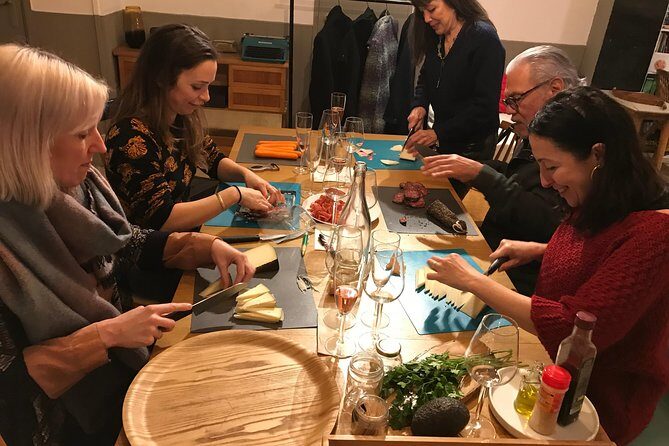
The host behind the experience is Zara, based in Barcelona, and she runs Savour Academy (open since 2017). What I like here is that the food part and the wine part connect. Zara’s background includes a WSET Level 2 Certificate in wines and a sommelier diploma from the Gremi de Restauracio de Barcelona. That translates to pairing advice that is likely to be practical, not just fancy-sounding.
Also, this is described as a no-cooking cooking class. That sounds like marketing, but it really fits what the activity is. You’re not standing at a stove. You’re learning how to select, arrange, and balance a board using Catalan and Spanish ingredients. If you can follow directions and pay attention to textures and contrasts, you’re in the right place.
From the experience style, you should expect a friendly, conversational evening. The board isn’t the only goal; you also get stories of Barcelona while you eat and try wines.
Building the Catalan board: embotidos, cheeses, preserves, and crunch
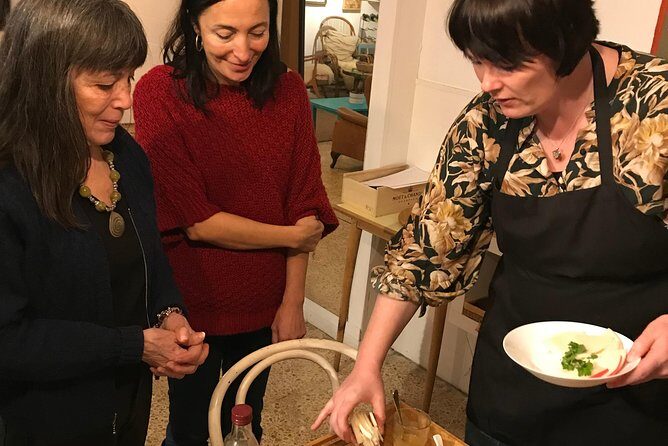
Here’s what makes this class feel more “authentic board-making” than a generic cheese-and-crackers demo: your board is designed around a full spread, not a sad corner of sliced meat.
The sample menu gives you a clear sense of the building blocks:
- Barcelona embotidos (cured meats)
- Spanish and Catalan cheeses
- Local preserves
- Seasonal fruits and vegetables
- Dried fruits and crackers
As you assemble, think in terms of structure. A strong board usually has contrasts: salty with creamy, fatty with acidic, soft with crunchy, and sweet with savory. This is exactly the kind of balance wine pairings depend on, so it’s smart that the class builds the board first and then connects it to what you taste in the glass.
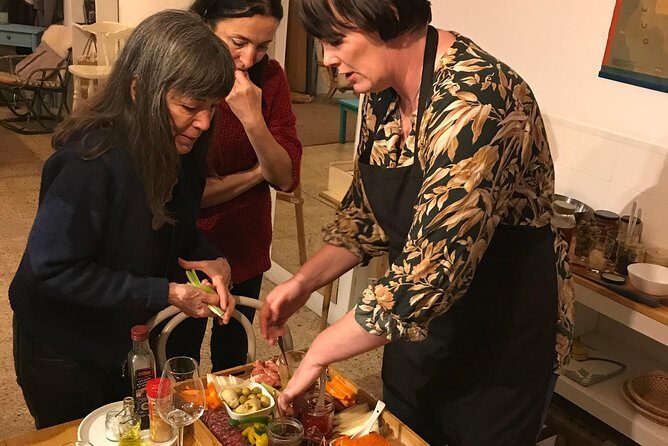
You’ll also learn the “planning” side. Multiple reviews point to the fact that Zara explains the essentials and takes you step-by-step to bring together ingredients that work visually and on the palate. That matches the core benefit: when you leave, you’re not stuck copying a photo. You’re able to build your own board for parties later.
One more detail that matters: the board is not presented as an appetizer snack. It’s described as enough as a meal. That helps you justify the price and keeps the evening from feeling short-changed.
Wine tastings and pairing tips you can actually use
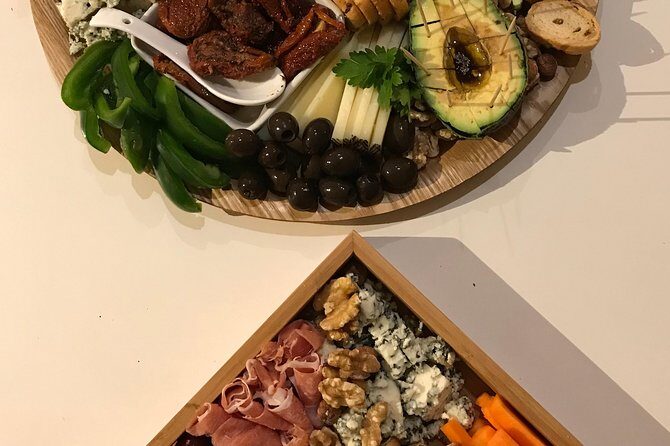
Wine can be the hardest part of board-making to understand. People taste a wine with food, like it, and then forget what they liked about the pairing. This experience tries to solve that by pairing your board with tastings and tips on wine pairings.
You should expect guidance tied to the categories on your board:
- Cured meats (like embotidos) often benefit from wines that can handle salt and fat.
- Cheeses can swing from mild to punchy, so pairing is about matching intensity.
- Preserves and fruit bring sweetness, which affects how tannins and acidity feel.
- Crunch from crackers and dried fruits changes the mouthfeel, which changes what you notice in the wine.
I like that the class isn’t framed as a wine lecture. It’s connected to your tasting table. That way you build a practical sense for what goes together. And because the board is Catalan and Spanish in flavor, you’re learning pairings that match what you’d likely order locally, not a random international mash-up.
Another thing: you’ll try “good wines to taste,” and the session includes wine tastings as part of the activity. That means your evening isn’t just a hands-on craft class that happens to hand you a drink. The wine is part of the learning loop.
Vegetarian and vegan options: how to keep a board satisfying
If you eat plant-based, you should know this is not presented as an awkward afterthought. One review specifically calls out that there were plenty of veggie options on the board, and the overview says you can request a vegetarian or vegan option.
Practical tip: when you book, ask for the vegetarian or vegan option right away so Zara can plan the ingredient mix. The key challenge with meatless boards is not the absence of flavor—it’s building the same kind of variety: creamy elements, salty elements, something tangy, something sweet, and enough textures to make each bite feel different.
The menu categories in the class already support that approach:
- Seasonal fruits and vegetables
- Local preserves
- Dried fruits and crackers
- Cheese would be swapped out for a vegetarian or vegan alternative
Even with substitutions, the board-building logic stays the same. You still want contrasts. And you still want enough substance that you’re eating a real meal, not nibbling.





Small group size in a food workshop: what that means for you
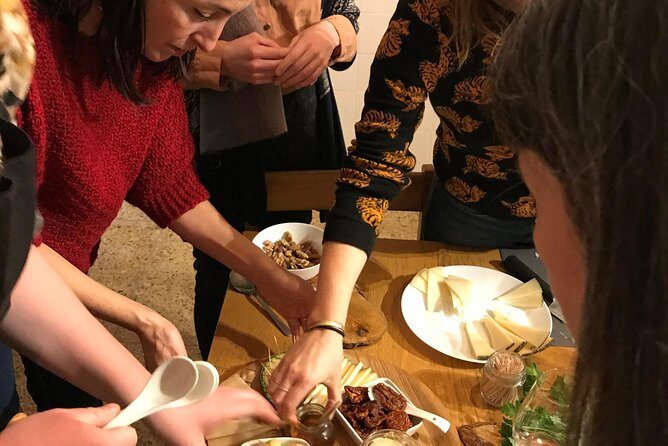
With a maximum of 10 travelers, you’re less likely to feel like a number. In a board-building class, the action is physical and visual: where ingredients go, how much variety you need, what looks balanced on the platter.
A small group also makes it easier to get personal tips. If you pause and ask why something works—why a preserve goes with a certain cheese, or why a wine behaves differently with cured meat—you’re more likely to get an answer that sticks.
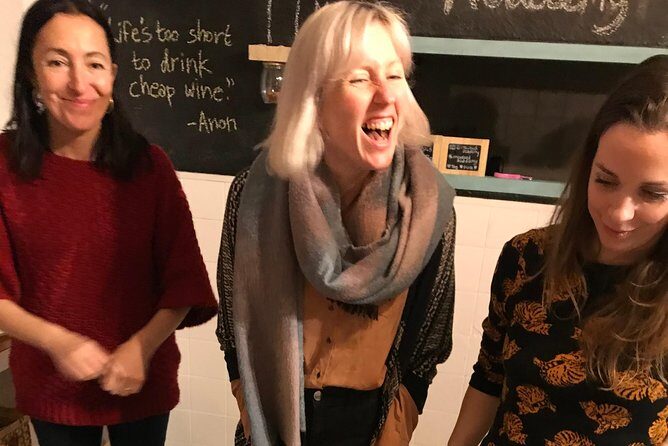
Several reviews highlight the intimate feel and the welcoming vibe. That’s not a small detail. Good hosts manage the tempo so you finish with a board you’re proud to take inspiration from later.
Price and value: why $106.04 per person can make sense
Let’s talk money like an adult. $106.04 isn’t cheap, especially if you’re only used to buying food, not paying for instruction. But in this case, the value case is fairly clear from what’s included.
You’re paying for:
- Instruction on how to build a Catalan charcuterie and cheese board
- A full ingredient spread (meats, cheeses, preserves, fruits/veg, dried fruits, crackers)
- Wine tastings plus pairing tips
- A meal portion, not just a snack-sized sample
- A small group format for better attention
When you add those together, the cost feels closer to a bundled “food + wine education + curated ingredients” experience. And because you take away the method to build your own board at home, it can pay back quickly if you like hosting dinners.
If you’re the type who buys ingredients and then gets stuck with what goes where, this class is a shortcut.
Where it starts (and why timing matters)
The meeting point is Savour Academy, Carrer del Farell 12, bajos, Sants-Montjuïc, 08014 Barcelona. It’s also noted as being near public transportation, which is helpful in a city where you might move across neighborhoods in a hurry.
The class starts at 8:00 pm and ends back at the meeting point. That means you can treat it like a self-contained evening block. You don’t need to coordinate a second destination right after, which reduces stress when your day already includes beach time, long walks, or museum hopping.
Because it’s an evening start, plan your day so you’re hungry enough for the meal-sized board. If you’ve had a big late lunch and you show up already full, you may miss part of what makes this experience satisfying.
Who this experience suits best
This is ideal if you fit one of these profiles:
- You like Catalan and Spanish food and want a board that feels connected to the place.
- You want a hands-on activity, but you do not want to cook from scratch.
- You care about wine pairing and want something you can recreate later.
- You’re hosting soon and want a blueprint for parties (the class is designed to help you impress guests).
- You have vegetarians or vegans in your group and want an option available if you ask ahead.
It may be less ideal if you want a long sit-down meal at a restaurant, or if you hate anything wine-related. The wine tastings are part of the structure, and the pairing tips are the point.
Should you book Savour Academy’s Catalan board and wine pairing?
Book it if you want a food experience that is both enjoyable and practical. You’ll build a Catalan charcuterie/cheese board you can use as a reference later, and you’ll get wine pairing guidance that connects directly to what you’re eating. The small group size helps you get more from the instruction, and the meal-sized portions keep it from feeling like a quick nibble.
Skip it if you’re looking for an early dinner, or if you’d rather spend your evening wandering independently instead of sitting down for board-building and tastings. At 8:00 pm, it’s better suited for people who like structured plans that still feel relaxed.
If you’re the “I want to do something local and useful” traveler, this is a strong choice.
FAQ
What’s included in the Barcelona charcuterie and wine pairing?
You’ll make a Catalan charcuterie and cheese board with fresh seasonal ingredients, then you’ll eat the board as a meal. The experience also includes wine tastings and tips on wine pairings.
Is it a cooking class where I cook the food?
No. It is described as a no-cooking cooking class. You focus on building and arranging the board rather than cooking at a stove.
Can I request a vegetarian or vegan board?
Yes. The experience notes that you can ask about vegetarian or vegan options when booking.
How long does the experience last?
It runs for about 2 hours.
How big is the group?
The experience has a maximum of 10 travelers.
Where do I meet, and what time does it start?
You meet at Savour Academy, Carrer del Farell 12, bajos, Sants-Montjuïc, 08014 Barcelona. The start time is 8:00 pm, and it ends back at the meeting point.