REVIEW · BARCELONA
Gaudí & Modernism with a Historian.
Book on GetYourGuide →Operated by Mariano Pesin · Bookable on GetYourGuide
Gaudí feels obvious. The reasons are not. On this 2.5-hour walk, historian Mariano Pesin connects Modernism (1888–1930) to Barcelona’s industrial boom and the nature symbolism inside Gaudí’s buildings.
I also like that you’re not just looking at pretty facades. You’re getting context for how the city grew, who funded the change, and why Gaudí’s style could reshape Barcelona for decades.
One possible drawback: this is a guided, explanation-forward tour with a fixed start time. If you’re the type who needs to linger before you move, give yourself extra buffer, because waiting is limited.
In This Review
- Key moments worth planning for
- Why Gaudí and Modernism Makes Barcelona Click Fast
- Meet Mariano Pesin and Learn the City’s Connections
- Where You Start: Passeig de Gràcia, Camper Store, and a Smart Head Start
- Casa Milà: The Stop That Teaches You How to Look
- How the Tour Explains Modernism (1888–1930) Without Making It Boring
- Nature as a Design Language: Symbolism You’ll Start Spotting Later
- The Coffee Stop: A Break That Fits the Story
- Price and Value: Is $65 Worth 2.5 Hours?
- Pace, Timing, and Small Tips That Prevent Headaches
- Who This Tour Suits Best (and Who Might Want Something Different)
- Should You Book Gaudí & Modernism with a Historian?
- FAQ
- How long is the Gaudí & Modernisme tour?
- Where do I meet for the tour?
- What does the tour include besides walking?
- Which language is the tour offered in?
- Is the tour wheelchair accessible?
- What should I bring or prepare before I go?
- Does the tour start on time?
- Can I cancel for a refund?
- Can I reserve now and pay later?
Key moments worth planning for
- Modernism as a full era: 1888 to 1930, explained in social, political, and economic terms
- Casa Milà time on the route: you’ll look closely at Gaudí’s work where it matters most
- Symbolism inspired by nature: you’ll learn what to notice in shapes and details
- Period objects in the story: the guide shares original items from the time to anchor the explanations
- Coffee stop after the walking: an exclusive shop experience in a calmer, courtyard-like setting
- English or Spanish live guide: plus wheelchair accessibility
Why Gaudí and Modernism Makes Barcelona Click Fast
If you’ve ever walked past Gaudí’s buildings and felt that they’re somehow different, you’re already close to the point. What most visitors miss is the logic behind the drama: why this style appeared when it did, and what people needed from architecture during that period.
This tour frames Gaudí inside Modernism, not as a random artistic detour. You get the city’s bigger story—Barcelona growing into a modern, international metropolis—so the shapes, curves, and symbols stop feeling like decoration and start feeling like communication.
It’s also practical. You’ll spend time learning how to “read” a facade, not just admire it. That means when you look back at other Modernist streets later, you’ll notice things you’d otherwise walk right past.
You can also read our reviews of more tours and experiences in Barcelona.
Meet Mariano Pesin and Learn the City’s Connections
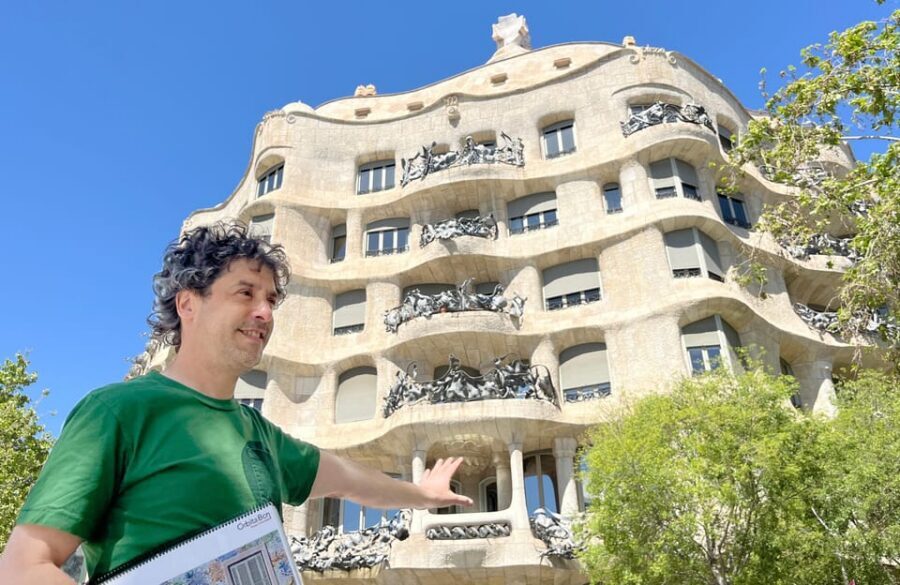
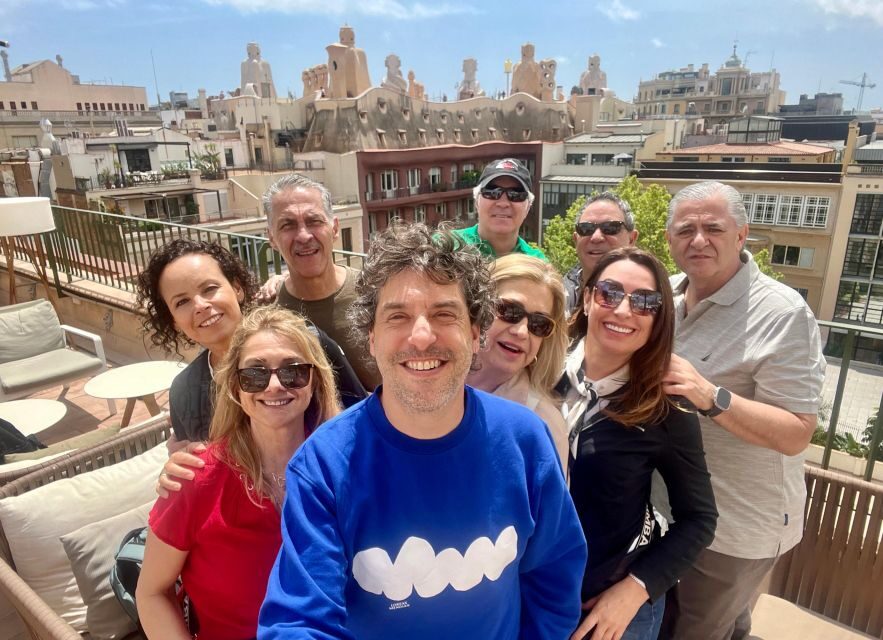
The guide is Mariano Pesin, and the format is built around interpretation. He’s not only pointing out design features; he’s explaining the forces behind them, including the social and political atmosphere of the time.
That approach matters because Modernism in Barcelona wasn’t born in a vacuum. Industrial growth and international influence changed who had money, who wanted prestige, and what kind of art felt relevant. When you hear this while standing near the buildings, everything feels more believable and less abstract.
A detail that elevates the experience: Mariano shares original objects from the time. You don’t need those items to be an art-history student, but they do something useful. They make the era feel tangible, and they help you connect design choices to real life rather than museum labels.
Also worth noting: the tour is offered in English and Spanish, and it’s a live guided experience. That means if something sparks your curiosity—like symbolism, materials, or the people behind the commissions—you can get straight answers instead of guessing from a guidebook.
Where You Start: Passeig de Gràcia, Camper Store, and a Smart Head Start
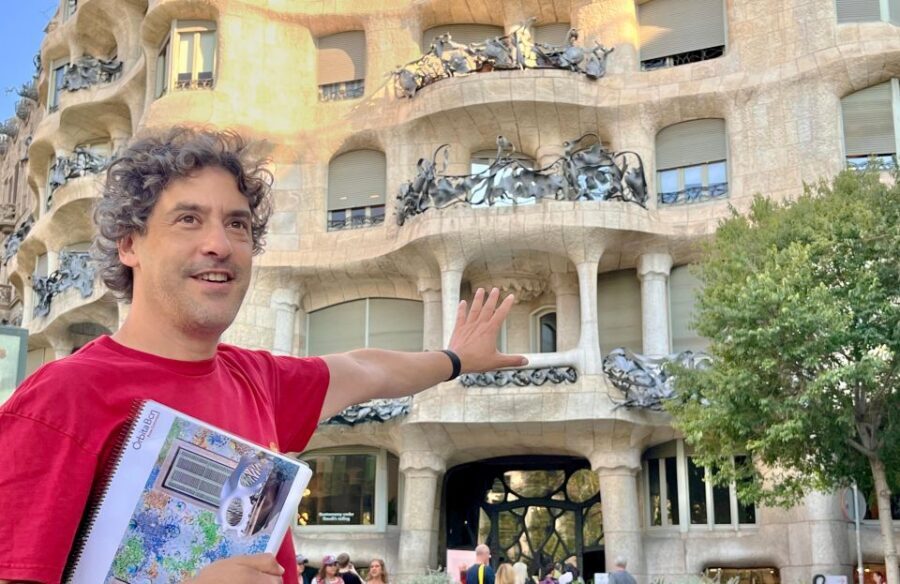
You begin at Passeig de Gràcia—meeting in front of Camper Store. This area is ideal for understanding Modernism because the buildings are close enough that you can compare styles and design languages in a short time.
Timing here is not optional. The experience starts on time, and waiting time is capped at 10 minutes with previous notice. Translation: show up ready to walk.
Before you leave, I suggest two small moves that make a big difference. First, use the bathroom before the tour. Second, bring water, since you’ll be on your feet for the full 2.5 hours.
Even the clothing tip is practical: the forecast can change, so dress in layers. You’ll do better if you don’t spend the first half of the tour thinking about heat or cold instead of listening.
Casa Milà: The Stop That Teaches You How to Look
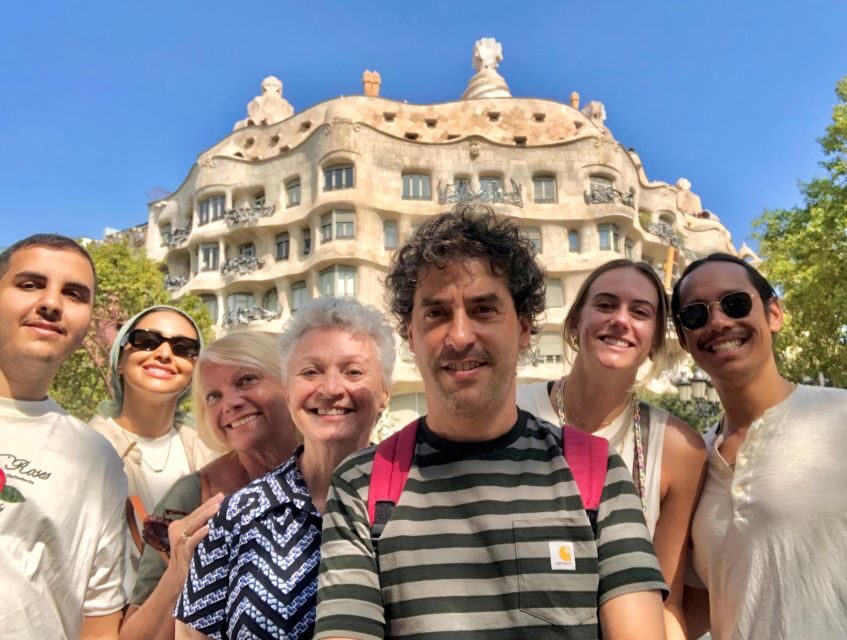
Casa Milà is the main building named on the route, and it’s a smart choice. It’s famous for a reason, but the tour focuses on what makes it more than an iconic exterior.
You’ll get a guided walk-and-look experience. Mariano explains Gaudí’s history in front of his most famous buildings, and Casa Milà becomes the anchor for understanding how his sensibility and technical choices shaped the city.
The key theme you’ll hear repeatedly is symbology. For Modernism and Gaudí, symbolism isn’t only about meaning you read later in a book. It’s built into forms, textures, and the way nature seems to guide the design logic.
So when you stand there, try this: don’t just scan for the most dramatic feature. Instead, slow down for the in-between details. The tour trains you to notice how shapes echo natural inspiration—so you’ll come away seeing more than the obvious curves.
How the Tour Explains Modernism (1888–1930) Without Making It Boring
One risk with history tours is that they turn into timelines you can’t use. This one tries to avoid that by tying the era to what changed in Barcelona.
You’ll hear how the Barcelona Industrial Revolution helped push the city into modern life. As industry expanded, Barcelona became more international, and influential artists began settling there. That’s the environment Gaudí was working within, and it explains why Modernism took on such ambition.
This context also helps you understand the economics behind the art. Gaudí used the people who had the richest influence and turned their status into emblematic buildings that still define the city today.
In other words, you’re learning that architecture is not only style. It’s also money, politics, social dreams, and public identity. Once you grasp that, you stop treating Modernism as a one-person genius story and start seeing it as a city-wide project.
And since the tour lasts 2.5 hours, the pace is long enough to make connections but short enough that you don’t drift into museum mode.
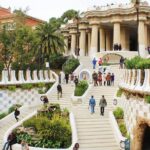

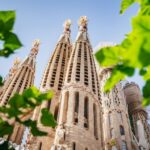


Nature as a Design Language: Symbolism You’ll Start Spotting Later
The standout learning goal is symbolism inspired by nature. Mariano explains it as more than a poetic idea, and that’s what makes it practical for your day after the tour.
When you understand nature symbolism in Gaudí’s style, you start seeing repeated patterns:
- shapes that suggest natural forms rather than strict geometry
- material choices and textures that feel organic
- design elements that look like they were shaped by growth, not just planning
Even if you don’t memorize every interpretation, you’ll get a mindset shift. You’ll know what to look for when you return to the streets. You’ll also be less likely to dismiss details as random flourishes, because you’ll understand why they exist.
This is where the tour tends to shine. You don’t just leave with facts; you leave with a new way of seeing.
The Coffee Stop: A Break That Fits the Story
After the walking portion, you head to an exclusive coffee shop surrounded by nature. It’s not only a reward for finishing the route; it also changes the tone.
You can reset. You can ask follow-up questions. And you can process what you just learned while you’re in a quieter setting instead of rushing back into the crowds.
There’s also something psychologically useful here: architecture tours can make you feel like you’re stuck in observation mode. Coffee brings you back to being a person in the city, not a camera with legs. If you like conversations that connect what you saw to what you might do next, this stop is a real part of the value.
Price and Value: Is $65 Worth 2.5 Hours?
At $65 per person for a 2.5-hour guided walk, the price is in the middle-to-upper range for city tours, but it makes sense for what’s included.
You’re paying for:
- a live guide (Mariano Pesin) focused on Modernism and Gaudí
- explanation tied directly to buildings on the route, including Casa Milà
- analysis of symbolism inspired by nature
- storytelling that connects art to Barcelona’s industrial and international shift
- original period objects shared during the tour
- an end-of-tour coffee stop
If you usually get more out of guided interpretation than out of self-paced wandering, this is strong value. The guided structure helps you see details you’d likely miss, especially the symbolism and the era’s context.
If you’re the type who prefers to just read a plaque and move on, you might not get your money’s worth from the explanation-heavy style. But if you enjoy learning why a city looks the way it does, the price feels reasonable.
Pace, Timing, and Small Tips That Prevent Headaches
This tour is scheduled and moves. So help yourself.
Here’s what matters most:
- Start time is firm, with a maximum waiting time of 10 minutes (with prior notice).
- Bring water and plan for changing temperatures.
- Go to the bathroom before you meet.
- Dress for walking—because the learning happens while you’re moving and looking.
Also, since the experience is wheelchair accessible, it’s a good sign of thoughtful planning for mobility needs. Still, you should confirm what feels comfortable for your situation, since it’s a walking tour.
If you want the best experience, arrive a few minutes early and mentally switch into observation mode. You’ll get more from the tour when you’re not trying to catch up.
Who This Tour Suits Best (and Who Might Want Something Different)
This experience is a great fit if you like architecture with context. You’ll enjoy it most if you want Modernism explained as a full-era story, not just a list of famous buildings.
It’s also ideal if you enjoy symbolism and want a guide who can point out what’s happening in a facade. The nature-inspired meaning isn’t just “pretty”; you’ll learn how it connects to Gaudí’s approach and the period around him.
You might consider a different type of tour if you want minimal walking and fewer explanations, or if you prefer to spend most of your time inside a single site rather than doing a structured city walk.
Should You Book Gaudí & Modernism with a Historian?
I’d book it if your goal is to see Barcelona through a sharper lens. The big win is that Gaudí isn’t presented as a lone-art-hero. You get Modernism (1888–1930) tied to Barcelona’s industrial, political, and economic change, and then you connect that story to what you’re looking at on the street.
The other reason to book is the guide style. Mariano Pesin blends education with a friendly, engaging way of sharing what he knows, and that makes the tour feel more like a great conversation than a lecture.
If you’re short on time but want to understand why these buildings matter, this 2.5-hour format is a strong use of your day.
If you’re the type who hates being on schedule, the only caution is timing. Arrive early, then relax into it.
FAQ
How long is the Gaudí & Modernisme tour?
The tour lasts 2.5 hours.
Where do I meet for the tour?
You meet in front of Camper Store. The starting point is listed around Pg. de Gràcia, 2.
What does the tour include besides walking?
You get guided explanations about the modernist period, analysis of symbolism, discussion of Gaudí’s history in front of famous buildings, original objects from the time, and a coffee shop stop at the end.
Which language is the tour offered in?
The live guide speaks English and Spanish.
Is the tour wheelchair accessible?
Yes, the tour is wheelchair accessible.
What should I bring or prepare before I go?
Bring water, and dress for the weather since the temperature may vary. Also, go to the WC before the tour.
Does the tour start on time?
Yes. The experience starts on time, and there is a maximum waiting time of 10 minutes with previous notice.
Can I cancel for a refund?
Yes. You can cancel up to 24 hours in advance for a full refund.
Can I reserve now and pay later?
Yes. You can reserve your spot and pay nothing today.