REVIEW · BARCELONA
Gothic Quarter and Gaudí Small-Group Tour
Book on Viator →Operated by Barcelona with a local · Bookable on Viator
Barcelona hits different in two hours.
This small-group tour links 2000 years of Barcelona in one smooth route, from Roman-era leftovers and medieval streets to the modernist look of Gaudí. Two things I really liked: the guide storytelling (Marcelo stood out for being funny and easy to remember, even for an 11-year-old), and the way the walk turns famous areas into a clear timeline you can actually follow.
One thing to plan for: most of the big sights are exterior-based only, so you should go for the street views and architecture details, not building entry (Barcelona Cathedral exterior, plus the Gaudí façades at Casa Batlló and La Pedrera).
In This Review
- Key highlights worth your attention
- Walking the Gothic Quarter the way locals actually do
- Plaça de Sant Jaume: the smart first anchor
- Barri Gòtic streets: the 40-minute time machine
- Barcelona Cathedral: outside-only, still worth it
- Passeig de Gràcia: where Barcelona shows its wealth
- Gaudí moments without the museum time
- Casa Batlló: the façade that looks like it’s moving
- La Pedrera (Casa Milà): the grand finish
- The value question: is this worth $19.78?
- Small-group touring: the difference you feel in Barcelona
- Who this tour is best for
- What to do before and after (so you get more out of it)
- Should you book this Gothic Quarter and Gaudí small-group tour?
- FAQ
- How long is the tour?
- What ticket do I get?
- What is included at the Barcelona Cathedral stop?
- Are the Gaudí stops inside the buildings?
- Where does the tour start?
- Where does the tour end?
- How large is the group?
- What fitness level is needed?
- Does the tour run in all weather?
- Is there free cancellation?
Key highlights worth your attention
- Marcelo’s style: clear, funny explanations that stick fast
- 2,000-year route: Roman-to-Gothic-to-modernist in one compact walk
- Small group (max 12): easier pace and more back-and-forth questions
- Photo-friendly stops: exterior views of the Cathedral and Gaudí landmarks
- Easy ending point: you finish by La Pedrera, right by Rambla de Catalunya-area dining
Walking the Gothic Quarter the way locals actually do
If your first hours in Barcelona feel like a blur, this tour is built to fix that. Instead of treating Barcelona as a list of landmarks, it frames the city as a layered place where older streets still shape what you see today. You start at Plaça de Sant Jaume, the sort of square that instantly tells you you’re in the older core of the city. It is busy in the everyday way, not tour-bus busy, and that matters because it sets a realistic mood for what comes next: narrow streets, old stone, and corners that feel made for wandering.
The tour begins with a short stop where you can orient yourself. Even if you only know Barcelona from photos, you’ll quickly understand why this area is the jump-off point for the Gothic Quarter. It is the political and historical center of the old city, so you’re not just walking for views. You’re walking to understand how the city organized itself long before it became a global design destination.
You can also read our reviews of more tours and experiences in Barcelona.

Plaça de Sant Jaume: the smart first anchor
This is where you get your bearings fast. You’ll spend about 15 minutes here, which is enough time to absorb the vibe without dragging your schedule. The payoff is mental: once you see the square and its role, the streets that follow stop feeling random.
What I like about this start is that it gives you a base before the maze. When you hit the Gothic Quarter, you’ll be able to connect what you’re seeing to the story you were just set up for.
Barri Gòtic streets: the 40-minute time machine
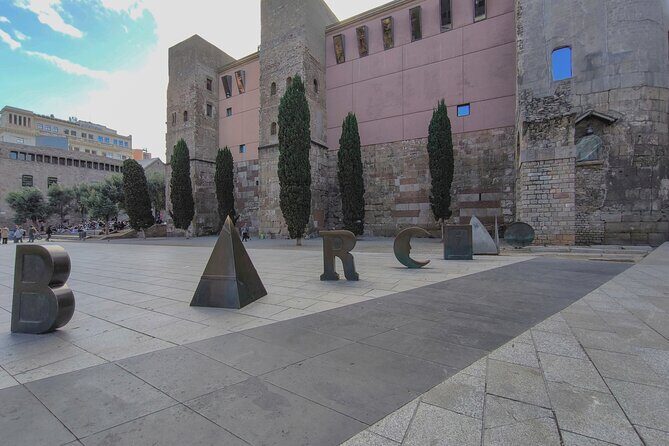
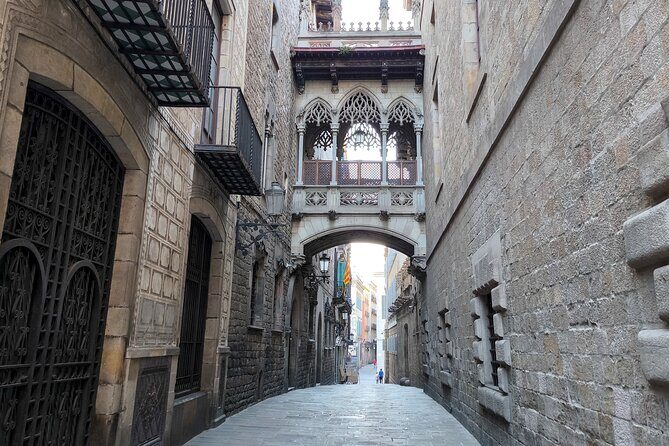
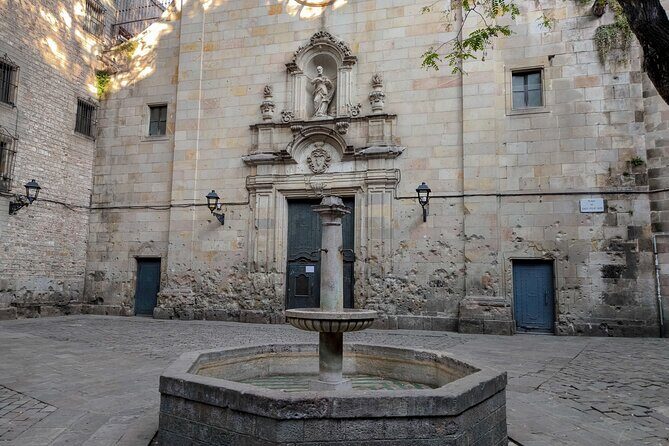
Then comes the Gothic Quarter (Barri Gòtic), where the city’s medieval layout shows up in the street plan itself. Think hidden little squares, tight alleys, and architecture that looks like it has been holding its breath for centuries. You spend about 40 minutes here, which is a good chunk for a compact tour because it lets you do two things at once: look around and keep up with the explanation.
The best part is how the walking route feels like a guided discovery rather than a checklist. Barcelona is great, but it can also be confusing on a first visit. This segment helps you understand why the Gothic Quarter is such a big deal. You start to notice patterns: the way the streets funnel, where openings appear, and how the neighborhood’s age shows through.
A practical note: the Gothic Quarter is old-stone walking. Even if the tour is not long, expect uneven ground in spots. Comfortable shoes matter more than you think.
Barcelona Cathedral: outside-only, still worth it
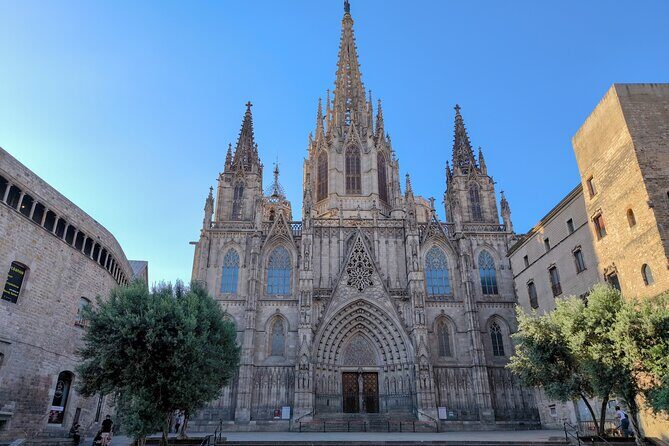
Next is Barcelona Cathedral, and here you should know the scope clearly. This stop is exterior-based only. You are not going inside, so don’t build your expectations around interior rooms or official ticketed entry.
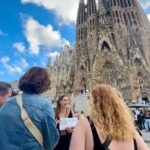
Still, the exterior is a strong stop because it anchors the Gothic theme visually. Even from the outside, you can spot the style cues that make this cathedral area feel distinctly medieval compared with the modernist buildings you’ll see later. This is a good time to take a photo, look up, and then move on while the story is fresh.
If you want interior time, pair this tour with a separate cathedral visit on another day. That way you get both: a guide-led route and then your own slower exploration inside.
Passeig de Gràcia: where Barcelona shows its wealth
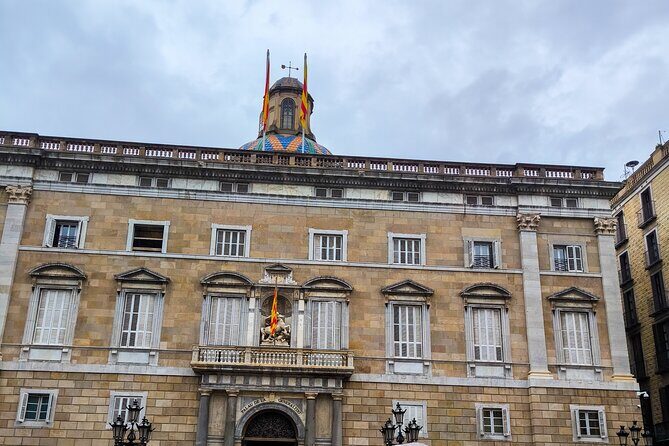
After the older streets, the tour shifts mood at Passeig de Gràcia. You’ll have about 25 minutes here. This is the elegant, high-end boulevard side of Barcelona, lined with grand buildings and upscale storefronts. It’s a change of pace, but it also serves a purpose in the tour logic: it shows you the shift from the city’s older centers to its modern expansion and ambition.
This stretch is useful for readers who want variety without exhausting their legs. You get a wide street feel after narrow alleys, and you can compare styles immediately. Even without going into any buildings, you’ll start to see how Barcelona’s identity kept evolving.
If you’re planning your day, this is a good moment to decide what you want to linger on later. You’re not stuck on one theme for the whole tour.





Gaudí moments without the museum time
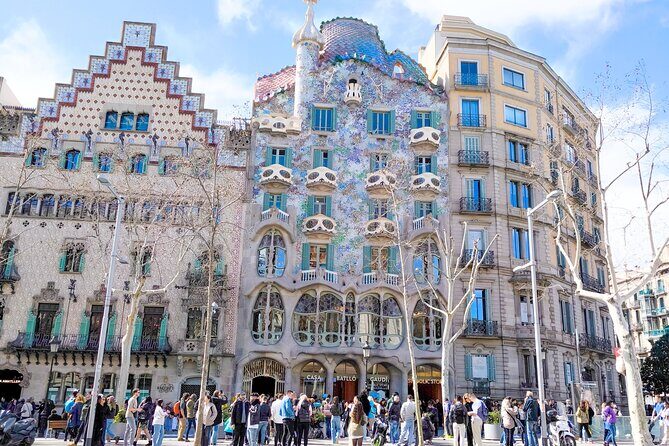
The tour then goes full Gaudí, but with an important limitation: both Gaudí stops are exterior-based only. That means you’ll focus on the façades and street presence, not entry experiences.
Casa Batlló: the façade that looks like it’s moving
You’ll spend about 15 minutes at Casa Batlló. The key selling point here is the façade. From street level, it looks sculptural, playful, and unlike anything you’d expect from a traditional building. You’re not coming here for a quiet history lecture. You’re coming to see why Gaudí became such an icon of Barcelona’s modernist spirit.
This stop works well because the explanation helps you “read” the building instead of just staring at it. Even if you only catch a few angles, you’ll leave with an understanding of what makes it feel so distinct.
La Pedrera (Casa Milà): the grand finish
Your endpoint is Casa Milà, also called La Pedrera, and you’ll spend about 15 minutes there. It’s just a short walk from Rambla de Catalunya, which is a big practical win. After a tour like this, you usually want food, a drink, or a calm moment to reset. Finishing near that restaurant strip makes it easy.
Like Casa Batlló, this is exterior-focused. You won’t be going inside during the tour, so treat La Pedrera as your closing “wow” based on architecture outside the building. Then, if you’re the type who wants more, you can plan an entry visit on a different schedule day.
The value question: is this worth $19.78?
At about $19.78 per person for roughly 2 hours, this tour feels like strong value if your goal is first-night orientation plus a guided storyline. You get a lot of recognizable areas in one go: Plaça de Sant Jaume, the Gothic Quarter, Barcelona Cathedral (exterior), Passeig de Gràcia, and two major Gaudí façades.
Where the value is especially good is that the tour is designed to reduce decision fatigue. Instead of you trying to connect Roman roots, Gothic streets, and modernist design by yourself, the guide helps you connect the dots quickly. That’s worth something, especially if you have limited time in Barcelona.
The trade-off is also clear: because it is mostly exterior-based, you’re not buying time inside major attractions during the tour itself. If you want paid entries as part of your experience, you’ll likely need to add those separately.
Small-group touring: the difference you feel in Barcelona
With a maximum of 12 travelers, this tour usually feels more personal than the big group options. You can ask questions without feeling like you’re shouting over a crowd. You’re also able to keep a comfortable walking rhythm through the older streets, which matters in the Gothic Quarter where sidewalks and street corners can feel tight.
Also, the tour ends close to where you’d likely want to go next anyway. That makes it easier to keep your day flowing without backtracking across town.
Who this tour is best for
This is a great fit if you want a guided overview that still feels like real wandering. It is especially smart for:
- First-time visitors who want a clean narrative route in a short time
- People traveling with kids who need explanations that stay simple and fun
- Anyone who prefers street-level architecture over long museum time
- Travelers who like small groups and don’t want to battle traffic between stops
A “moderate physical fitness” level is listed, so think about your comfort with walking on older surfaces. It’s not a marathon, but you’ll be moving steadily for the full route.
What to do before and after (so you get more out of it)
I recommend treating this tour as your foundation. Afterward, you’ll know where to spend extra time.
Here are practical ways to extend your day:
- Take one more slow pass through a stop you loved most. You’ll notice details you missed on the first pass.
- Plan a separate visit if you care about interior spaces, since this tour focuses on exteriors for major landmarks.
- When you finish by La Pedrera and Rambla de Catalunya-area restaurants, choose something that feels local rather than rushed. This is a good place to sit down, hydrate, and let the tour stories settle.
Should you book this Gothic Quarter and Gaudí small-group tour?
Yes, if your priority is a guided first impression that connects eras quickly. The standout reason to book is the guide experience—Marcelo’s style (funny, easy to remember, and kid-friendly) is the kind of guidance that makes a short tour feel like it lasts longer.
Skip the booking only if you strongly prefer inside-the-building experiences during the same tour. Since Barcelona Cathedral and both major Gaudí stops are exterior-based, you won’t get the full attraction experience in one ticket.
If you want an efficient, story-driven route through the old and the iconic modern side of Barcelona, this is a very sensible pick.
FAQ
How long is the tour?
It runs about 2 hours.
What ticket do I get?
You receive a mobile ticket.
What is included at the Barcelona Cathedral stop?
You get an exterior-based visit only, with no entry to the inside included.
Are the Gaudí stops inside the buildings?
No. Casa Batlló and Casa Milà (La Pedrera) are both exterior-based only, with no entry included.
Where does the tour start?
It starts at Starbucks, Plaça de Sant Jaume 3, Ciutat Vella, 08002 Barcelona, Spain.
Where does the tour end?
It ends at La Pedrera (Casa Milà), Pg. de Gràcia 92, L’Eixample, 08008 Barcelona, Spain.
How large is the group?
The tour has a maximum of 12 travelers.
What fitness level is needed?
A moderate physical fitness level is recommended.
Does the tour run in all weather?
It requires good weather. If canceled due to poor weather, you’ll be offered a different date or a full refund.
Is there free cancellation?
Yes. You can cancel for a full refund up to 24 hours in advance of the experience start time.