REVIEW · BARCELONA
Guitar Legends Hall: Entrance to the Immersive Rock Museum
Book on Viator →Operated by Guitar Legends Hall - Museu del Rock · Bookable on Viator
If you love guitar, this is for you. Guitar Legends Hall in Barcelona turns rock history into a walk-through experience, with eight themed zones that trace the genre from blues roots to big-stage concerts. You’ll get an audio guide in 4 languages, and your ticket is mobile, so you can focus on the fun part: the music, gear, and pop-culture moments.
Two things I really like are how hands-on the displays feel and how the route keeps changing. You’re not just staring at guitar facts; you’re moving through spaces built like a blues bar, a 70s/80s record store, an MTV-era set, and performance rooms with lights and effects.
One drawback to consider: this is an audio-guided experience rather than a live host. If you want lots of back-and-forth conversation, you might wish for a human guide. Also, the time window is very broad (1 to 10 hours), so you’ll want to plan your pacing before you go.
In This Review
- Key highlights at Guitar Legends Hall
- Entering Rock Museum Barcelona: where to start and how to plan your time
- Your one-ticket route through the Guitar Legends Hall zones
- Stop-by-stop: from blues bar to hologram rock legends
- Space 1: A blues bar that turns blues into rock
- Space 2: Iconic guitars and programs from the 1950s
- Space 3: 1960s festivals and the festival era
- Space 4: A record store from the 1970s and 1980s
- Space 5: Music videos and MTV-era storytelling
- Space 6: A VIP room that channels concert energy
- Space 7: A garage with projections and lights
- Space 8: A concert scene with holograms of rock legends
- Audio guide and small-group setup: how the experience actually works
- Value check: what you’re really paying for at about $21.69
- Who should book this, and who might not love it
- Should you book Guitar Legends Hall in Barcelona?
- FAQ
- FAQ
- How long does the Guitar Legends Hall visit take?
- What’s included with my ticket?
- Is transport included?
- What language is the audio guide offered in?
- Where is the meeting point?
- Is it a small group experience?
- Can I use a mobile ticket?
- Can I cancel for a refund?
- Are service animals allowed?
Key highlights at Guitar Legends Hall
- Eight themed zones that map rock’s story from blues origins to hologram concert moments
- Interactive displays with guitars and visual set pieces, not just static exhibits
- Audio guide in 4 languages with English offered
- Mobile ticket for easy entry
- Small group size (up to 10), which tends to keep the visit feeling manageable
Entering Rock Museum Barcelona: where to start and how to plan your time
Guitar Legends Hall (Museu del Rock) is in Ciutat Vella, at Carrer de la Portaferrissa, 16. Your visit starts there, and it ends back at the same meeting point, so you’re not dealing with a long commute or an open-ended itinerary.
Your ticket is priced around $21.69 per person, and you can expect roughly 1 to 10 hours depending on how slowly you go. That wide range is normal here because the experience mixes reading, looking, and doing. If you’re the type who stops often, you’ll probably want more than the minimum.
One practical plus: it’s near public transportation, and transport isn’t included in the price. So, plan your route into the old city, then budget a little extra time to find your way to the entrance without rushing.
You can also read our reviews of more museum experiences in Barcelona



Your one-ticket route through the Guitar Legends Hall zones
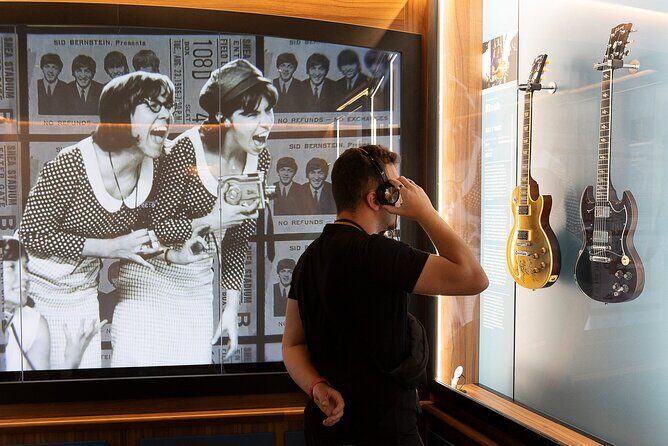
Think of this place as a guided soundtrack you walk through. Instead of a single hallway of guitars, you get themed rooms built around eras and rock-adjacent pop culture. The big payoff is variety: each space has its own vibe, from a blues-bar feel to a record-store mood, and then into performance-style rooms with projections, lights, and even holograms.
You’ll also have a shop on site, where you can pick up exclusive guitar and rock items. That’s useful if you want a souvenir that doesn’t feel like generic store-bought merch.
The audio guide matters because it ties the visuals together. Since it’s included, you’re not paying extra to understand what you’re seeing. If you’re coming in with a casual interest, the guide helps you catch the connections between the guitars, the musicians, and the cultural shifts.
Stop-by-stop: from blues bar to hologram rock legends
Here’s what each of the eight zones is built to deliver, and what to watch for in each one.
Space 1: A blues bar that turns blues into rock
Start in a space that frames rock as an evolution, not a sudden invention. This blues-bar setup is where the show explains how blues feeds into rock’s attitude and sound. If you care about the roots, you’ll likely enjoy this first room because it gives you a baseline before the later decades start throwing more flash and louder references at you.
What to do here: pay attention to the links between style and instruments. It makes later zones easier to follow.
Space 2: Iconic guitars and programs from the 1950s
This is where the display focus shifts to guitars and early rock-era visual culture. The room highlights iconic instruments and the kind of programming associated with the 50s, which helps you see rock as a media-driven scene, not just music you hear.
If you’re an electric-guitar fan, this is one of the stops that tends to satisfy. Early electric-guitar use and its move into mainstream performance is exactly the kind of topic this kind of exhibit is built around.





Space 3: 1960s festivals and the festival era
The 60s room takes the story forward through festivals. You’re basically walking into the idea that rock becomes bigger than individual bands. Festivals also connect to how live music culture grows, and how audiences start expecting a certain kind of spectacle.
What to look for: how festival culture changes what musicians do and how people experience performances.
Space 4: A record store from the 1970s and 1980s
This zone slows things down in a good way. A record store setup pulls you into the era of browsing, collecting, and discovering. It’s also a reminder that rock spread through physical media and music retail, not only through radio or TV.
If you like practical details like how music was marketed and consumed, you’ll likely enjoy hanging out longer here than you expect.
Space 5: Music videos and MTV-era storytelling
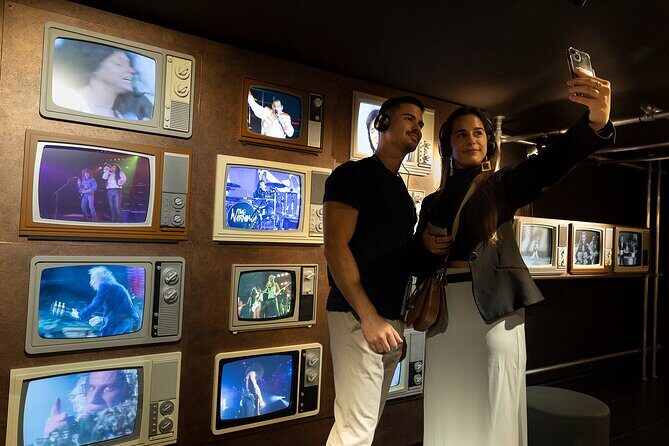
This room moves from record culture into television culture. It’s built around music videos and the MTV-era influence, where image, style, and sound start moving together in a way people still recognize today.
If you’re a fan of how rock became pop culture, this stop helps you connect the dots between gear, fashion, and the media that amplified everything.
Space 6: A VIP room that channels concert energy
This is one of the performance-themed stops. It’s set up like a VIP concert room, designed to make you feel the energy rather than just learn about it. Expect a space that encourages you to experience rock as an event.
Tip: don’t just glance and move on. This is the kind of room where lingering lets you notice the atmosphere the exhibit is aiming for.
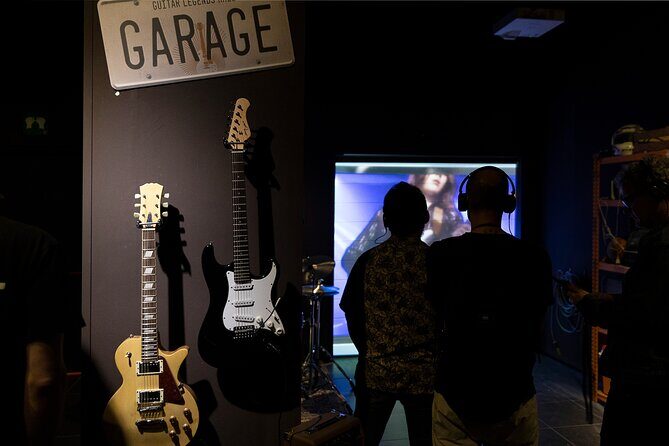
Space 7: A garage with projections and lights
Another big shift: this zone uses a garage vibe with projections and lighting effects. It’s perfect if you like shows of sound and motion, or if you’re the type who enjoys a room that feels a little theatrical.
If the earlier eras felt more like history lessons, this one gives you a more sensory payoff.
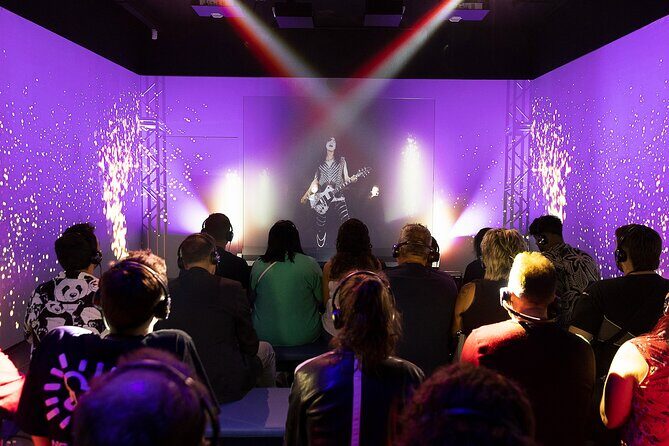
Space 8: A concert scene with holograms of rock legends
End on the high-tech note: a concert setup with holograms of rock legends. It’s a strong closer because it ties the whole journey together into spectacle. Whether you’re there for the tech look or the emotional music vibe, the ending room is designed to feel like the grand final.
If you’re short on time, don’t skip it. It’s the strongest moment for people who want that wow factor.
Audio guide and small-group setup: how the experience actually works
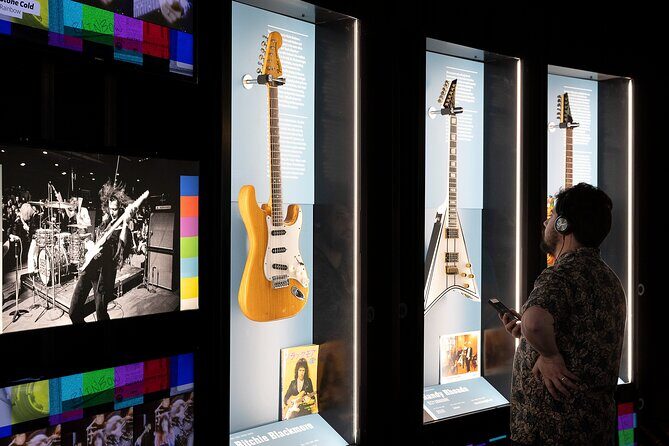
You’ll have the audio guide included, and it covers the visit in 4 languages, with English offered. That means you can choose the language that fits you best, and you won’t feel stuck trying to read labels the whole time.
Audio guides also let you move at your own speed. One minute you’re lingering over a guitar display; the next minute you’re ready to follow the story forward to the next era. It’s a good setup for mixed groups, like people who want the music facts plus people who just want the fun visual rooms.
Group size is capped at 10, which helps the overall flow. You should still expect a crowd at popular times, but a smaller group tends to make it easier to move between rooms without constant shoulder-to-shoulder navigation.
Value check: what you’re really paying for at about $21.69
At around $21.69 per person, you’re paying for more than entry. You’re getting:
- entrance to a multi-room, themed show of rock’s evolution
- an audio guide included in the price
- access to interactive-style areas with effects like lights, projections, and holograms
- on-site shopping if you want gear-inspired souvenirs
If you only care about one decade of rock, the value might feel average. If you enjoy guitar culture across decades, it can feel like a good deal because the exhibit keeps changing rooms and themes.
The best value move is simple: plan for at least a couple of hours. One of the most useful points from the experience itself is that it’s easy to spend serious time here because the displays invite you to stop, read, and re-look.
Who should book this, and who might not love it
This works especially well for:
- electric guitar and rock fans who want to connect instruments to eras
- people who like interactive displays more than quiet galleries
- visitors who want pop-culture context, not just sound
It may be less satisfying if you’re expecting a strict museum format with long curator-style lectures. The exhibit is built around experience-style rooms, and the story pacing depends heavily on the audio guide.
If you’re visiting Barcelona and want something that’s a break from Gaudí photos and art museums, this can be a smart change of pace. It’s also a good option when you want an indoor activity you can pace yourself.
Should you book Guitar Legends Hall in Barcelona?
Yes, book it if you want an indoor, rock-focused activity that mixes guitars, era-by-era themes, and tech effects like projections and holograms. The included audio guide in 4 languages plus the variety across the eight zones is what makes it feel worth your time.
Skip or reconsider if you’re not interested in rock’s cultural evolution, or if you strongly prefer a live guide and lots of conversation. In that case, you might find yourself wishing for more human storytelling.
FAQ
FAQ
How long does the Guitar Legends Hall visit take?
The experience is listed as lasting about 1 to 10 hours, so your timing will depend on how much you read and how slowly you move through the rooms.
What’s included with my ticket?
Your ticket includes the audio guide and museum entrance.
Is transport included?
No. Transport is not included in the ticket price.
What language is the audio guide offered in?
The audio guide is offered in English, and the audio guide covers 4 languages total.
Where is the meeting point?
The start point is Rock Museum Barcelona, Carrer de la Portaferrissa, 16, Ciutat Vella, 08002 Barcelona, Spain.
Is it a small group experience?
Yes. The experience has a maximum group size of 10 travelers.
Can I use a mobile ticket?
Yes. A mobile ticket is part of the experience.
Can I cancel for a refund?
No. The experience is non-refundable and cannot be changed for any reason, and the amount you paid will not be refunded.
Are service animals allowed?
Yes. Service animals are allowed.