REVIEW · BARCELONA
Barcelona Sunset Sailing Cruise from Port Olímpic with Open Bar
Book on Viator →Operated by Barcelona Sailing and Tourist Tours · Bookable on Viator
Sunset in Barcelona gets a lot easier to enjoy. You start at Port Olímpic and spend about two hours gliding along the harbor skyline, with sails up once conditions allow. I especially like the way you get real sea views of landmarks like Montjuïc and the Olympic-era skyline without fighting crowds on land.
Two things I like a lot: the small group size (max 11) makes the vibe relaxed, and the open bar plus snacks keeps you comfortable from boarding to return. One consideration: if the weather is cloudy or the timing is earlier, it can feel more like an evening sail than a perfect sunset moment.
In This Review
- Key things to know before you go
- Port Olímpic start: getting on board without stress
- The opening sail in Port Olímpic: golden whale and modern metal plates
- Montjuïc Fortress from the sea: a different angle on an old power spot
- The commercial port drawbridge: quick, practical, and oddly interesting
- Maremagnum from pontoons: shopping center views that feel like you’re floating
- Olympic Towers skyline: where your camera finally stops working for a second
- Drinks and snacks on an open bar: easygoing, not complicated
- Skipper Jorge: how a relaxed captain changes the whole cruise
- Sailing realities: when it’s true sailing and when it’s more evening than sunset
- How long is it, and what’s the pacing?
- Small group size: why max 11 feels better on a boat
- Value check: is $54.54 really fair?
- Who should book this sunset sailing cruise?
- Should you book it?
- FAQ
- How long is the Barcelona Sunset Sailing Cruise?
- Where does the cruise start and end?
- What’s included with the open bar?
- What sights will I see during the cruise?
- Is the tour offered in English?
- Do I need to bring anything for check-in?
- What happens if the weather isn’t good?
Key things to know before you go
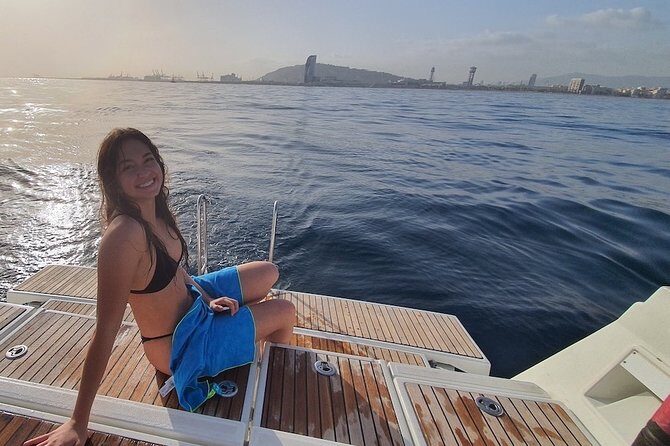
- Sails up experience: your skipper runs it as a true sail when there’s enough breeze, not a motor-only cruise
- Harbor shelter option: you may sail inside the port first if seas are rough, so you still see the city from a calmer angle
- Olympic-era details: you’ll pass the golden whale statue built for the 1992 Barcelona Olympics
- Sea-level views: Montjuïc Fortress, the commercial port drawbridge, and Maremagnum from pontoons
- Olympic Towers viewpoint: one of the clearest skyline shots from water
- Jorge-style hosting: named skippers like Jorge have a calm, informative approach and clear meeting directions
Port Olímpic start: getting on board without stress
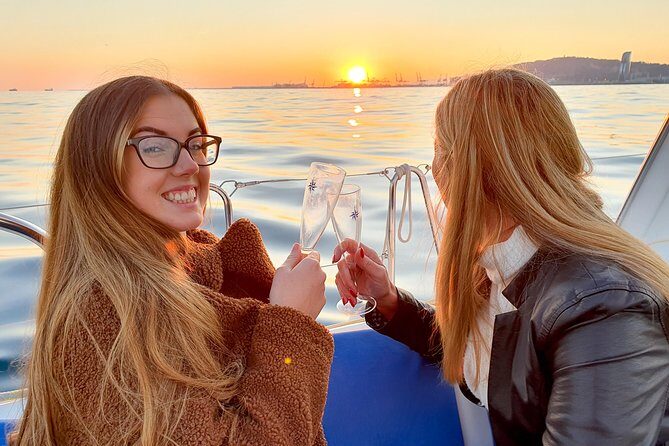
The meeting point is at Moll de la Marina, 12 in Sant Martí (08005). You’re not out in the middle of nowhere either; it’s near public transportation, so you can make this work even if you’ve been walking all day. Since this is a sailing cruise, I’d treat timing a little like catching a flight: give yourself a buffer. A mobile ticket is part of the deal, and having it ready helps you move smoothly.
The cruise ends back at the same meeting point, which makes your evening planning simple. You don’t need a complicated follow-up plan, and you can roll right into dinner or drinks afterward in Barceloneta or the broader waterfront area.
If you’re the type who likes to “get your bearings fast,” this itinerary is friendly. You begin in the marina area where you can see the layout of the harbor, then move outward into better skyline sightlines as the skipper judges wind and sea conditions.
You can also read our reviews of more boat tours in Barcelona
The opening sail in Port Olímpic: golden whale and modern metal plates
Before you go out toward the city skyline, the boat typically sails inside the port area for an initial segment. The big visual moment here is a metal golden whale statue created for the 1992 Barcelona Olympics. It’s set between the two tall towers at Port Olímpic, so even if you’re not a museum person, you’ll likely recognize it quickly once you spot those tower markers.
This is also where the experience can feel especially smart on a practical level. Some days can be a bit choppy; sailing inside the port keeps things calmer and gives everyone a more comfortable start. That doesn’t mean it’s boring. You’re still on the water, and you’re still seeing Barcelona from a perspective you don’t get from the beach.
I like this “start sheltered, then open up” approach because it lowers the chances you’ll be immediately bounced around. It also lets you settle in—find a spot, grab a drink, and get ready for the skyline portion when conditions improve.
Montjuïc Fortress from the sea: a different angle on an old power spot
Next up is a sea view of the old Fortress of Montjuïc. On land, Montjuïc can feel like a climb, a viewpoint, or a destination you plan around. From the water, it reads more like a piece of Barcelona’s strategic past sitting above the coastline.
This stop matters because it gives you contrast. You see older Barcelona shaping the coastline, then you watch the city’s modern lines come in behind it. It’s the kind of viewpoint that helps the whole city “click” in your head, even if you don’t know every name of every building yet.
The sea-level perspective also changes how you judge distance. Things that look far inland on land can feel closer and more connected from the harbor.
One small reality check: your actual viewing time depends on wind and sea conditions, but the route is designed so you get these landmark moments rather than just cruising around randomly.
The commercial port drawbridge: quick, practical, and oddly interesting
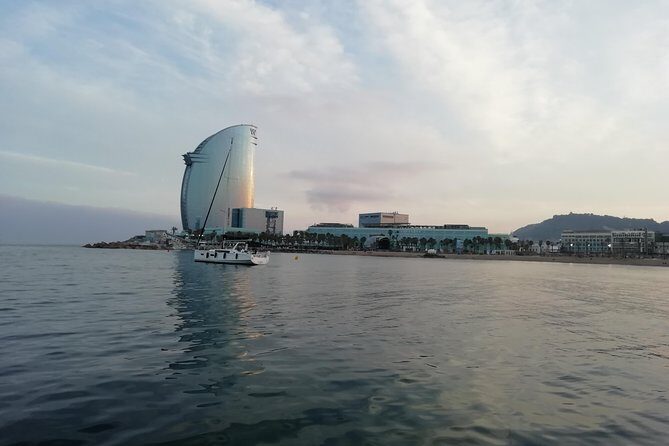
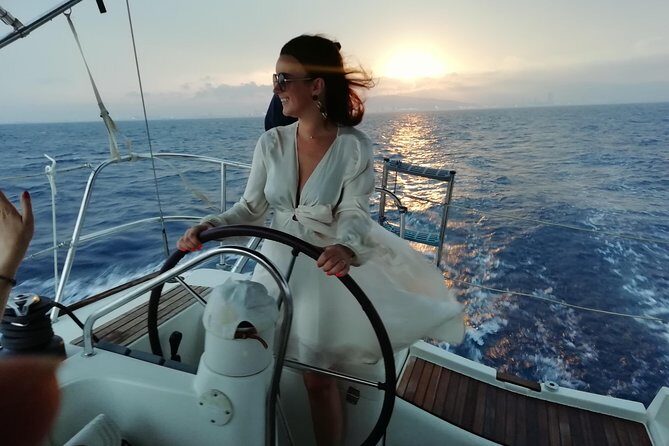
You’ll also pass a white drawbridge in Barcelona’s commercial port area. It’s not a dramatic “wow” stop like a historic monument, but it’s a great example of how living port cities work. You’re seeing the working side of Barcelona, not only the postcard side.
From a photo standpoint, this section can be useful too. Bright harbor structures and the contrast between industrial elements and the skyline can make for clean shots—especially as light starts to shift.
If you prefer quiet moments to watch rather than rush for photos, you’ll probably like how the skipper controls the pacing here.
Maremagnum from pontoons: shopping center views that feel like you’re floating
Another highlight is a sea view of Maremagnum, the modern shopping center built on pontoons. From water, it feels like the city is literally extending platforms into the sea. That’s a detail you miss from land because you tend to focus on shop fronts and pedestrian routes.
This stop is also a reminder that Barcelona’s waterfront is layered. You have historic-looking hills, Olympic-era architecture, and then modern commercial spaces all sharing the same coastline. Getting them in one sailing gives you a compressed sense of how the city is built.
If you like travel moments where you realize Barcelona is more than one “type” of view, Maremagnum is a good clue.
You can also read our reviews of more evening experiences in Barcelona

Olympic Towers skyline: where your camera finally stops working for a second
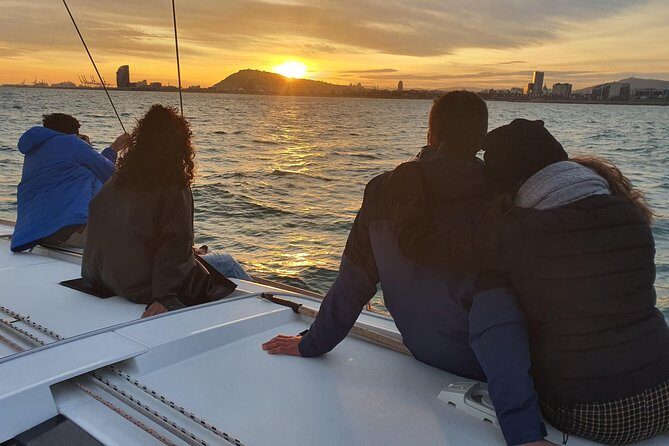
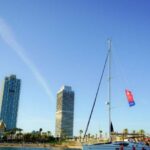
The Olympic Towers are one of the biggest skyline anchors in the cruise. This is the point where the tour starts feeling more like a classic skyline sail: you’re watching the city line up across the horizon with key shapes you recognize.
This part is often where the “sunset” portion feels most rewarding. Even when clouds cut the drama, the city still looks cinematic from water. Light changes how metal and glass reflect, and Barcelona’s waterfront architecture tends to take on a warmer tone near late afternoon.
One reason this matters: from the harbor, you get a view that’s hard to replicate without a boat. If you’ve done beach time already, this is a way to switch the visual channel without adding a full new day trip.
Drinks and snacks on an open bar: easygoing, not complicated
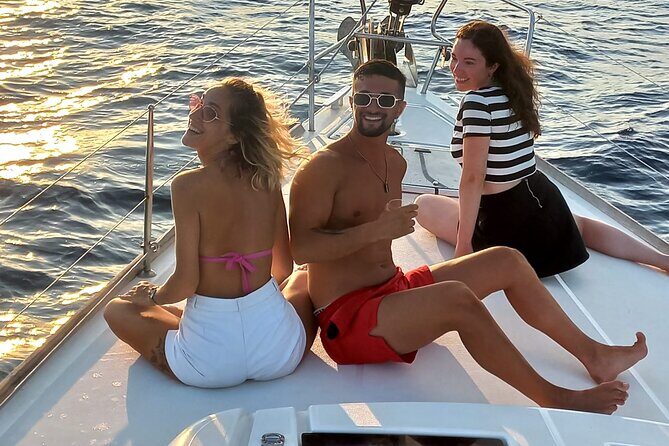
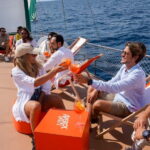
The cruise includes drinks and snacks served on board, and it’s offered as an open bar. The style is casual: you don’t have to make decisions like a menu situation. Common options mentioned include sangria, wine, beer, soft drinks, and water, with snacks served as you sail.
Most of the food talk centers on things like crackers, olives, hummus, peanuts, and cheese. It’s light fare rather than a full meal, but that’s usually what you want on a sail. You’re moving, the breeze helps, and heavy food can make you feel a little sluggish.
That said, there’s one fair caution. A couple of experiences mention that snacks could feel older on certain days, and others felt plentiful. Quality may depend on the specific supply that night, so if you’re picky about freshness, go in ready to treat it as a snack rather than dinner.
If you’re the type who likes to try the local vibe, sangria plus skyline at sea is a solid pairing. If you’re not into alcohol, you still get soft drinks and water, so you won’t feel stuck.
Skipper Jorge: how a relaxed captain changes the whole cruise
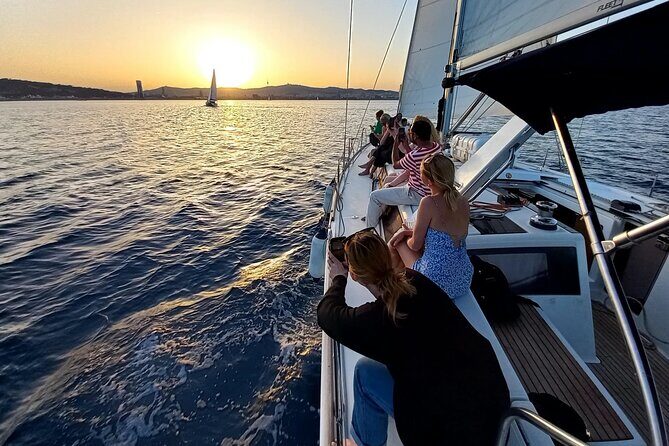
A huge chunk of the magic here comes from the hosting. Named skippers like Jorge are repeatedly described as warm, informative, and relaxed. That sounds like a vague compliment, but on a sailing boat it actually matters.
Good hosting helps in three ways:
- Landmarks make sense: you don’t just see buildings, you understand what you’re looking at from the water
- Timing feels smoother: if wind shifts or weather turns, the captain can adjust without panic
- You get breathing room: the best sailing moments are still yours, not a lecture
One practical tip that shows up in the experience style: clear meeting instructions. There are mentions of sending guidance with pictures before the cruise, and that can save you from unnecessary wandering around the marina. On a tight schedule, that detail is worth its weight in gold—because marinas all look similar when you’re standing there squinting at tower tops.
Also, a skilled captain makes a difference when conditions aren’t perfect. One account describes a day with clouds and rougher sea motion. The hosting helped everyone keep the evening enjoyable.
Sailing realities: when it’s true sailing and when it’s more evening than sunset
This cruise is designed as a sailing experience, not a motor tour. Many boats run with head and main sails once the breeze is right. That’s part of why it feels special: you hear waves and wind more than engine noise.
Still, the “sunset” part is weather-dependent in a real way. Clouds can mute the sky, and earlier light loss can mean you’re back at the dock before the full dark settles in. Some experiences describe it as more of an evening sail, especially if clouds or timing push things earlier.
Also, movement can vary. If the day brings swell, you may feel some rolling, particularly before the boat settles into calmer conditions. Sailing inside the port can help with that, which is exactly why that sheltered start exists.
So here’s my practical advice: treat the sunset as a bonus, not a promise. If you show up for the skyline views, the open bar vibe, and the sailing itself, you’ll still leave happy even if the sky doesn’t go full firework mode.
How long is it, and what’s the pacing?
It runs about two hours. That’s a sweet spot for a first-time sailing on the Mediterranean. Long enough to see multiple landmark areas from water, but short enough that you’re not exhausted afterward.
The pace generally follows a simple arc:
- board and settle
- start with the sheltered port segment (where you catch the golden whale)
- move into bigger skyline sightlines
- enjoy landmarks in sequence (Montjuïc, drawbridge, Maremagnum, Olympic Towers)
- return to the same meeting point
If you like structure, this works. If you like freedom, it still has breathing space because this is a small group setting and the skipper isn’t trying to keep you busy with constant activity.
Small group size: why max 11 feels better on a boat
With a maximum of 11 travelers, you’re not packed in. Several experiences mention the small-group feel as a key part of what makes the cruise relaxing.
On a sailboat, that matters more than on a bus. Space for personal comfort, easier conversation, and fewer people crowding the same photo spot all add up.
In real terms, it means you can pick a position on board that suits you—sun, shade, or a more sheltered corner—without feeling like you’re in the way. It also helps the captain keep communication clear, especially when there’s wind.
Value check: is $54.54 really fair?
At $54.54 per person, this cruise sits in a range that makes sense for what you’re getting: a real sail experience (not just floating), a guided view of multiple famous points, and an open bar setup with snacks.
Here’s how I judge the value:
- You’re paying for the boat + the time on the water + the included drinks and snack spread.
- You’re not paying extra for each drink or for a separate paid viewpoint.
- You’re buying one of the few angles in Barcelona that’s hard to get any other way.
If you’re the kind of traveler who likes to see the skyline but also wants an easy evening without planning a whole second activity, this is a solid deal.
If you’re expecting a full meal or a guaranteed dramatic sunset, lower your expectations slightly. Treat snacks as snacks, and treat the sky as a variable.
Who should book this sunset sailing cruise?
This works best for:
- couples and small groups who want an easy, romantic-feeling evening
- travelers who enjoy skyline views more than strict walking schedules
- first-timers to sailing who want a short, friendly introduction
- people who want included drinks without bar-hopping
It may be less ideal if:
- you need the exact timing of a specific sunset minute (weather and schedule can shift)
- you’re very sensitive to boat movement on choppy days
- you’re expecting a heavy dinner-style food setup
Should you book it?
Yes, if you want an evening that’s simple to execute and genuinely different from land views. The combo of small-group sailing, open bar, and skyline landmark routing makes it a good “end of day” plan.
Book with a flexible mindset about sunset drama. The real win is the way Barcelona looks from water—Port Olímpic first, then Montjuïc, then the modern waterfront shapes like Maremagnum and the Olympic Towers.
If you’re choosing between this and a busier cruise, I’d pick the smaller vibe for comfort and for getting landmark context without feeling rushed.
FAQ
How long is the Barcelona Sunset Sailing Cruise?
The duration is about 2 hours.
Where does the cruise start and end?
It starts at Moll de la Marina, 12, Sant Martí, 08005 Barcelona, Spain, and ends back at the same meeting point.
What’s included with the open bar?
The tour includes sailing plus drinks and snacks served on board.
What sights will I see during the cruise?
You’ll see views from the sea including Montjuïc Fortress, the commercial port area drawbridge, Maremagnum, and the Olympic Towers, plus the Port Olímpic whale statue area.
Is the tour offered in English?
Yes, it’s offered in English.
Do I need to bring anything for check-in?
You’ll have a mobile ticket, and confirmation is received at booking unless you book within 1 hour of travel.
What happens if the weather isn’t good?
This experience requires good weather. If it’s canceled due to poor weather, you’ll be offered a different date or a full refund.