Five days of clay work in Barcelona.
This course is interesting because it mixes serious studio time with a friendly, learn-by-doing pace, led by Wendy (and often Eric in the mix). You’re not just watching demos, you’re making pieces—then getting guidance on how to improve them while you build a small body of work. The small class size (up to eight) also matters a lot here, because you can actually get your questions answered.
I love two things most. First, the structure is built for progress: 20 hours across five consecutive days, with instructor-led technique work early and hands-on building later. Second, it’s genuinely low-friction to join—materials, tools, aprons, and kiln firings are included, so you can show up and focus on learning. One possible drawback: instruction is in Spanish and/or English based on your preferences, so if you want 100% English the whole time, you’ll want to confirm how that’s handled when you book.
In This Review
- Key highlights that make this course a smart use of your time
- Finding The Studio: Carrer de Salvà and a Location That Plays Nice With Transit
- The Course Rhythm: Five Days, 20 Hours, and Exactly How Teaching Fits Your Making
- Monday Through Friday: What Each Session Feels Like in Real Life
- What You’ll Actually Learn: Handbuilding Techniques That Cover Both Functional and Sculptural Work
- The Small-Class Advantage: Personalized Attention With Wendy (and Eric’s Hands-On Help)
- Included Materials and Studio Tools: Packing Light Is Part of the Value
- Kiln Firings and Your Finished Pieces: Why Choosing Up to Five Matters
- Pricing and Value: Where $612.78 Actually Pays Off
- Pairing This With Barcelona Sightseeing: Easy Evenings Beat Overstuffed Days
- Who This Course Suits Best (and Who Might Want Something Else)
- Should You Book This Intensive Handbuilding Course?
- FAQ
- How long is the intensive course?
- What time does the course start?
- Where is the meeting point?
- How many people are in the class?
- Do I need prior ceramics experience?
- What languages are used during instruction?
- What is included in the price?
- What items can I get kiln fired?
- Is shipping included for finished pieces?
- What’s the cancellation policy?
Key highlights that make this course a smart use of your time
- Up to eight participants means more personal feedback when you get stuck
- Five consecutive four-hour sessions helps skills click fast instead of dragging out
- Technique first, making second (first half guided, second half individualized)
- You can choose up to five pieces for kiln firing, so you’re not overwhelmed
- Wendy and Eric’s studio teaching style focuses on suggestions that match your level
- Everything is handled for you (aprons, tools, clay, kiln firing), so packing is light
Finding The Studio: Carrer de Salvà and a Location That Plays Nice With Transit
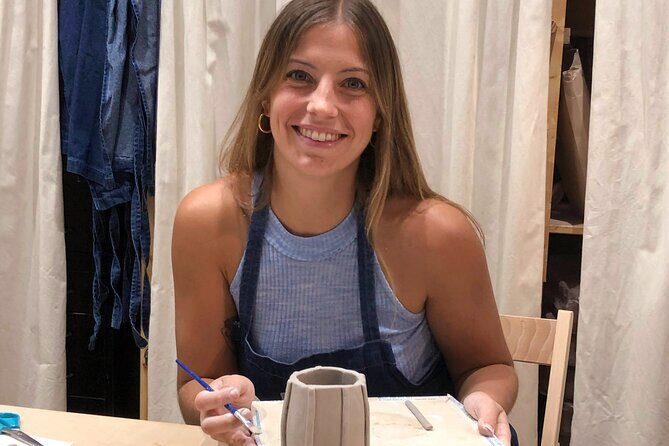
The meeting point is Carrer de Salvà, 71, Sants-Montjuïc, 08004 Barcelona. That’s useful because it’s in an area where getting to and from the workshop is generally easier than if you were way out of the city center. The course notes it’s near public transportation, which matters on busy days when you’re carrying your focus (and whatever you’re allowed to store or transport) rather than dragging around extra logistics.
Also, this is the kind of activity where “easy arrival” helps. If you’re doing a five-day intensive, you don’t want to spend the first hour each day navigating. You want to arrive, settle in, and get to the work.
Practical tip: wear clothes you’re comfortable getting dusty or marked. Even with aprons ready, ceramics still has a way of making your day feel like a hands-on workshop, not a museum visit.
You can also read our reviews of more tours and experiences in Barcelona.



The Course Rhythm: Five Days, 20 Hours, and Exactly How Teaching Fits Your Making
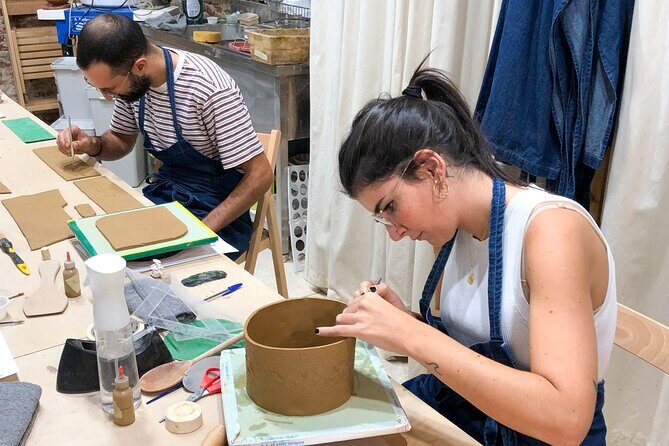
This is a 20-hour intensive spread across five consecutive four-hour classes (Monday to Friday). Start time is 10:00 am each day, and the activity ends back at the meeting point.
Here’s the rhythm you’ll experience:
- For the first two hours, the instructor introduces techniques and gives you the “why” behind them.
- For the second two hours, you construct your own pieces with dedicated instruction as you work.
That format is gold for beginners and also good for returning students. Beginners get the basics while you’re still fresh. More experienced makers get the chance to work on technique refinement without spending the whole time in lecture mode.
And the word intensive is accurate, but not chaotic. The course is designed for steady momentum. You’re building skills across multiple sessions, so things that felt confusing on Day 1 can start making sense by Day 3.
Monday Through Friday: What Each Session Feels Like in Real Life
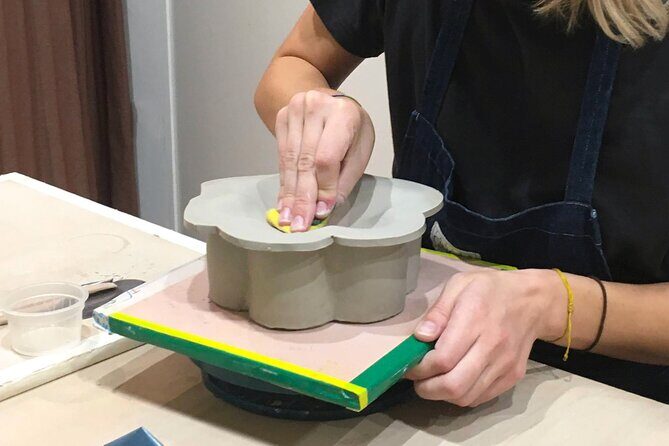
While the course doesn’t list a day-by-day syllabus of exact projects, the teaching pattern stays consistent: technique introduction first, then individualized construction. In practice, each day tends to break down like this:
Day 1: Setup and core handbuilding fundamentals
You’ll get oriented with tools and the studio workflow. Then you’ll start building with essential handbuilding techniques—the kind you can reuse later for bowls, cups, vases, and more sculptural ideas. Expect the most “learning by doing” feelings early on, plus a chance to ask lots of questions while you’re still new.
Day 2: Skill repetition with upgrades
You’ll practice and refine what you started. This is where technique instruction starts translating into better form control. If your first day was all about getting the clay behaving, Day 2 is about shaping it with intent.
Day 3: Building your own small body of work
By now, you’ll likely be deep in construction time, with your instructor checking your technique as you go. This is a great day for committing to the style you want, because you can adjust your plan rather than starting from scratch.
Day 4: Details, structure, and problem-solving
This is often the day where you notice improvements. If your piece starts behaving differently after drying, or you run into joins or thickness issues, you’ll get guidance while there’s still time to adjust. The second half of each class is set up for that kind of real-time coaching.
Day 5: Final pushes and making choices for kiln firing
You’ll wrap up work and consolidate what you’re finishing during the week. Since each student can select up to five items to kiln fire, you’ll want to think strategically about what’s ready and what’s worth putting in the kiln. This is the day where making choices matters.
If you like consistency, this five-day structure is satisfying. If you need long museum-style breaks in between, you’ll want to plan your sightseeing for early evenings rather than expecting free-form time every day.
What You’ll Actually Learn: Handbuilding Techniques That Cover Both Functional and Sculptural Work
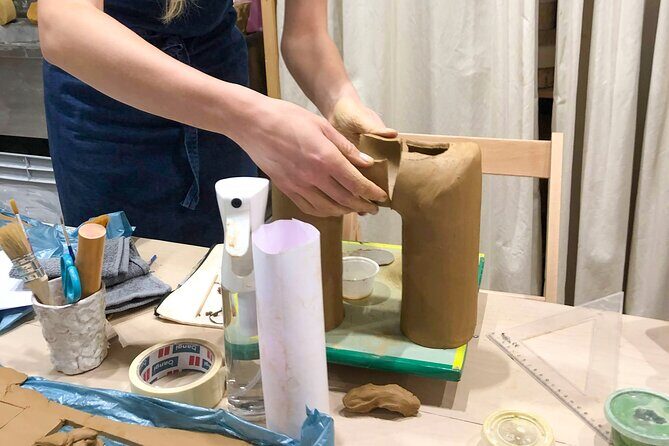
The course is focused on essential handbuilding techniques used for both:
- Functional ceramics (things meant for daily use)
- Sculptural ceramics (more form-forward, design-driven work)
Even without prior experience, the course is designed so you can build up competence through repeated technique practice and instructor feedback. That matters because handbuilding isn’t one “magic move.” It’s a set of habits: thickness control, joining parts correctly, shaping with consistency, and understanding drying and handling.
A few additional learning areas pop up in student experiences—like sculpting details, mold making, and even work connected to glazes/under glazes and kiln testing. Not every class will feel identical, but if you’re the type who asks about surfaces and finishing, Wendy and Eric seem comfortable taking your questions seriously and guiding you further.
A note on expectations: you’ll leave with pieces-in-progress and pieces intended for firing, but the final look depends on what gets kiln-fired and how your glazes turn out. That’s part of the craft and part of the fun.
The Small-Class Advantage: Personalized Attention With Wendy (and Eric’s Hands-On Help)
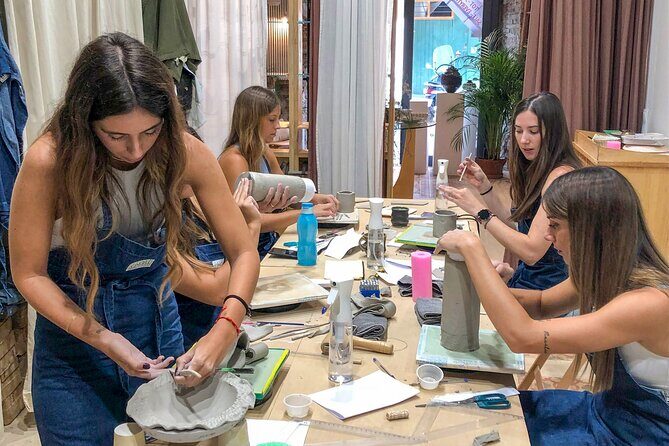
Your teacher is listed as Wendy, and the experience notes an open, friendly environment. The class maximum is eight participants, which is a big deal. When you’re working with clay, you can’t always describe problems in words. You need someone to spot what your hands can’t see yet.
From the way instruction is described—technique demo early, then individual construction coaching—this course is built to avoid the common problem of group classes where one instructor can’t reach everyone. Here, you should expect:
- guidance on what to do next while your piece is still wet enough to adjust
- suggestions to improve technique without taking your creative control away
- a supportive atmosphere where you can sign up alone or with a friend
If you’re a beginner, that support matters. If you’re returning to ceramics, it helps because you’re not starting from zero; you’re starting from what you already know and trying to make it cleaner, stronger, or more intentional.





Included Materials and Studio Tools: Packing Light Is Part of the Value
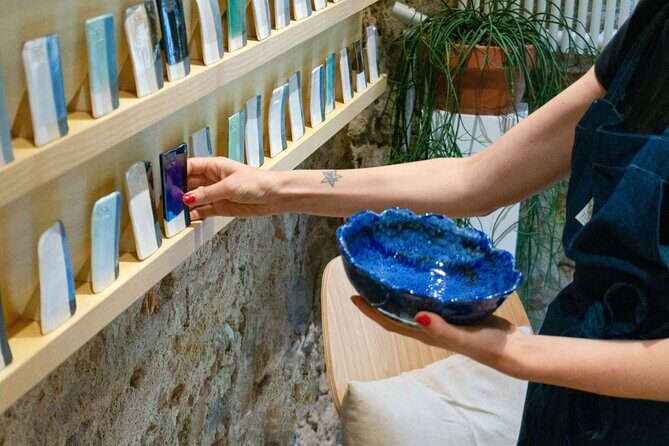
You don’t need to bring much. The course includes:
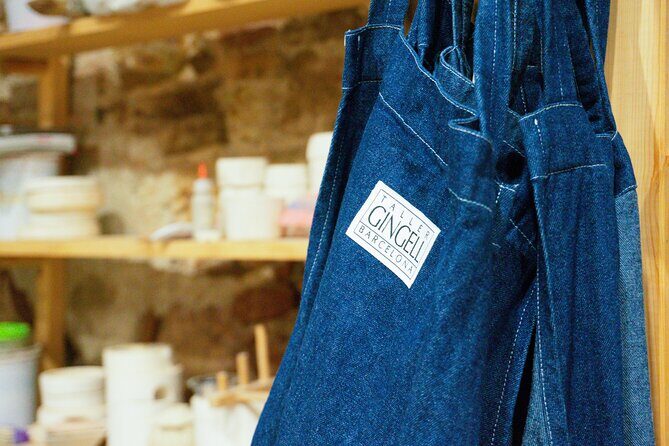
- aprons
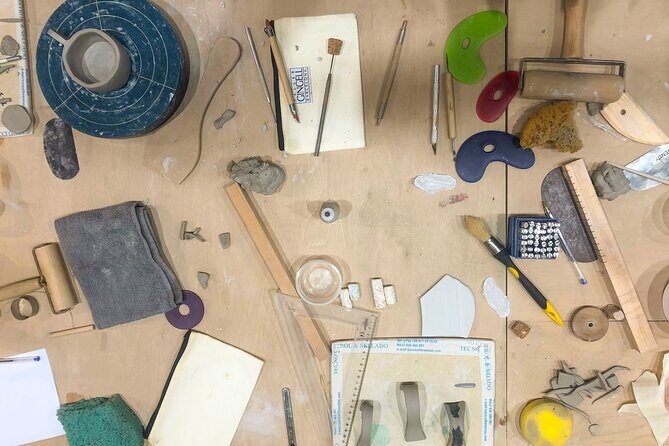
- ceramic modeling tools
- clay
- kiln firings
- WIFI
That list is more important than it sounds. Clay, tools, and kiln time are usually where costs pile up in workshops. Here, those basics are bundled. You’re paying for access plus teaching, not for a scavenger hunt of extra purchases.
What’s not included is shipping (if desired). If you want your fired pieces sent to you, that’s an extra step and extra cost you’ll need to plan for.
Practical packing checklist (based on what’s not included):
- clothes you can stain or mark
- a jacket for Barcelona indoor-to-outdoor swings
- any small notebook for technique notes if you like remembering what worked
Also, since this is WiFi-enabled, you can keep plans handy for evenings—tickets, transit notes, or even a photo log of your process.
Kiln Firings and Your Finished Pieces: Why Choosing Up to Five Matters
Each student can select up to five items to kiln fire. That rule does two things:
- It forces you to choose what you want to see become real, fired ceramics rather than making ten experiments you can’t finalize.
- It encourages focus. You’ll make decisions earlier about form, function, and finishing style.
From student experiences, the firing process is treated as part of the learning arc. Some courses also capture progress in photos for students, which can be fun for remembering what you tried and what you changed.
One more practical consideration: drying and handling in ceramics can be tricky. If you overstuff your week with ambitious projects, you may end up with more pieces that need extra time than you have. With the up-to-five kiln-fired limit, it’s worth aiming for fewer pieces with strong execution rather than many half-finished ideas.
Pricing and Value: Where $612.78 Actually Pays Off
The price is $612.78 per person for a five-day, 20-hour intensive. That sounds like a commitment, so here’s how I’d think about value.
You’re getting:
- structured, repeated instruction over five days (not one workshop session)
- small-group teaching capped at eight
- clay and tools included
- aprons included
- kiln firings included
- WiFi included
For most people, the “hidden cost” in ceramics is materials plus firing. Firing isn’t just a checkbox; it’s part of whether your piece becomes ceramic. Bundling kiln time into the price is a big value driver.
Also, the schedule matters. A one-week course gives your hands and eyes time to learn patterns. In other words, you’re not paying only for time in a studio; you’re paying for momentum.
Pairing This With Barcelona Sightseeing: Easy Evenings Beat Overstuffed Days
The highlights say the experience combines crafting and sightseeing, but the course schedule itself is built around studio sessions (ten to about mid-afternoon given the four-hour blocks). So the best way to pair it is with a realistic plan:
- Keep mornings and early afternoons for clay work
- Use early evenings for short, low-stress sightseeing
- Pick neighborhoods you can reach without complicated detours
Sants-Montjuïc is also a helpful context. You can plan outings without making every day a logistics puzzle. And because you’ll be tired in a very specific, satisfying way (hands, shoulders, brain), quick walking routes often beat big transit days.
If you want more structure, treat your course week as a “studio anchor,” then plan one or two sightseeing highlights per day max, not five.
Who This Course Suits Best (and Who Might Want Something Else)
This intensive is suitable for all levels, and the course states no prior ceramics experience is necessary. That’s great if you’re:
- brand new and want real guidance from the start
- intermediate and want technique refinement and accountability
- traveling with a friend, or coming solo and wanting a welcoming group
- looking for a hands-on, genuinely different Barcelona activity
It may be less ideal if you:
- hate structured schedules
- want long blocks of free time daily
- are looking for an outdoor/food-focused tour rather than a studio workshop
If you’re unsure, consider how you learn. If you like doing, not watching, this will fit you well.
Should You Book This Intensive Handbuilding Course?
I think you should book if you want a focused, small-group ceramics week where technique instruction and hands-on building are both taken seriously. The class format, the up-to-eight limit, and the fact that clay/tools/aprons/kiln firings are included make it a strong value for the effort you put in.
You might hesitate if your language needs are very strict, since instruction is provided in Spanish and/or English depending on your preference. And if you’re the kind of traveler who wants a sightseeing-heavy day, you’ll need to plan evenings carefully.
Bottom line: if you want to go home with skills you can use again—plus pieces you helped shape with real coaching—this is the kind of Barcelona experience that sticks.
FAQ
How long is the intensive course?
It runs for 5 days with five consecutive four-hour classes (about 20 hours of teaching and studio work).
What time does the course start?
The start time is 10:00 am.
Where is the meeting point?
The meeting point is Carrer de Salvà, 71, Sants-Montjuïc, 08004 Barcelona, Spain.
How many people are in the class?
The activity has a maximum of 8 travelers.
Do I need prior ceramics experience?
No. No prior ceramics experience is necessary.
What languages are used during instruction?
Instruction is in Spanish and/or English based on your preferences.
What is included in the price?
Included items are aprons, ceramic modeling tools, clay, kiln firings, and WIFI.
What items can I get kiln fired?
Each student can select up to five items to kiln fire.
Is shipping included for finished pieces?
No. Shipping is not included (if desired).
What’s the cancellation policy?
You can cancel for free up to 24 hours in advance of the experience’s start time for a full refund. If you cancel less than 24 hours before, the amount paid is not refunded.