REVIEW · BARCELONA
Montjuic Panoramic Segway/e-Bike Tour
Book on Viator →Operated by Barcelona Segway Tour · Bookable on Viator
Segways make Montjuïc feel close. This 3-hour ride is built for getting big views and landmark photos without burning your whole day walking steep streets. I like the small-group setup, and I also like that you get a lot of ground covered with 15 quick stops along the way.
My second favorite part is the guided flow, with pauses at major spots like the Castle of Montjuïc and MNAC so you can orient yourself fast. One thing to consider: the route is a set loop with short stops (about 5 minutes each), so if you want slow, in-depth time inside museums or viewpoints, this won’t be that kind of tour.
In This Review
- Key things to know before you go
- Why a Montjuïc Segway ride is such a practical choice
- How the guide and small group change the whole experience
- Where the tour starts and why the meeting point matters
- The first stretch: Arc de Triomf and Parc de la Ciutadella
- From Estació de França to Port Vell and the maritime area
- Mirador de Colom and the Alcalde gardens: where quick viewpoints work
- Montjuïc Castle, Miró, and Teatre Grec in one climb-focused arc
- MNAC and Olympic sites: connecting the cultural and sports eras
- Time on the ground: how to make the most of 5-minute stops
- What you actually pay for: value in equipment, guiding, and coverage
- Who this tour suits best (and who should skip it)
- Should you book the Montjuïc Panoramic Segway/e-Bike Tour?
- FAQ
- How long is the Montjuïc Panoramic Segway/e-Bike Tour?
- What’s included in the ticket price?
- Are any of the stops admission-free?
- Is food or hotel pickup included?
- What is the minimum age to participate?
- How big is the group?
- Where does the tour start and end?
Key things to know before you go
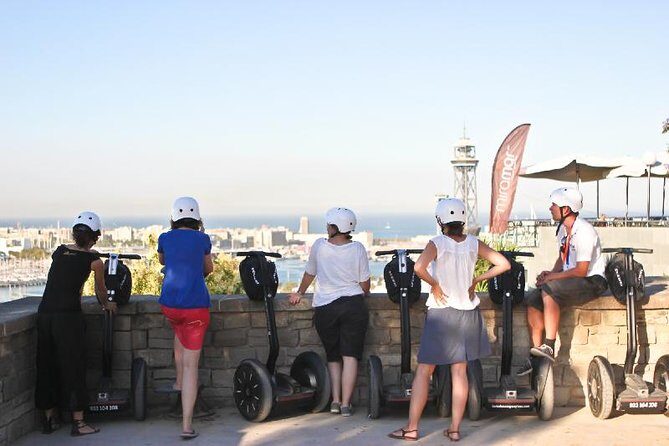
- Small groups (max 6 per guide) keep the ride personal and the pace manageable
- 15 landmark pauses spread from the waterfront up to Montjuïc highlights
- Helmet and Segway/e-bike included, plus a bottle of water to keep you comfortable
- Every stop is marked admission-free, so you’re not paying add-ons to see the sights
- Several departure windows (morning, lunchtime, afternoon) help you match the schedule to your day
Why a Montjuïc Segway ride is such a practical choice
If you’ve ever looked at a map and thought, That’s too much climbing for one afternoon, this is the fix. Montjuïc is famous for views and big landmarks, but foot travel can turn into stop-and-start exhaustion. A Segway or e-bike keeps you moving, so you spend your energy on seeing, not on getting there.
This tour is also a smart way to get your bearings in Barcelona. You start in Ciutat Vella and you work your way through the city’s layers. You’re not only focused on one neighborhood bubble. You’re taken from parks and grand architecture to the maritime edge, then up to the Montjuïc sights and Olympic-era spaces. That mix helps you understand where things sit relative to each other.
And you get the best kind of guiding for this style of tour: a local guide to keep the route smooth and the stops purposeful. The included bottle of water is small, but it matters when you’re riding and stopping in the sun.
One more practical point: you can pick morning, lunchtime, or afternoon tours. That flexibility helps if your itinerary is already packed with other must-dos, like beach time, a food plan, or a museum morning.
You can also read our reviews of more cycling tours in Barcelona

How the guide and small group change the whole experience
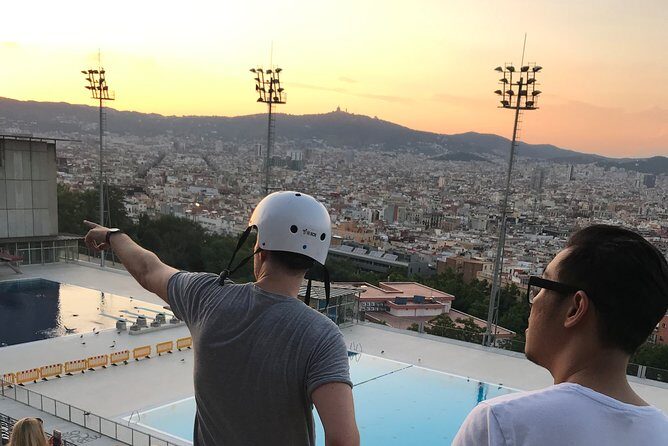
This doesn’t run as a huge bus parade. The tour operates with a maximum of six travelers per guide, which is a big deal for a Segway/e-bike experience. With fewer people, the guide can keep an eye on the group and keep you from feeling like you’re being rushed through checkpoints.
The guide quality also shows up in how people describe the ride. You may get a guide like Maria or Giovanni, who are praised for being top-notch and making the experience feel smooth. Other names that come up include Nicolas and Sarah, both noted for being attentive and responsive. One person even described the guide handling crazy requests with care, which tells you the guide isn’t just reciting facts at you.
What you should look for in any guide on this kind of tour is simple: clear instructions, good pacing at stops, and the ability to adapt to the group’s comfort level. In this setup, you’re more likely to get that because the group is small and the guide can actually talk to people, not just manage a crowd.
Where the tour starts and why the meeting point matters
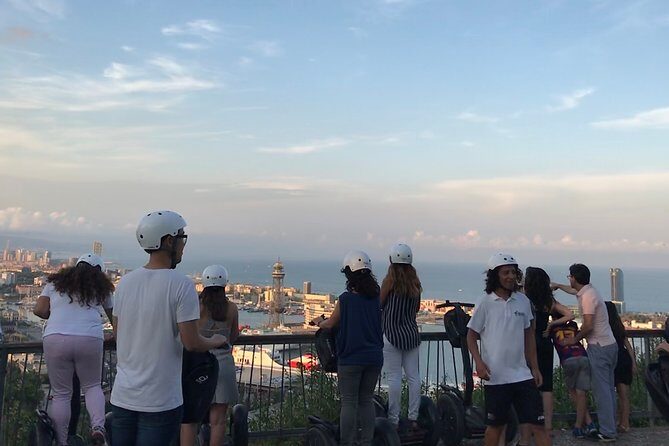
You begin at Passeig de Lluís Companys, 10, Ciutat Vella, 08018 Barcelona. The tour ends back at the same meeting point. That loop format is convenient because you’re not trying to figure out a second pickup or a long transit at the end.
It’s also helpful that the meeting area is near public transportation. If you’re pairing this with other plans in the city center, you don’t have to build in extra time for complicated logistics.
Because the tour is about movement and quick landmark pauses, showing up on time matters. You’ll want to be ready to ride and ready to go when the group lines up. If you’re running late, the schedule tightens fast.
The first stretch: Arc de Triomf and Parc de la Ciutadella
The opening stops set the tone. You start with Arc de Triomf for about five minutes. Think of this as your visual warm-up. It’s a classic “big landmark” moment where you can get an easy photo and start understanding the route style. Because the stop is short, it’s best used for quick photos and orientation rather than deep reading.
Next you head to Parc de la Ciutadella. This stop gives you a break from pure city streets and helps break up the early momentum. A park stop works well on a Segway/e-bike tour because it’s a natural rhythm shift: you ride into open space, pause, then roll again.
A practical upside of these early stops is confidence. By the time you reach the later Montjuïc climbs and viewpoints, you’re already warmed up with the feel of the ride and the pace of the group.
From Estació de França to Port Vell and the maritime area
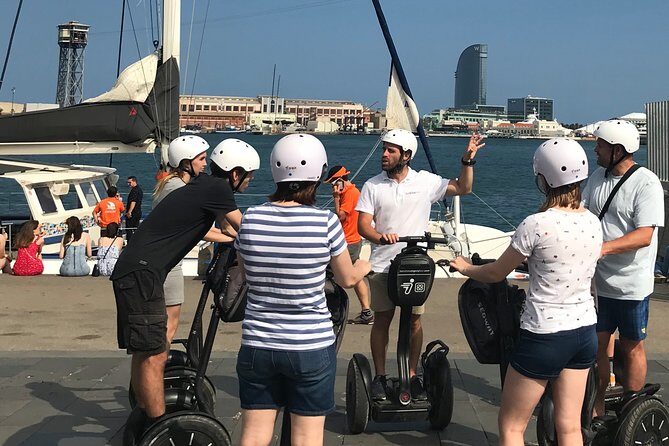
Then the route swings toward the waterfront story. You pause at Estació de França for about five minutes. Even if you’re not planning to go inside anything, a station stop is useful because it marks a change in scenery. You’re moving from the earlier city fabric to a more coastal, visitor-friendly zone.
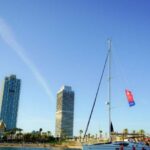
After that comes Port Vell. A quick stop here is ideal if you like maritime atmosphere but don’t want to spend hours doing it. Port Vell is a place where the sea is part of the vibe, and it’s a good “reset” before you start focusing on Montjuïc.
The tour continues to Museu Maritim de Barcelona (Reials Drassanes). The stop is brief, so treat it as a look-and-photo moment, not a full museum visit. The value is in what it helps you connect: the waterfront area isn’t just scenery. It’s part of Barcelona’s identity, and the ride ties it into the larger route you’re taking.
You can also read our reviews of more tours and experiences in Barcelona




Mirador de Colom and the Alcalde gardens: where quick viewpoints work
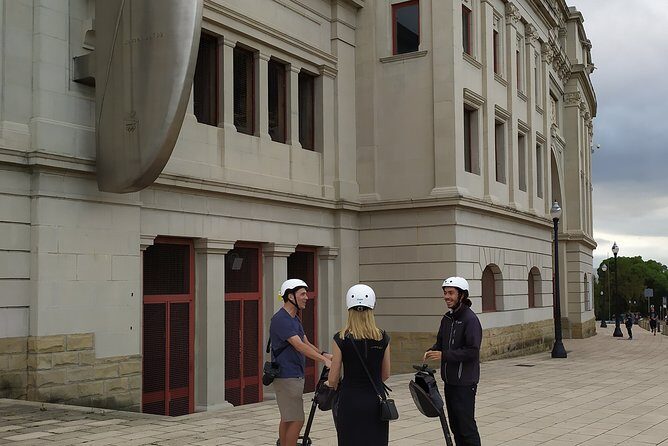
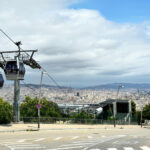
Next you’ll hit Mirador de Colom and Jardins del Mirador del Alcalde. These are viewpoint-style stops, and on a Segway/e-bike tour they’re perfect. You get the payoff of a viewpoint without needing to build your entire day around one spot.
Because each stop is about five minutes, you’ll want to have a photo plan. If you’re traveling with someone who takes 40 shots per landmark, build in patience now. The whole point here is covering a lot with less effort, so the stops are meant to be used efficiently.
One small strategy: if you care about photos, arrive with your camera ready before the group parks. Viewpoints can fill up, and even in short stops, it helps to be quick.
These viewpoint pauses also do a good job breaking up the bigger Montjuïc highlights. They feel like stepping stones toward the castle and the arts areas ahead.
Montjuïc Castle, Miró, and Teatre Grec in one climb-focused arc
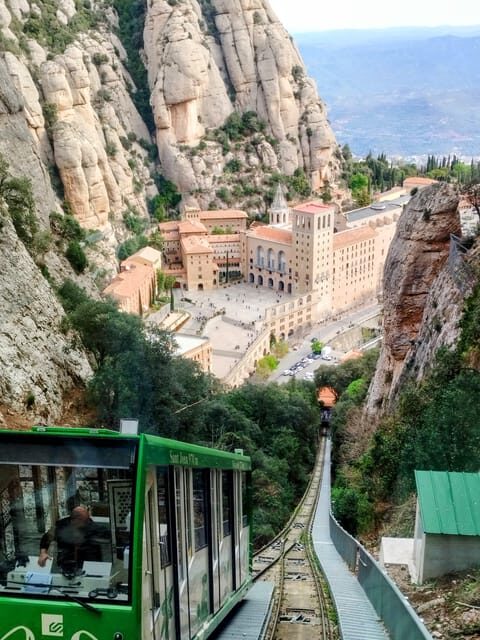
Now you’re in the Montjuïc core. The route includes Montjuïc Castle (Castillo de Montjuïc). This is usually the kind of place people remember because it signals you’ve reached the “big height” part of the neighborhood. Even with a short stop, it’s a strong landmark for photos and orientation.
From there, you head to Joan Miró Foundation (Fundació Miró). Again, the stop is short, so you’re not aiming for a full gallery afternoon. Instead, you’re getting the location and the sense of the area. If you like modern art, you’ll likely feel inspired to return later for more time.
Then comes Teatre Grec. It’s another stop that works well with the tour’s format. Instead of rushing through a museum-style plan, you get a chance to see where the performance spaces are and snap your bearings. It also helps you see that Montjuïc isn’t only about one thing. It’s part culture, part scenery, part event spaces.
If you’re trying to decide what to do later on your trip, these quick pauses are useful. They show you what you’re most interested in returning to. A 5-minute look can be enough to tell you whether you want a longer visit to Miró, a show at Teatre Grec, or more time around the castle area.
MNAC and Olympic sites: connecting the cultural and sports eras
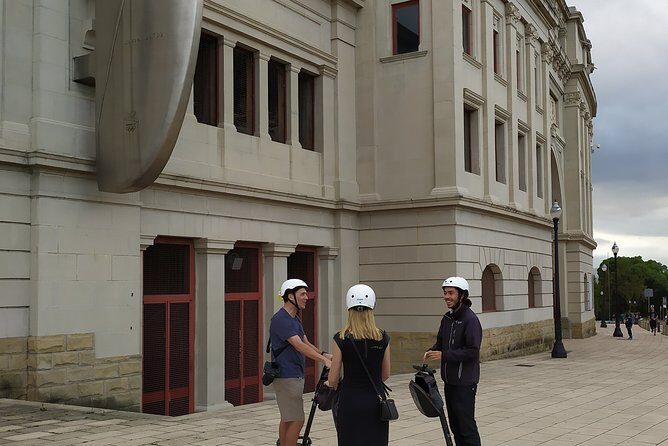
The tour continues to Museu Nacional d’Art de Catalunya (Palau Nacional / MNAC). Like the Miró stop, this is a landmark-forward pause. It gives you the scale and setting of the museum complex without turning your day into a ticket line and an all-day inside visit.
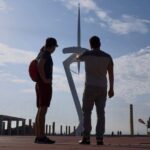
Then you move to Estadi Olímpic and L’Anella Olímpica de Montjuïc. These stops make the tour’s theme click. Montjuïc isn’t just about views. It’s also tied to major Olympic-era spaces. The tour stitches those areas together so you can see how they fit into the broader Montjuïc layout.
Finally, you reach The Magic Fountain of Montjuïc. This is a big draw for many visitors, and even with a short stop, seeing it as part of the route is helpful. You’ll also understand why the area attracts people at certain times, because the fountain is a centerpiece.
A note for planning your expectations: since this is a guided ride with brief stops, you’re seeing these places from the outside and at quick intervals. If you’re hoping for a long stop that includes waiting around for a show or a long interior visit, you’d need separate plans.
Time on the ground: how to make the most of 5-minute stops
Every stop in the sequence is timed at about five minutes. That’s the tour’s design choice, and it can be either perfect or annoying depending on your style.
If you love fast sightseeing, this is great. You’ll roll up, pause, get your bearings, take photos, and move on. Your brain gets multiple “mini hits” of Montjuïc without waiting for one single highlight to consume your entire day.
If you’re the kind of visitor who wants to read every sign, sketch, and linger for half an hour, you might find the stops too short. The good news is that all stops are marked as admission-free, so you’re not losing money if you decide you want to revisit later with your own pace.
What I recommend is picking a priority for each stop. For example: one stop for a photo, one stop for a quick viewpoint, one stop where you decide if you want a longer revisit. That way the short stops feel purposeful, not rushed.
What you actually pay for: value in equipment, guiding, and coverage
The price is $54.07 per person, and the tour lasts about 3 hours. For that time, you’re getting use of a Segway and helmet, a local guide, and a bottle of water. You’re also not paying admission at the listed stops, since each is marked ticket free.
That combination is where the value comes from. You’re paying for movement (equipment), interpretation (guide), and efficiency (coverage across different areas). If you’ve been planning on spending most of a day walking and taking separate transport rides, the bundled approach can feel like a bargain.
What’s not included is also important: food and drinks aren’t included, and there’s no hotel pickup or drop-off. So if you’re doing this as part of a full-day plan, eat before or after. Don’t count on the tour to solve your lunch.
Also remember the age requirement for Segway participants: the minimum age in Barcelona is 16. If you’re traveling as a family, this matters for who can join the ride.
Who this tour suits best (and who should skip it)
This tour fits you if you want:
- A way to see a lot of Montjuïc and nearby landmarks in a short time
- A guided route that keeps you from second-guessing where to go next
- A small-group experience that feels manageable
It may not fit you if:
- You want long museum visits or extended time inside attractions
- You dislike riding on a powered device
- You need a super flexible schedule with no fixed stop timing
If you’re doing Barcelona for the first time and you want to connect key areas quickly, this kind of tour is especially useful. It helps you map the city in your mind, not just take photos.
Should you book the Montjuïc Panoramic Segway/e-Bike Tour?
Yes, I’d book it if your priority is efficient sightseeing with a small group and you’re comfortable riding. The route is packed with major landmarks—from Arc de Triomf and Parc de la Ciutadella through Port Vell, Miradors, Montjuïc Castle, MNAC, Olympic sites, and the Magic Fountain area. You get a lot of visual variety without needing to plan separate trips.
I’d think twice if you’re craving slow pacing and deep time at fewer sites. With brief stops built in, this is a route for momentum, not for lingering.
FAQ
How long is the Montjuïc Panoramic Segway/e-Bike Tour?
It runs for about 3 hours.
What’s included in the ticket price?
You get the use of a Segway and helmet, a local guide, and a bottle of water.
Are any of the stops admission-free?
Yes. Each stop on the route is marked as admission ticket free.
Is food or hotel pickup included?
No. Food and drinks are not included unless specified, and there is no hotel pickup or drop-off.
What is the minimum age to participate?
The minimum age for Segway tour participants in Barcelona is 16.
How big is the group?
The tour operates with a maximum of six people per guide.
Where does the tour start and end?
It starts at Passeig de Lluís Companys, 10, Ciutat Vella, 08018 Barcelona, Spain, and it ends back at the same meeting point.