REVIEW · BARCELONA
Sant Pau Recinte Modernista Entrance Ticket in Barcelona
Book on Viator →Operated by Fundació Privada Hospital de la Santa Creu i Sant Pau · Bookable on Viator
Sant Pau is a rare kind of museum. You’re walking through a working hospital turned Art Nouveau showpiece, spread across a whole garden campus. It’s one of the biggest Modernisme complexes in Europe, and you see it at your own pace with a prepaid ticket.
I especially like the stop-start freedom. You can begin in the Administration Pavilion anytime during opening hours, then move on to restored pavilions, old hospital spaces, tunnels, and the airy garden network when you feel like it. Another highlight is the way the site tells the story of medicine alongside the architectural details, with interactive and video elements that help you connect what you’re seeing to how care evolved.
One thing to consider: self-guided wayfinding can feel a little hit-or-miss. A few visitors noted confusing directions and occasional closures during special events, so you may want to plan for a slower, more careful wander rather than trying to speed-run everything.
In This Review
- Key things to know before you go
- Why Sant Pau feels special in Barcelona
- Price and value: what your ticket really buys
- How long it takes and how to pace it
- Entering through the Administration Pavilion
- Exterior architecture: stained glass, sculptures, and domes
- The tunnel network that explains how care moved
- Stop-by-stop: what to look for as you move through the pavilions
- Sant Salvador Pavilion: history from 1401 to today
- Restored Sant Rafael Pavilion and the old Surgery Room
- Lluís Domènech i Montaner Room and Pau Gil Room
- The Main Hall: where everything feels connected
- Sant Jordi Pavilion: rotating temporary exhibitions to end the loop
- Audio help: worth it if you want more guidance
- What the best visit looks like (and what can trip you up)
- Getting there: near transit, easy to fit into a day
- Should you book Sant Pau Recinte Modernista tickets?
- FAQ
- How long does the Sant Pau Recinte Modernista ticket experience take?
- What is the price per person?
- Is the entry ticket self-guided?
- What language is available?
- Do I get a mobile ticket?
- Where do I start inside the complex?
- What can I see during the visit?
- Is food or drinks included?
- Is there an on-site guide included?
- What is the cancellation policy?
- Is Sant Pau near public transportation?
Key things to know before you go
- You start when you want at the Administration Pavilion during opening hours
- Underground tunnels connect pavilions and help explain the hospital’s original workflow
- Architectural details are everywhere, from stained glass to sculptures and domes
- English materials are included, and the exhibits aim to be visitor-friendly
- Temporary exhibitions rotate at the end point, so the finish can feel fresh
- Plan around special events, since some areas may be blocked off at times
Why Sant Pau feels special in Barcelona
Barcelona has plenty of big-name sights. Sant Pau plays a different game. Instead of a single monument, you enter a patient-care system turned architectural masterpiece. The result feels calm and “walkable,” even though the complex is large.
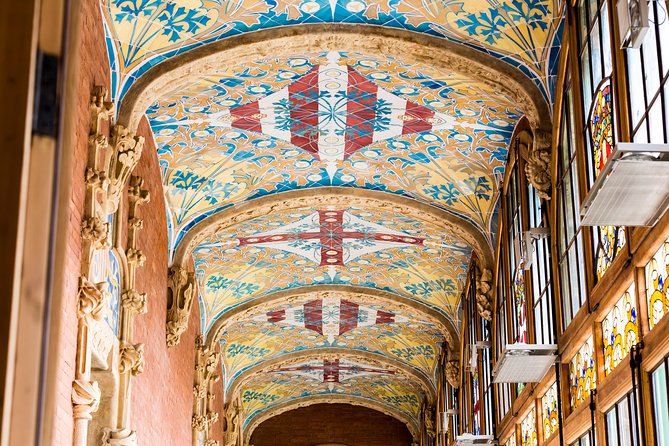
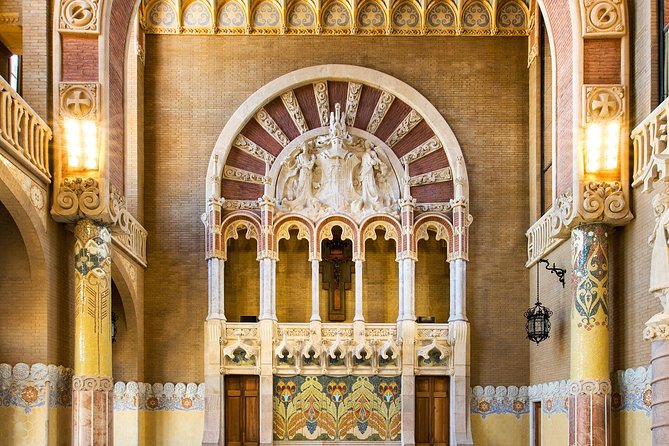
What makes this visit click is the mix of practical purpose and pure design. This wasn’t built to impress Instagram. It was built to support healthcare, light, airflow, and movement between buildings. When you later spot all the ornamentation, stained glass, mosaics, and domes, you’ll realize the artistry wasn’t decoration piled on top. It’s part of the hospital’s original thinking about people and space.
You also get a better chance to actually look. With a self-guided ticket, you’re not stuck in a long queue or forced into a group pace. If you like reading plaques, spotting tilework, and catching your breath in the gardens, this is a smart choice.
You can also read our reviews of more tours and experiences in Barcelona.



Price and value: what your ticket really buys
At about $21.78 per person, this is not the cheapest ticket in town. But the value is strong because you’re paying for access to a large, multi-building site, not just one photo-stop.
You’re also paying for time. Prebooking matters here because entry to a popular attraction can be tight on busy days. Even if you could buy on the day, your prepaid ticket is the cleanest way to avoid the uncertainty and get straight into sightseeing.
The big practical point: you’re not paying for a guided tour. A guide is not included. That’s a tradeoff. If you want a person explaining every design choice, you’ll need to handle it yourself or use any optional audio support mentioned at the entrance. If you’re comfortable exploring independently, this ticket format fits well.
How long it takes and how to pace it
Expect about 1 to 2 hours. In reality, that range depends on how slow you walk and how much you read. If you mostly want architecture plus a quick grasp of the medical story, one hour can work.
If you enjoy careful wandering, you’ll likely land closer to 90 minutes. The complex is expansive, and the tunnels and pavilions reward a calmer pace. My advice: don’t force yourself to see every single room at maximum speed. Choose what you care about—tiles and stained glass, healthcare history, underground passages—and let the rest support those interests.
Entering through the Administration Pavilion
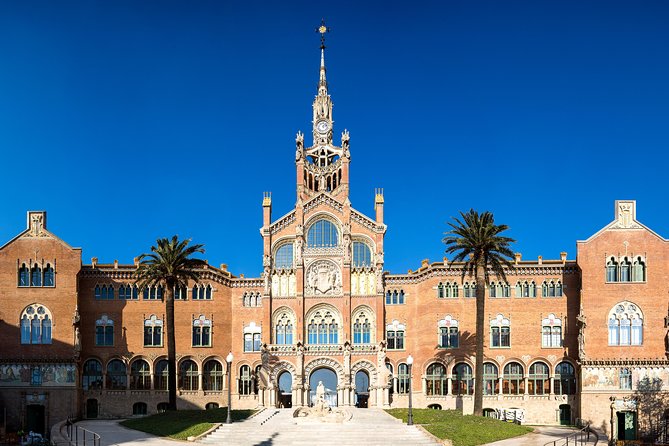
Your ticket is admission to the Recinte Modernista de Sant Pau, and the easiest way to start is the Administration Pavilion. You can begin there anytime during opening hours, which is great because it lets you shape the timing around your day in Barcelona.
In this first hub, you’ll find exhibition space built to explain what Sant Pau was and why it mattered. There’s an interactive touch table and a video presentation. These aren’t just filler. They help you understand the hospital’s contribution to medicine before you walk into the physical layout.
This matters because the site’s design is the story. Without context, the complex can feel like beautiful buildings with no thread. With a quick orientation from the interactive and video parts, the rest becomes easier to follow.
Exterior architecture: stained glass, sculptures, and domes

Before you go deep into the pavilions, take a deliberate lap outside. Sant Pau’s exterior details are part of the attraction, and you’ll see them repeatedly as you navigate.
Look for stained glass, sculptures, and domes. The design is Modernisme at full volume—ornate, expressive, and very intentional. The best strategy is to stop when something catches your eye and then locate it again later from another angle. You’ll notice how the decoration and the building function talk to each other.
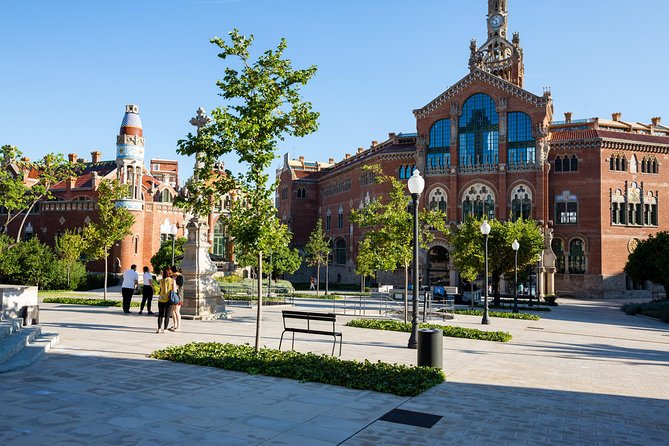
Also, don’t ignore the setting. You’re in central Barcelona, but the campus layout can feel surprisingly peaceful compared with the city’s busiest zones. That calm atmosphere is a real quality-of-life upgrade during a trip full of crowds.





The tunnel network that explains how care moved
One of the most memorable parts is the network of underground tunnels. These passageways wind through the complex and connect the buildings and pavilions with a purpose that goes beyond sightseeing.
It’s one thing to read about hospitals. It’s another to physically move through the idea of connected care spaces. The tunnels make the whole site feel like a system instead of a set of separate monuments.
If you like details, slow down here. Notice how the tunnels link to the building collections and how they eventually open back out into the gardens. It gives you a clear sense of scale, planning, and why the campus wasn’t designed as a random scatter of buildings.
Stop-by-stop: what to look for as you move through the pavilions
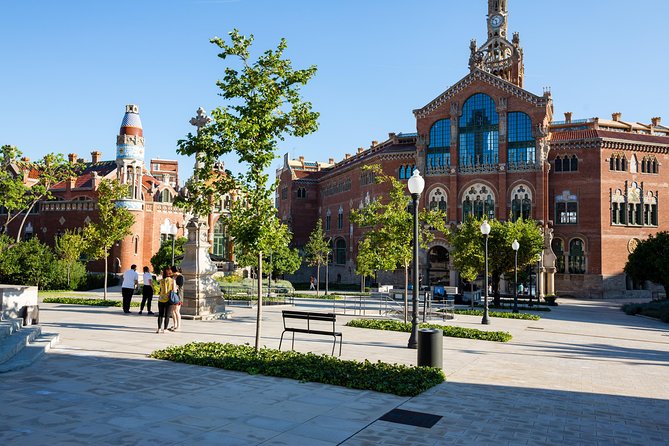
Sant Pau is spread out, but there’s a logical rhythm to the visit. Here’s a practical walk-through of the main areas you’ll likely hit.
Sant Salvador Pavilion: history from 1401 to today
The Sant Salvador Pavilion sets the stage with the history of the Hospital de la Santa Creu i Sant Pau, from its founding in 1401 to the 21st century. This is where you’ll get the timeline sense that keeps everything else from feeling like wandering.
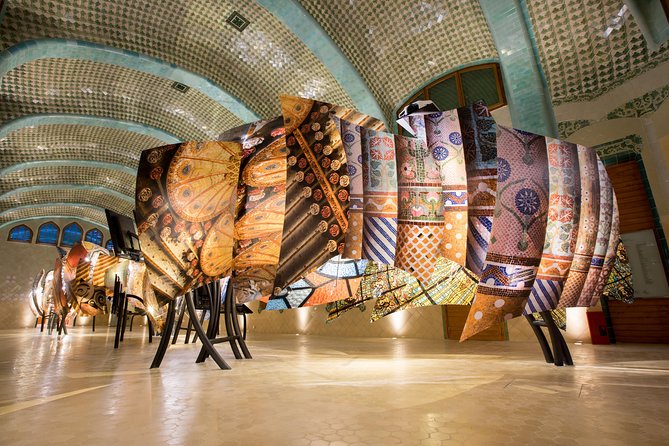
On the upper floor, there’s a contemporary installation symbolizing a dragon, connected as a tribute to Lluís Domènech i Montaner and his work. If you like spotting how modern interpretation sits inside historic architecture, this moment gives you that bridge.
Practical tip: don’t rush this pavilion. Even a short pause here makes the rest of the complex easier to understand.
Restored Sant Rafael Pavilion and the old Surgery Room
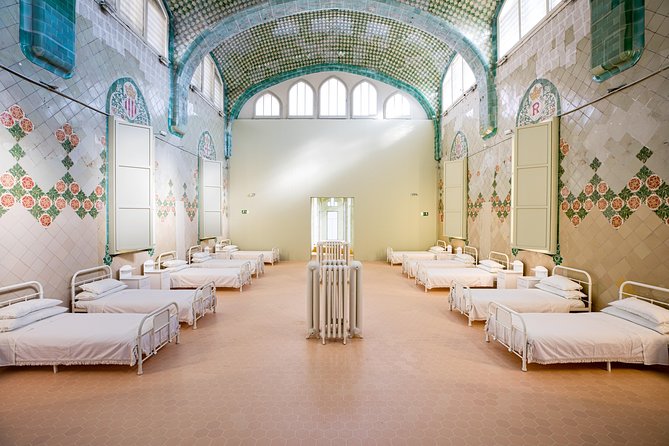
Next, you’ll move toward the restored Sant Rafael Pavilion and the old Surgery Room. This is where the “hospital museum” concept becomes real, because you’re stepping into spaces that help you imagine past healthcare practice.
You’ll likely notice how the room setup, access, and building layout relate back to the larger campus plan. The experience is not just about looking pretty. It’s about seeing how design supported medical routines.
If you care about the human story behind healthcare, this is a section worth extra time. Expect it to feel more grounded than the decorative exterior moments.
Lluís Domènech i Montaner Room and Pau Gil Room
As you continue, you’ll encounter the Lluís Domènech i Montaner Room and the Pau Gil Room. These spaces are tied to people behind the project and the broader Modernisme movement.
This is where the architecture gets more than aesthetic credit. You start to connect design choices to the individuals and the era. If you enjoy architecture beyond surface-level style—why it looks the way it looks—these rooms help you anchor the visit.
The Main Hall: where everything feels connected
Then there’s the Main Hall, which acts like a centerpiece. Even if you don’t know every detail, you’ll feel the shift from smaller rooms and passageways into a bigger, more public-feeling space.
It’s a good point to slow down and look back at where you’ve been. By now you’ve seen tunnels, restoration work, and the historical narrative. In the Main Hall, it starts to click as a cohesive site rather than separate stops.
Sant Jordi Pavilion: rotating temporary exhibitions to end the loop
Finish at the Sant Jordi Pavilion, home to rotating temporary exhibitions. Ending here is a clever move because it gives your visit a sense of present-day momentum. Your last moments can feel slightly different each time you go.
If you’re the type who hates visits that stop too predictably, this rotating-exhibit ending helps.
Audio help: worth it if you want more guidance
The ticket is self-guided, and a guide is not included. Some visitors also mention that an audio narration device may be available at the entrance for about €4. If you’d like extra context while you walk, it can be a decent add-on.
Here’s my practical take: if you like reading plaques, you might be fine without audio. If you prefer learning while moving, the audio option can make the big complex feel more streamlined.
If you can, give yourself a little buffer to grab whatever self-guided tools are available so you don’t lose time deciding once you’re already inside.
What the best visit looks like (and what can trip you up)
Sant Pau is best when you treat it like a campus, not a checklist. The site is large, and the charm comes from noticing patterns: tilework, glass details, and the repeated logic of connected buildings.
That said, self-guided visits can have friction. A few visitors found the tour direction confusing or felt they missed sections because some areas were closed. Another mentioned influencer events blocking off parts of the complex. These are the real-world annoyances that can happen at popular sites.
So, here’s how you avoid disappointment:
- Give yourself extra time if you want a full circuit.
- If you hit a blocked area, don’t force it. Use the maps and flow to follow what’s open.
- Don’t be afraid to spend more time in a pavilion that interests you and less time in a section that doesn’t.
Also, keep in mind that walking includes indoor/outdoor movement and stairs in parts of the complex. One visitor specifically called out that lifts were not great, so if you rely on step-free access, you should factor that into your planning.
Getting there: near transit, easy to fit into a day
This site is near public transportation, which matters because Sant Pau fits well into a longer Barcelona itinerary. It’s also not as exhausting as some attractions where you spend half the day just getting from point A to point B.
If you’re already planning to see Sagrada Família, Sant Pau can be a very satisfying pairing. It has the same broad Modernisme flavor, but the mood is calmer and the architecture is built for human movement rather than one monumental facade.
Should you book Sant Pau Recinte Modernista tickets?
I think this is a strong yes if you want architecture with purpose. You’re not just buying access to pretty buildings. You’re getting a healthcare story told through real spaces: pavilions, an old Surgery Room, and underground tunnels that explain how the system worked.
Book it if:
- You like self-guided sightseeing at your own pace
- You care about Art Nouveau/Modernisme details like mosaics, stained glass, sculptures, and domes
- You want a quieter alternative to Barcelona’s most crowded headline attractions
Skip or reconsider if:
- You want a talk-through guided explanation (a guide is not included)
- You dislike self-guided direction and prefer highly structured tours
If you’re on the fence, my advice is simple: reserve your spot and plan for a relaxed 1–2 hours. Sant Pau rewards slow looking, and once it clicks, you’ll feel like you discovered a whole world inside Barcelona rather than just checked off another museum.
FAQ
How long does the Sant Pau Recinte Modernista ticket experience take?
Plan for about 1 to 2 hours.
What is the price per person?
The price is listed as $21.78 per person.
Is the entry ticket self-guided?
Yes. The experience is described as a self-guided admission ticket with you exploring the pavilions and exhibition spaces at your own pace. A guide is not included.
What language is available?
The ticket is offered in English.
Do I get a mobile ticket?
Yes, the ticket is described as a mobile ticket.
Where do I start inside the complex?
You can begin at the Administration Pavilion anytime during the facility’s opening hours.
What can I see during the visit?
You can explore exhibition spaces, including areas focused on the hospital’s contribution to medicine and its artistic heritage, plus underground tunnels, restored pavilions, rooms tied to major figures, the Main Hall, and the Sant Jordi Pavilion with rotating temporary exhibitions.
Is food or drinks included?
No. Food and drinks are not included.
Is there an on-site guide included?
No. A guide is not included.
What is the cancellation policy?
Free cancellation is available up to 24 hours in advance for a full refund.
Is Sant Pau near public transportation?
Yes, it’s described as near public transportation. Service animals are allowed, and most travelers can participate.