REVIEW · TARRAGONA
Tarragona: Roman Heritage Guided Walking Tour
Book on GetYourGuide →Operated by ITINERE, Turisme & Cultura · Bookable on GetYourGuide
A Roman walk in Tarragona moves fast. You’ll see how the city’s Roman walls and monuments still shape the streets today, then finish at the Amphitheater by the sea for the big-picture payoff. I especially like that this tour uses a city model and a 3D audiovisual stop to help you picture what you’re seeing, not just what’s written on a plaque. One heads-up: at peak times it can feel tight and busy, and the 2 hours can feel short if you want extra details.
What really sells it for me is the structure: history first, then the working parts of the ancient city, and finally the stadium experience. If you get a strong guide—like Adrià (praised for clear, organized explanations and making the visit feel quick)—the whole thing clicks. The only real drawback to weigh is timing: some people feel the route packs a lot in, and that you might want a longer visit if you’re the type who likes to linger.
In This Review
- Key highlights to expect
- Roman Walls as Your Real Starting Point
- Tarragona’s Historic Center: Rome Under Modern Streets
- The Circus Vaults: Chariot-Race Drama in a Small Package
- The 3D Exhibit That Helps Everything Click
- The Amphitheater by the Sea: Gladiators, Beasts, and Big Views
- How to Fit This Tour Into Your Tarragona Day
- Price and Value: Why $17 Can Work
- Weather and Comfort: Small Tips That Matter
- Who This Tour Suits Best
- Should You Book This Tarragona Roman Tour?
- FAQ
- How long is the Tarragona Roman Heritage Guided Walking Tour?
- What does the $17 per person price include?
- Where do I meet the guide?
- What Roman sites will I see during the walk?
- What language is the tour offered in?
- Is the tour wheelchair accessible?
- What should I bring and wear?
- Are large bags or luggage allowed?
- Is there free cancellation?
Key highlights to expect
- Old Roman walls outside Italy: You’ll start by walking alongside some of the earliest Roman fortifications in the region.
- Circus vaults and chariot-race energy: The included Circus visit turns the “history talk” into a real visual.
- City model + 3D audiovisual exhibit: You get help understanding the ancient layout and building functions.
- Roman streets inside today’s Tarragona: Monuments sit right alongside homes, squares, and modern street life.
- Amphitheater views over the sea: You’ll connect the building to its location and atmosphere.
Roman Walls as Your Real Starting Point
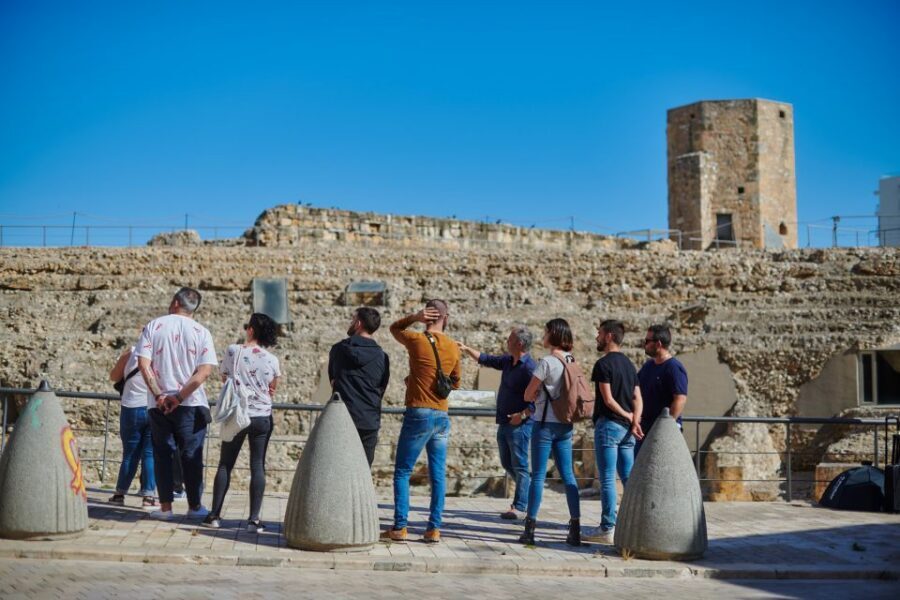
Tarragona’s Roman story isn’t tucked away in a museum room. It’s right there at the edge of the historic center, where you begin near the Roman walls. This matters because it changes how you read the city: you’re not just looking at ruins, you’re walking the kind of geography Romans chose on purpose.
The walls here are described as among the oldest Roman walls outside Italy. That’s a bold claim, but it’s exactly why the start works. You get instant context for why the Romans invested so heavily in this spot.
And the guide framing is practical: you’ll hear why they built on this hill beside the Mediterranean as the gateway to Rome for the whole peninsula. Translation: this was strategic. You’ll likely find yourself thinking about movement—ports, routes, and control—while you walk, instead of treating everything as disconnected stonework.
You can also read our reviews of more walking tours in Tarragona

Tarragona’s Historic Center: Rome Under Modern Streets
After the walls, the tour shifts into the historic center, where Roman remnants and today’s streets share the same space. This is one of my favorite kinds of city exploring because it makes the past feel usable. The Roman setting doesn’t sit behind fences in the same way it does at some sites; it blends with houses, streets, and squares.
Here’s what you can expect the guide to do: use the city model to show how Tarragona used to look, then connect that to the buildings around you. Instead of only saying this was important, the tour explains functions—what certain structures were used for and how the city worked as a system.
This portion is also where language support matters. The tour runs in Catalan and Spanish, with a live guide. If your goal is understanding more than scenery, you’ll benefit from being in that guided rhythm, rather than trying to connect dots on your own.
A quick practical note: because this part runs through central streets, it’s a good moment to wear shoes you can trust. The tour’s only 2 hours, so you’ll be standing, walking, and looking upward and around constantly.
The Circus Vaults: Chariot-Race Drama in a Small Package
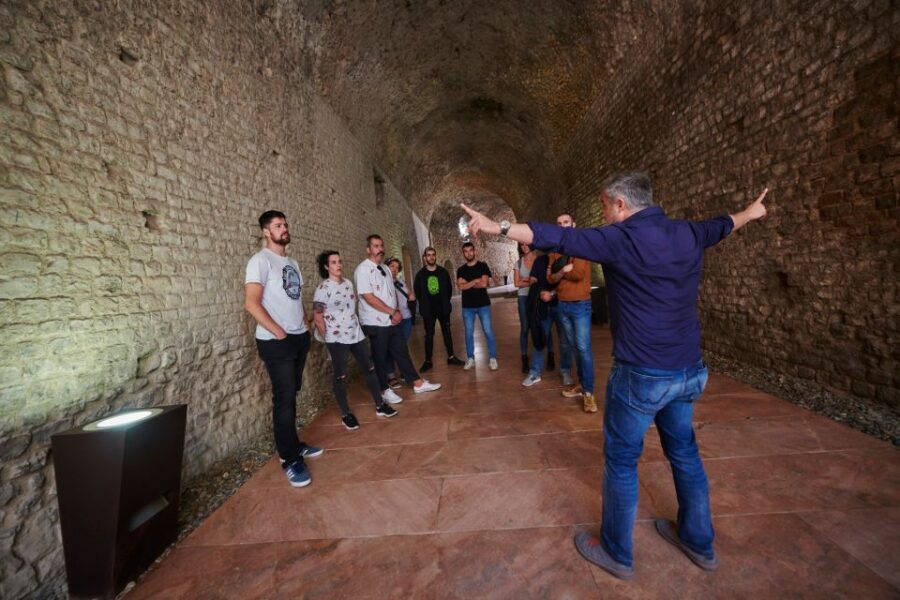
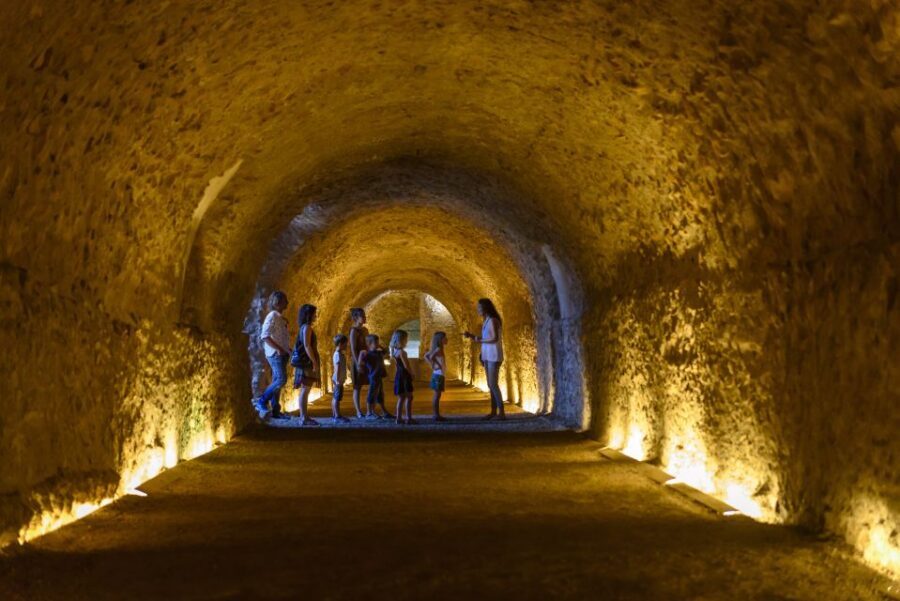
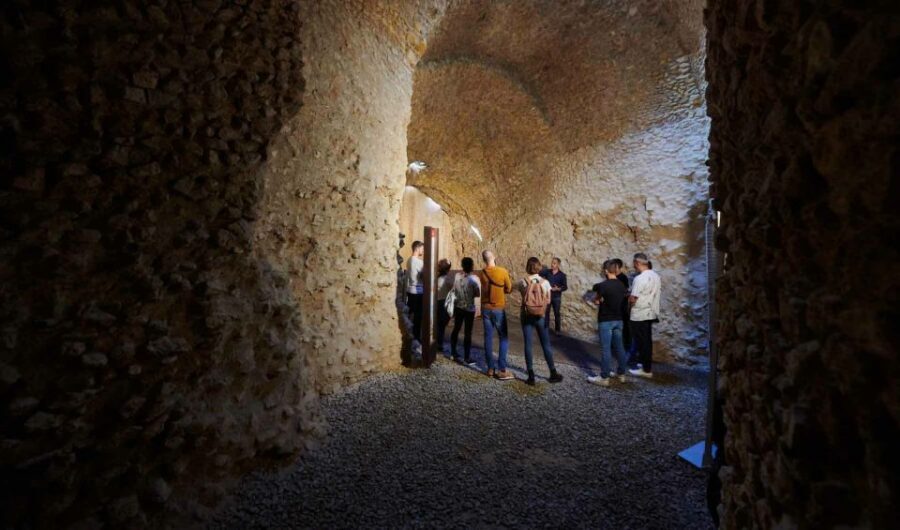
Then comes one of the most fun pivots of the tour: the Circus. The highlights specifically call out the Circus vaults and the feeling of chariot races. Since the tour includes entrance to the Circus, you’re not just hearing about it—you get access.
This stop tends to be the kind of place where your brain starts filling in the action. The Circus connects to spectacle: crowds, speed, and noise. And because you’re inside a structure built for that kind of energy, the explanations land faster than if you were only reading about it from outside.
If you’re a fan of Roman entertainment, this is the part that earns its spot in a short itinerary. It gives you a concrete anchor before you move to the amphitheater, where the visuals turn darker and more intense.
The 3D Exhibit That Helps Everything Click
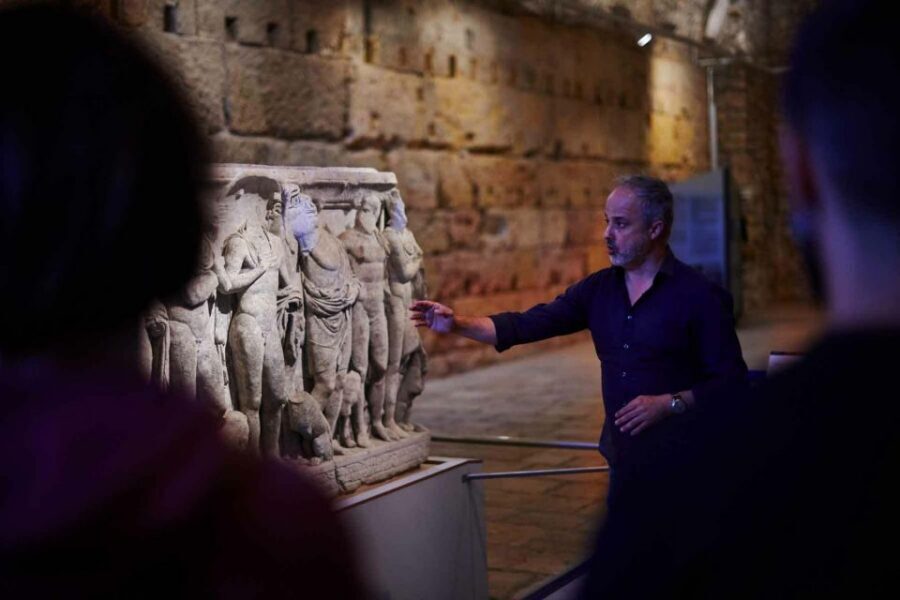
Between outdoor walking segments, you’ll watch an audiovisual exhibit with 3D images. This is a big value piece. Roman sites often suffer from the same problem: ruins look impressive, but it’s hard to picture how they worked.
That’s what this exhibit is aiming to solve. You’ll likely see reconstructions that help you interpret scale, building arrangement, and how the “now” version of Tarragona relates to the “then” version. It’s also the sort of stop that makes the tour feel fuller without adding too much time.
This is also where strong guiding shows up. One highlight from the feedback was how a video about Tarragona was especially well liked. That lines up with the idea that the media component doesn’t feel like a break from the tour—it feels like the glue that holds the story together.
The Amphitheater by the Sea: Gladiators, Beasts, and Big Views
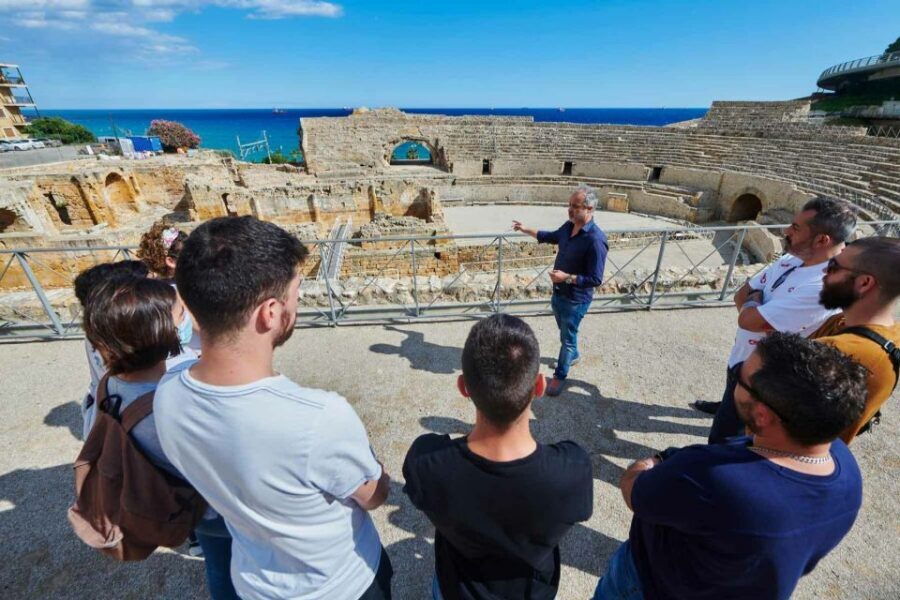
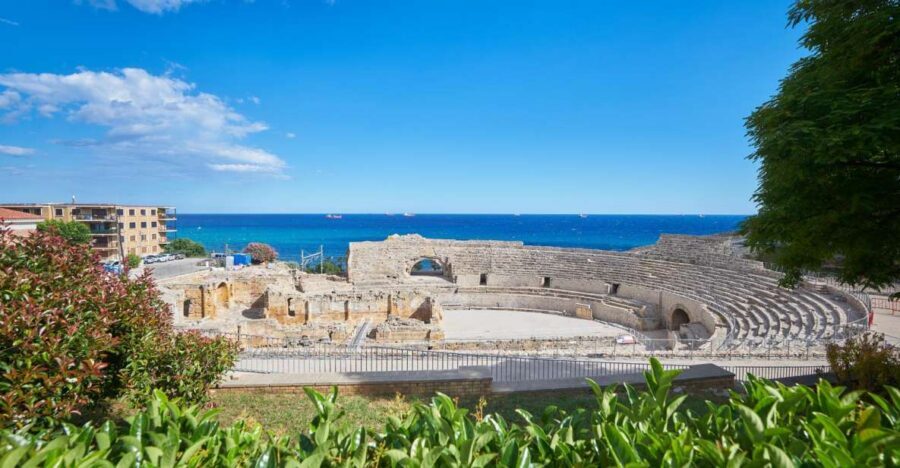
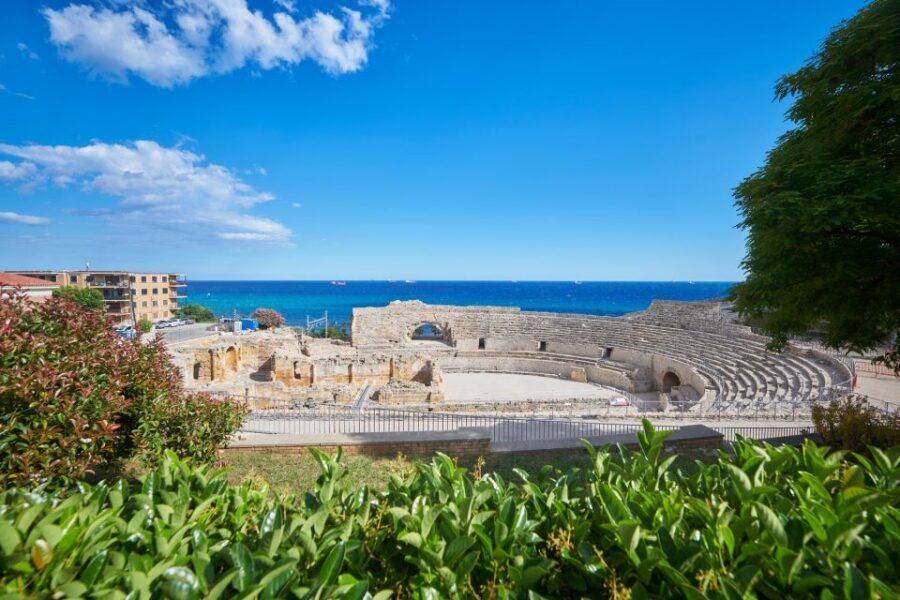
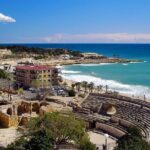
The tour’s last act is the Amphitheater, located by the sea. It’s a strong ending for two reasons. First, amphitheaters are built to frame spectacle—so when you arrive, the setting naturally supports the stories you’ve been hearing. Second, the sea location gives you an immediate sense of the environment Romans were harnessing.
Here’s what you’ll learn at the amphitheater: gladiator fights and beast hunting that took place there in ancient times. The guide will also review the stadium’s history up to the present day, which helps you understand what survived, what changed, and what restoration can’t fully recreate.
Don’t skip the viewing moments. Even if you focus on the text and explanations, make time to look outward. Roman architecture often makes more sense when you see how it sits in relation to light, open space, and nearby landmarks.
You can also read our reviews of more guided tours in Tarragona

How to Fit This Tour Into Your Tarragona Day
This is a 2-hour guided walk, so think of it as an orientation plus highlight reel. It’s ideal when you want to leave Tarragona with a clear mental map of the Roman pieces and how they relate to the modern city.
If your schedule allows only one Roman-focused activity, this is a good candidate because it covers:
- Roman walls at the start
- Roman monuments in the everyday city
- Circus access for chariot-race context
- Amphitheater finale with sea views
If you prefer slower travel, plan for this tour as the “get your bearings fast” move, then return on your own later for extra time at the spots that grabbed you.
One other planning angle: because the tour can be busy and groups may be noisy, consider choosing a less crowded time if you have the choice. You’ll still get the history, but your attention will thank you.
Price and Value: Why $17 Can Work
At $17 per person for a 2-hour official-guided experience, you’re paying for more than a walk. You’re paying for interpretation—plus entrance to the Circus.
That value is worth thinking about in practical terms:
- If you try to DIY it, you’ll still need to identify what you’re looking at and connect sites in a meaningful way.
- If you add individual tickets and separate entrances on your own, the total often grows quickly.
- Here, the itinerary is built to connect Roman walls, city layout, and entertainment venues in one flow.
Based on the consistently high rating (4.7 across 261 reviews), the tour seems to deliver on explanations and structure—especially when the guide is firing on all cylinders. That doesn’t mean every moment will feel perfect for every style of learner, but the overall design is efficient for the time you spend.
Weather and Comfort: Small Tips That Matter
Tarragona can throw weather at you. One recent run was under intense rain and was described as correct, meaning the tour didn’t fall apart. Still, don’t rely on luck.
Bring comfortable shoes, and if skies look uncertain, pack a light rain layer. You’ll be outside for much of the route, and you’ll want grip and comfort for repeated stops and short bursts of walking.
Also note that luggage or large bags aren’t allowed. That’s a real-life detail that helps you avoid stress: travel light and keep your hands free for photos and taking in views.
Who This Tour Suits Best
This guided walking tour is a strong match if you:
- Want Roman Tarragona explained in clear, organized steps
- Like learning the why behind location choices and city planning
- Enjoy entertainment architecture—Circus and amphitheater—more than only temples or forums
- Appreciate a mix of walking plus structured visual aids (the 3D exhibit)
It may feel tight if you:
- Prefer long stops and lots of free time to linger
- Need quiet, low-stress pacing (crowds can happen)
- Want deeper archaeology in one sitting beyond what fits into 2 hours
Should You Book This Tarragona Roman Tour?
Yes—if you want an efficient, guided way to understand Tarragona’s Roman bones without spending hours figuring it out yourself. The combination of Roman walls, the Circus entrance, the amphitheater by the sea, and the 3D audiovisual support is exactly the kind of “time well spent” package that works on a short visit.
I’d book it especially if you’re the type who learns faster with a live guide and visual aids, and you don’t mind that the route is packed into a compact 2-hour window. If you’re hoping for a slow, quiet, ultra-detailed archaeology session, you might consider pairing this with extra independent time afterward—so you can linger where you want.
FAQ
How long is the Tarragona Roman Heritage Guided Walking Tour?
The tour lasts 2 hours.
What does the $17 per person price include?
It includes the guided tour of Tarragona and entrance to the Circus.
Where do I meet the guide?
You meet at the Itinere office next to the Roman walls. Arrive 10 minutes early.
What Roman sites will I see during the walk?
You’ll visit the Roman walls, monuments in the historic center, the Circus (including entrance), and the Amphitheater by the sea.
What language is the tour offered in?
The live guide speaks Catalan and Spanish.
Is the tour wheelchair accessible?
Yes, it is wheelchair accessible.
What should I bring and wear?
Wear comfortable shoes.
Are large bags or luggage allowed?
No, luggage or large bags aren’t allowed.
Is there free cancellation?
Yes. You can cancel up to 24 hours in advance for a full refund.