REVIEW · TARRAGONA
Tarragona Highlights Private Tour
Book on Viator →Operated by Trails & Culture · Bookable on Viator
Tarragona rewards slow wandering. This private tour strings together Roman Tarraco power-spots and later medieval layers, and the guide (often Bernat/Bernard, plus Carmen or David in feedback) turns dates into real places you can picture. I also love the pacing: it feels unhurried and question-friendly, with plenty of time at each stop. One thing to plan for: there’s real walking and some steps over uneven old-town streets, so bring good walking shoes.
You’ll get a smooth arc from the Roman walls to the sea views above the port, with admission tickets included at the major sites and a mobile ticket that keeps things simple. And because it’s private, you’re not stuck following a fast-moving crowd through the cloister or the amphitheatre.
One Sunday detail matters: the cathedral area can close for Catholic mass, and the plan swaps so you spend more time at the Roman amphitheatre instead. If you’re visiting a Sunday, that knowledge helps you feel confident about what you’ll actually see.
In This Review
- Key things I’d circle before you go
- Roman Tarragona route: meeting at Portal del Roser and ending at the Mediterranean Balcony
- Circ Roma and Praetorium: seeing Tarraco’s circus complex in layers
- Cathedral cloister, Saint Tecla, and the Diocesan Museum
- Roman walls and the amphitheatre by the sea
- Rambla Nova views, toque ferro, and the Ajuntament tomb
- Old houses and Part Alta art: Consolat, Castellarnau, and Modern Art Museum
- Price and pacing for a private 4-hour highlights tour
- Should you book this Tarragona Highlights Private Tour?
- FAQ
- How long is the Tarragona Highlights Private Tour?
- Is admission included for the stops?
- What language is the tour offered in?
- Where do we meet the guide, and where does the tour end?
- Is pickup available?
- Is bottled water included?
- What happens on Sundays?
- What is the cancellation window?
Key things I’d circle before you go
- Circ Roma scale and hidden structure: a 1st-century circus once estimated at 30,000 spectators (325 by 115 metres), with parts hidden under later buildings.
- Praetorium connections: a Roman tower that originally linked levels of the city to the forum area via underground passages.
- Saint Tecla + Romanesque sculpture: the cathedral cloister area and Diocesan Museum add medieval art depth beyond just the façade.
- Roman walls outside Italy: the Murallas de Tarragona are among the oldest Roman constructions still standing outside Italy.
- Amphitheatre by the sea: 2nd-century bedrock seating with big historical moments, including the 259 A.D. execution of Bishop Fructuoso and his deacons.
- Balcón del Mediterráneo payoff: a 40-metre-high view that ties the Roman amphitheatre to the port and Platja del Miracle beach.
Roman Tarragona route: meeting at Portal del Roser and ending at the Mediterranean Balcony
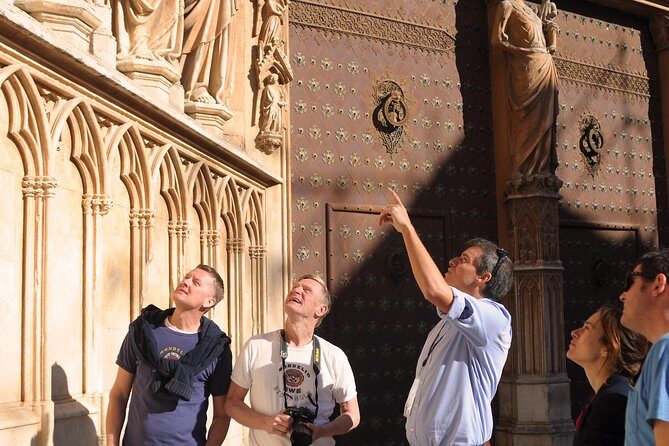
This tour is built like a proper highlights loop through Tarragona’s Part Alta (historic centre), not a random scatter of stops. You start at Portal del Roser, by the Via de l’Imperi Romà, outside the old quarter and in front of the Roman wall. Your guide meets you right there, so you’re not trying to decode a meeting point on your own.
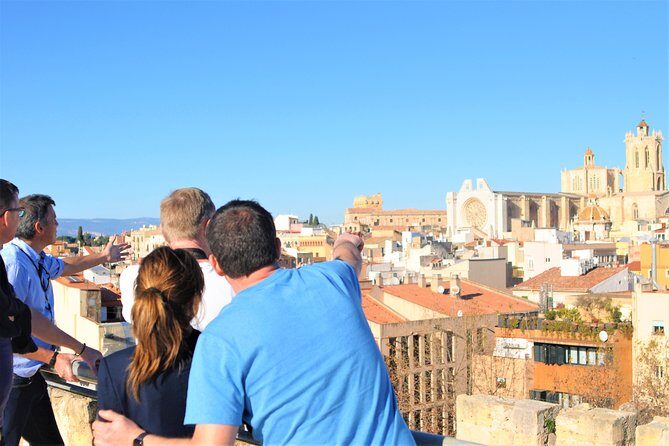
The finish line is almost a reward: the Balcón del Mediterráneo area on Passeig de les Palmeres. It’s at the top of Rambla Nova, about 40 metres above the sea, with sightlines over the port, Platja del Miracle, and the ancient amphitheatre down below. Ending with the view is smart, because everything you learned during the walk suddenly clicks into a “whole city” picture.
It’s offered in English, lasts about 4 hours, and it’s private, meaning only your group participates. That matters in Tarragona, because some of the best stories are the ones you’ll ask for—how a building worked, why a wall was built where it was, what changed after the Romans.
You can also read our reviews of more private tours in Tarragona

Circ Roma and Praetorium: seeing Tarraco’s circus complex in layers
Stop one is Circ Roma, Tarragona’s Roman circus complex. The key idea here isn’t just that it existed—it’s how big it was and how Tarragona built around it. The circus was an elongated structure measuring 325 by 115 metres and built in the 1st century, with an estimated original capacity around 30,000 spectators. That scale is hard to get from a quick glance at ruins, so you’ll want the time to understand what you’re actually looking at.
What I like about this stop is the “layer-cake” feel. Even though Circ Roma is one of the best-preserved circuses in the West, some parts remain hidden under later 19th-century buildings. That’s why a guide is useful here: you can connect what’s visible with what’s been covered and what’s been adapted.
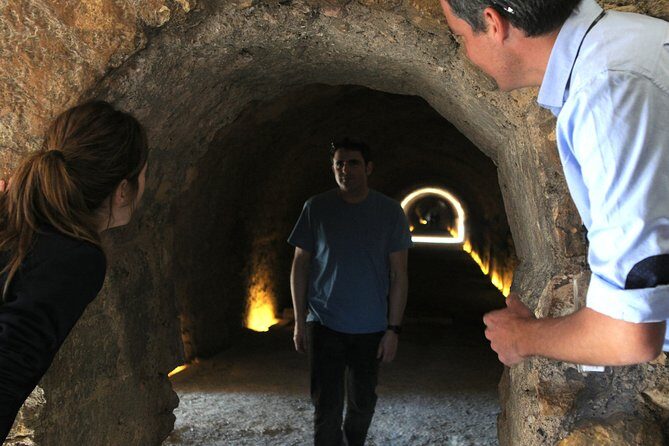
You’ll also hear how the Praetorium (a Roman-era tower) connects the lower city to the provincial forum. It originally housed stairs linking different levels, and it ties to the circus through underground passageways. Later, in the 12th century, that tower was transformed into a palace for the Crown of Aragon monarchs—and then used as a prison. It’s a reminder that Tarragona reused structures instead of wiping the slate clean.
Cathedral cloister, Saint Tecla, and the Diocesan Museum
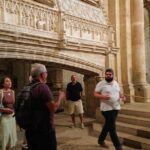
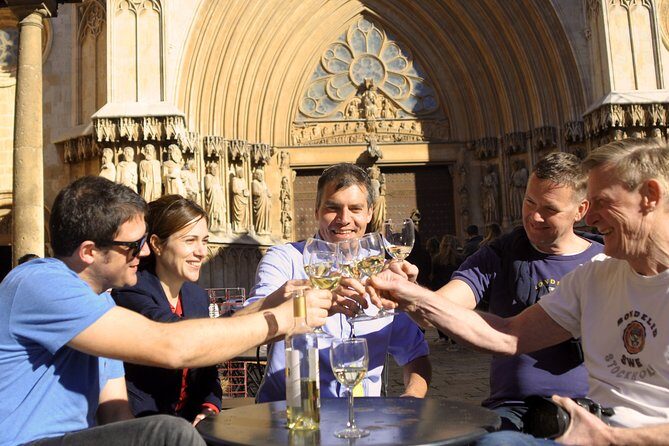
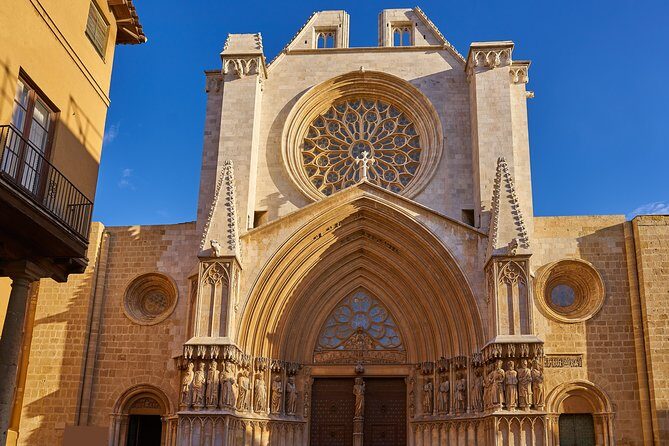
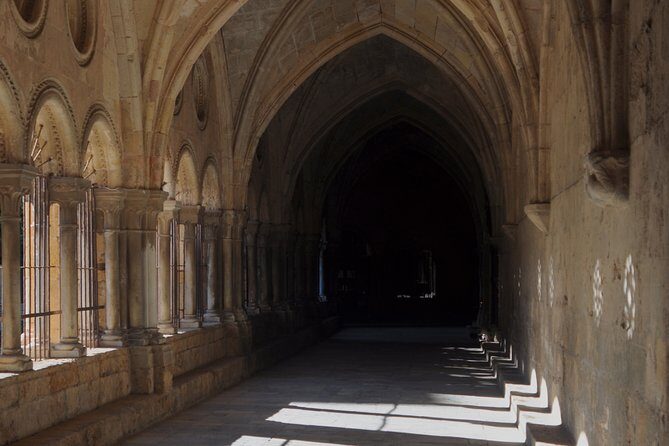
After the Roman layer, you switch to the medieval one at Catedral Tarragona. Construction began in the 12th century in the Romanesque style and continued into the Gothic period. The cathedral was consecrated in 1331, but it couldn’t be finished because of the Black Death that devastated the region. The result is a building that carries its unfinished story in the shape and details you’ll see, especially the soaring entrance and rose window on the façade.
This stop isn’t only about the outside. The cathedral’s cloister area connects you to the Diocesan Museum, where you’ll spend time with medieval and modern religious art tied to Tarragona’s diocese. If you care about how craftsmanship looked before photography and power-point, this is a great moment: you’ll encounter altarpieces, stone sculptures, carved wood work, goldwork, wrought-iron items, textiles, ceramics—an entire chain of skills shown through religious commissions.
A special highlight is the Saint Tecla altarpiece. And if you’re there around the cloister entrance, you’ll also see how the Romanesque sculpture tradition in Catalonia developed around the turn of the 13th century.
One planning detail you should know: on Sundays, the cathedral and its close area can be shut during Catholic mass. The tour plan adjusts so you’ll get inside the Roman amphitheatre instead. That swap is the difference between arriving on a Sunday and feeling surprised versus arriving with a plan.
Roman walls and the amphitheatre by the sea
Tarragona’s identity as a Roman city isn’t just about monuments you can photograph—it’s about how it was defended. Murallas de Tarragona trace the municipal boundaries around Tarraco. In the 2nd century B.C., a wall ran about 3,500 metres, and today roughly 1,100 metres remain along the edge of the Old Quarter. The big claim to fame here: these walls are among the oldest Roman constructions still conserved outside Italy.
The walls also show how defence changed. Between the 16th and 18th centuries, the fortifications were reinforced with bulwarks and exterior structures to adapt to new artillery. So as you walk along what’s left, you’re not only seeing Roman-era planning—you’re seeing later “mods” layered into the same footprint.
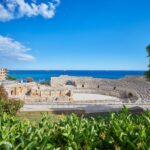
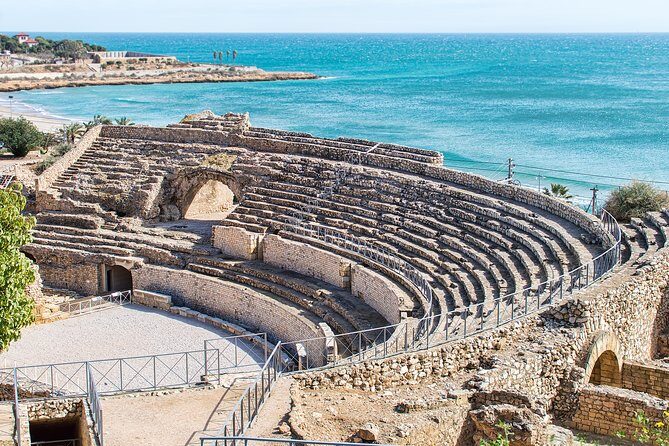
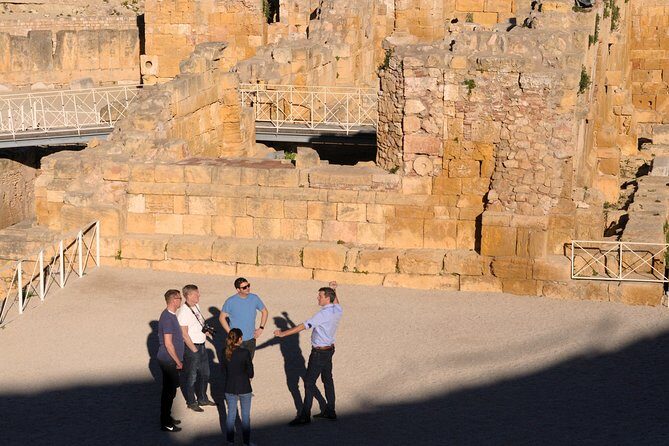
Then you reach Anfiteatro, the oval amphitheatre overlooking the sea. It’s 2nd-century work with stands carved from the bedrock, measuring 109.5 by 86.5 metres, and once seating up to 14,000 people. This is one of those stops where context changes everything. Yes, it’s an amphitheatre, but it was also a stage for gladiator fights and wild beast encounters, plus public executions.
The historical weight can land hard: in 259 A.D., Bishop Fructuoso and his deacons Augurio and Eulogio were burned alive within this amphitheatre. Later, a Visigoth basilica went up in the early 6th century, and then it was replaced by the medieval Santa Maria del Miracle church. That long sequence—entertainment, persecution, worship—helps you understand why Tarragona’s ruins feel personal instead of distant.
Rambla Nova views, toque ferro, and the Ajuntament tomb
After the amphitheatre, the tour swings into a viewpoint that ties the whole story together. The Mediterranean Balcony sits at the top of Rambla Nova, 40 metres above the sea, and gives you a clean visual link between the port, Platja del Miracle, and the amphitheatre. It’s also where Tarragona locals do a small ritual: touching the railing—tocar ferro—is said to bring good luck.
This stop is short, but it’s worth it for orientation. When you can see the sea and the amphitheatre at once, the city stops being a list of ruins and becomes a map of how people moved between work, worship, entertainment, and waterfront life.
Next you’ll pass through the Ajuntament de Tarragona area, which includes an Art Noveau tomb tied to the medieval king Jaume I. The contrast here is useful. You’ve just been in Roman and medieval layers; now you’re seeing a later artistic and commemorative layer in the city’s civic setting.
I like stops like this because they prevent “Roman-only Tarragona” thinking. Tarragona isn’t a theme park of antiquity; it’s a working city that keeps adding meaning to older spaces.


Old houses and Part Alta art: Consolat, Castellarnau, and Modern Art Museum
Not every “highlight” has to be a major ruin. Part of what makes this tour satisfying is the mix of architecture that feels lived-in and the cultural stops that broaden your view of the city.
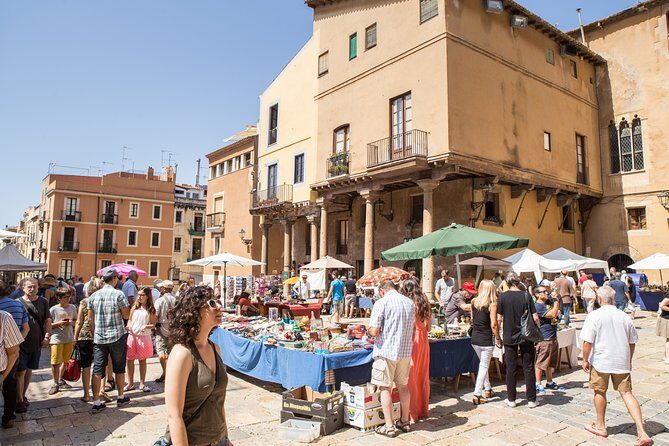
In the maze of narrow streets near the Old Town, you’ll visit Antiga Casa del Consolat Tarragoni. It’s described as charming with a decadent old-town air, and it fits the way Tarragona’s Part Alta feels: short streets, older facades, and a slow shift from monumental stone to everyday history.
You’ll also see Casa Castellarnau, a noble house from the 15th century. Even if you’re not an architecture buff, it’s a helpful change of pace after Roman and cathedral stops. You start noticing how style signals status—then how that status shifted over centuries.
For a break from stone and story, the tour includes the Museu d’Art Modern de la Diputació de Tarragona. It was created in 1976 to support the study of modern and contemporary art and to share Tarragona’s artistic heritage. The museum occupies the combined result of three 18th-century buildings, which means you’re not only seeing art on walls—you’re moving through architecture that already has history.
You’ll find works from the 19th to 21st centuries, including the legacy of sculptor Julio Antonio and the Tarragona Tapestry by Joan Miró and Josep Royo. This stop is proof that Tarragona doesn’t freeze at Roman times. It keeps talking.
Price and pacing for a private 4-hour highlights tour
At $150.85 per person for about 4 hours, this tour can look high at first glance—until you factor what you’re actually paying for. You’re not buying only walking access to monuments. You’re paying for a guide who can connect Circ Roma, the Praetorium, the cathedral cloister and Diocesan Museum, the walls, the amphitheatre, and the viewpoint payoff into one coherent route.
A big part of the value is admission tickets included at the main stops. That removes the “nickel-and-dime” feeling and lets you spend your energy on seeing. You also get a private format, which matters because Tarragona’s best moments often require pause time—photos, questions, and a minute to let a story land.
The itinerary is timed in short blocks (for example, the cathedral and cloister time is set separately from museum time), which keeps the day from turning into one long blur. It also helps you manage energy. Still, the tour is very much a walking experience across the historic centre, so build in your own reality check: comfy shoes, sun protection if it’s warm, and a relaxed mindset.
Bottled water is not included, so plan to bring your own or buy it nearby.
Should you book this Tarragona Highlights Private Tour?
Book it if you want Tarragona’s key places explained in the kind of order that makes sense. This is especially strong if your time is tight and you’d rather hit the big anchors—Roman circus, cathedral cloister, walls, amphitheatre, and the Rambla Nova view—without juggling tickets and routes on your own.
Skip it or consider another option if you’re expecting a very slow, mostly-flat stroll. There are steps and uneven walking in the Part Alta, and the tour covers a lot of ground in one session.
If you’re heading in on a Sunday, feel confident that the plan adjusts if the cathedral area closes for mass, so you’ll still get meaningful indoor time at the amphitheatre.
FAQ
How long is the Tarragona Highlights Private Tour?
It runs for about 4 hours.
Is admission included for the stops?
Yes. Admission tickets are included at each of the listed main sites during the tour.
What language is the tour offered in?
The tour is offered in English.
Where do we meet the guide, and where does the tour end?
You start at Portal del Roser (in front of the Roman wall) and end at Balcón del Mediterráneo on Passeig de les Palmeres.
Is pickup available?
Pickup is offered. The guide meets you next to Portal del Roser outside the old quarter, in front of the Roman wall.
Is bottled water included?
No, bottled water is not included.
What happens on Sundays?
The cathedral and its close area can be closed due to Catholic mass, and the tour will get inside the Roman amphitheatre instead.
What is the cancellation window?
You can cancel for a full refund if you cancel at least 24 hours in advance. If you cancel less than 24 hours before the experience starts, the amount paid won’t be refunded.