REVIEW · BARCELONA
Witch Hunt on Montjuïc: Self-Guided Puzzle Quest in Barcelona
Book on Viator →Operated by Questo · Bookable on Viator
Your phone turns Montjuïc into a game.
Witch Hunt on Montjuïc is a self-guided city exploration challenge in Barcelona where a story unfolds through short puzzle moments at major landmarks. It is designed so you can play when you feel like it, without syncing your schedule to a guide or group, and you move stop to stop at your own speed using the Questo app.
Two things I like a lot: stop-and-start flexibility and a route that feels walkable and logical. You can pause, wander, and then jump back into the next clue without feeling like you are falling behind. And because it is limited to just your group, the experience feels more like your Barcelona plan than someone else’s checklist.
One potential drawback: there is no tour guide, so if you want deep explanations on what you are seeing, you’ll need to look things up yourself. Also, a few stops list admission ticket not included, so you may have choices about whether to go inside while the puzzle still keeps going.
In This Review
- Key points before you go
- The Questo app puzzle engine: solve, pause, and continue
- Price and value: why $8.42 feels fair for 2-ish hours
- Where you start and finish on Montjuïc
- Parc Joan Miró to Arenas de Barcelona: your first clue sets the pace
- Plaça d’Espanya and Torres Venecianes: when orientation becomes part of the game
- Font Màgica and the museum zone: art stops without the pressure
- Gardens, slides, and the final climb to Montjuïc Castle
- Why this route feels good even without a guide
- Who should book Witch Hunt on Montjuïc
- Should you book this Witch Hunt on Montjuïc?
- FAQ
- FAQ
- How long is Witch Hunt on Montjuïc?
- Do I need a tour guide for this activity?
- What app do I use to play?
- What language is the puzzle quest offered in?
- Where do I start and where do I finish?
- Are entry tickets included for the attractions?
- Is this a private experience?
- Is there customer support if I get stuck?
- What is the cancellation policy?
Key points before you go
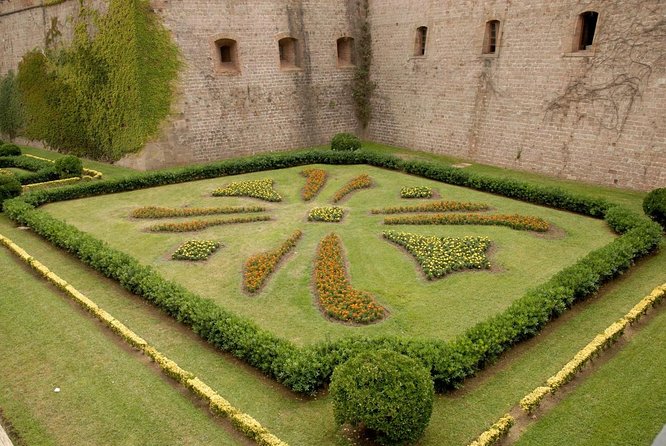
- Smartphone-led gameplay: Use the Questo app and a mobile ticket to move through the story at your pace.
- Limited to your group: You do not join a big crowd; it stays private for your group only.
- A stop-by-stop story map: Clues appear at major Montjuïc locations, from Parc Joan Miró to Montjuïc Castle.
- Admission varies by stop: Some stops are listed free, while others note admission not included.
- 24/7 help: Customer support is available around the clock if you get stuck.
The Questo app puzzle engine: solve, pause, and continue
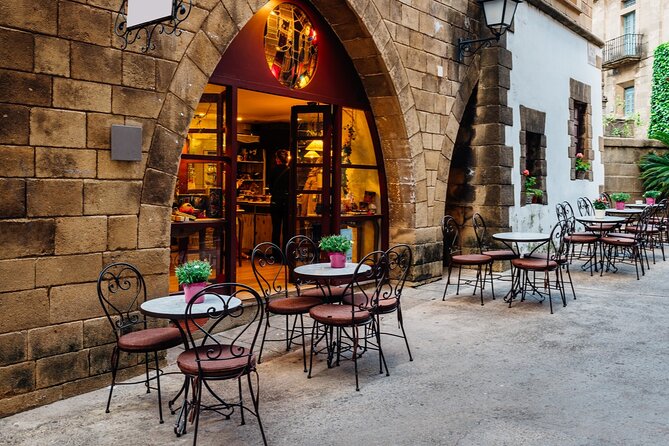
This is not a guided tour with a scripted lecture. It is a puzzle quest you run through your smartphone, guided by the Questo app. That means the experience is more about your choices than someone else’s timing.
Here is the practical part: you start at the designated meeting point, download the game through your phone, and then you work through clues in sequence. Each stop gives you the next piece of the story and directions to the next location. If you feel fast, you can push through. If you want to linger for photos or a snack break, you can. The game is built for a real walking rhythm rather than a forced sprint.
You also get 24/7 customer support, which matters more than it sounds. With self-guided games, the common stress is getting stuck on a clue or not understanding where to go next. Having support available means you are not stuck waiting for business hours.
What I find especially useful is that the experience is offered in English, so you do not have to guess at instructions. Even if your English is rusty, puzzle games often rely on clear prompts, and this one is set up for English speakers.
You can also read our reviews of more tours and experiences in Barcelona.

Price and value: why $8.42 feels fair for 2-ish hours

At $8.42 per person, you are paying for a structured route plus puzzle prompts delivered straight to your phone. You are not paying for a person’s time, and that shows in the format. You get about 1 hour 45 minutes to 2 hours 10 minutes of planned movement, with built-in freedom to stop and start.
That value really depends on how you like to travel:
- If you enjoy city exploration games, this is a low-cost way to turn Montjuïc into something interactive.
- If you like guided storytelling, you may feel like you are missing context since there is no guide on-site.
Also, Montjuïc is all about picking the right approach. Doing a self-guided puzzle quest helps you “earn” your way through it. Instead of walking from sight to sight with nothing connecting them, you get a sequence that keeps you oriented.
One more detail that helps value: it is private for your group. That means your experience is not diluted by chasing different paces in a mixed group. The game works better when everyone can match your rhythm.
Where you start and finish on Montjuïc
You meet at Carrer del Consell de Cent, 6769, in the Sants-Montjuïc area. Your finish is at Montjuïc Castle, with the address listed as Ctra. de Montjuïc, 66, Sants-Montjuïc.
The start-to-finish shape matters. You begin with a park stop and progressively move through Montjuïc’s landmarks, plazas, museums, gardens, and funicular-adjacent areas, then end at the castle where the story and the exploration game finish.
You do not have to keep checking your watch. You do have to keep your phone charged. Since the directions and clues are delivered through the app, bring a charging strategy if you use your phone heavily for photos.
The listed opening hours show Monday through Sunday from 12:00 AM to 11:30 PM, so the game is not tied to a narrow time window. You can realistically fit it into a lot of travel schedules.
Parc Joan Miró to Arenas de Barcelona: your first clue sets the pace
Stop 1 is Parc Joan Miró, where you get your first clue. This is a smart opener. Parks can feel like “dead time” in some guided formats, but in a puzzle quest, a park works as a calm starting zone where you can get your bearings quickly.
You should expect a short stop here, and you do not need to hurry. The clue unlocks what comes next and tells you where to go.
Stop 2 is Centro Comercial Arenas de Barcelona, a place that’s known as a former bull arena. This is one of those locations where the setting adds texture even if you do not go inside. When a puzzle drops you into a landmark like this, you start noticing the city as layers: old functions, new uses, and architecture that survived enough to be repurposed.
Tip for this section: if your group likes breaks, this is a good point to pause and regroup. The game lets you stop for as long as you like, then continue exploring at your own pace.
This segment is listed at about 5 minutes per stop in the flow of the route. In real life, your time may be longer if you read details, take photos, or revisit the clue prompt.
Plaça d’Espanya and Torres Venecianes: when orientation becomes part of the game

Next up is Plaça d’Espanya. In Barcelona, big squares are more than photo backdrops. They are orientation hubs. A puzzle that includes a stop like this is useful because it anchors you—once you understand where the square sits in your mental map, the rest of Montjuïc feels easier.
Then you move to Torres Venecianes. These towers are visually distinctive, so they are a natural place for puzzle games to use as reference points. You can look up and identify them quickly, which reduces “Where are we?” friction and keeps the momentum.
This middle section is valuable because it turns “transit walking” into part of the story. Instead of feeling like you are simply moving uphill or across the city, you are solving for the next direction.





Font Màgica and the museum zone: art stops without the pressure
Stop 5 is the Magic Fountain, listed as Font Màgica de Montjuïc. Even if you do not time things for a show, this is a well-known spot and a scenic moment on the route. The puzzle clue here helps you approach the fountain area with purpose, not just as a distant landmark you look at and then move on from.
Stop 6 is Museu Nacional d’Art de Catalunya. This is one of the stops with admission ticket not included. That is important. The puzzle may bring you into the museum area or may require access depending on how the clue is structured in the app. If you want to go inside, plan on buying tickets separately.
Even with that caveat, this is where the experience can feel especially rewarding. One of the strongest reviews tied to the route talks about how the building’s organization creates a strong sense of separation between past and present, with the concept working through the layout of different wings. That kind of architectural thinking is exactly what you can appreciate when the puzzle game slows you down enough to look.
Stop 7 is Palauet Albéniz, also marked as admission ticket not included. Palauet Albéniz tends to feel more “pause and observe” than “run through the exhibits,” which can match well with a puzzle quest format.
Then stop 8 is Joan Miró Foundation, again with admission ticket not included. Miró-related stops can become very meaningful fast, especially when a puzzle prompts you to notice details instead of treating art as a background activity.
Practical advice for the museum stretch: if you do not want to add museum entries, you can still treat these stops as exploration waypoints. Just be prepared that you might need separate tickets if the clue directs you inside.
Gardens, slides, and the final climb to Montjuïc Castle
Stop 9 is Jardins de Mossèn Cinto Verdaguer, listed as admission ticket free. Gardens are ideal for this kind of experience because the puzzle work blends naturally with wandering. You can slow down, look around, and reset before the route nudges you toward more “do something” stops.
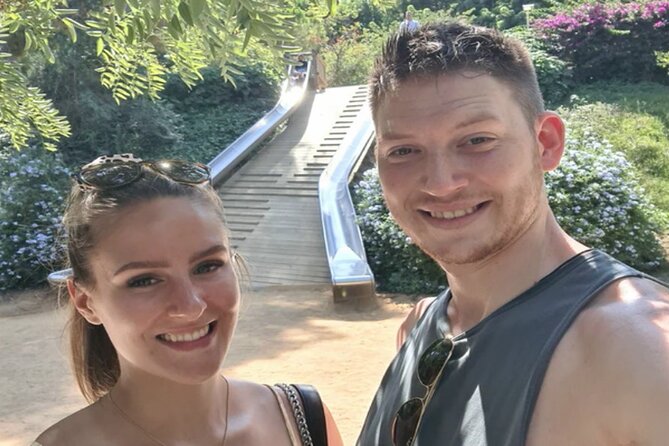
Stop 10 is Montjuïc Slides (listed as Tobogans de Montjuïc), also admission ticket free. This is a fun contrast to the art and museum zone. Even if you are not in the mood for rides, the change of pace helps the game feel varied rather than repetitive.
Stop 11 is Montjuïc Castle, your finishing point. This is where the story and city exploration game end. Ending at a castle is a classic travel move for a reason: the setting gives you a natural “wrap-up” feeling. It is also a good place to decide whether you want to extend your time beyond the game.
A note on flow: the route lists about 5 minutes per stop, but real time at the end can stretch. If you want a slower ending, plan extra minutes here and do not rush your final clue.
Why this route feels good even without a guide
You might wonder: if there is no guide, what is the point? Here is what I think this setup does well.
First, the puzzle creates direction. You are not just wandering across Montjuïc guessing what to see next. Each clue is a reason to move.
Second, the route mixes different kinds of places: park, commercial building with a former bull arena identity, major squares, towers, a fountain area, museum institutions, gardens, and a final castle. That variety makes the game feel like a curated sampling of Montjuïc rather than a single theme.
Third, the private group format helps. Because it is limited to your group, the pacing usually matches your party instead of being controlled by a stranger’s schedule.
The tradeoff is context. Without a guide, you will not get built-in explanations for what you are seeing at each site. If that context matters to you, consider pairing the puzzle with a bit of pre-reading on Montjuïc’s landmarks so the sights click while you play.
Who should book Witch Hunt on Montjuïc
This puzzle quest is a great fit if you:
- Like scavenger-style city walking games and want a clear route
- Want flexibility to pause and start without regrouping with a guide
- Prefer exploring at your own pace in a private setup
- Enjoy learning indirectly through clues and observation
It is less ideal if you:
- Want a person to explain the art, architecture, and history at each stop
- Prefer fully guided pacing and guaranteed entry into indoor spaces
One more practical thought: it works well as a “plan B” day activity. If you want something structured but not rigid, this is that sweet spot.
Should you book this Witch Hunt on Montjuïc?
I would book it if you want Montjuïc to feel like a mission with room for wandering. The smartphone puzzle format, the private group feel, and the low price make it an easy “try it” experience. Just go in knowing it is self-guided, so you are responsible for your own context.
If your priority is museums inside and guided commentary, you might get better value with a guided option. But if your goal is a fun, walkable, story-driven route across iconic Montjuïc stops, this one is worth it.
FAQ
FAQ
How long is Witch Hunt on Montjuïc?
The experience lasts about 1 hour 45 minutes to 2 hours 10 minutes.
Do I need a tour guide for this activity?
No. It is a self-guided puzzle quest you play using your phone.
What app do I use to play?
You play using the Questo app, and the experience is available as a city exploration game on your phone.
What language is the puzzle quest offered in?
It is offered in English.
Where do I start and where do I finish?
You start at Carrer del Consell de Cent, 6769., Sants-Montjuïc, 08014 Barcelona, Spain. You finish at Montjuïc Castle, Ctra. de Montjuïc, 66, Sants-Montjuïc, 08038 Barcelona, Spain.
Are entry tickets included for the attractions?
Entry tickets to attractions are listed as not included. The experience notes that admission ticket availability varies by stop, but tickets are not needed to complete the tour.
Is this a private experience?
Yes. It is a private tour or activity, and only your group participates.
Is there customer support if I get stuck?
Yes. There is 24/7 customer support.
What is the cancellation policy?
You can cancel for free up to 24 hours in advance for a full refund.