REVIEW · BARCELONA
Barcelona: Old Town and Gothic Quarter Walking Tour
Book on GetYourGuide →Operated by In Out Barcelona Tours · Bookable on GetYourGuide
Barcelona’s Old Town has layers.
This walking tour strings them together in a way you can actually feel, starting at Plaça de Sant Jaume where the Roman Forum once stood and working through medieval squares and cathedrals. I like that it includes both the big-name hits—Barcelona Cathedral and Santa Maria del Mar—and the streets between them, so you’re not just checking monuments off a list. Two things I really loved: the guide storytelling (Alba, Omid, Joris, Nilo—each brought the same kind of energy), and the smart timing around the market and main boulevard so you get atmosphere without wasting hours. One thing to consider: it’s still a walking tour through tight old streets, so pack light—no luggage or large bags—and bring comfortable shoes.
The best part is how the route connects politics, daily life, and architecture. From the Roman wall and the Pati Llimona area to places tied to Christopher Columbus’s reception, you get a clear sense of how Barcelona’s identity formed. And because the group is kept small (max 15), you can ask questions and actually hear the answers over the street noise.
Before you book, plan for the fact that your time is concentrated: expect 2.5 to 4 hours, with stops that are memorable but not long museum marathons.
In This Review
- Key highlights you’ll notice right away
- Why this Barcelona Gothic Quarter walk works so well
- The pace and group size: what it means for your day
- Stop 1: Plaça de Sant Jaume and the Roman Forum story
- Roman Barcelona: the wall walk and Pati Llimona baths
- Gothic Quarter power points: Plaça del Rei and the Columbus connection
- Barcelona Cathedral and Santa Maria del Mar: Catalan Gothic, explained
- La Rambla on foot: street energy without getting lost
- La Boqueria Market: 300 stalls, practical guidance, and smart tasting
- El Born and the finish near Passeig del Born
- What’s included (and what you provide)
- Value check: is $21 worth it for a 2.5–4 hour walk?
- Who should book this tour
- Should you book this Old Town and Gothic Quarter tour?
- FAQ
- How long is the Barcelona Old Town and Gothic Quarter walking tour?
- Where does the tour start?
- What languages are the guides?
- How many people are in a group?
- Is there a private group option?
- What should I bring, and what’s not allowed?
Key highlights you’ll notice right away
- Roman-to-medieval route: Starts at the old political center and keeps moving through major eras
- Small group feel: Max 15 people means better flow and more Q&A with the guide
- La Rambla + La Boqueria combo: You get the boulevard energy and the market scale
- Catalan Gothic architecture focus: Barcelona Cathedral and Santa Maria del Mar are treated with context
- El Born atmosphere: You finish near Passatge del Born, close to more wandering
Why this Barcelona Gothic Quarter walk works so well
If you’ve ever wandered the Gothic Quarter solo, you know the problem: you can see pretty stone and pointed arches, but you don’t always know what you’re looking at. This Barcelona: Old Town and Gothic Quarter Walking Tour solves that by giving you a thread—Roman origins, medieval power, and the streets people used every day.
At $21 per person and a duration of 2.5 to 4 hours, it’s priced like a “city orientation with depth,” not like a full-day tour that burns your whole schedule. The value is in the guided explanations tied to specific stops: you’re not just moving from landmark to landmark, you’re learning what each place meant.
Also, the guide experience is a standout theme in the reviews. I saw a pattern of praise for guides such as Alba (passionate, humorous, and willing to recommend where to eat and drink), Omid (keeps details interesting without losing people), and Joris (high energy and lots of “look closer” details). That matters because the Gothic Quarter rewards attention. The difference between a good and great guide is often whether they slow you down at the right moments.
You can also read our reviews of more walking tours in Barcelona



The pace and group size: what it means for your day
This is a small-group tour with a maximum of 15 participants, and it runs about 2.5 hours (up to 4, depending on the starting time and how the group flows). For you, that usually means two things:
- You’re not stuck waiting for a big crowd to squeeze through narrow lanes.
- You’re more likely to hear the guide clearly and ask follow-up questions.
It starts at Plaça de Sant Jaume (with a meeting point that may vary by option). One of the listed starting options is the Movistar Centre. The tour ends near Passeig del Born (08003 Barcelona), which is a helpful landing spot because you can keep exploring El Born afterward.
Practical note: since luggage or large bags aren’t allowed, travel light. Old streets + backpacks can be a pain, especially if the group is moving steadily.
Stop 1: Plaça de Sant Jaume and the Roman Forum story
Your first big mental shift comes right away at Plaça de Sant Jaume. This is framed as a place where the Roman Forum once stood, and it’s also described as the political heart of Catalonia for over 2,000 years.
Why that’s valuable: most first-time visitors see squares as pretty open space. Here, you’re prompted to see a square as a system that keeps being reused—politically and physically—across centuries.
If you want a fast way to understand Barcelona’s layers, this is a strong beginning. Even if you don’t remember every historical detail, the idea sticks: the city’s “center” didn’t move because of luck. It held power, traffic, and public life, generation after generation.
Roman Barcelona: the wall walk and Pati Llimona baths
Next, you hear stories tied to the Roman era, including one of the best-preserved Roman walls in the world. The tour also references the Roman baths of Pati Llimona, with emphasis on everyday life—what ancient people did, not just what emperors signed.
This part is the bridge between “I’m looking at old buildings” and “I’m seeing how the city functioned.” You get the sense that Barcelona wasn’t always a Gothic postcard. It was also plumbing, routines, and public spaces long before the medieval architecture took over.
And because you’re on foot, you can notice the shape of the streets around the Roman remains. That “fit” between ancient structure and modern streets is one of the reasons a walking tour beats reading alone.
Gothic Quarter power points: Plaça del Rei and the Columbus connection
Once you enter the Gothic Quarter proper, the stops start acting like chapters.
You’re guided through places like Plaça del Rei, described as home to the Palace of the Viceroy and the Palau Reial. The tour includes the famous moment of Christopher Columbus being welcomed by the Catholic Monarchs after his Americas journey.
This is where many visitors get an easy win: you’ll connect a world event you learned in school to a specific square and building in front of you. It makes the history less abstract. You’re also likely to look at the architecture differently—less like decoration, more like power made visible.




Barcelona Cathedral and Santa Maria del Mar: Catalan Gothic, explained
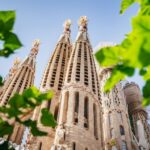
Two of the headline stops are Barcelona Cathedral and Santa Maria del Mar, both presented as finest examples of Catalan Gothic architecture.
What I like about the way the tour frames Santa Maria del Mar is that it’s not just “pretty.” You’re told it was built in an incredibly short time, highlighting medieval engineering. That detail matters because it changes how you read the building: you start thinking about organization, labor, and technique, not just style.
With a good guide, you’ll catch things you might otherwise miss—like how the spaces feel designed for real crowds and real rituals. This is the kind of stop where a guide’s humor and pacing (seen in reviews of multiple guides) can keep the “facts” from turning into a lecture.
La Rambla on foot: street energy without getting lost
After the Gothic Quarter monuments, you move toward La Rambla, the iconic boulevard known for its flower stalls, entertainers, and eateries.
La Rambla can be a tourist magnet, so the key is what you do with it. In this tour, it’s treated like a transition zone: you’ve just learned how the old city worked; now you see how Barcelona performs in public space.
If your goal is to experience the city’s mood, this segment helps. It’s not about quiet contemplation. It’s about Barcelona being Barcelona—people watching, street music, and the “walk and smell something good” vibe.
La Boqueria Market: 300 stalls, practical guidance, and smart tasting
The tour includes time at La Boqueria with emphasis on the scale: over 300 stalls with a wide range of local products.
Here’s how I’d use this stop to get value: don’t treat it like a grocery checklist. Treat it like a sensory sampler. Let the guide help you choose—many guides (including those praised in reviews like Alba and others) also give suggestions for what to try and where to go next.
Even if you don’t buy much, the market is worth it for context. You’ll see how Catalan food culture shows up in daily life: produce, seafood, cured items, sweets, and the sheer energy of people deciding what to eat next.
Practical tip: wear shoes you can stand in for a while, and keep an eye on pockets. Market crowds + pickpocket risk are a real concern in many major cities, and the reviews repeatedly praise guides for safety awareness.
El Born and the finish near Passeig del Born
You end near Passeig del Born, and the route passes through El Born. This is where you’re likely to keep exploring after the tour.
Why that matters: a walking tour like this works best if it doesn’t trap you in a loop of scheduled stops. Finishing near El Born puts you near streets where you can extend your evening with cafés, small shops, and more walking. It’s a logical “you’re oriented now, go enjoy” landing.
What’s included (and what you provide)
Included:
- An English and Spanish-speaking guide
Not included:
- Your personal expenses (food, drinks, souvenirs)
What to bring:
- Comfortable shoes
Not allowed:
- Luggage or large bags
That combination points to a tour built for moving efficiently. It’s not built for stopping to browse for 30 minutes every time you see a shop window. If you like structured time with space afterward, this is your kind of experience.
Value check: is $21 worth it for a 2.5–4 hour walk?
At $21 per person, you’re paying for something harder to replicate on your own: a guided narrative that links the Roman remains, medieval power centers, and Gothic architecture to streets you can see and walk.
If you tried to do this solo without a guide, you’d either:
- spend extra time reading plaques and hoping it all connects, or
- miss the “why does this matter” explanations that turn buildings into a story.
Here, the value comes from the guide’s ability to connect details. Reviews repeatedly praise guides for being engaging, interactive, and willing to recommend where to eat or what to do next. That’s not just entertainment—it can save you time when you’re deciding what to do after you’re done with the walk.
Who should book this tour
Book it if:
- You’re in Barcelona for a short time and want a high-meaning introduction to the Old Town.
- You care about how the city changed from Roman to medieval power centers.
- You like guided storytelling more than self-guided wandering.
- You’d enjoy a route that includes both architecture and lived-in city atmosphere (La Rambla and La Boqueria).
Skip it (or pair it with something else) if:
- You hate walking, even for a few hours.
- You want lots of time inside major interiors rather than exterior-and-area storytelling (this tour’s focus is more on walking route learning than long museum time).
Should you book this Old Town and Gothic Quarter tour?
I think you should book it if your priority is context. This isn’t just a “see the sights” route. It’s a way to understand why Barcelona looks the way it does—and to connect Roman foundations, medieval governance, and Gothic artistry into one walkable story.
If you’re the type who gets annoyed when history sounds like a list of dates, pay attention to what the reviews highlight: guides like Alba, Omid, Joris, Nilo, and Steven are repeatedly described as energetic, funny, and able to keep explanations at the right length. That style makes a difference in the Gothic Quarter, where it’s easy to feel overwhelmed.
One last decision tip: if you’re already planning to visit La Boqueria and walk La Rambla, taking this tour is a smart way to turn those “must-do” areas into something you understand, not just something you pass through.
FAQ
How long is the Barcelona Old Town and Gothic Quarter walking tour?
It runs for about 2.5 hours, with a duration listed as 2.5 to 4 hours depending on the starting time.
Where does the tour start?
The meeting point may vary depending on the option booked. One listed starting location option is the Movistar Centre.
What languages are the guides?
The live tour guide speaks English and Spanish.
How many people are in a group?
It’s a small group tour with a maximum of 15 participants.
Is there a private group option?
Yes, private group availability is offered.
What should I bring, and what’s not allowed?
Bring comfortable shoes. Luggage or large bags are not allowed.