REVIEW · BARCELONA
All about old Barcelona (tasting included)
Book on Viator →Operated by ToursforFoodies · Bookable on Viator
Old Barcelona is a living puzzle.
This tour strings together some of my favorite kinds of sights: markets, church exteriors, and public squares, all in a tight 2 hours 30 minutes loop through Ciutat Vella. You’ll hear how the built environment tells stories, and you’ll get a guided explanation right where it happens, from El Born Center for Culture and Memory toward Pastisseria Escribà.
What I like most is the way the route mixes “big-looking” places with small details you might otherwise miss. I also like that the tour includes a final sweet tasting after talking through Las Ramblas, so you end with something concrete instead of just photos. One possible drawback: a few major stops (like Santa Maria del Mar and Barcelona Cathedral) list entry as not included, so you should be ready for extra onsite costs if you want to go in.
In This Review
- Key takeaways before you go
- A 2.5-hour Old Barcelona walk that starts in El Born
- How the meeting points shape the experience
- Stop-by-stop: what each place adds to the story
- Mercat del Born: architecture you can read
- Basilica de Santa Maria del Mar: “peculiar” aesthetics in the open air
- Plaça del Rei: history from a different angle
- MUHBA Temple d’August: learning the environment around you
- Plaça de Sant Jaume: neo-Gothic details that reward close looking
- Plaça Sant Felip Neri: one of the tour’s more emotional stops
- Barcelona Cathedral: hidden qualities beyond the obvious view
- Plaça Reial: a famous street experience in a square form
- Las Ramblas: the guided explanation plus your sweet tasting
- Price and value: when $28.90 feels fair
- Group size, pacing, and what to do before you start
- Accessibility and comfort basics
- A small red flag to know about meeting points
- Who this tour suits best
- Should you book this Old Barcelona (tasting included) tour?
- FAQ
- How long is the Old Barcelona tour?
- How much does the tour cost?
- Is the tour offered in English?
- Where do I meet the guide for the tour?
- Where does the tour end?
- Is the sweet tasting included?
- Are entry tickets included for all stops?
- Does the tour run in bad weather?
- How big is the group?
- Is there free cancellation?
Key takeaways before you go
- Born-to-La Rambla route keeps walking efficient in about 2.5 hours
- Short stops with explanations help you focus instead of wandering
- Free-admission mix includes several stops marked free, plus one marked included
- A sweet tasting at the end gives the tour a memorable finish
- Max 25 people makes it easier to hear the guide on busy streets
A 2.5-hour Old Barcelona walk that starts in El Born
This is the kind of tour that fits real travel days. The pace is fast enough that you don’t burn half your afternoon in transit, but slow enough that you get explanations at each stop—Mercat del Born to Las Ramblas in one continuous story.
The meeting point anchors you in the Born area at El Born Center for Culture and Memory (Placa Comercial, 12). Then the route ultimately ends at Pastisseria Escribà on La Rambla (La Rambla, 83). That end point matters. La Rambla can feel like a blur once you’re in it, so finishing at a known pastry spot is a smart way to cap the walk with a clear “here we are” moment.
You can also read our reviews of more food & drink experiences in Barcelona



How the meeting points shape the experience
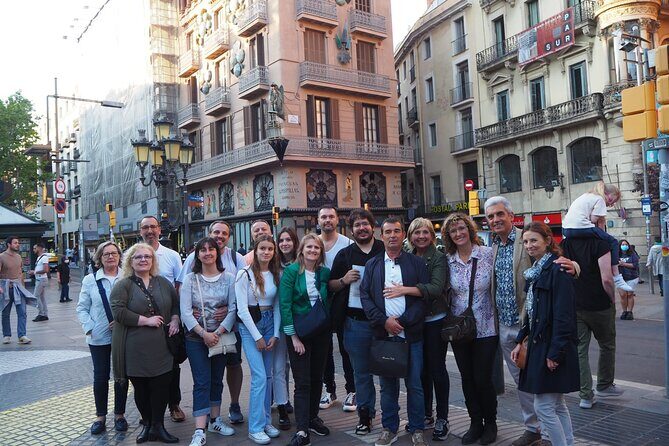
Starting at El Born Center for Culture and Memory puts you near the part of the old city that’s easiest to understand as a walkable neighborhood. You’re not hopping across town. You’re moving through the layers of Ciutat Vella in a sequence that makes sight-to-sight comparisons feel natural.
Ending at Pastisseria Escribà also helps you plan the rest of your day. If you want lunch or coffee right after, you’re already in the high-activity area of La Rambla. And since the tour includes a final tasting of a sweet, you’re not left wondering what to do with your appetite afterward.
Stop-by-stop: what each place adds to the story
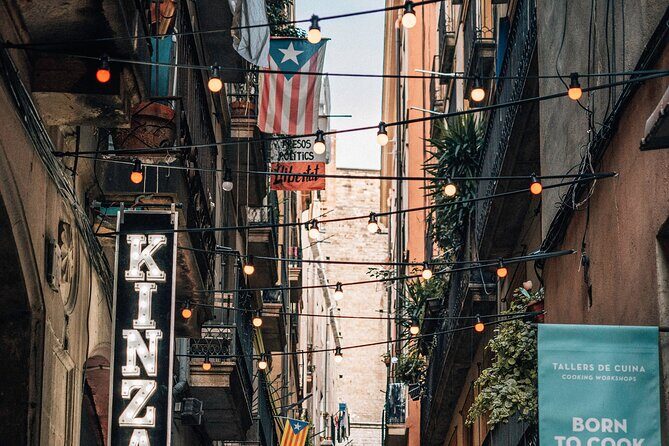
The itinerary is built from a mix of architecture, public space, and “look closer” moments. Many stops are around 3–5 minutes, so the guide’s job is to point you to the details that change how you see each location.
Mercat del Born: architecture you can read
Your first stop is Mercat del Born. You’ll spend about 5 minutes, with the admission ticket listed as free.
This is a great opening because it sets your lens: you’re not just looking at a building, you’re discovering the architect and how the structure shapes the space. Even if you’re not a “museum person,” markets are often where you get the most honest sense of city life—so starting here gives your whole walk a practical backbone.
Tip: when the guide points out design features, try to look for how light, height, and layout affect what you notice as you walk.
Basilica de Santa Maria del Mar: “peculiar” aesthetics in the open air
Next comes Basilica de Santa Maria del Mar, about 5 minutes. Admission is marked not included.
Even without paying to enter, this stop works well as a sight-reading exercise. The tour focuses on the basilica’s peculiar aesthetics and hidden details—exactly the kind of thing that improves your photo (and your memory) later.
Consideration: if you want to go inside, you may need to pay separately since entry is not included.



Plaça del Rei: history from a different angle
You’ll move to Plaça del Rei for roughly 3 minutes, also marked not included for admission.
This is a shorter stop, but it has a clear purpose: it’s about learning the story from an alternative point of view. In old European cities, that often means the guide reframes what you think you already know by pointing out how power, space, and time connect. Even in just a few minutes, this can make the public square feel less like a postcard and more like a stage.
MUHBA Temple d’August: learning the environment around you
Stop 4 is MUHBA Temple d’August for about 4 minutes, and the admission ticket is listed as free.
This stop is less about one single view and more about understanding the environment. “Add knowledge of the environment” is exactly what makes these urban archaeology sites worth your time: they turn the street into a historical map.
Tip: keep your eyes open for the way the area’s layout helps you imagine what used to be there. Even if you only see a portion, the guide can connect the dots quickly.
Plaça de Sant Jaume: neo-Gothic details that reward close looking
You’ll spend about 3 minutes at Plaça de Sant Jaume, with admission marked free.
This square is presented through its neo-Gothic aesthetics, and that’s a good cue for how to approach it. Instead of treating the square as a backdrop, look for lines, shapes, and structure details. If you like architecture but don’t want a full architecture tour, this is a nice middle ground.
Plaça Sant Felip Neri: one of the tour’s more emotional stops
Stop 6 is Plaça Sant Felip Neri, about 5 minutes, and here the admission ticket is marked included.
The focus is on being moved by the tragedy of the last century. That matters because it gives the walk a second tone: not just beauty and design, but memory—how a city holds onto difficult chapters.
Because this stop has admission included, it’s also a small “budget win” compared with places labeled not included.
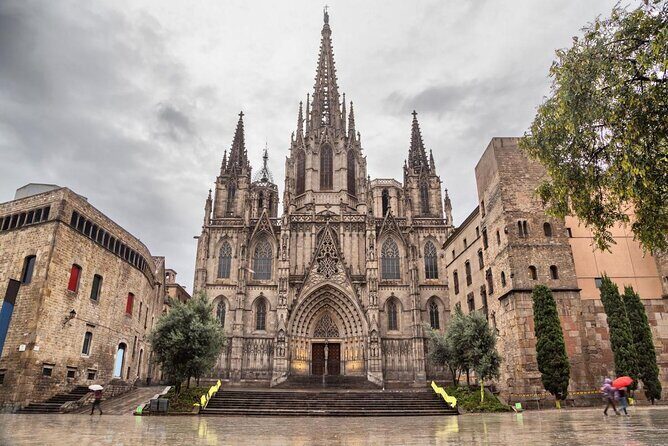
Barcelona Cathedral: hidden qualities beyond the obvious view
Next is Barcelona Cathedral, around 5 minutes, with admission marked not included.
The tour promise here is “discover hidden qualities,” which is the key phrase I’d watch for. Cathedral exteriors can be so iconic that people stop seeing them. But when a guide points out what’s subtle, you start noticing proportions, carvings, and the way structures behave visually from different angles.
Consideration: if you want to go inside, you should be prepared for extra cost since admission is not included.
Plaça Reial: a famous street experience in a square form
You then reach Plaça Reial for about 5 minutes. Admission is free.
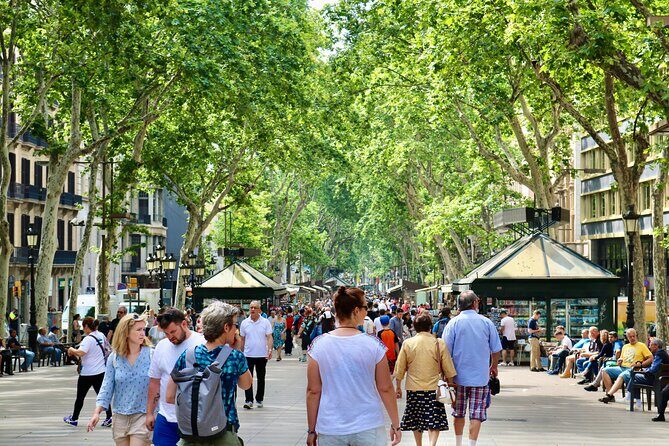
This square is tied to the most famous street in Europe: La Rambla. The tour frames Plaça Reial as a way to “know” that connection. What makes it useful is that the square gives you a rest-stop viewpoint before you hit the real La Rambla crush of sights.
If you want a quick win for sightseeing: take a few minutes here and orient yourself to what’s ahead.
Las Ramblas: the guided explanation plus your sweet tasting
The final portion is Las Ramblas with about 4 minutes of explanation, and the tasting is the ending payoff.
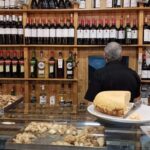
Admission is marked not included here, and the tour ends at Pastisseria Escribà with a final tasting of a sweet. That combination is smart: you get the context for the street first, then you end with something you actually get to consume.
Practical tip: plan to have water nearby after the tasting. Even if the sweet is small, La Rambla can be a long-feeling walk if you’re not used to the crowds.
Price and value: when $28.90 feels fair
At $28.90 per person for about 2 hours 30 minutes, I see good value in three things: guided routing, a structured set of stops, and the fact that a tasting is included.
Your route includes multiple stops with free admission listed (Mercat del Born, MUHBA Temple d’August, Plaça de Sant Jaume, Plaça Reial). That helps keep the experience from becoming “great tour, plus surprise entry fees everywhere.” There are also stops labeled not included (Santa Maria del Mar, Plaça del Rei, Barcelona Cathedral), so you should treat this as a walking-and-learning tour with optional paid entry at certain points, rather than an all-in ticket.
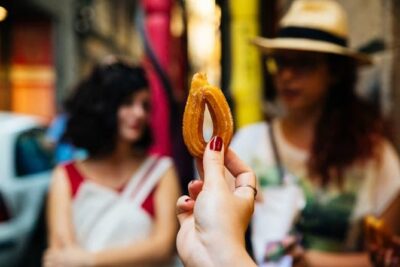
The tasting is the wildcard that often justifies the cost. It turns the ending into a small ritual you’ll remember, and it’s placed right where the street narrative hits its peak.
Group size, pacing, and what to do before you start
This tour caps at 25 travelers. That’s a meaningful limit in Barcelona’s older neighborhoods where streets can get tight. With a group of this size, you’re more likely to hear the guide’s explanations instead of losing them to the crowd.
You’ll also want to plan for the weather. This experience requires good weather. If conditions don’t work out, you’ll be offered a different date or a full refund. That’s a fair trade in a city where rain can make outdoor viewing less pleasant.
One more practical point: this is offered in English, and the booking confirmation is handled at the time you reserve. You’ll receive a mobile ticket, which is helpful if you hate juggling paper while walking.
Accessibility and comfort basics
Good news for many people: most travelers can participate, and service animals are allowed.
Also, the meeting area and the route are described as near public transportation. That matters because it makes it easier to fit the tour between museum time and dinner—especially in Ciutat Vella, where taxis and parking can be annoying.
A small red flag to know about meeting points
One caution based on a recorded incident: there’s at least one case where the group didn’t start as scheduled after a meeting-point wait, followed by an apology and a refund. That doesn’t mean it’s common, but it does mean you should take meeting time seriously.
My advice is simple: arrive a few minutes early, and have your phone ready with any contact info from your booking confirmation. If you’re running late, message first rather than just showing up hoping.
Who this tour suits best
I’d point this tour at you if you:
- want an Old Barcelona walk that feels organized and story-driven
- like architecture and public squares but don’t want a full-day commitment
- enjoy mixing sightseeing with a food moment at the end
- want an English-language experience in a small-to-medium group (max 25)
It may not be ideal if you want to spend long stretches inside major churches, because several key stops list admission as not included, and most stops are timed around a few minutes.
Should you book this Old Barcelona (tasting included) tour?
Yes—if you like guided context and a route that moves. At $28.90 and 2 hours 30 minutes, the mix of free-admission stops and a final sweet tasting at Pastisseria Escribà makes this a practical choice for your first visit to Ciutat Vella.
I’d book it with one mindset: this is a guided walk focused on what you see and why it matters, not a “pay once, go everywhere inside” ticket. If you’re okay covering a few entrance fees on the spot for places marked not included, you’ll likely leave happy—fed, oriented, and with a better sense of how Old Barcelona layers its stories.
FAQ
How long is the Old Barcelona tour?
It’s approximately 2 hours 30 minutes.
How much does the tour cost?
The price is $28.90 per person.
Is the tour offered in English?
Yes, it’s offered in English.
Where do I meet the guide for the tour?
The start is at El Born Center for Culture and Memory, Placa Comercial, 12, Ciutat Vella, Barcelona.
Where does the tour end?
The tour ends at Pastisseria Escribà, La Rambla, 83, Ciutat Vella, Barcelona.
Is the sweet tasting included?
Yes. The tour includes a final tasting of a sweet at the end.
Are entry tickets included for all stops?
No. Some stops are marked admission ticket free, some are not included, and Plaça Sant Felip Neri is marked included.
Does the tour run in bad weather?
This experience requires good weather. If it’s canceled due to poor weather, you’ll be offered a different date or a full refund.
How big is the group?
The tour has a maximum of 25 travelers.
Is there free cancellation?
Yes. You can cancel up to 24 hours in advance for a full refund.