REVIEW · BARCELONA
Barcelona: 2.5-Hour Bike or E-Bike Historical Tour
Book on GetYourGuide →Operated by City Tours on Bike-eBike-Segway · Bookable on GetYourGuide
Gaudí fans, this one makes sense fast. A 2.5-hour e-bike tour strings together the city’s most recognizable Modernism sights with just enough context to help you see the connections. I especially like the built-in sightseeing flow from the Arc de Triomf area through Gràcia to Sagrada Família, plus the fact that your guide keeps the pace comfortable.
Two things really land for me: you get standout photo stops like La Pedrera and Casa Batlló, and you’re not stuck doing stop-and-go walking between far-flung neighborhoods. One consideration: it is not suitable for people with heart problems, so check that before you book.
If you want an efficient way to cover major Gaudí landmarks without feeling rushed on foot, this is a strong pick. And if you’re doing Barcelona in a short window, it’s one of those tours that helps the city make sense quickly.
In This Review
- Key highlights that make this tour worth your time
- Why a Gaudí e-bike tour works so well in Barcelona
- Starting at Passeig de Lluís Companys and the Arc de Triomf photo stop
- Parc de la Ciutadella: fountain views and a possible young Gaudí connection
- El Born and Mercat del Born: the medieval mood before Gaudí’s big leap
- Gràcia’s Modernism: Casa Calvet, the Marieta bell, and Vila de Gràcia
- Casa Batlló and La Pedrera: how the tour turns icons into patterns
- The ride to Sagrada Família: spires, facades, and unfinished wonder
- How the pace feels: 2.5 hours, helmets, and guides who handle real life
- Price and value: what $28 buys you in real terms
- Should you book this Gaudí historical bike tour?
- FAQ
- Where do I meet for the tour?
- What’s the nearest metro stop?
- How long is the tour?
- Is it an e-bike or a regular bike?
- Is this tour okay for kids?
- Are there any health restrictions?
Key highlights that make this tour worth your time
- Arc de Triomf to Parc de la Ciutadella start: a good warm-up with a photo stop at a neo-Mudéjar landmark
- Born district stops: El Born and the Mercat del Born area set a medieval backdrop before Modernism takes over
- Gràcia and its Catalan Modernism: you’ll see Gaudí-linked buildings plus the Marieta bell on a 33-meter tower
- Multiple Gaudí building icons: including Casa Calvet, Casa Batlló, and La Pedrera
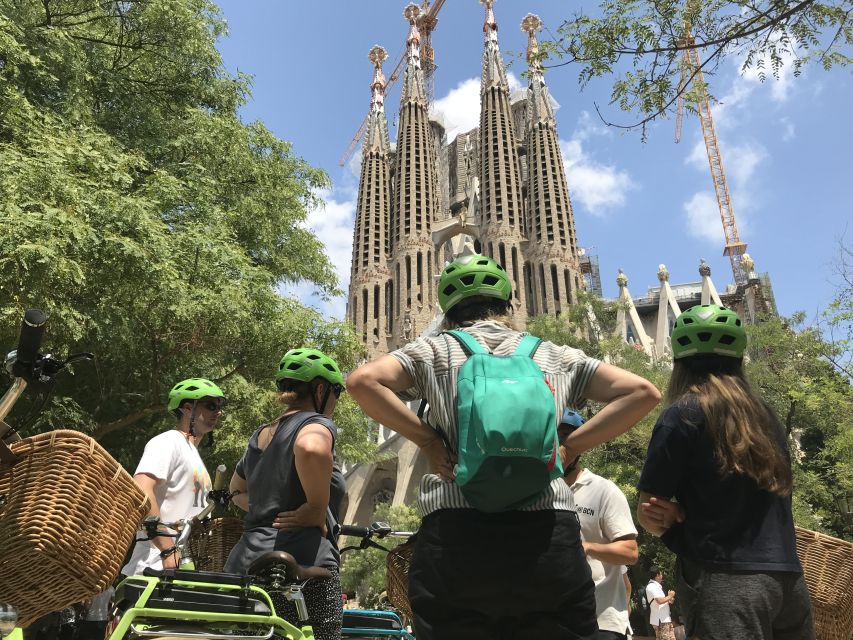
- Sagrada Família with views: the best big payoff, focused on facades and spires while it’s still under construction
- Small group feel (2 to 15): easier questions and a calmer pace than you’d expect from a mega-group bus tour
Why a Gaudí e-bike tour works so well in Barcelona
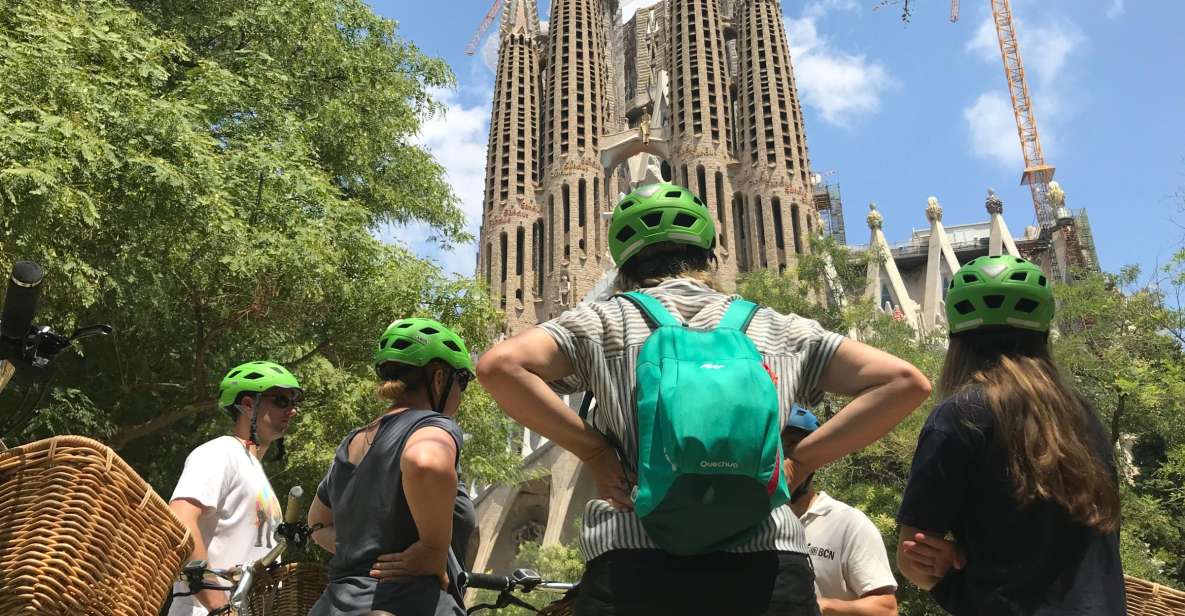
Barcelona is made for wandering, but it can also wear you out. Gaudí’s signature buildings are spread across different neighborhoods, and lining them up with taxis or long walks can eat your day. This tour solves that problem with a bike route that keeps you moving while you still get photo stops and guided explanations.
The big value here is not only seeing famous facades, but learning how the city’s styles evolved. You start with the architecture of the early days around the Arc de Triomf, then you roll into neighborhoods that feel different in tone and texture—Born first, then Gràcia, and finally the modern landmark gravity of Sagrada Família.
And yes, the e-bike helps. Even on a mostly easy route, you’re touring for 2.5 hours. Electric assist means you can focus on the buildings and the streets instead of fighting fatigue.
You can also read our reviews of more tours and experiences in Barcelona.
Starting at Passeig de Lluís Companys and the Arc de Triomf photo stop
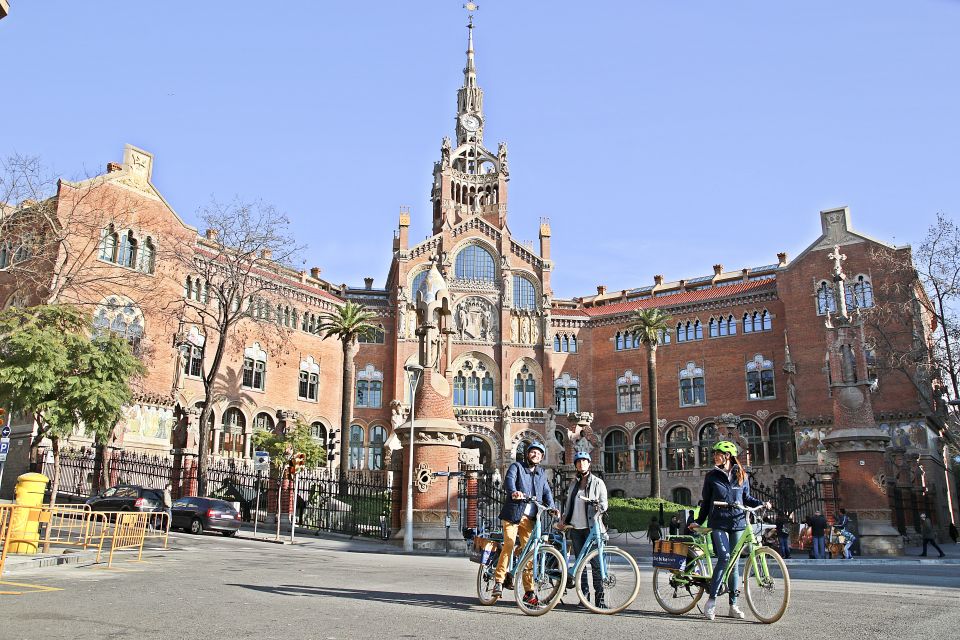
You meet at Passeig de Lluís Companys, 10. The easiest approach is the Arc de Triomf (L1) metro station, then a short walk along Passeig de Lluís Companys toward Passeig de Sant Joan; the office is on the left. It’s also a practical starting point if you’re already in that northeast grid of the city.
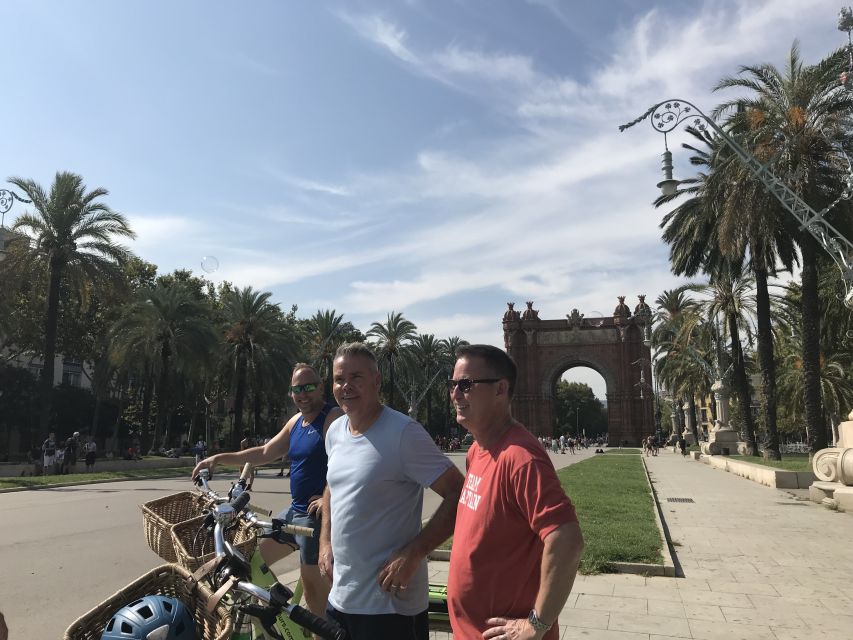
Right away, you get a key visual anchor at Arc de Triomf. The tour highlights its neo-Mudéjar style, and that matters because Gaudí is not just about one look. You’re training your eye early to notice how Catalan identity and historic influences show up in architecture.
This first stretch also tends to set the tone for the ride. With helmets on and the group rolling together, you get a sense of how the guide manages the flow through the streets—where to slow down, where to watch intersections, and how to keep everyone together without drama.
Parc de la Ciutadella: fountain views and a possible young Gaudí connection
After Arc de Triomf, the ride moves into Parc de la Ciutadella. You’ll stop for photos and a guided moment around an Italian-inspired fountain, with the tour mentioning possible contributions by a young Gaudí.
That kind of detail is exactly the point of a historical tour like this. Even when the city is stunning, it can feel like a series of separate photo ops. This stop nudges you to think of Gaudí as part of a longer creative timeline rather than a switch that flipped when he became famous.
You also get a useful transition here: a park setting that breaks up the urban pace before you head toward the more lively, commercial feel of central neighborhoods.
El Born and Mercat del Born: the medieval mood before Gaudí’s big leap
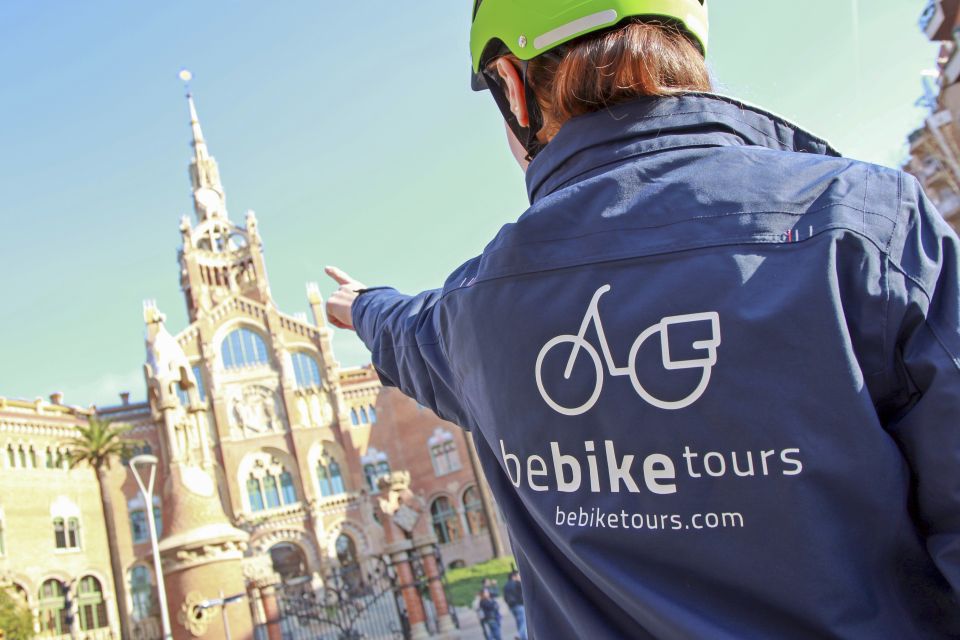
From the park, you work your way into El Born. The tour includes guided time and photo stops as you move through the neighborhood’s lanes and squares. Born is historically tied to the idea of aristocratic seaside life, and even if you don’t memorize every date, the atmosphere helps you understand why Barcelona’s architecture feels layered instead of one-style-only.
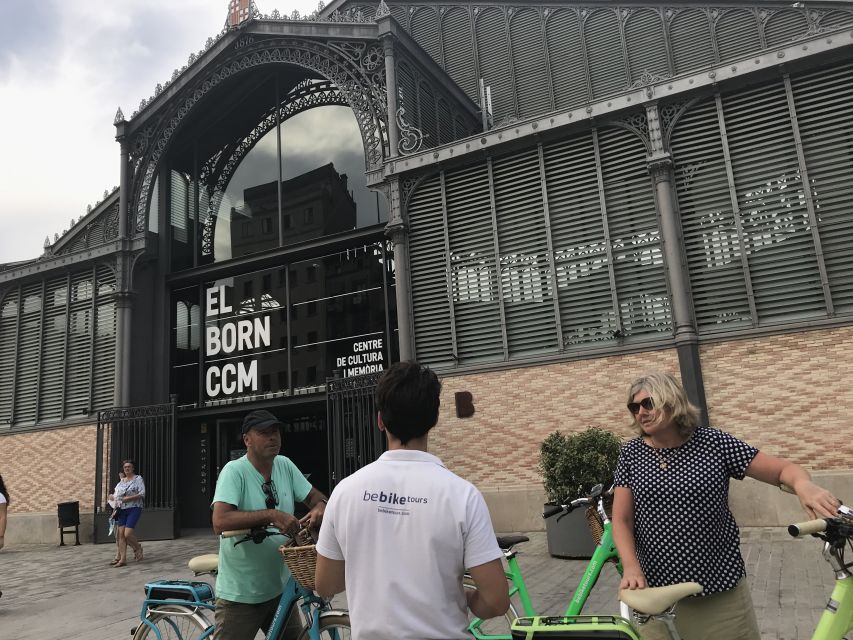
The next stop is around Mercat del Born. You’ll have time for sightseeing while the bike keeps you from losing momentum. Markets are also one of those places where you can spot day-to-day Barcelona life, which balances all the high-design architecture you’ll see soon.
Then the route continues past St. Mary of the Sea Cathedral and stops at Plaça Sant Jaume. Those pauses are brief, but they’re useful. They help you reposition the city in your head: Gaudí’s buildings aren’t floating in a vacuum. They’re in real neighborhoods with real civic and religious landmarks nearby.
Practical note: the ride through this section is more about navigation and quick context than about lingering for long interior visits. If you love architecture, that’s fine. If you want deep indoor time, you’ll treat this tour as the fast, scenic “map” day.
Gràcia’s Modernism: Casa Calvet, the Marieta bell, and Vila de Gràcia
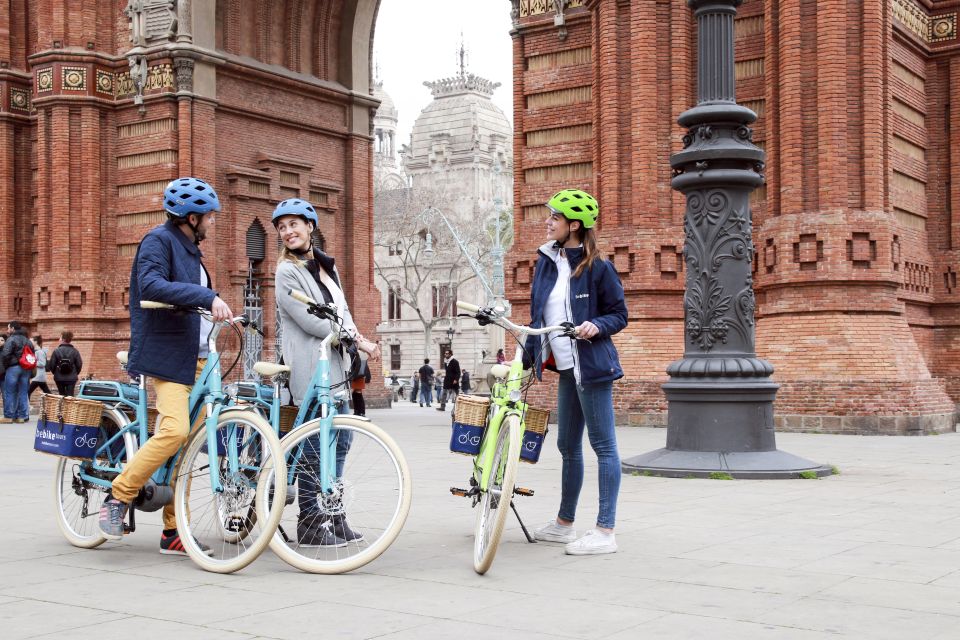
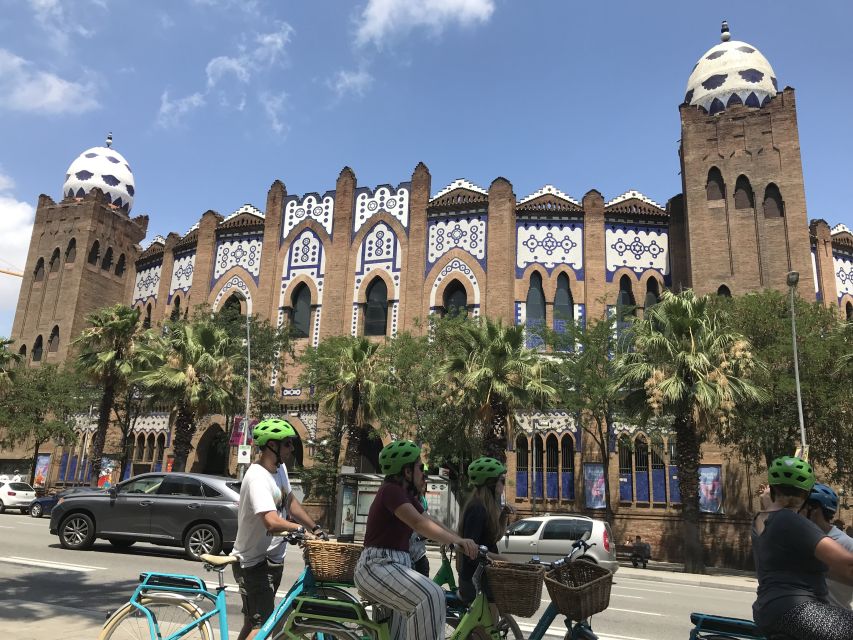
Once you reach Gràcia, the tour’s tone shifts toward Catalan Modernism. You get guided stops and photo moments tied to the neighborhood’s character, including Vila de Gràcia, described as Barcelona’s coolest suburb and its administrative and commercial center.
One highlight here is Casa Calvet, designed by Gaudí and declared a Place of Cultural Interest in 1969. That’s not just trivia. When you learn that specific designation, it helps you understand why these buildings are treated like cultural landmarks, not just pretty facades.
The tour also spotlights the neighborhood’s 33-meter tall bell tower, crowned with the famous bell called Marieta. That detail is the kind you remember later because it’s so specific. You’re not just looking at a building; you’re tracking a symbol tied to the local identity of Gràcia.
And then you get Casa Vicens mentioned as well—described as one of the early Art Nouveau buildings and the first house designed by Gaudí. Even if you’re not inside, having the “first Gaudí house” and Art Nouveau connection in your guide’s explanation gives you a sharper lens for what comes next.



Casa Batlló and La Pedrera: how the tour turns icons into patterns
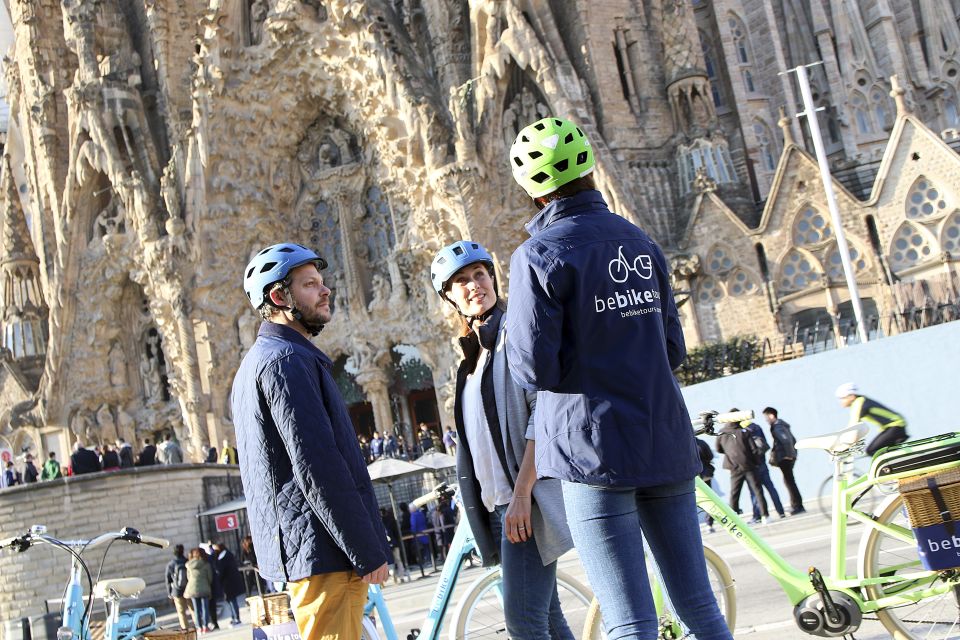
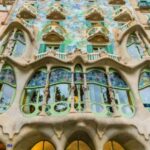
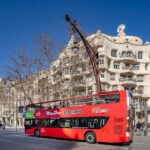
This is where the tour earns its reputation. You’ll see Casa Batlló and Casa Mila (La Pedrera) with photo stops and guided information. These are the buildings most people recognize, but on a bike tour, you see something that walking often hides: the way the structures relate to the street grid and to how people move between blocks.
What I like about this part is that the guide doesn’t treat each building like an isolated spectacle. You’re helped to notice patterns—how Gaudí’s imagination shows up in different forms across different sites. That’s why the prior stops matter: you’re building context as you go.
You’ll also get the sense of scale. From a bike, the facades read differently than they do from a distant viewpoint. You’re close enough to take in details, but moving enough to catch the building’s presence as a street feature.
And yes, these are big “tick the box” landmarks. The difference is that your guide’s talking points make it feel less like checking names and more like learning a visual language.
The ride to Sagrada Família: spires, facades, and unfinished wonder
The tour continues along Passeig de Sant Joan to Sagrada Família. This is the centerpiece payoff. The basilica is described as Gaudí’s unfinished masterpiece, under construction since 1883, and the tour focuses on the views of the spires and the facades as you arrive.
Even if you’ve seen photos before, Sagrada Família has a way of hitting you differently in person. On a bike tour, you’re arriving with momentum and context, which changes how you look at it. You’ve already seen the Modernism ideas. Now you’re seeing how far they can stretch.
The tour includes photo time, plus guided moments. You’ll also have free time there, which is a helpful cushion. You can grab photos, look from different angles around the area, and decide what you want to focus on instead of sticking with only whatever your guide points out.
Practical tip: plan to spend your free time choosing one or two facade areas to really study. Sagrada Família can overwhelm your camera roll fast.
How the pace feels: 2.5 hours, helmets, and guides who handle real life
The structure is built for comfort and efficiency. Expect a tour duration of 2.5 hours, with a local guide, helmet, insurance, and a bottle of water included. Those small “support” items matter more than they sound, especially in a city where you may not want to think about logistics mid-ride.
This is also a small-group experience: 2 to 15 people per guide. That range is big enough to feel social, but small enough that you can usually ask questions and get answers without waiting your turn forever.
One reason the reviews are so consistently positive is how the guide handles the ride. In past groups, guides including Sergio and Peter have been praised for being accommodating and adapting the tour to your interests and your biking skill level. Another group experience credited Liuba for being fun and informative, and Alex for adding dining and shopping suggestions after the tour.
There’s also reassurance in bike reliability. A past group had a bike issue and a mechanic was sent out quickly so the tour could continue, and everyone got to keep the plan.
E-bike versus regular bike: you can choose depending on the option. You might find that the route is mostly manageable, but there can be a few uphill sections. The electric assist makes those sections feel like a non-event instead of a test of stamina. And if you’re not a confident cyclist, this matters a lot.
Family note: kids under 6 can join for free when seated in a child safety seat on the parent’s bike, and children up to 20 kg and 130 cm can also take part at no cost in the child seat. Just keep in mind the tour is not suitable for children under 2.
Price and value: what $28 buys you in real terms
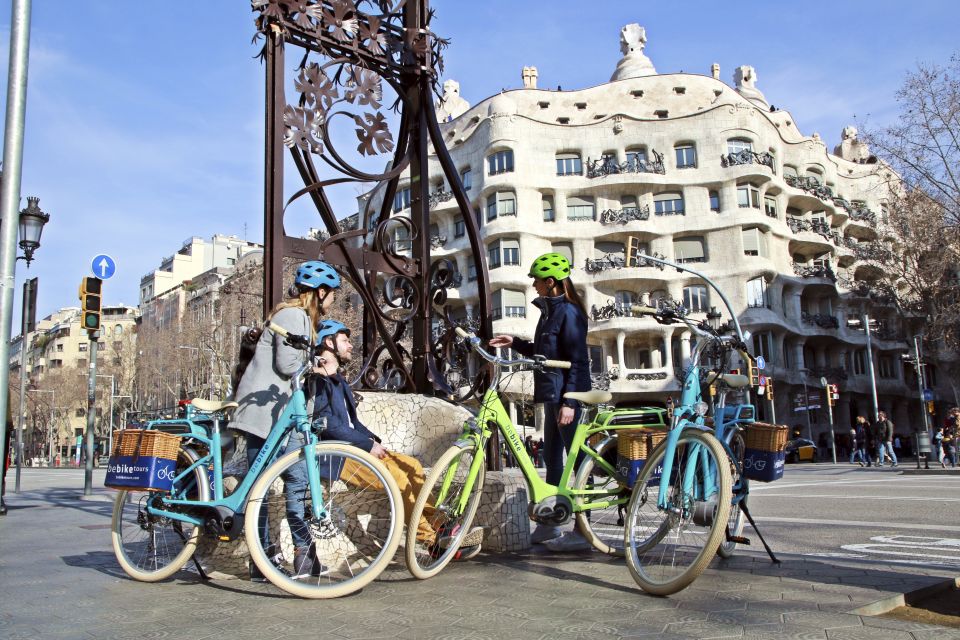
At $28 per person for 2.5 hours, you’re paying for more than movement. You’re paying for a guide who turns famous buildings into an organized route, plus the included gear and safety basics: a helmet, insurance, and water.
Here’s the value equation as I see it:
- If you tried to do this yourself, you’d spend time figuring out routes and you’d likely miss context that makes Gaudí click.
- If you rely on cabs or taxis, the cost climbs fast and you lose the street-level experience.
- With a bike, you cover distance efficiently and still get photo stops and guided notes.
Also, the tour is designed for a specific goal: seeing major Gaudí landmarks in a short window. If that’s your travel priority, this price doesn’t feel like a splurge. It feels like a tool that buys you clarity and comfort.
Should you book this Gaudí historical bike tour?
Book it if you want a fast, scenic way to connect Gaudí’s buildings across Barcelona, especially if you’re short on time or you’d rather spend your energy looking at architecture than managing walking routes.
Choose the e-bike option if you want to keep the ride easy and focus on seeing the city. This tour is also a great fit if you like guided storytelling, because the route builds context from neighborhood to neighborhood instead of tossing you from one landmark to another.
Skip it (or at least reconsider) if you have a heart condition, since the tour is explicitly not suitable for people with heart problems. Also, if your dream day is long interior visits and slow wandering without set pacing, you may prefer to pair this with more time on foot before or after.
If you want one outing that makes Gaudí feel understandable—and keeps Barcelona moving under your wheels—this is a solid choice.
FAQ
Where do I meet for the tour?
Meet your guide at the activity provider’s office on Passeig de Lluís Companys, 10.
What’s the nearest metro stop?
The nearest station is Arc de Triomf (L1, red line). Exit the metro and walk about 3 minutes along Passeig de Lluís Companys toward Passeig de Sant Joan.
How long is the tour?
The tour lasts 2.5 hours.
Is it an e-bike or a regular bike?
It depends on the option you choose: you’ll ride a regular or electric bike. Helmets and water are included either way.
Is this tour okay for kids?
Kids under 6 can join for free and ride in a child safety seat on a parent’s bike. Children up to 20 kg and 130 cm can also join at no cost in the child seat. It is not suitable for children under 2.
Are there any health restrictions?
Yes. The tour is not suitable for people with heart problems.