REVIEW · BARCELONA
Barcelona 2-Hour Gothic Walking Tour
Book on GetYourGuide →Operated by Turisme de Barcelona · Bookable on GetYourGuide
Gothic Quarter details get real fast. This 2-hour walking tour turns the Barri Gòtic into a readable map of Roman, medieval, and royal Barcelona, with an expert guide guiding you street by street.
I especially like the guided attention at Barcelona Cathedral, including the cloister, because it helps you see the building’s logic instead of just taking photos. And if you book the English tour, you get a free follow-up visit to Museu Frederic Marès, which is a great way to cap the walk with more hands-on culture.
One thing to plan for: it is still a walk. Expect steady movement for about 2 hours, so eat first and bring water.
In This Review
- Key Highlights Worth Your Time
- Starting at the Tourist Office With the i Symbol
- How the Tour Keeps the Gothic Quarter From Feeling Random
- Barcelona Cathedral and the Cloister: More Than a Photo Stop
- Santa Àgata Chapel: When the Gothic Feels Personal
- The Gothic Quarter’s Roman-to-Medieval Thread: Augustus and Barcino
- Palau Reial Major and Royal Power in the Same Streets
- Museu d’Historia de Barcelona: Context in One Guided Stop
- Plaça Sant Felip Neri: A Calm Square With Heavy History
- Carrer del Bisbe and Plaça del Rei: Where the Quarter Looks Like It Belongs in a Film
- The Tour’s Human Touch: Guides Like Olga, Jordi, Pilar, and Alex
- English Tour Bonus: Free Entry to Museu Frederic Marès
- Price and Value: Is $32 Worth It?
- Who This Tour Fits Best (and Who Might Skip It)
- Should You Book This Gothic Quarter Walking Tour?
- FAQ
- Where is the meeting point for the Barcelona Gothic Walking Tour?
- How long is the tour?
- How much does the tour cost?
- Is the tour available in English?
- What’s included in the English tour besides the walking part?
- Which guided stops are part of the experience?
- Can I cancel, and can I pay later?
Key Highlights Worth Your Time
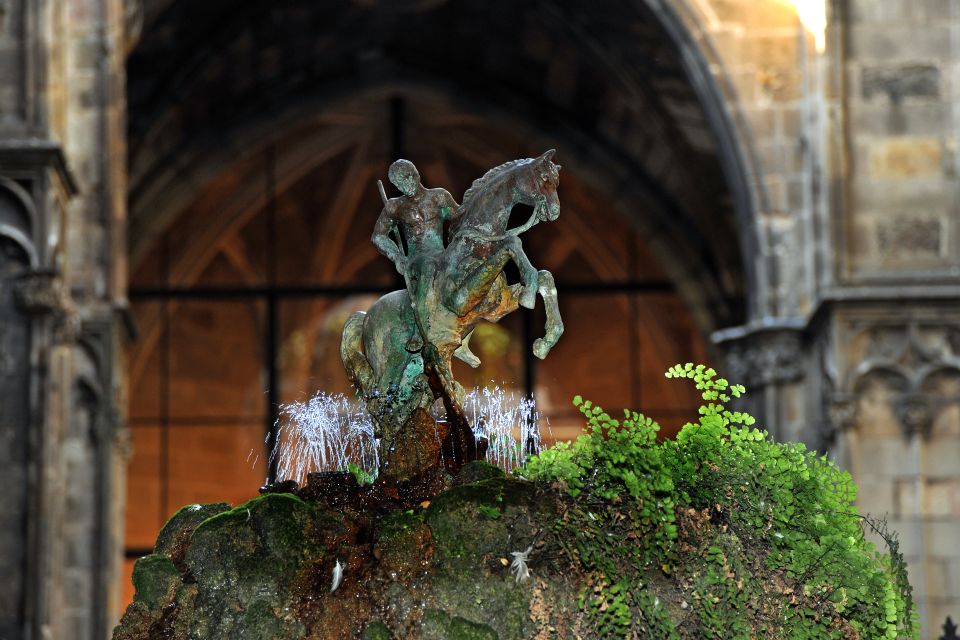
- Cathedral cloister access that puts the Gothic Quarter’s main landmark in context
- A clear Roman-to-medieval story as you pass from Barcino hints to later Gothic power
- Santa Àgata and other tucked-in sites where the city feels layered and surprising
- Plaça Sant Felip Neri’s Civil War scars and baroque atmosphere in a calmer pause
- Saló del Tinell and royal palace connections that show Barcelona’s historical gravity
- Free Museu Frederic Marès after the walk for English tours, turning history into objects you can see
Starting at the Tourist Office With the i Symbol
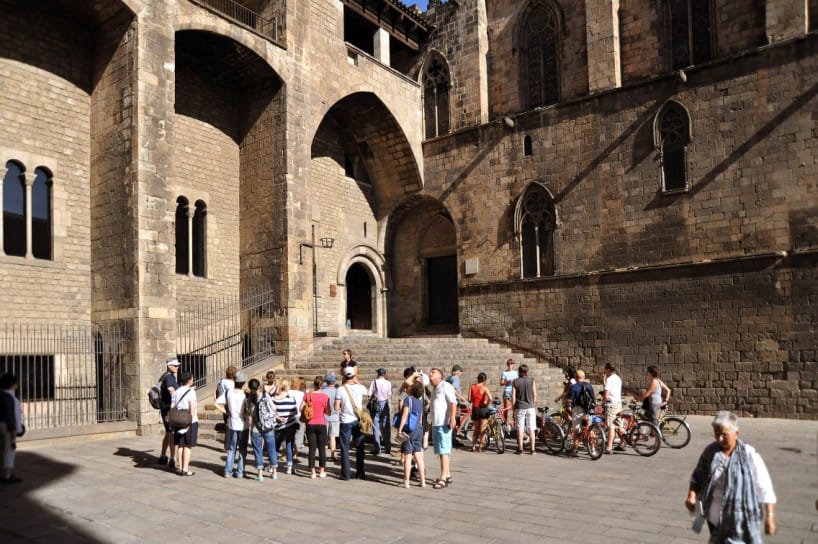
You’ll meet at the tourist information office marked with the i symbol. This is helpful because the Gothic Quarter can feel like a maze the first time you’re in it, and a clear meeting point keeps the start stress-free.
From there, your guide leads you into the Gothic Quarter where the streets are tight, the buildings are old, and the best stuff isn’t always obvious from street level. The tour is built so you don’t just wander—you’re pointed toward specific places and told what to look for before you arrive.
If you’re the type who wants to understand what you’re seeing (instead of only collecting landmarks), this setup is made for you.
You can also read our reviews of more tours and experiences in Barcelona.

How the Tour Keeps the Gothic Quarter From Feeling Random
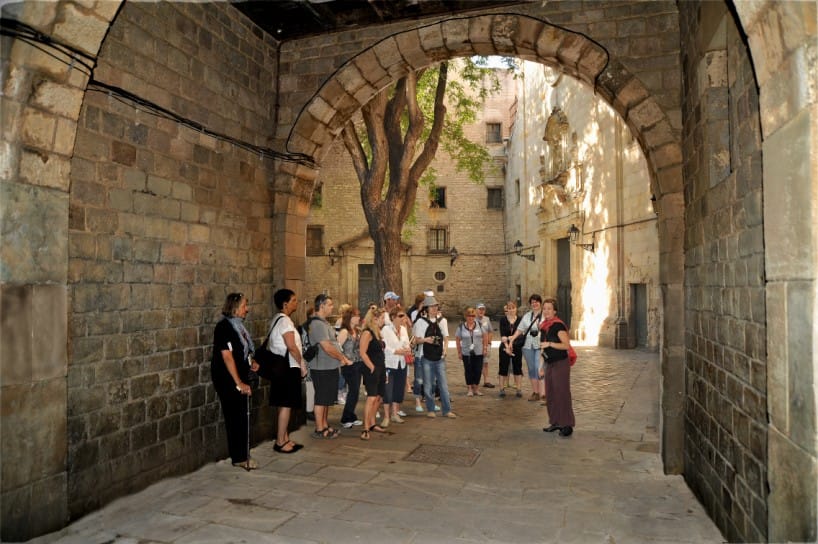
The whole point of a short guided walk is orientation, and this one is designed around that. You cover a compact area, so you’re not spending half your time moving between far-flung stops. That matters in a city like Barcelona, where walking in the center can add up fast.
You’ll also be working on two tracks at once:
- the architecture track (cathedrals, chapels, palaces, courtyards)
- the story track (who lived here, what changed, and why these streets ended up like this)
Several guides on this tour have a habit of using photos during the walk, which is smart. Facades and details can be hard to register in passing, but a quick visual reference makes the building’s shape and function click immediately.
Practical tip: plan to be there with your energy up. One guest called out the very real issue of getting hungry mid-tour; having a snack before you start makes the experience smoother.
Barcelona Cathedral and the Cloister: More Than a Photo Stop
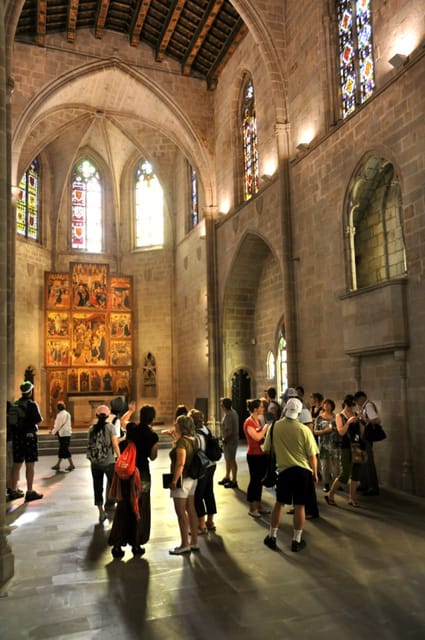
You go inside Barcelona Cathedral on a guided visit, including time with the cloister. This is the kind of stop where your eyes need help. Outside, the cathedral can look like a single big landmark. Inside the grounds and cloister spaces, it becomes a complex structure tied to how the city organized religious and community life.
Here’s what I think you’ll appreciate most: the guide doesn’t treat it like a standalone monument. You get clues that connect the Cathedral back to the neighborhood around it—how power and faith shaped the blocks you’ll walk next.
Drawback to consider: this is a “look closely” visit, not a quick pass. If you rush through buildings on your own, you may feel a little slower. If you like learning what you’re seeing, this stop is the backbone of the tour.
Santa Àgata Chapel: When the Gothic Feels Personal
Next is the Capella de Santa Àgata (Santa Àgata Chapel). The tour frames it as one of those places that can feel haunting and quietly intense, especially compared with the wider squares where crowds gather.
Why this matters on a walking tour: a chapel stop gives you a change of pace. You’re not only absorbing grand civic spaces—you’re seeing how specific religious sites shaped the everyday rhythm of the old city.
If you enjoy atmosphere—stonework, scale, and the sense of time layered into corners—this is one of the moments where the Gothic Quarter starts to feel like a lived-in place, not just a set of sights.
The Gothic Quarter’s Roman-to-Medieval Thread: Augustus and Barcino
One of the best parts of the tour is the way it links ancient Barcelona (Barcino) to what came later. You’ll hear about the Roman Temple of Augustus, described as a relic tucked away within a medieval courtyard.
That contrast is the magic trick here. Barcelona doesn’t always let you see Roman ruins in a clean, stand-alone way. Instead, Roman traces can be hidden inside later structures. Having a guide point that out turns the city from background noise into a layered timeline.
You’ll also pick up connections to medieval grandeur, including the Saló del Tinell—a major historic hall where the scale of architecture helps you understand why ruling, gathering, and ceremony mattered so much.
A quick reality check: this is a walking tour, not a deep archaeology lecture. If you want museum-level Roman detail, you’ll want to pair this with later reading or a museum visit in your own time. But as an intro, it does exactly what it should: it makes the layers visible.





Palau Reial Major and Royal Power in the Same Streets
The tour includes a stop that connects you to the Palau Reial Major, the former palace of Catalan kings. You’re also told about a famous moment tied to Ferdinand and Isabella receiving Columbus after his voyage—an example of how this city positioned itself at major historical crossroads.
This kind of royal reference can sound distant until you see the setting. On foot, you can feel the scale of influence. Streets around the palace don’t just look old; they make sense as corridors of authority and decision-making.
If you like history that connects buildings to human events, this is where the tour stops being generic. It’s not only architecture; it’s Barcelona’s political story in stone.
Museu d’Historia de Barcelona: Context in One Guided Stop
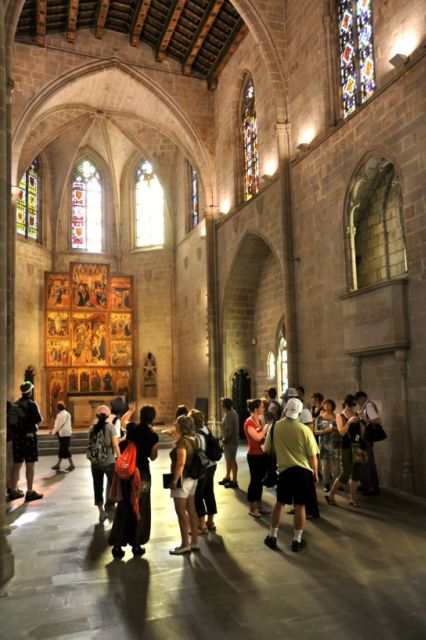
The itinerary includes a guided visit to the Museu d’Historia de Barcelona. This is useful because it gives you a breather from the street-level experience and helps organize the timeline you’ve been picking up.
What you get here is a structured way to make sense of what you’ve already seen—how the Gothic Quarter changed, and why certain shapes and spaces end up where they do.
Because your time is limited, think of this museum moment as a “sense-making” stop rather than an all-day deep dive. Afterward, when you return to outdoor squares, you’ll likely notice more details because you’ll have a clearer framework in your head.
Plaça Sant Felip Neri: A Calm Square With Heavy History
Now comes one of the most emotionally powerful moments on the route: Plaça Sant Felip Neri. You’ll visit this tranquil square, and the tour highlights its baroque church and the pockmarked walls tied to the Spanish Civil War bombings.
This is where the Gothic Quarter can surprise you. The mood shifts from grand architecture to a more intimate sense of how conflict leaves marks on everyday space. Even if you’re not a hardcore history person, the atmosphere here is strong because the evidence is literal.
The practical benefit: this stop helps you slow down. After lots of stone and detail, you get a small pause where you can absorb the meaning behind what you’re seeing.
Carrer del Bisbe and Plaça del Rei: Where the Quarter Looks Like It Belongs in a Film
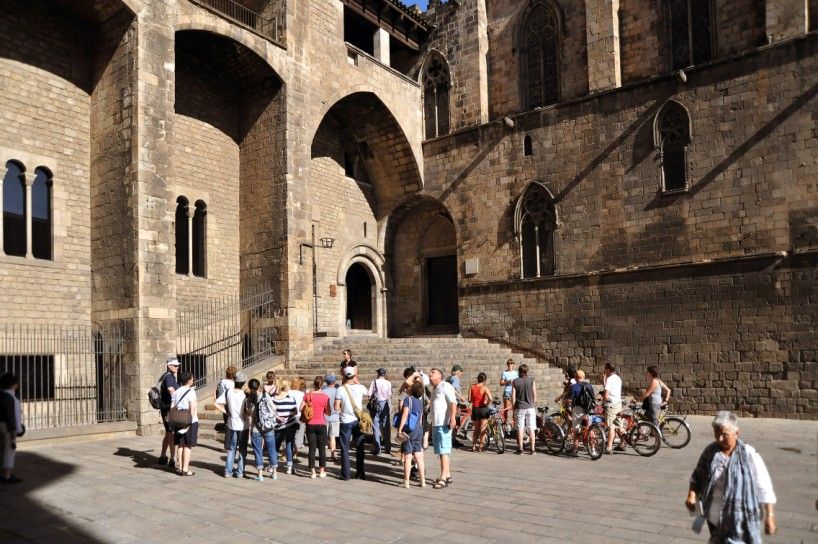
Between the bigger landmark visits, you’ll also pass through key character areas like Carrer del Bisbe, known for its Gothic facades and flower-filled balconies. You’ll also reach Plaça del Rei, described as one of the most atmospheric squares in Europe.
These moments matter because the Gothic Quarter isn’t only about big buildings. It’s the micro-atmosphere: the street bends that reveal a façade at the right angle, the balconies that soften the stone, and the way squares hold space for daily life.
If you’re doing Barcelona for the first time, these are the spots where you start to “get it.” You’ll see why the Barri Gòtic is so photogenic, and you’ll also understand why it still functions as a neighborhood rather than a theme park.
Tip: bring your camera, but also keep your eyes up. The best views are often what you catch while turning a corner, not what you frame from one perfect spot.
The Tour’s Human Touch: Guides Like Olga, Jordi, Pilar, and Alex
What really lifts this tour is the guide factor. Many people mention guides such as Olga Escribano, Jordi/Jordy, Pilar, Alex, and others by name, and the common thread is clear: they connect facts to the place you’re standing in.
Some guests also talked about how guides could answer questions and provide follow-up suggestions once the walk ends. That’s a real advantage, because it helps you keep exploring without getting stuck in decision fatigue.
If you’re lucky enough to have a guide who enjoys story details, you’ll leave with a stronger sense of Barcelona’s identity—Catalan culture, city politics, and the layers of time running through the streets.
English Tour Bonus: Free Entry to Museu Frederic Marès
If you’re on the English version, the tour includes free admission to Museu Frederic Marès after the walking portion. This matters for value and for variety.
The museum is described as being housed in a medieval palace, with collections that range from sculptures and antique curiosities to personal artifacts collected by artist Frederic Marès. You’ll also see categories that include medieval religious art and even 19th-century everyday objects—so it’s not only sacred art and royalty.
Why this combo works: the Gothic Quarter walk gives you context in public space. Then the museum gives you context in objects and rooms. It turns “history” from a concept into things you can look at closely.
Price and Value: Is $32 Worth It?
At $32 per person for a 2-hour guided experience, the key question is what you get that you can’t easily get on your own.
You’re paying for:
- structured route planning through a dense neighborhood
- guided visits at major stops like Barcelona Cathedral and the Santa Àgata Chapel
- a guided experience at the Museu d’Historia de Barcelona
- and for English tours, free entry to Museu Frederic Marès
That last point is the biggest value driver if you’re on the English tour. A museum ticket alone can change whether a tour feels like a bargain or not. In this case, you’re stacking a guided walk plus an extra museum visit without extra cost.
Also, the high rating and large number of reviews suggest this isn’t a random “walk and point” situation. You’re set up to notice details and connect them into a story.
Who This Tour Fits Best (and Who Might Skip It)
This tour is a strong match if:
- you like learning what you’re looking at, not just where it is
- you want a first-day orientation in the Gothic Quarter
- you enjoy architecture and how it connects to real events
- you’re an English speaker who wants the Museu Frederic Marès bonus
You might consider skipping it if:
- you hate guided groups and would rather wander freely for hours
- you only want a short list of must-see landmarks with no explanation
- you have trouble with sustained walking, since the experience is paced as a 2-hour route through mostly pedestrian streets
One good sign: at least one guest noted the guide was helpful for a mobility concern, suggesting the guide can respond to the group’s needs. Still, it’s wise to be realistic about cobblestones and time on your feet.
Should You Book This Gothic Quarter Walking Tour?
I’d book it if you want the Gothic Quarter to make sense quickly. The Cathedral cloister stop, the Santa Àgata visit, and the Roman-to-medieval connections do the heavy lifting. Then the English-tour bonus at Museu Frederic Marès turns the whole experience from “sights” into “understanding.”
If you’re in Barcelona for only a short time, this is exactly the kind of guided start that helps the rest of your trip feel easier and more rewarding.
FAQ
Where is the meeting point for the Barcelona Gothic Walking Tour?
You meet at the tourist information office. Look for the i symbol.
How long is the tour?
The tour lasts 2 hours.
How much does the tour cost?
It costs $32 per person.
Is the tour available in English?
Yes. The tour is an English tour.
What’s included in the English tour besides the walking part?
The English tour includes free admission to the Museu Frederic Marès after the walking tour.
Which guided stops are part of the experience?
The tour includes guided visits including Barcelona Cathedral (with the cloister), the Chapel of Santa Àgata, Museu d’Historia de Barcelona, and Plaça Sant Felip Neri.
Can I cancel, and can I pay later?
Yes. You can cancel up to 24 hours in advance for a full refund. You can also reserve now and pay later.