REVIEW · BARCELONA
Jewish tour by Jewish Guide in Barcelona
Book on Viator →Operated by The best of Barcelona · Bookable on Viator
Jewish Barcelona has layers. This private Jewish-guided walk connects the city’s old Jewish streets to major sites tied to synagogue life, royal power, and persecution. It’s priced as a guide-led experience, not a long museum day, so you get context fast.
I love that the route is tight and focused: you start at Placa de Sant Jaume and end back there after hitting the Gothic Quarter and key historical markers. I also like the guide factor—names like Adi and On Tal show up in praise for humor, clear explanations, and answering questions without rushing you.
One thing to plan for: entrance fees aren’t included. The Major Synagogue museum needs an extra ticket, and there’s also a small €5 donation for the synagogue.
In This Review
- Key highlights you’ll care about
- A private Jewish guide makes Barcelona make sense
- Starting at Placa de Sant Jaume: where the city’s center meets the old quarter
- Major Synagogue stop: what the museum adds (and what costs extra)
- The Gothic Quarter and El Call: reading the city’s oldest Jewish street network
- Placa del Rei: where the Nachmanides disputation happened
- Muralla Romana: the Roman wall still shapes what you see
- Museu Frederic Mares and Inquisition-era Barcelona
- How pacing works in a 2-hour private route
- Price: what you’re paying for at $70
- Practical tips to make the most of it
- Should you book this Jewish Barcelona tour?
- FAQ
- How long is the Jewish history tour in Barcelona?
- Where does the tour start and where does it end?
- Is the tour private?
- What language is the tour offered in?
- How much does it cost per person?
- Are entrance fees included?
- Are service animals allowed?
- Can I cancel for a full refund?
- Do I get a ticket on my phone?
Key highlights you’ll care about
- A private tour means your group gets undivided attention and time for questions
- Jewish-guide storytelling adds human context, not just dates and plaques
- Stop-by-stop walking route across the Gothic Quarter’s historic core
- Synagogue Museum stop with an extra admission fee (don’t get surprised)
- Nachmanides disputation site area at Placa del Rei links Jewish and city power
- Roman wall + Inquisition-era location show how one neighborhood shifted over centuries
A private Jewish guide makes Barcelona make sense
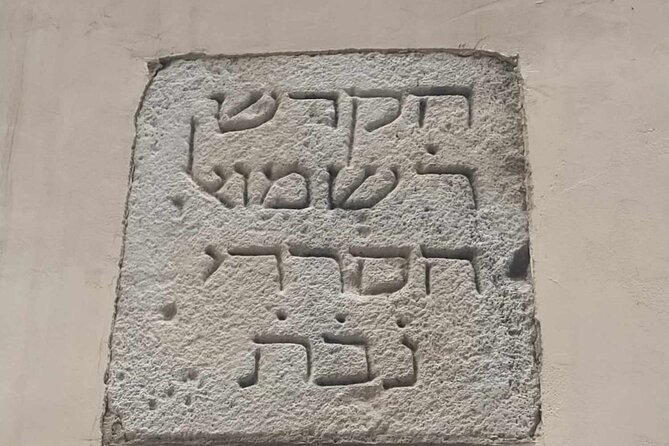
Barcelona’s Gothic Quarter can feel like a maze of stone streets. What changes everything is having a guide who can explain the “why” behind what you’re seeing—especially when you’re tracing Jewish life, not just generic medieval sights.
This tour keeps things practical. It runs about 2 hours, and the format is designed for steady pacing: short stops where you’re told what matters, what to notice, and what to look for in the surrounding buildings. Since it’s private, the route doesn’t get swallowed by a big group shuffling at the same speed as everyone else.
English service is offered, and you’ll get a mobile ticket. Start times are flexible too, which helps if you’re juggling church-hours, meal plans, or a busy sightseeing schedule. And if you like planning ahead, this is commonly booked around 53 days in advance on average—so don’t leave it to the last minute.
You can also read our reviews of more tours and experiences in Barcelona.

Starting at Placa de Sant Jaume: where the city’s center meets the old quarter
You meet at Starbucks, Pl. de Sant Jaume 3 in Ciutat Vella, and the walk begins right at the square. Placa de Sant Jaume is a sharp starting point because it’s all official Barcelona—while just beyond it lies the historic Jewish quarter area.
This first segment matters because it sets the map. You’re not just heading into streets at random. You’re moving from the city’s modern civic identity toward the older neighborhood fabric, with clear wayfinding and context. You’ll also pass or reference the Catalan Parliament and City Hall, which helps you understand how power and community sit side by side in the same city.
If you’re the type who likes to know where you are and why it matters, this start does that job quickly. It also gets you oriented for the rest of the walk, so the next stops don’t feel disconnected.
Major Synagogue stop: what the museum adds (and what costs extra)
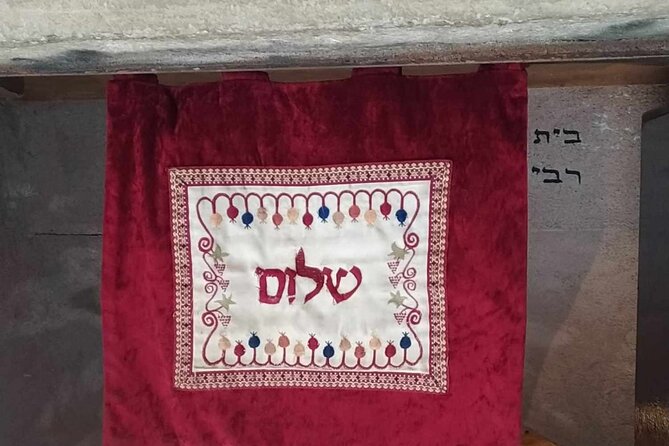
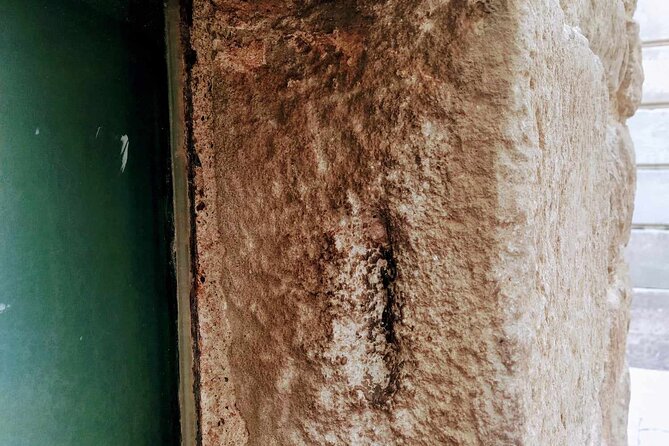
Next comes the Major Synagogue, with a visit to the synagogue museum. The museum is described as one of the oldest synagogues in the world, and even if you only spend about 20 minutes here, the point is the continuity—Jewish worship, community life, and identity left visible traces.
This is the segment where you’ll want to budget for reality. The admission ticket is not included, and you’ll also see the note about a €5 donation for the synagogue. So if you’re trying to keep your trip costs tight, factor that in when you’re deciding whether $70 feels worth it for you.
The upside is that the museum stop anchors the whole route. Instead of treating the Gothic Quarter as a set of “interesting locations,” you’re placing it next to a place of Jewish religious life. That context changes how you read the rest of the streets.
The Gothic Quarter and El Call: reading the city’s oldest Jewish street network
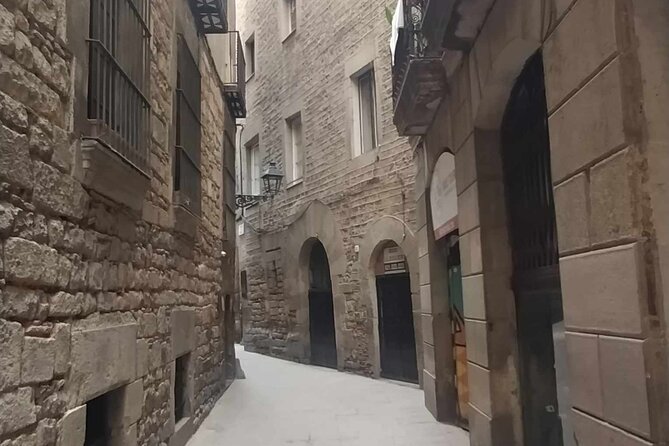
Then you step into the Gothic Quarter, described as the city’s oldest part—where the historic Jewish quarter called El Call was located. This isn’t a “stand still and listen” stop. It’s more about learning how to notice what’s around you: the street structure, the feel of the block, and the way centuries of changes layer over older spaces.
El Call is powerful for one main reason: it helps you understand that Jewish life wasn’t an abstract concept. It was a lived neighborhood with everyday movement—work, worship, learning, and family life—shaped by the city itself.
In guides like Adi and others mentioned in praise, the storytelling tends to include specific clues you might not catch on your own. Some guides have a knack for pointing out small remnants of past Jewish life in places that look purely like shops or regular buildings today. That’s exactly the kind of detail that makes a short walking tour feel worth the money: you leave seeing patterns, not just landmarks.
Placa del Rei: where the Nachmanides disputation happened
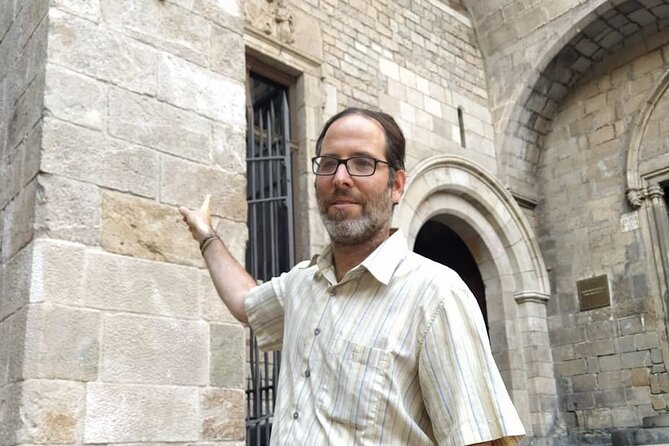
At Placa del Rei, you’re in a different kind of historical spotlight. This is tied to the oldest kings palace, and it’s where the Nachmanides disputation took place.
This stop gives you a crucial bridge between Jewish history and the broader political story of Barcelona. It’s not only about where people lived. It’s about how Jewish ideas collided with authority—how debate, power, and religion shaped what happened next for the community.
A tour like this is often best when it doesn’t skip the uncomfortable parts. The disputation reference is one of those moments that makes the story feel real. You’re not only looking at heritage; you’re seeing where heritage meets pressure and scrutiny.




Muralla Romana: the Roman wall still shapes what you see
Next is Muralla Romana, the original Roman wall of Barcelona. The practical value here is visual. When you can connect the city’s earliest boundaries to later neighborhoods, everything clicks.
Why does this matter for Jewish history? Because neighborhoods don’t exist in a vacuum. The old Roman structure helped define the shape of the city for generations, and later communities—Jewish residents included—lived inside a physical framework that had already been in place for centuries.
Even with only 20 minutes, this is a smart stop. It helps you understand why the Gothic Quarter feels tight and layered. Instead of thinking of it as random medieval sprawl, you can picture the older skeleton beneath it.
Museu Frederic Mares and Inquisition-era Barcelona
The final stop is Museu Frederic Mares, identified here as the historical location of the Spanish Inquisition headquarters in Barcelona. That shift—from synagogue life and neighborhood streets to Inquisition-era power—is not subtle. It’s the emotional turning point of the route.
This part is powerful because it shows the consequences of history. You’re looking at the same kind of old-city fabric—stone, courtyards, walls—yet the meaning changes. The neighborhood that once held Jewish life also became part of a darker chapter tied to persecution and control.
Guides who tell the story with balance tend to do two things well here. They respect the seriousness of what happened, and they still connect it to what remained: community memory, traces in the city, and the way Barcelona’s layers are readable if you know what to look for.
How pacing works in a 2-hour private route
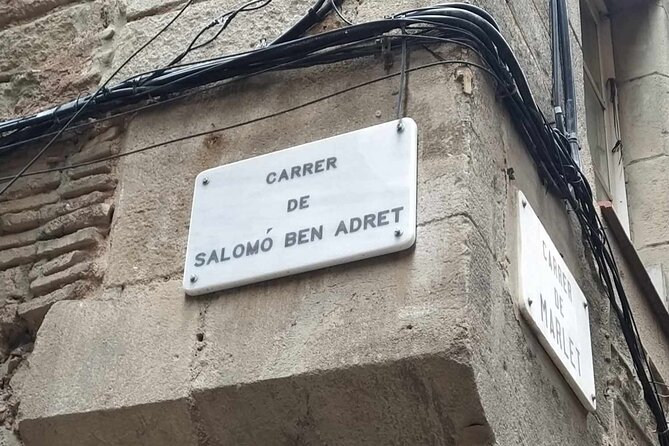
The tour is set up with about 20 minutes per stop, across six stops, for roughly 2 hours total. That structure is a good match for most people who want a meaningful route without spending half a day in transit and waiting.
In the praise for guides, one theme comes up again and again: good pacing and being patient with questions. If you like interaction—asking why something happened or what a place means—this format tends to work. It also helps if you’re traveling with mixed interests, because the guide can connect Jewish history to wider Barcelona history as you go.
One more practical note: the tour is private, and that makes it easier to keep your own pace. One review specifically mentions a guide adjusting to someone’s needs and offering a place to sit when necessary, which is a reassuring signal that the experience isn’t rigid.
Price: what you’re paying for at $70
At $70 per person for a private professional guide, you’re paying mainly for the human context. The guide is included, and you get English service plus a mobile ticket. You’re also getting a route that strings together major points across centuries, instead of leaving you to piece the story together on your own.
The cost has one caveat: entrance fees are not included. The Major Synagogue museum needs a separate ticket, and the synagogue donation mentioned is €5. So the real value depends on your comfort with adding a small extra amount once you’re there.
Still, if you want the fastest way to understand what El Call, the Gothic Quarter, and the synagogue context mean in real-world terms, this price structure often lands as fair. You’re not paying for a long multi-day museum marathon; you’re paying for guided interpretation of several key sites in a short window.
Practical tips to make the most of it
Here are the small things that can turn a good tour into a great one:
- Bring a fully charged phone for the mobile ticket, and keep it handy near the start.
- Dress for walking. The route is about two hours, with multiple stops in a historic core that can be uneven.
- If you care about details, ask early. The tour is short, and questions often lead to the best explanations.
- If cost matters, mentally plan for the Major Synagogue museum admission plus the €5 donation.
- Use the first stop for orientation. Once you get the map of Placa de Sant Jaume to El Call to the later power sites, the rest reads clearer.
Should you book this Jewish Barcelona tour?
If you want a focused introduction to Jewish history and heritage in Barcelona, and you like learning from a guide who can connect places to people, this is an easy yes. The private format is a big deal here: it turns a short route into an actual conversation, with room for questions and story, not just facts.
I’d skip it only if you’re mainly looking for a long museum day where you can wander independently for a couple hours inside exhibits. This tour is built to move. It’s about the meaning of places—starting at Placa de Sant Jaume, stepping into the Jewish quarter area, pausing at the Major Synagogue museum, and ending with the Roman wall and Inquisition-era site.
If that sounds like your style, and you’re okay budgeting extra for synagogue-related admission, booking now is a solid move—especially since it’s commonly reserved well in advance.
FAQ
How long is the Jewish history tour in Barcelona?
It runs for about 2 hours.
Where does the tour start and where does it end?
It starts at Starbucks, Pl. de Sant Jaume, 3, Ciutat Vella, 08002 Barcelona and ends back at the same meeting point.
Is the tour private?
Yes. It’s a private tour/activity, so only your group participates.
What language is the tour offered in?
The tour is offered in English.
How much does it cost per person?
The price is $70.00 per person.
Are entrance fees included?
No. Entrances fees are not included, including admission for the Major Synagogue museum. The synagogue donation noted is €5.
Are service animals allowed?
Yes. Service animals are allowed.
Can I cancel for a full refund?
Yes, you can cancel for a full refund if you cancel at least 24 hours before the experience starts.
Do I get a ticket on my phone?
Yes. You’ll receive a mobile ticket. Confirmation is received at the time of booking.