REVIEW · BARCELONA
Barcelona: Cathedrals and Squares Walking Tour
Book on GetYourGuide →Operated by Tipsy Tours · Bookable on GetYourGuide
Barcelona’s old streets still talk.
This 2,000-year walk through the Gothic Quarter is built for people who want stories tied to real places, not just checklists. I love the way the guide connects Barcino the Roman city to Barcelona’s later layers, including the Spanish Inquisition era and today’s Catalan quirks. One possible drawback: you get the sights and guided commentary, but entry to cathedrals and basilicas isn’t included, so don’t plan on going inside for long.
You’ll start right where the name Barcino becomes visible, then move through squares and landmark corners where history shows up in architecture and street layout. My favorite part is how the tour keeps your attention on what’s in front of you, with short stops and quick “what to notice” moments. The other upside is that the guide energy can genuinely make the mediaeval setting feel close. If you’re hoping for a museum-style, slow paced experience, you might find it a bit fast at times, since it’s designed as an efficient walk.
If you want Barcelona’s center explained clearly in a couple of hours, this is a strong option. Guides like Sara are specifically praised for being entertaining and funny, and that matters because it turns history into a story you can remember. Still, plan for time on foot and bring comfortable shoes, since this is a street walk with regular standing and walking.
In This Review
- Key things you’ll notice on this Barcelona cathedrals-and-squares walk
- Plaça Nova 40 and the Barcino sculpture: setting the timeline fast
- Els Quatre Gats: a cultural stop that explains Barcelona beyond churches
- The Kiss of Freedom: a small name with big symbolic weight
- Barcelona Cathedral zone: what you’ll learn even without entry
- La Casa de l’Ardiaca: why details matter in medieval Barcelona
- Bishop’s Bridge: a name you’ll understand after the story
- Plaça Sant Felip Neri: a pause in the medieval feel
- The tour’s “dark past” theme and Catalan quirks that make it memorable
- How to pace your 2-hour walk, plus what to bring
- Price and what you’re getting for $22 in Barcelona
- Should you book this Barcelona cathedral-and-squares tour?
- FAQ
- Where does the tour start?
- How long is the walking tour?
- Is entry into the cathedral included?
- What language is the tour in?
- What should I bring?
- Is the tour refundable if plans change?
- Can I book without paying right away?
Key things you’ll notice on this Barcelona cathedrals-and-squares walk
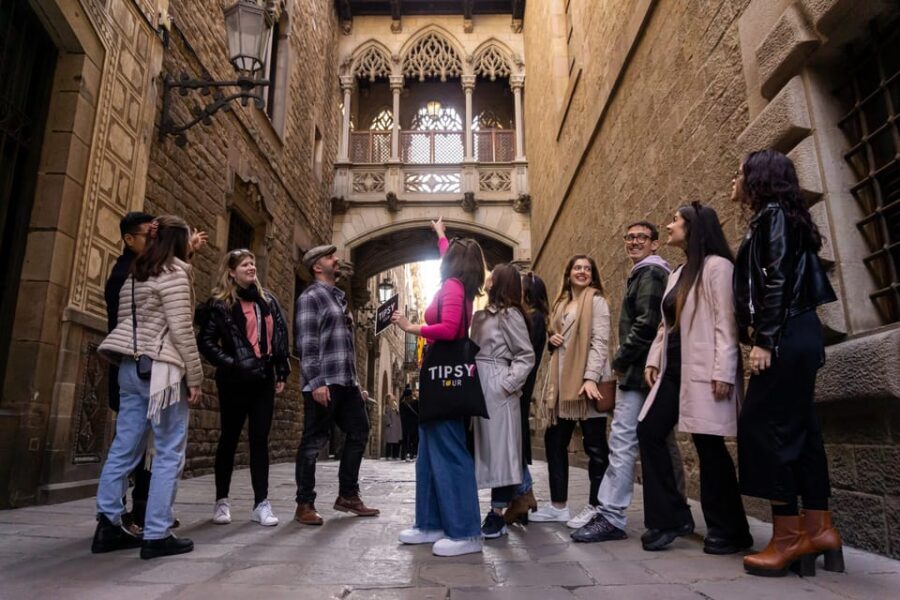
- Plaça Nova 40 start point: meet by the Barcino sculpture with the Carpe Diem Tours sign for easy orientation.
- A Roman-to-medieval storyline: the walk links Barcino’s original layout to later Barcelona growth.
- Short guided stops: think about roughly 10 minutes per stop, so you get variety without long waits.
- Els Quatre Gats: you’ll get context for a place with cultural weight, not just a pretty name.
- Cathedral area viewing: you learn about major religious sites even without cathedral interior entry.
- Guide-led storytelling: humor and local perspective are a big part of why the tour feels worth it.
Plaça Nova 40 and the Barcino sculpture: setting the timeline fast
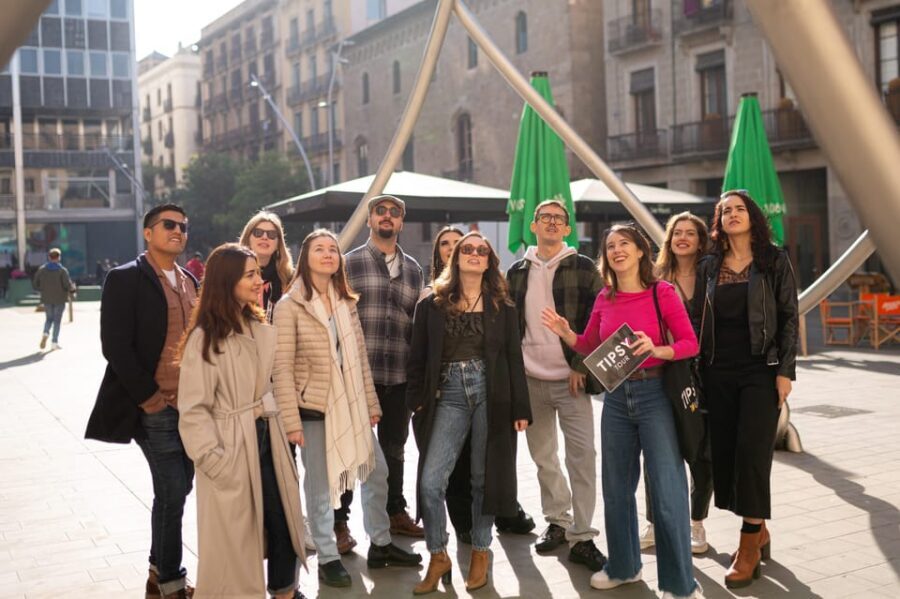
The tour begins at Plaça Nova 40, right in front of the Barcino sculpture with the big letters “Barcino.” The meeting point is practical: you can find the yellow Carpe Diem Tours sign and a guide holding it, which cuts down on the usual morning scrambling.
From the first minutes, you’re not just looking at Gothic architecture. You’re being oriented to how Barcelona’s city center evolved. The guide frames this area as a layered site, starting with Roman Barcino and moving forward into the medieval city you’ll be walking through.
Why I like this start: it gives you mental map bones. Before you get lost in pretty stone and narrow streets, you understand what you’re seeing and why it sits where it does. The tradeoff is that this kind of “big picture early” setup works best if you’re paying attention at the start and not drifting.
You can also read our reviews of more walking tours in Barcelona



Els Quatre Gats: a cultural stop that explains Barcelona beyond churches
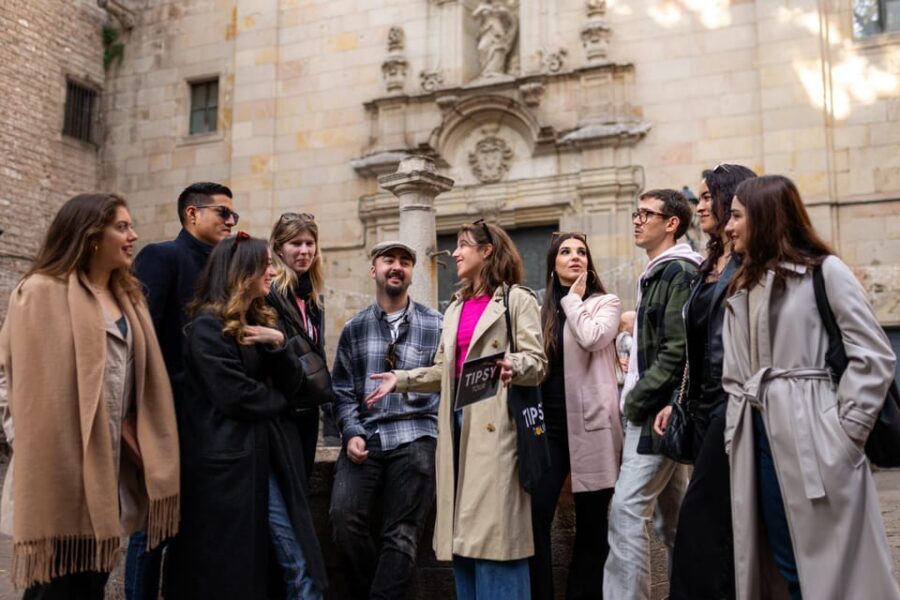
One of the early stops is Els Quatre Gats, which is often discussed as more than a building you walk past. Here, the guide uses it as part of the city’s broader story, connecting the Gothic Quarter’s medieval streets to later cultural life.
Even if you’re not an art-obsessed traveler, this stop helps you balance the religious-heavy feeling you might get in Barcelona’s center. You’ll hear what makes the place significant and how it fits into Barcelona’s identity over time.
What to watch for: the goal isn’t to stare at one wall for ten minutes. It’s to pick up the “why this mattered” thread, so when you move on, the city feels connected rather than random.
The Kiss of Freedom: a small name with big symbolic weight
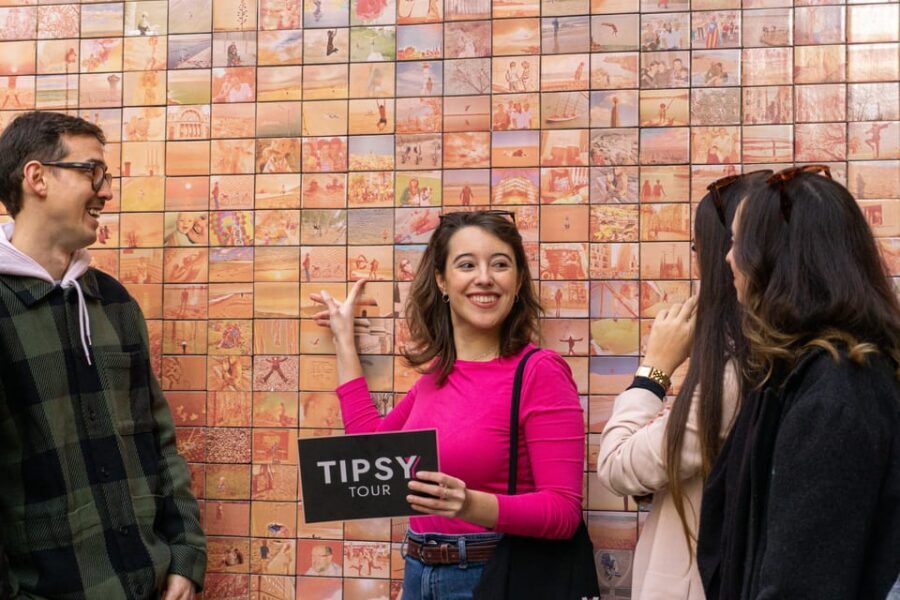
Next comes The Kiss of Freedom, another short guided moment that’s easy to miss if you’re only focused on famous landmarks. This is one of those stops where the story behind the name is the point.
You’ll get context that ties the idea of freedom to Barcelona’s historical and cultural narrative. Since the tour already sets up multiple eras, this stop works like a bridge, showing how modern identity can grow from older layers.
Possible drawback: if you prefer detailed physical exploration over story-driven stops, you may want a little more time here. But as a 2-hour walking format, it’s designed to keep momentum.
Barcelona Cathedral zone: what you’ll learn even without entry

You’ll then reach Barcelona Cathedral, a must-see for most first-time visitors. Here’s the key practical point: the tour does not include entry into cathedrals and basilicas, so the experience is about learning what you’re seeing from the outside and nearby areas.
That said, you’re still not just getting a quick photo moment. The guide explains the site’s importance and helps you recognize how religious architecture and civic life have shaped this neighborhood.
One thing I think this setup does well: it’s time efficient. If you want to spend your money on other experiences, skipping interior tickets can make sense. But if you’re the type who always wants to go inside for the atmosphere and details, you’ll need to plan a separate visit later.
La Casa de l’Ardiaca: why details matter in medieval Barcelona
Stop after the cathedral zone is La Casa de l’Ardiaca, a building that pulls attention because it feels like it belongs to the medieval world around it. Even on a tight schedule, the guide helps you notice what makes the building important and how it connects to the wider setting.
This is the kind of stop that rewards you for looking up. The tour encourages attention to how the area’s history is carried in stone and design, not just in a single dramatic monument.
A small consideration: if you’re expecting a full guided building tour, remember you’re not entering cathedrals or basilicas as part of this experience. For other indoor access, you’d need separate plans.





Bishop’s Bridge: a name you’ll understand after the story
Then you reach Bishop’s Bridge, which is exactly the sort of place that sounds ordinary until someone explains why it has a name and a place in the neighborhood’s story. This stop fits the tour’s overall pattern: short, guided, and designed to make a specific corner of the Gothic Quarter click in your mind.
You’ll learn about how the area functioned over time, with religious and civic influence shaping everyday movement. It’s one of those moments where you start seeing the quarter as a living map, not just a backdrop.
If you’re walking with friends, this is also a nice stop for discussion. After the guide’s explanation, everyone tends to look at the bridge the same way: as a clue to how the past operated.
Plaça Sant Felip Neri: a pause in the medieval feel
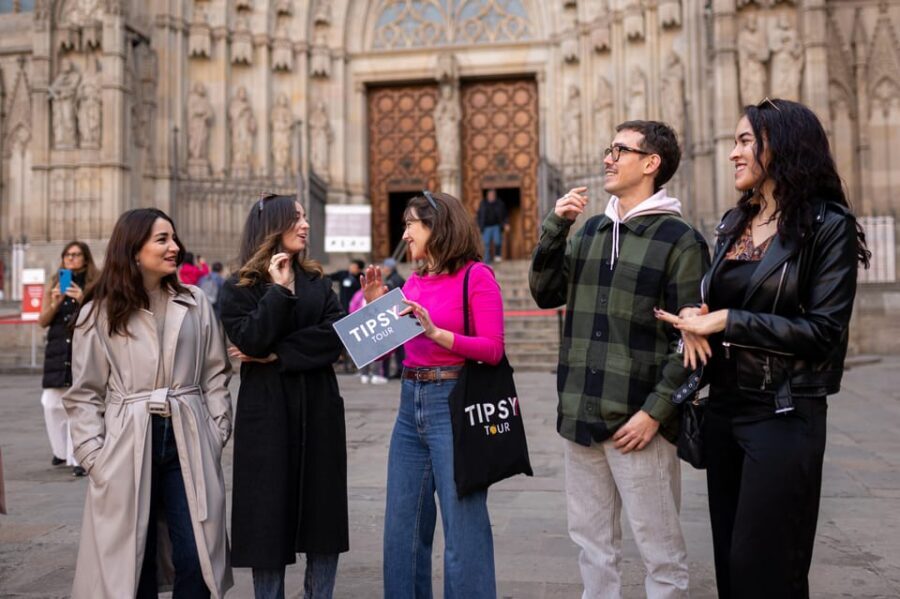
One of the later stops is Placa Sant Felip Neri, a square that works as a mental reset. Walking the Gothic Quarter can make everything blend together, but a square gives you space to absorb scale and street geometry.
Here, you’ll get guided context tied to the neighborhood’s development. You’re also learning how Barcelona’s identity mixes solemn religious sites with everyday street life.
The practical angle: squares are where you’ll often feel how your legs are doing. With this tour’s pace, it’s a good moment to stand, listen, take pictures, and then keep going without losing the thread.
The tour’s “dark past” theme and Catalan quirks that make it memorable
Across the walk, the guide weaves in stories about Barcelona’s dark past during the Spanish Inquisition and the cultural quirks that show up in Catalan society. This is one reason the tour can feel more memorable than a standard photo walk.
Why that matters for you: Barcelona is full of strong landmarks, but you can walk past them without understanding what kind of fear, control, rebellion, or identity they grew from. When a guide connects those themes to the places you’re standing near, you understand the city’s emotional layers, not just its shapes.
Also, humor and storytelling are a big part of the experience. A guide named Sara is called out for being entertaining, funny, and very good at making history feel alive. Even if your guide isn’t Sara, the style is clearly built around narrative energy, not dry facts.
And if you’re lucky with timing, you might catch street life in action while you’re in the area. One group noted seeing a lively street performance during the walk, which fits the Gothic Quarter’s habit of rewarding you with small surprises between major stops.
How to pace your 2-hour walk, plus what to bring
This experience is set up as a 2-hour walking tour with multiple short guided stops. That structure is smart for real travel days. You get a lot of key sites without committing to half a day of museums, lines, or long indoor segments.
You’ll want comfortable shoes because you’ll be on pavement and standing to listen. Bring your camera, but also bring your attention. The guide’s job is to help you see what you might otherwise miss: names, meanings, and small architectural cues.
In terms of comfort, this tour is best for people who can handle moderate walking and don’t need a full sit-down break. If you’re nursing aching feet, consider doing a shorter follow-up wander nearby instead of trying to add extra distance afterward.
Price and what you’re getting for $22 in Barcelona
At $22 per person, this is priced like a serious value tour. The big reason: you’re paying for an English live guide and focused interpretation in a small cluster of major sites and lesser-known corners.
You’re not paying for interior tickets to cathedrals and basilicas, which is a clear tradeoff. Instead, you’re buying context, routing, and story-telling that turns the Gothic Quarter into something you can understand quickly.
For me, the best value is when a guide makes the city feel less overwhelming. With Barcelona, that’s the difference between walking through landmarks and walking through a timeline. This tour is designed to do that in about two hours, which can be perfect on your first or second day.
Who this is for:
- First-timers who want orientation in the Gothic Quarter
- Travelers who like history but don’t want a long classroom-style session
- People on a budget who still want guided context
- Anyone who enjoys stories about power, religion, and identity, not just pretty scenery
Who might want a different option:
- Travelers who strongly prefer interior cathedral time
- Anyone who can’t stand/walk for the duration
- People who want a deep architecture study with longer on-site moments
Should you book this Barcelona cathedral-and-squares tour?
I’d book it if you want a quick, guided way to understand the Gothic Quarter without spending extra money on interior entries. The meeting point at Plaça Nova 40 is easy to find, the route hits major landmarks like Barcelona Cathedral, and the guide narrative adds depth, including the Inquisition era and Catalan cultural quirks.
The biggest “yes” sign is the guide style. When a guide is entertaining and funny, the city’s history lands better. That’s also why comments about Sara’s storytelling show up clearly.
The biggest “hold on” sign is your expectations for inside visits. If you want cathedral interiors as part of the plan, this isn’t built for that. You’ll need a separate stop later.
If your goal is to get bearings fast, learn why key places matter, and leave with a city that feels more personal, this is a smart buy.
FAQ
Where does the tour start?
The guide meets you at Plaça Nova, 40, right in front of the Barcino sculpture, holding a yellow Carpe Diem Tours sign.
How long is the walking tour?
It lasts about 2 hours.
Is entry into the cathedral included?
No. Entry into cathedrals and basilicas is not included.
What language is the tour in?
The tour is offered with a live English guide.
What should I bring?
Bring comfortable shoes, a camera, and comfortable clothes.
Is the tour refundable if plans change?
Yes, you can cancel up to 24 hours in advance for a full refund.
Can I book without paying right away?
Yes. There’s a reserve now & pay later option, so you can book your spot and pay nothing today.