REVIEW · BARCELONA
The Secret of Cerdà – Barcelona
Book on Viator →Operated by Mystery City Games · Bookable on Viator
Follow Cerdà’s clues through old Barcelona. This Mystery City walk turns the Eixample into a puzzle map, so you’re solving as you go and seeing the center in a smarter way. I love two things most: the hands-on mystery route that makes familiar streets feel fresh, and the way the stops come with real stories tied to Barcelona’s growth. One fair heads-up: if you’re a group of adults, you may find the experience a bit pricey for what can feel like mostly self-paced game time once it starts.
You’re on your feet for about 2 hours of play on a roughly 3 km loop, and you come back to the start at Carrer de Trafalgar 17 in L’Eixample. The tour runs as a private activity for your group, and it’s designed for people of different ages, with mobile tickets and multiple language options (including English). If you’re expecting a traditional step-by-step guided lecture for every minute, this one plays more like a street game with explanations built into the stops.
If you like escape-room style challenges, or you want something beyond museum hours, this is a fun fit. It’s also a nice option for Barcelona locals who want to test their city instincts and learn how Cerdà’s plan shaped the city’s future.
In This Review
- Key things to know before you play
- Why Cerdà’s plan works as a walking mystery
- Getting started at Carrer de Trafalgar 17 (and how to handle the game)
- Stop 1: Palace of Catalan Music and the first layer of clues
- Stop 2: Eixample streets where Cerdà’s legacy becomes a puzzle
- Stop 3: Manzana de la Discordia and why details slow you down (nicely)
- Stop 4: Plaça de Catalunya to finish the story
- Timing and distance: how to fit it into a Barcelona day
- Price and value: is €-to-2-hours fair?
- Who should book The Secret of Cerdà
- Practical tips to make the puzzle part actually fun
- Should you book The Secret of Cerdà?
- FAQ
- How long does The Secret of Cerdà take?
- What distance do we walk?
- Where does the tour start and end?
- Is it a private tour?
- Is there a mobile ticket?
- What language options are available?
- What are the main stops?
- Is it suitable for families and kids?
- How difficult are the puzzles?
- Is it accessible and can I bring a service animal?
- What’s the cancellation window?
Key things to know before you play
- 3 km, ~2 hours of puzzle time across the historic center and Eixample
- Private group format, so you won’t get mixed into a crowd
- Language options include English, Spanish, Catalan, and French
- Four major stops: Palace of Catalan Music, Eixample, Manzana de la Discordia, Plaça de Catalunya
- Learn while you solve, with Barcelona history woven into the game
- A small end-of-game prize is part of the closure (like a pin)
Why Cerdà’s plan works as a walking mystery
Barcelona grew fast in the 1800s, and the city needed a new design. In 1856, the plan associated with Ildefons Cerdà was chosen, and this tour uses that backstory as the engine for the whole game. Instead of just reading plaques, you move through the city and peel back ideas step by step—like the city itself is the puzzle box.
What makes this work is the route logic. You don’t just hop between landmarks. You’re trained to look at details as you pass them, then answer questions that connect the dots between the Eixample expansion and the bigger story of Barcelona.
You can also read our reviews of more tours and experiences in Barcelona.



Getting started at Carrer de Trafalgar 17 (and how to handle the game)
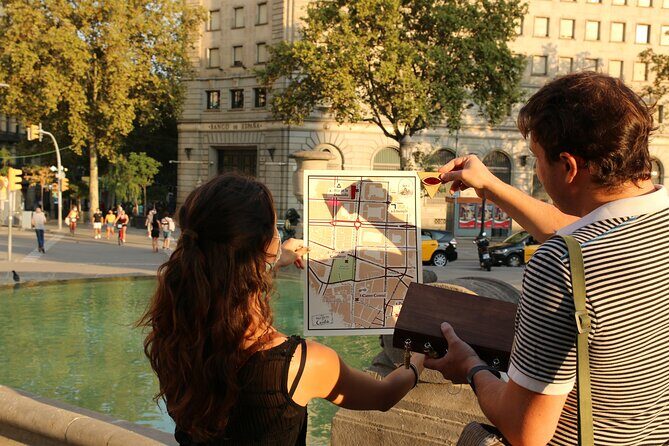
You meet at Carrer de Trafalgar, 17 in L’Eixample, and the activity ends back there. It’s a mobile-ticket style experience, and you’ll get confirmation at booking, so you’re set up before you even arrive on the street.
The format is a walking challenge: you’ll stroll around noticing buildings and monuments, and you’ll solve puzzles with your friends as you go. You can generally set your own pace, and that matters because it makes breaks easy. If your group needs a quick stop for water or a snack, you can usually slow down without feeling like you’re “late” to a rigid schedule.
The one practical thing I’d plan for: you’ll want to treat this as a game, not a sightseeing sprint. If you zoom past things to “get the route done,” you’ll miss the clues and the learning that goes with them.
Stop 1: Palace of Catalan Music and the first layer of clues
The game starts with the Palace of Catalan Music. Even if you’ve seen it before, this is the part where you reset your way of looking. The setting helps because it signals that you’re not doing a generic “where is the next landmark” walk—you’re beginning a story.
In play terms, the first stop is where you learn how to think like the game expects. You’ll likely be figuring out how the clues connect to what you’re seeing around you, and that makes the later stops easier. It also sets a friendly tone for mixed groups: the challenge isn’t just for puzzle nerds; it’s built for real people walking streets together.
Possible drawback here: if your group arrives frazzled or splits up right away, the first clues can feel confusing. The fix is simple—agree on a plan before you start reading, even if it’s just who looks for clues and who checks the answers as you go.
Stop 2: Eixample streets where Cerdà’s legacy becomes a puzzle
Next you head into the Eixample area, the heart of the story. This is where the tour delivers on the promise of exploring Barcelona in a new way. You’re walking the city’s expansion zone while solving questions tied to the idea of growth and design—so you’re not just viewing architecture, you’re interpreting it.
Eixample is also where you can enjoy some natural “game momentum.” Straightforward walking plus clear visual references makes it easier to coordinate with your group and stay oriented. It’s a good part of the tour if you want laughs, light competition, and quick teamwork rather than long, quiet museum-style attention.
One thing to keep in mind: because this is puzzle-led, people who prefer deep, nonstop commentary may want a bit more structure. If that sounds like you, treat each puzzle as the mini-lesson, not the interruption to sightseeing.
Stop 3: Manzana de la Discordia and why details slow you down (nicely)
The third stop is Manzana de la Discordia. This is a great mid-tour choice because by now you’re already in “look mode.” The game timing helps too: you’ve had enough time to get comfortable, but you haven’t grown restless yet.
This stop is where I’d expect most groups to get the most out of the puzzle experience. Buildings and street details tend to reward careful looking, and the game style pushes you to notice those details on purpose. If you’ve ever walked through Barcelona and thought you were seeing everything, this is the kind of location that can prove you wrong—without needing a lecture.
Practical tip from the experience: bring your attention. Some players even recommend that you use the game’s diary as intended, since it’s described as essential. If your group treats it as optional, you may end up re-checking clues later.





Stop 4: Plaça de Catalunya to finish the story
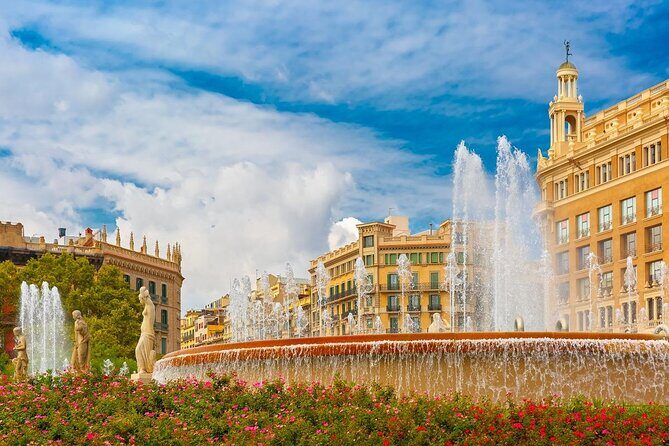
Finally, you reach Plaça de Catalunya, a central square that works well as a finish point. The energy of a major hub helps the ending feel rewarding. After puzzle time, you get that satisfying “we did it” moment as the route closes back at your meeting point.
This is also where your group can regroup. If you’ve got kids, it’s easier to manage energy in a major public space. If you’ve got adults, it’s easier to compare answers and laugh at the moments you were sure you were correct—until you weren’t.
One more value note: the end includes a small prize, and in at least one case it was just a pin. Don’t book this expecting a big souvenir haul. Book it for the walk, the puzzles, and the way the story keeps you looking closely.
Timing and distance: how to fit it into a Barcelona day
You’re looking at about 2 hours of play time and a route of around 3 km through the city center. That’s a strong length for a “real day” in Barcelona: short enough to do without wrecking your evening plans, but long enough to feel like you actually explored something.
If you’re planning other activities the same day, I’d treat this as a mid-morning or early afternoon activity. It gives you time to explore nearby afterward, and you won’t feel like you’re rushing from one ticket line to the next.
Also consider pacing. If you have slower walkers in the group, the puzzle nature can help, because you can pause to solve and catch your breath. The game structure tends to break the walk into mini-challenges rather than one long march.
Price and value: is €-to-2-hours fair?
The price is $26.36 per person for the 2-hour experience. That may sound like a lot for a walking game, and value comes down to your group size and expectations.
Here’s the honest way to think about it:
- If you want an activity that turns sightseeing into teamwork and problem-solving, the price can feel fair. You’re paying for a guided-by-game experience with explanations tied to the city.
- If you expected frequent staff support during the walk, you might feel a mismatch. Some experiences of this type run with more independence once you start, so you’re mostly managing the puzzle yourselves.
A practical way to decide: if your group loves scavenger hunts, escape-room style challenges, or even just learning while moving, you’ll likely feel the cost more clearly. If your group only tolerates minimal “game time,” you might prefer a classic guide-led walk instead.
Who should book The Secret of Cerdà
This is built for groups. It’s great for friends and families, and it can work especially well when kids are involved. One family found it engaging for children around 10 to 12 years old and adults at the same time, which tells me the puzzles aren’t just for one age group.
It can also make sense for locals. The pitch isn’t only for first-time visitors; it’s for anyone who wants a fresh way to see familiar streets. If you’re curious about how Cerdà’s plan shaped the city’s growth, the game format makes it easier to remember.
What about people who don’t do puzzles? If you can handle light problem-solving and reading prompts, you’ll be fine. Also, the experience notes that most travelers can participate, so it’s not built as a hard-core fitness event.
Practical tips to make the puzzle part actually fun
A few small decisions can make this tour smoother:
- Keep your group together. Puzzle games depend on teamwork. If you drift, you’ll spend time regrouping instead of solving.
- Use the diary if it’s provided. A tip from the experience suggests it’s essential, and it likely helps you keep track of clues.
- Plan for easy breaks. Since you can move at your pace, you can take a breather or grab a drink without feeling like you’re breaking a strict schedule.
- Don’t treat it like a race. The best moments usually come when you slow down just enough to notice what the clues are asking about.
- Bring your curiosity. The real payoff is in the story behind the design choice for growth in 1856.
Should you book The Secret of Cerdà?
If you’re the kind of person who gets bored with standing still, this is a strong yes. You’ll get a walkable route, a clear sense of “mission” through the puzzles, and four big, meaningful stops that tie into how Barcelona expanded through Cerdà’s plan. For families and groups of friends, it’s a fun way to do city sightseeing that doesn’t feel like homework.
I’d hold off if your group wants a traditional guide with lots of continuous speaking, or if you’re very sensitive to price-versus-staffing because the game is partly self-managed once it’s underway. For most people who enjoy interactive activities, though, this is exactly the type of Barcelona experience that makes the city feel bigger than a list of monuments.
FAQ
How long does The Secret of Cerdà take?
It’s approximately 2 hours of play time.
What distance do we walk?
The route is about 3 km through the city center.
Where does the tour start and end?
You start at Carrer de Trafalgar, 17, L’Eixample, 08010 Barcelona, Spain, and the activity ends back at the meeting point.
Is it a private tour?
Yes. It’s listed as a private tour/activity, meaning only your group participates.
Is there a mobile ticket?
Yes, the tour includes a mobile ticket.
What language options are available?
It’s offered in English, and the experience is also available in Spanish, Catalan, and French.
What are the main stops?
The stops are: Palace of Catalan Music, Eixample, Manzana de la Discordia, and Plaza de Catalunya.
Is it suitable for families and kids?
Most people can participate, and the game is designed to be engaging for groups. It’s also described as working well for kids around ages 10 to 12.
How difficult are the puzzles?
The experience is described as easy enough for some first-time puzzle players, though it’s still interactive and requires attention.
Is it accessible and can I bring a service animal?
Service animals are allowed, and it’s near public transportation. It also notes that most travelers can participate.
What’s the cancellation window?
You can cancel for free up to 24 hours in advance of the experience’s start time.