Gothic streets show layers fast. This walk gives you a guided route through Barcelona’s old heart, where Roman stone, medieval power, and local legend all sit a few steps apart. I love having a local guide to keep the story straight and help you get your bearings fast in the tight streets of Ciutat Vella.
You’ll also enjoy the mix of big sights and small surprises—from the Cathedral’s Roman wall section to the lucky palm-and-turtle courtyard at Casa de l’Ardiaca. One possible drawback: each stop is brief (often around 10–20 minutes), so if you want long, slow museum-style time, you’ll need to plan a follow-up on your own.
In This Review
- Key highlights you’ll notice right away
- Why This Tour Makes the Gothic Quarter Easier Than DIY
- From Roman Aqueduct Area to Cathedral Time: The Route’s Smart Start
- Barcelona Cathedral: Gothic Splendor, Roman Wall Fragments, and a Goose-Legend Courtyard
- Placa del Rei: Royal Power, Kings of Aragon, and Roman Remains You Can Feel
- Antigua Casa del Verdugo Municipal: Medieval Justice, Grim Legends, and Human Context
- Placa de Sant Jaume: Ajuntament, Palau de la Generalitat, and Catalonia’s Autonomy
- Jewish Quarter Streets and an Ancient Synagogue: Trade, Daily Life, and Living Memory
- Church of Saint Philip Neri: A Quiet Square With Spanish Civil War Marks and Movie Clues
- Pont del Bisbe: Neo-Gothic Bridge Views and the Hidden Skull Legend
- Casa de l’Ardiaca: Oldest Palm Tree Luck, Turtle Charm Rituals, and Peace-Prosperity Stories
- Price and Time: Is $29.57 Good Value for 2–3 Hours?
- Who This Tour Suits Best
- Should You Book This Gothic Quarter Walk?
- FAQ
- How long is the Barcelona Gothic Quarter tour?
- What language is the tour offered in?
- How much does it cost?
- Where does the tour start and end?
- Is a guide included?
- Are the stops you visit free to enter?
- What group size should I expect?
- Are service animals allowed?
- Is there a height requirement?
- What if the weather is bad or I need to cancel?
Key highlights you’ll notice right away
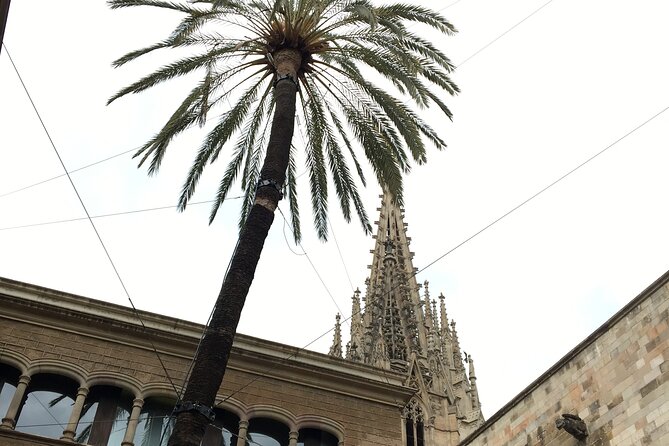
- Roman wall and early Barcelona under the Cathedral in the same view
- Thirteen white geese tied to Barcelona legend and good luck lore
- Underground Barcino remains you can connect to the city’s start
- A medieval executioner’s house that adds context to everyday life in darker times
- Shrapnel marks from the Spanish Civil War in a quiet film-famous square
- Lucky-touch courtyard rituals at Casa de l’Ardiaca (palm tree and turtle charm)
Why This Tour Makes the Gothic Quarter Easier Than DIY
Barcelona’s Gothic Quarter can feel like a maze made of history. That is fun—until you realize you’re back to a street you already walked ten minutes ago. This tour solves the biggest DIY problem: you follow a guide’s route and commentary, so the sites click together instead of staying as separate postcards.
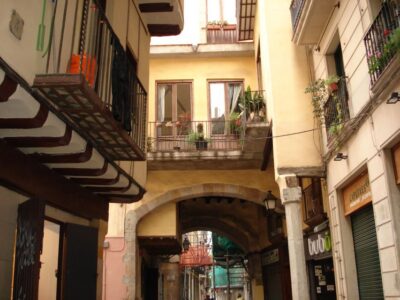
You get a local guide and an organized path through the Cathedral area, royal and political squares, Jewish Quarter streets, and a couple of small courtyard-style photo stops. The total time is about 2 to 3 hours, with the pacing built around short stops and quick context, not long museum hangs.
Group size stays small—up to 20 people—which matters here. In a tight quarter, a big group can turn sightseeing into shuffle time. A smaller group keeps the walk more human, and it’s easier to stop, look, and take photos without constant bottlenecks.
You can also read our reviews of more tours and experiences in Barcelona.

From Roman Aqueduct Area to Cathedral Time: The Route’s Smart Start
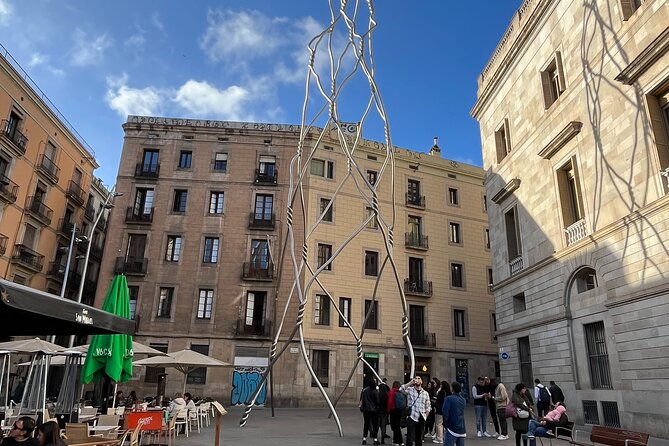
The tour starts at a meeting point listed around the Roman Aqueduct and La Casa de l’Ardiaca area on Carrer de Santa Llúcia, 1 (Ciutat Vella, 08002 Barcelona). Ending back at the same meeting point is convenient because you don’t have to think about your way home through the narrow lanes.
Starting in the cathedral zone helps your brain organize the “why” behind everything you’ll see next. You’ll move from the city’s earliest layers into medieval Barcelona, with guide commentary that stitches the timeline together—Roman foundations, Christian expansion, then later political and cultural eras.
I also like the practical side of this format. You get a mobile ticket, and the tour is offered in English, so you don’t need extra apps or printed paperwork to be ready. If you’re doing this on your first full day in the Gothic Quarter, it’s a great way to set up where everything is before you go exploring later.
Barcelona Cathedral: Gothic Splendor, Roman Wall Fragments, and a Goose-Legend Courtyard
The first major stop is Barcelona Cathedral. What you’re looking at is not just one era stacked neatly on another. It’s a Gothic Cathedral built on the site of an earlier first Christian basilica, and you also get to spot a section of Roman wall that marks the city’s origins.
This stop is a highlight for two reasons: the visuals and the storytelling. Visually, the Cathedral area gives you strong architectural contrast—Gothic stone forms alongside older Roman fabric. Story-wise, your guide connects the religious site to local legend, including miracle-and-relic type lore.
Then comes a detail that’s easy to miss if you walk through on your own: the courtyard with thirteen white geese. According to the tour description, those geese are tied to Barcelona legends and a symbol closely associated with good luck. It’s the kind of detail that makes photos more interesting than just another cathedral façade—because the moment feels local.
Timing note: this stop is about 15 minutes, and there’s no pressure to linger. If you want more time for cathedral interiors, you can always come back later after the tour gives you orientation.
Placa del Rei: Royal Power, Kings of Aragon, and Roman Remains You Can Feel
Next you’ll step into Placa del Rei, a square tied to Barcelona’s royal past. Here, the focus is on the Royal Palace, which was home to the Counts of Barcelona and the Kings of Aragon. The guide adds the human scale: lavish feasts, local power shifts, and the sense of authority that would have dominated daily life in earlier centuries.
A big reason this stop works is that it links above-ground royalty with below-ground history. You’ll also learn about a museum connected to underground Roman remains of Barcino, Barcelona’s earlier Roman name. Even if you don’t go far into any museum space during the stop, the concept alone is powerful: you’re standing in a medieval center that sat over earlier city life.
The value for you: this is where you start understanding the Gothic Quarter as more than aesthetics. It becomes geography for power—who ruled, where they met, and what was preserved (or built over) as Barcelona changed.
Antigua Casa del Verdugo Municipal: Medieval Justice, Grim Legends, and Human Context
Then the tour turns darker, and that’s a good thing. You’ll visit the Antigua casa del verdugo Municipal, a building that has survived from a time when Barcelona had an official executioner. Public punishments were part of how authority was displayed, and this stop gives that reality a specific address.
Expect dark legends and city folklore about the executioner’s role in medieval Barcelona, with the guide framing how life and death were intertwined in everyday routines. It’s not pleasant, but it’s useful. Without a stop like this, the Gothic Quarter can feel like it’s only about romance and cathedrals. With it, you get a truer sense of what people’s days may have looked like.
Practical consideration: this moment is brief (about 15 minutes). If you’re sensitive to grim topics, you can still keep it light by focusing on the architecture and the historical role, rather than the folklore.




Placa de Sant Jaume: Ajuntament, Palau de la Generalitat, and Catalonia’s Autonomy
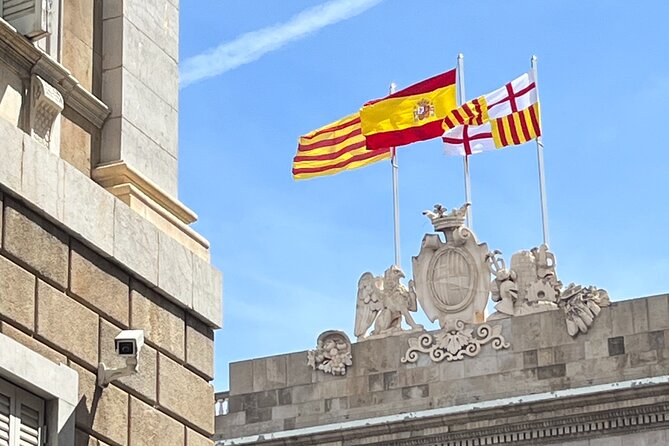
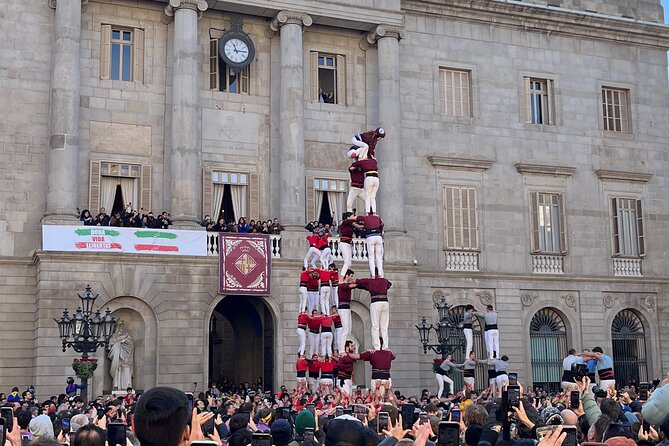
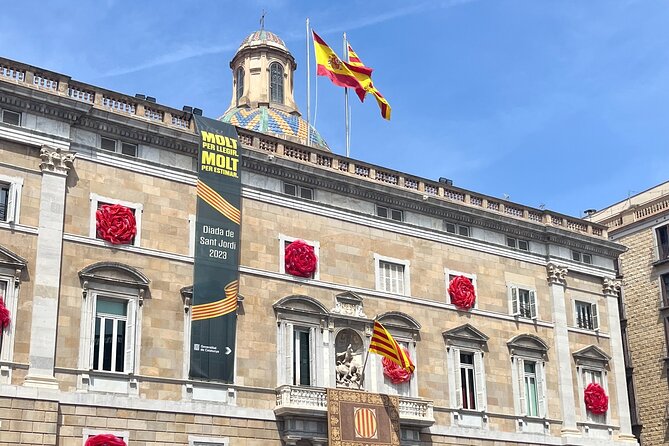
The tour then moves into Placa de Sant Jaume, described as Barcelona’s main political square. This is where you’ll see major civic and governmental buildings: the Ajuntament (City Hall) and the Palau de la Generalitat (Palace of the Government of Catalonia).
What makes this stop interesting is the way your guide connects architecture to modern identity. You’ll learn how the city maintains a unique culture and how Catalonia’s autonomous status shapes today’s civic life. The square also feels like a living stage: this is not just a museum backdrop, it’s an actual governance hub.
For you: even if politics is not your main vacation interest, this stop gives context for why Barcelona feels the way it does. The Gothic Quarter is tied to streets, yes—but also to institutions that still operate.
Jewish Quarter Streets and an Ancient Synagogue: Trade, Daily Life, and Living Memory
After the political center, the tour shifts to quieter lanes in the Jewish Quarter, where you’ll walk narrow streets tied to medieval Jewish life. The tour highlights one of the oldest surviving synagogues in Europe, and your guide focuses on everyday customs—trade, traditions, and the stories of people who lived here.
One detail I appreciate from the tour description: this area is not presented like a sealed-off past. You may also witness ongoing commemorations and events linked to the historical site. That matters because it reminds you that history isn’t frozen here; it’s part of current community remembrance.
Photo and pacing reality: this part is short (about 15 minutes), which means you’ll likely do quick street moments and a few key views rather than a full neighborhood wander. If you want more time, save it for later exploration once your mental map is set.
Church of Saint Philip Neri: A Quiet Square With Spanish Civil War Marks and Movie Clues
Next up is Church of Saint Philip Neri, which you’ll experience as a quiet, secluded square. The most striking information here is that walls still show shrapnel marks from the Spanish Civil War. That one fact changes the whole mood of the stop. It’s not only architecture; it’s a witness.
The tour also notes that scenes from movies were filmed here, including Perfume and Vicky Cristina Barcelona. That doesn’t mean the square is only for film fans. It gives you another lens: the same corners artists use still exist, but they carry real scars.
Photo value: this is one of those places where photos can feel more meaningful than pretty. The guide helps you sense the wartime atmosphere and understand why this quarter offered shelter.
Pont del Bisbe: Neo-Gothic Bridge Views and the Hidden Skull Legend
You’ll then reach Pont del Bisbe, one of the Gothic Quarter’s best-known photo moments. The tour describes it as a neo-Gothic bridge connecting the Government building area to a neighboring Episcopal structure.
And yes, there’s a legend. Your guide shares the story of a hidden skull in the bridge’s ornate design. It’s the kind of detail that’s fun to chase visually once you know what you’re looking for—one reason this bridge stop works well in a short time window.
This stop is brief (about 10 minutes), but it’s built for quick wins: a memorable angle, a legend worth repeating later, and a smooth transition to your final courtyard-focused stop.
Casa de l’Ardiaca: Oldest Palm Tree Luck, Turtle Charm Rituals, and Peace-Prosperity Stories
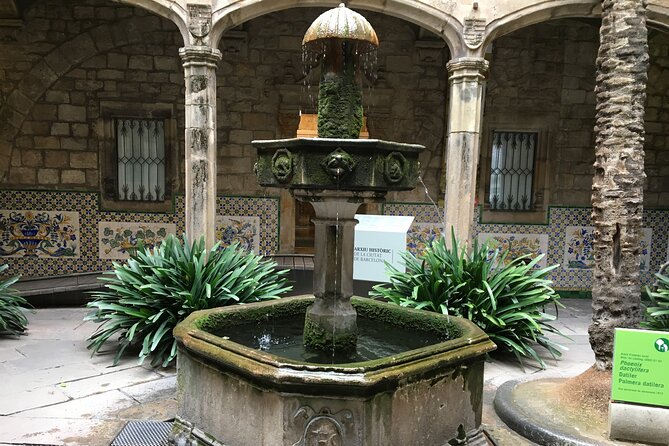
The tour finishes at a place that feels like a secret even when you’re standing in front of it: Casa de l’Ardiaca. You’ll see a historic building with a courtyard that includes a fountain and a lovely courtyard centerpiece, highlighted as home to Barcelona’s oldest palm tree.
This is also where the “good luck” element becomes practical. The tour description tells you about a small stone turtle in the courtyard that works as a traditional lucky charm. You’ll be encouraged to touch the ancient palm tree and rub the turtle sculpture for good luck. It’s a simple ritual, and it gives the tour a satisfying ending because it’s physical, not just informational.
There’s more context too. Your guide connects the house to both church and secular authorities, and explains why locals see it as a symbol of peace and prosperity. That mix—religious connection, civic power, and personal luck—matches how Barcelona often feels: public and private history in the same frame.
Why this ending is smart: after looking at squares and institutional buildings, you end with an enclosed, calm space. It lets the tour’s legends and layers settle into something personal.
Price and Time: Is $29.57 Good Value for 2–3 Hours?
At $29.57 per person for 2 to 3 hours, this tour feels like good value for a simple reason: you’re paying for the sorting. The Gothic Quarter is dense. Without a guide, you can spend time walking and still leave with a jumble of facts.
Here, your ticket buys guide commentary plus a structured path through eight standout stops, including Roman fragments, royal history, civic centers, and Jewish Quarter streets. The tour description also lists free admission tickets for the individual stops, which helps keep costs predictable. You’re not stacking paid entry fees on top of the base price.
Group size (max 20) is another hidden value item. It improves the odds that your guide can keep the group moving without turning each stop into a waiting line.
One small practical note: the experience requires good weather, and if it’s canceled for poor weather you’ll be offered another date or a full refund. Plan something flexible for the same week if your schedule is tight.
Who This Tour Suits Best
This tour is a strong match if:
- You want the Gothic Quarter to make sense fast, not slowly
- You enjoy legends as much as architecture
- You like a guided walk that includes a mix of big landmarks and small courtyard-style photo moments
- You prefer a route that minimizes wrong turns in Ciutat Vella
It may feel less ideal if you want lots of time inside buildings, because each stop is designed to be short. You’ll get context and key sights, but not long, unhurried immersion in every location.
I’m especially drawn to the combination of “serious” and “quirky” details: Roman walls and royal power paired with thirteen white geese, a hidden skull bridge legend, and the palm-tree-and-turtle good luck ritual.
Should You Book This Gothic Quarter Walk?
If you’re visiting Barcelona and you want the Gothic Quarter to feel like a guided story rather than a self-made scavenger hunt, I’d book this. The price is reasonable for a guided route, the pacing covers major eras, and the ending at Casa de l’Ardiaca gives you a memorable, very Barcelona-style ritual.
Pick it especially if you’re only here for a short time, or if you’re the type who hates wasting half a day wandering in circles. Bring comfortable shoes, expect to move, and you’ll leave with a sharper sense of how the city’s layers fit together.
FAQ
How long is the Barcelona Gothic Quarter tour?
It runs about 2 to 3 hours.
What language is the tour offered in?
The tour is offered in English.
How much does it cost?
The price is listed as $29.57 per person.
Where does the tour start and end?
It starts at Roman Aqueduct / La Casa de l’Ardiaca, Carrer de Santa Llúcia, 1, Ciutat Vella, 08002 Barcelona, Spain, and it ends back at the meeting point.
Is a guide included?
Yes. The tour includes a local guide.
Are the stops you visit free to enter?
The listed stops show admission tickets as free for each stop.
What group size should I expect?
The tour has a maximum of 20 travelers.
Are service animals allowed?
Yes, service animals are allowed.
Is there a height requirement?
Yes. Most travelers can participate, but the tour lists a height requirement of at least 150 cm (about 4’11”).
What if the weather is bad or I need to cancel?
The tour requires good weather. If canceled due to poor weather, you’ll be offered a different date or a full refund. You can cancel for free up to 24 hours in advance for a full refund.