REVIEW · BARCELONA
Barcelona & Gothic to Modern. Regular Tour
Book on Viator →Operated by Barcelona Architecture Walks · Bookable on Viator
Barcelona gets new meaning fast.
This 3-hour architecture walk takes you from Roman traces to later eras, using the way architect Enric Miralles thinks about design—where buildings reflect politics, culture, and power. You’ll move through the Gothic and La Ribera quarters, and you end with fieldwork-style checks in a market setting that turns looking into practice.
I especially like the in-depth explanations that connect architectural details to historical change, not just dates on a plaque. I also like that the tour doesn’t treat the city like a museum—there’s a hands-on feeling to it, including fieldwork at Mercado de Santa Caterina and a clear architecture microguide style of teaching. One possible drawback: it can feel more like an architecture seminar than a broad storytelling tour, so if you want simple postcard vibes, you might find it a bit “classroom.”
In This Review
- Key points at a glance
- From Roman Traces to Modern Barcelona: What This Walk Actually Covers
- Starting at Plaça Nova (Barcino Sculpture): Easy to Miss, Easy to Fix
- The Big Idea: Learning to See Through Enric Miralles’ Lens
- Mercado de Santa Caterina: Market Energy Meets Architecture Fieldwork
- Santa Maria del Mar: Gothic Clarity and Community Power
- Catedral de Barcelona: When a City Flexes Its Ambitions
- MUHBA Temple d’August: The Roman Layer You Can Still Touch
- The Style of the Guide: Why Pia Gets Named So Often
- How Much Walking? How Long Is Long Enough?
- Where This Tour Delivers Best Value in Your Barcelona Trip
- Who Should Book This (and Who Might Want Another Option)
- Should You Book Barcelona & Gothic to Modern?
- FAQ
- How long is the Barcelona & Gothic to Modern Regular Tour?
- Where does the tour start, and what time?
- Is the tour offered in English?
- What’s the group size limit?
- Do I need to bring a printed ticket?
- What if the weather is bad?
Key points at a glance
- Enric Miralles’ approach: architecture as reality, not slogans
- Gothic to Modern timeline: Roman, Carolingian, post-Franco, Olympic-era, and later cultural shifts
- Market fieldwork at Mercado de Santa Caterina to test what you’re learning
- Stops that teach by contrast: Santa Maria del Mar vs. the bigger Cathedral footprint
- Small group size (max 20) keeps the pace and questions manageable
- Many groups are led by architect Pia, praised for charts, pacing, and making terms usable
From Roman Traces to Modern Barcelona: What This Walk Actually Covers
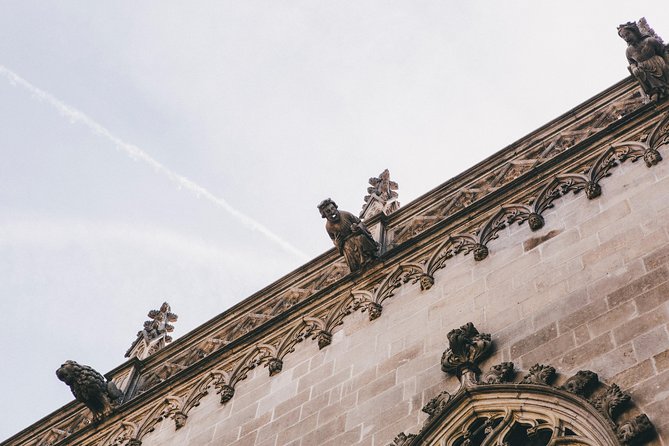
This is not a “see the famous stuff and move on” tour. The whole point is to train your eye so Barcelona starts explaining itself. You’re guided through architectural change across eras, and you’re pushed to ask what a building is doing socially—who it served, what it meant, and what it tried to prove.
The tour’s big theme is how architecture avoids easy talking points. It follows a “you’ll understand by doing” approach: you look at structures, then you learn the patterns behind them. That matters because Barcelona’s look isn’t one style layered on top of another—it’s more like the city arguing with itself over centuries.
Expect the walk to feel like a structured conversation. The best part is that it’s not stuck in one time period. You’ll get Roman echoes early on, then you’ll jump forward through later chapters that shaped the city you see today.
You can also read our reviews of more tours and experiences in Barcelona.

Starting at Plaça Nova (Barcino Sculpture): Easy to Miss, Easy to Fix
You meet at Barcino Sculpture, Plaça Nova, 40 (Ciutat Vella). The start time is 10:30am, and the tour ends back at the same meeting point. That simple loop is handy: you can plan your other day around it without worrying about ending across town.
One practical note: the start area is popular. A reviewer mentioned there were several tours starting from the same spot, which can make it annoying to spot the right group. Your best move is to arrive a few minutes early and look for your guide and group colors/identification if they share it.
Because it’s a small-group walk (up to 20), once you’re in the right cluster, the pacing is manageable. You’ll have time to stop, look up, and read the building logic instead of just passing through.
The Big Idea: Learning to See Through Enric Miralles’ Lens
The tour explicitly centers on the thinking of architect Enric Miralles. Even if you’ve never heard the name before, you don’t need homework. The guidance is set up so you can follow along as your eyes start recognizing the same kinds of decisions again and again.
What that means in practice: you’re not only learning what a building is. You’re learning why it looks the way it looks. The tour frames architecture as connected to history, politics, and how people imagine the future. That’s a big upgrade from “that’s Gothic because it’s pointy.”
This is also where the style can split people into two camps. Some guests love it because it’s detailed and structured, with tools like charts and clear comparisons. Others say it can feel less like a storyteller and more like a guided lecture that assumes some interest in architecture. If you’re the type who likes explanations for how and why, you’ll likely be delighted.
Mercado de Santa Caterina: Market Energy Meets Architecture Fieldwork
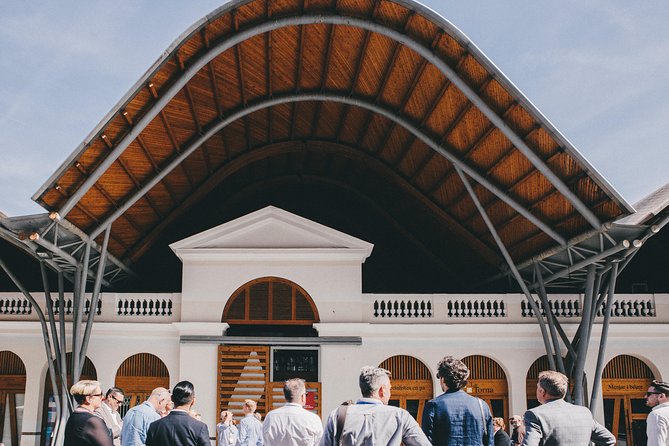
You kick off at Mercado de Santa Caterina. Markets are perfect teaching spaces because they’re architectural—and social—at the same time. They show how a city makes daily life work, and how design serves movement, light, and community needs.
In this tour, the market isn’t just a photo stop. You do fieldwork—a more active style of learning where you check what you’re being taught against what you see in front of you. It’s a clever setup because after this, the rest of the walk feels less like sightseeing and more like pattern recognition.
What you can expect to notice:
- How the building supports real use, not just appearances
- Structural and spatial choices that shape how people flow
- The way commerce and civic life influence design
There’s also a practical bonus. You’ll be in a neighborhood where you can later keep walking on your own. Even if you only catch part of the market atmosphere, you’ll understand better why this area matters.
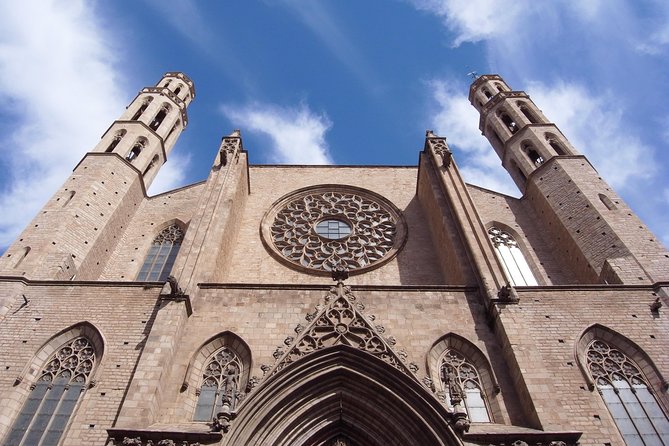
Santa Maria del Mar: Gothic Clarity and Community Power
Next is Basilica de Santa Maria del Mar. This church is often a favorite for people who like Gothic architecture without the confusion. It’s a place where you can stand back and quickly feel the scale and the intent of the space.
For this tour, the value of Santa Maria del Mar is how it connects religion, society, and design choices. Gothic buildings are not only “a style.” They’re ambitious construction projects that require organization, money, and a belief that the community should show its strength in stone.
You’ll likely get more out of this stop if you slow down. Look at how the space guides attention. Notice how the architecture helps people feel gathered, focused, and part of something larger than themselves.
A drawback to be aware of: churches can make groups spread out. If you want the best view for your learning, try to find a spot where you can still hear the guide. With a small group, it usually works, but you may have to choose between the perfect photo angle and the best listening position.


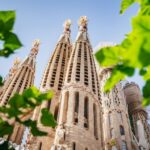


Catedral de Barcelona: When a City Flexes Its Ambitions
Then you reach Catedral de Barcelona. Compared with Santa Maria del Mar, the Cathedral experience is about scale and symbol. Even if you’ve seen Gothic cathedrals before, Barcelona’s one has a way of showing how cities use architecture to project authority.
This stop tends to reward curiosity. You’ll get explanations that connect the Cathedral’s presence to the bigger story of how Barcelona developed. It’s not just about the building details; it’s about the cultural imagination that builds around them.
If you like the “how does power show in stone?” angle, this is the part you’ll probably remember. If you’re mainly after quick highlights, you might feel like you’re spending more time on thinking than pictures—but thinking is the point here.
MUHBA Temple d’August: The Roman Layer You Can Still Touch
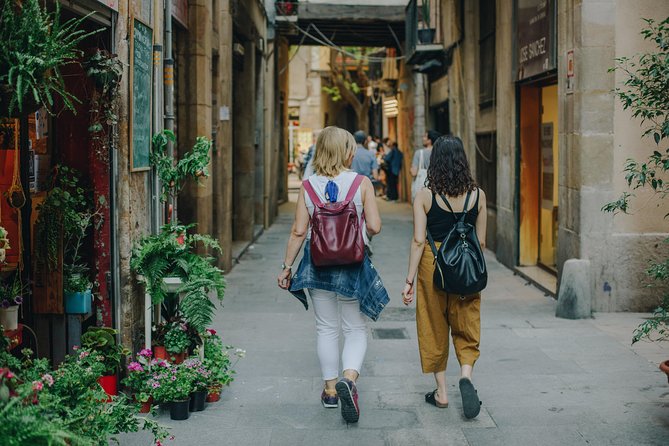
The tour includes MUHBA Temple d’August. This is a great turning point because it makes the Roman era feel less abstract. You’re not just learning that Rome existed in Barcelona—you’re standing with remnants that let the city’s timeline feel real.
For a visitor, this stop is powerful because it corrects a common mistake: thinking Barcelona’s “old city” is one era only. The city you walk through is an ongoing conversation across time periods. Seeing Roman traces during a Gothic-to-modern walk makes the whole timeline click.
You’ll likely get a sense of how later centuries built their identities on top of what came before. That’s exactly the kind of architectural reasoning Miralles’ approach pushes you toward.
The Style of the Guide: Why Pia Gets Named So Often
Many reviews point to architect Pia specifically, and her teaching style shows up in repeated details. Guests praise her for:
- Making complicated architecture ideas understandable
- Using charts to explain how Barcelona evolves
- Tailoring the overview to non-experts, while still serving people who know architecture
- Keeping the walk paced so it doesn’t feel rushed
One review also mentioned she translated some words for an Italian-speaking group member, which hints at how seriously she takes communication, even in a mixed group.
Still, there’s a balancing point. One reviewer said the tour can feel like an architecture course rather than an entry-level overview, especially if you want pure story delivery. That doesn’t make it “bad”—it just means you should check your own expectations. If you like explanations, you’ll likely love it.
How Much Walking? How Long Is Long Enough?
The tour is listed as about 3 hours. That’s long enough to cover meaningful ground and still stop frequently to look and listen. It’s also short enough that you won’t feel stuck all day.
The group limit (max 20) matters here. It generally helps the guide keep the pace and manage questions. With a larger crowd, architecture walks can become “hurry up and follow.” Here, the format sounds built for stopping.
It’s also worth knowing the tour works best with good weather. If the day is wet or miserable, you might get rescheduled or offered a different date or a refund option. On clear days, the walking and exterior architecture observations are far more pleasant.
Where This Tour Delivers Best Value in Your Barcelona Trip
This tour is strong value if you want to go past the usual “I saw it” mindset. You’ll leave with a way of reading buildings that helps even when you’re alone later. That means you don’t just consume Barcelona—you understand how it’s built, and why it changed.
It also fits well on a first or second visit to Barcelona’s old quarters. Starting in Ciutat Vella gives you a framework quickly. After that, you can wander more confidently because you know what to look for.
If your trip is mostly guided tours already, this one can be a great brain reset. It slows you down and teaches your eyes to notice the cues you normally miss.
Who Should Book This (and Who Might Want Another Option)
I’d point you to this tour if you:
- Like architecture, design, or how cities change over time
- Want explanations that connect buildings to society and politics
- Enjoy structured teaching with clear comparisons
- Prefer small groups and a steady walking pace
I’d think twice if you:
- Want a pure beginner-friendly story tour with minimal terminology
- Prefer lots of free time to browse shops and linger without stopping for analysis
- Get impatient with a guided lecture tone
The good news is that the tour has a reputation for working for mixed interest levels. Many comments describe the guide making things accessible, even for non-experts. Just be aware that it’s not designed to be only light and fluffy.
Should You Book Barcelona & Gothic to Modern?
If you’re curious about why Barcelona looks the way it does, book it. The “Enric Miralles” lens turns the Gothic-to-modern timeline into something you can actually see, not just memorize. I especially like the combination of major monuments with a market fieldwork approach, because it keeps you actively learning while you walk.
Skip it only if you’re chasing effortless sightseeing without much explanation. This is better when you’re willing to look a little harder and ask why.
FAQ
How long is the Barcelona & Gothic to Modern Regular Tour?
It’s approximately 3 hours.
Where does the tour start, and what time?
The meeting point is Barcino Sculpture, Plaça Nova, 40, Ciutat Vella (08002 Barcelona), and the start time is 10:30am. The tour ends back at the meeting point.
Is the tour offered in English?
Yes. The tour is offered in English.
What’s the group size limit?
The tour has a maximum of 20 travelers.
Do I need to bring a printed ticket?
No. It includes a mobile ticket.
What if the weather is bad?
The tour requires good weather. If it’s canceled due to poor weather, you’ll be offered a different date or a full refund.