REVIEW · BARCELONA
Barcelona Highlights Segway Tour – The Grand Tour
Book on Viator →Operated by Barcelona Segway Glides · Bookable on Viator
Barcelona on wheels is a fast way to start.
This Grand Tour Segway route strings together Old Port views and Olympic landmarks in one smooth loop, with a training session so your first ride feels controlled instead of scary. I especially liked how guides like Alex and Pablo kept the ride moving while still talking through what I was seeing.
Two things I really enjoyed: the amount of Segway time you get for the price, and the way the stops feel practical—parks, stations, ports—stuff you’d otherwise need separate plans for. One heads-up: it is a short, photo-stop style day, so if you want long museum time, you’ll probably want to pair this with extra walking afterward.
In This Review
- Key things that make The Grand Tour worth considering
- A Barcelona Segway tour that helps you “map” the city fast
- Price and value: what $70.81 buys you in practice
- Where the tour starts (and why arriving early matters)
- Training, safety rules, and rider requirements you should not skip
- How the route actually unfolds: Roman Wall to Old Port at Mirador de Colom
- Ciutadella Park: fountains, shade, and a quick architecture break
- Arco di Trionfo and Port Olímpic: big-city spectacle in short stops
- El Cap de Barcelona and Port Vell: classic “1992 plus harbor” views
- Historic defense walls: Baluard de Migdia and Muralla de Mar
- Estació de França: a fast stop with serious architectural payoff
- David and Goliath and Plaça dels Campions: Olympic-era details you can point to
- Mar Bella beach break: when you want sun and motion together
- Parc del Fòrum and the Museu de Ciències Naturals exterior: modern Barcelona by the sea
- Group size and pace: why the tour feels smooth instead of chaotic
- Who should book Barcelona Highlights Segway Tour: The Grand Tour
- Should you book this Segway tour?
Key things that make The Grand Tour worth considering
- First-timer training built in, plus helmet rental at no extra cost
- A big coverage loop that links Roman-era walls, ports, parks, and the Olympic area
- Lots of waterfront and photo points, including Port Vell and Port Olímpic
- 1992 Olympics references you can actually spot on the ground (not just read about)
- Two vibe changes in one tour: beach time at Mar Bella, then modern Parc del Fòrum
A Barcelona Segway tour that helps you “map” the city fast
If you’re new to Barcelona, you’re going to spend part of your trip figuring out where everything sits. This Segway Grand Tour is built for that job. You cover a lot of ground quickly, so you come away with real spatial memory: old harbor on one side, the big park chunk inland, and the Olympic-zone highlights later.
The best part is that the route isn’t random. It keeps bouncing you between places that make Barcelona feel like Barcelona: maritime history, grand civic architecture, and that unmistakable 1992 Olympic influence that still shows up in sculptures, plazas, and monuments.
Also, this is one of those activities that tends to work even if your group is mixed—some people want stories, some just want movement. The tour does both without turning it into a lecture.
You can also read our reviews of more tours and experiences in Barcelona.
Price and value: what $70.81 buys you in practice
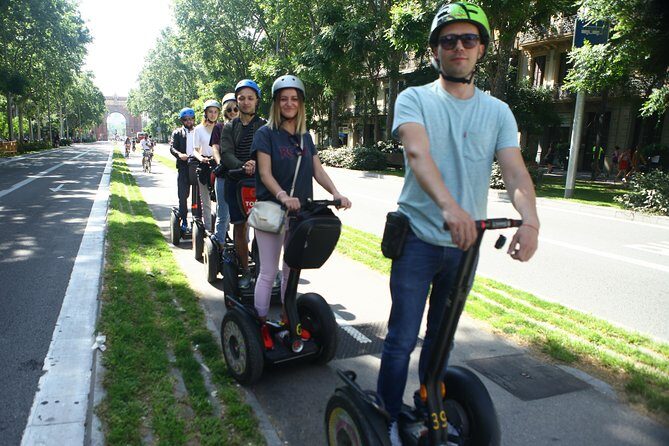
At about $70.81 per person for roughly 2 to 3 hours, the value comes from what’s included and how much you cover. You’re not paying for museum entrances. You’re paying for transport on a Segway, a short guide-led route, and the training so you can ride confidently in city traffic.
Your included basics are solid: helmet rental and one bottle of bottled water per guest. That small add-up matters when you’re moving around for a couple hours and you don’t want to think about where to buy something first.
Tips aren’t included, and you might also run into a specific admission item at Mirador de Colom where admission isn’t included. The good news: most stops in the route are listed as free admission, so you’re not doing this on a ticket-by-ticket basis.
Where the tour starts (and why arriving early matters)
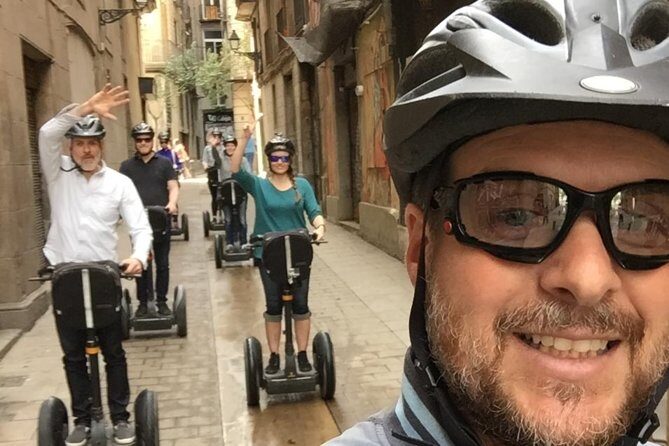
You meet at Carrer del Correu Vell, 6 in Ciutat Vella, and the tour ends back at the same meeting point. This is convenient because you’re not scrambling to find another pickup spot later.
Arrive 15 minutes early. The tour starts on time, and you need time for check-in and the practice session. That practice is more than a formality; it’s what makes a first ride feel smooth rather than wobbly.
This is also a near-public-transport kind of meeting area, which helps if you’re building the rest of your day around metro and foot travel.
Training, safety rules, and rider requirements you should not skip
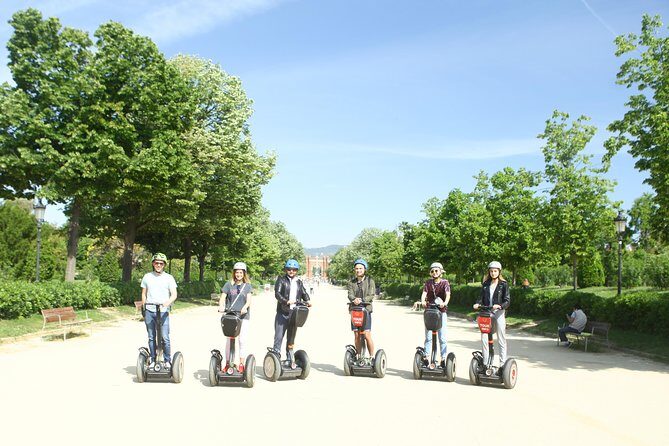
This tour is very clear about safety, and I like that. Helmets are mandatory, and rental is free. You’ll get a training session before you head out, so you learn how to start, stop, turn, and manage your speed before mixing into busier city blocks.
The rider rules are also specific:
- Minimum age is 14 for joining the tour, but by city law the minimum age to ride a Segway is 16
- If riders are under the Segway age, the company provides child-suited e-bikes at the same price
- Weight limits run from 45 kg (100 lbs) to 117 kg (260 lbs)
- The activity is forbidden for people under the influence of alcohol, drugs, or strong medicine
- You need a valid ID or passport at the time of the tour (a copy is accepted)
One more practical point: the tour works in all weather, but they will provide raincoats in case of rain. In real life, I still suggest bringing your own light waterproof layer and wearing comfortable shoes—because even a smooth Segway ride doesn’t erase the fact that you’re in an outdoor city.
How the route actually unfolds: Roman Wall to Old Port at Mirador de Colom
The tour kicks off in front of the ancient Roman Wall, then moves you toward the Old Port of Barcelona. That start matters. It sets your mental map right away: you’re starting with history, then shifting to the harbor where Barcelona’s identity keeps showing up.
Mirador de Colom is the next key stop. It’s a historic entrance point to the Old Port area and one of the most visited spots there. You’re there for about 10 minutes. Admission isn’t included, so if you choose to go beyond the outside viewing, you’ll want to be ready to pay that separately.
What I like about this part of the tour is the perspective change you get from the harbor zone. Even if you don’t know any Spanish, the setting tells the story: boats, docks, and that wide-water feeling right in the city.




Ciutadella Park: fountains, shade, and a quick architecture break
Next comes Parc de la Ciutadella, which the tour uses as a breathing-space moment. You’ll get about 20 minutes here, plus an additional stop time for a monumental fountain feature in the park.
The itinerary specifically highlights the park’s central role and the “hot spot” energy around it. Then it zeroes in on one of the most beautiful sights there: the monumental waterfalls of the main fountain. Those fountain scenes are the kind of thing that look good from a distance and even better once you’re close enough to see details.
A balanced way to think about Ciutadella Park: it’s not just a pretty pause. It’s a reset from the port and it adds a different Barcelona texture—green space and civic life rather than maritime views.
Potential drawback: park time is time-boxed. If you want to sit longer or linger for photos in a slow way, you’ll probably feel a bit rushed. This is a highlights tour designed to keep moving.
Arco di Trionfo and Port Olímpic: big-city spectacle in short stops
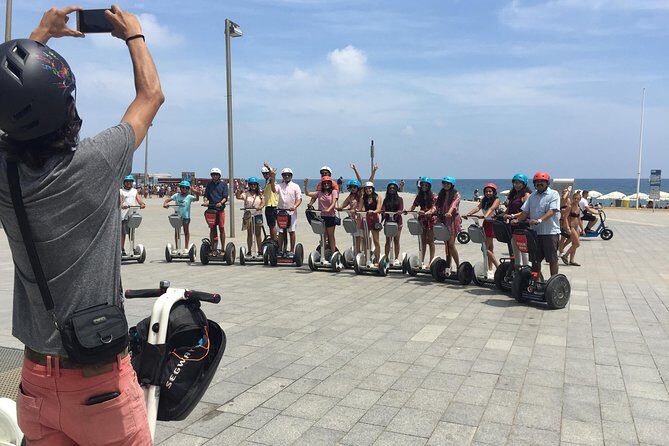
After the park, you’ll roll to Arco di Trionfo. It’s tied to the entrance of the first World Fair in Spain. You get about 15 minutes, and admission is listed as free.
Then the route shifts toward the sea at Port Olímpic, the marina created for the Olympic competition. Expect around 10 minutes. This is one of the spots where you can get panoramic views without needing a long walk, because the marina layout naturally opens the sightlines.
If you’re the type who likes to grab a few standout images and keep going, this timing works. If you’re the type who likes to go deep on one area, you’ll want to mark these places for a return visit later.
El Cap de Barcelona and Port Vell: classic “1992 plus harbor” views
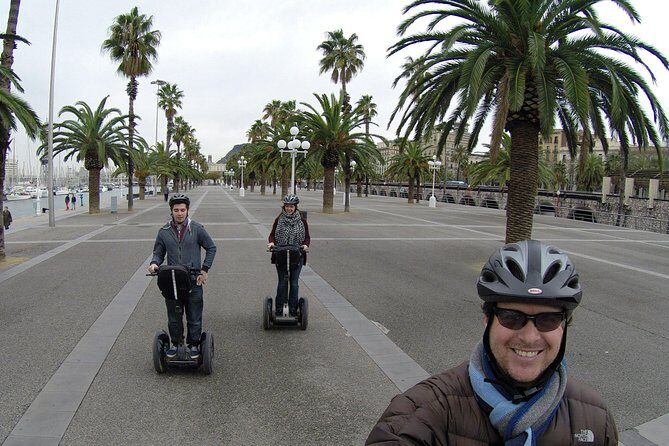
A short stop at El Cap de Barcelona brings in the Olympics again. This monument was made for the 1992 Games, and it’s quick—about 5 minutes.
Then you glide into Port Vell (Old Port) for roughly 5 minutes. This is where the Segway part really feels fun. You can move smoothly along the waterfront, with yachts and a maritime charm that’s hard to recreate just by walking slowly through the same blocks.
I also like that the route doesn’t just do “scenery.” It gives you a mix of city surfaces: open water views, harbor architecture, and then a shift toward historic defenses next.
Historic defense walls: Baluard de Migdia and Muralla de Mar
Next you’ll hit Baluard de Migdia and Muralla de Mar, tied to Barcelona’s historic defense walls. The stop is about 5 minutes.
The value here is perspective. When you look at a coastal city, it’s easy to assume the waterfront is just for today. This part reminds you that the shoreline mattered for protection and control long before cruise ships and marina bars.
It’s also a nice contrast to the Olympic zone. One minute you’re looking at modern sport-era symbols; the next you’re looking at sturdy coastal fortification architecture.
Estació de França: a fast stop with serious architectural payoff
Estació de França is one of those places where even a brief stop feels worth it. You’re there for about 2 minutes, and admission is listed as free.
This is a railway station masterpiece with big architectural presence. Even if you don’t take a train, seeing a major station like this in person helps you understand how Barcelona channels movement. You start to feel the city’s logic: harbor connects to transport, transport connects to neighborhoods, and suddenly your later sightseeing makes more sense.
David and Goliath and Plaça dels Campions: Olympic-era details you can point to
Two short stops near the Olympic village vibe round out this part of the route.
First is the David and Goliath sculpture by Antoni Llena. It was created for the preparations for the 1992 Olympic Games. You’ll see a stylized version of the biblical story, meant as a symbol of strength and resilience. Stop time is about 2 minutes.
Then you’ll reach Plaça dels Campions, a square where the names of the gold medal winners of the 1992 Olympic Games are listed. Another quick 2 minutes, with free admission.
This is the kind of tour that helps you recognize references later. After seeing these in the context of the city, you’ll spot Olympic-era echoes during your own walks around Barcelona.
Mar Bella beach break: when you want sun and motion together
The itinerary includes time at Platja de la Mar Bella, one of Barcelona’s well-known beaches. The stop time isn’t listed in the details you provided, but this is presented as a “renowned beach along the vibrant coastline” with golden sands and clear Mediterranean water.
What you can expect here: a quick chance to feel the sea air and break up the city texture. Even if your beach plan is just 10 minutes of salt-and-sun energy, it’s a smart way to keep the day from feeling like pure sightseeing.
Practical note: bring sunscreen and something to drink. You get bottled water with the tour, but beach weather can move fast.
Parc del Fòrum and the Museu de Ciències Naturals exterior: modern Barcelona by the sea
The route ends by shifting back to urban Barcelona, but in a modern register.
Parc del Fòrum is on the list for about 5 minutes. This is where you’ll see contemporary architecture and waterfront views. The tour highlights the Forum Building and open spaces, plus Mediterranean panoramas.
Then you get a short exterior glance at Museu de Ciències Naturals de Barcelona for about 3 minutes. The tour frames it as a biodiversity and natural sciences stop, even if you’re not going inside. The practical benefit is that you leave with a visual marker for later, in case you decide you want to return for a real museum visit.
Group size and pace: why the tour feels smooth instead of chaotic
This Grand Tour caps at 20 travelers, which matters when you’re steering a Segway in the city. Local rules also set an operating style: groups of 6 participants plus 1 guide, with a separation of no less than 50 meters between groups.
That setup helps the ride feel manageable. You aren’t packed together. You’re moving in your own bubble, while still getting the shared guide stories.
Pace-wise, remember: this is designed to cover a lot fast. You’ll spend more time moving between sight clusters than lingering at one single location for an hour.
If that sounds like your style—get the overview, then go back on your own later—you’ll probably love it. If you’re the type who wants one neighborhood at a slow stroll speed, you might feel it’s too quick.
Who should book Barcelona Highlights Segway Tour: The Grand Tour
You’ll likely enjoy this if:
- You’re visiting Barcelona for the first time and want a fast orientation
- You like the idea of blending waterfront, parks, architecture, and Olympic-era landmarks
- You want a guided overview without the extra cost and time of museum entries
- Your group includes first-time Segway riders, because the training is part of the deal
It’s also a good fit for families with older teens, since the minimum age rules and e-bike option are explicitly handled.
Should you book this Segway tour?
Yes, if you want a time-efficient highlights circuit that helps you understand Barcelona’s geography quickly. The Segway format is genuinely helpful for covering port and city blocks without tiring yourself out before your next meal and walk.
Skip it or plan a different option if you’re seeking long, sit-down sightseeing or deep museum time. This tour is built for motion and overview, not slow immersion at a single landmark.
If you’re weighing it between this and walking, I’d lean this way for your first day—especially because you get training, a helmet, and a structured route that hits both the Old Port and the Olympic landmarks in one go.