REVIEW · BARCELONA
Barcelona Highlights Walking Tour
Book on Viator →Operated by Exploring Barcelona Tours · Bookable on Viator
That political Barcelona is easier to see. This private highlights walk pairs major sights with a straight-talking local guide who explains the Catalonia story on more than one side. I especially like how it starts in El Born and moves through key memorial and escape-route points, not just photo stops. I also like the practical flow ending near Plaça de Catalunya, so you can roll right into food and metro lines. One possible drawback: with only a 2–3 hour window, you’ll want to plan any extra museum time for after the tour, not during.
You should come if you like history that connects to daily life. The tour is limited to your group, includes hotel pickup within Barcelona’s city region, and runs in English with a mobile ticket. My advice: wear comfortable shoes and keep your expectations realistic. It’s a focused walking route with a lot of ideas, not a slow, museum-style crawl.
In This Review
- Catalonia Highlights in a Small Group: What Makes This Walk Special
- What You’ll Likely See Before You Even Start Walking
- Price Check: Is $58.38 Worth It for a Barcelona Highlights Tour?
- Stop 1: El Born Centre de Cultura i Memoria (Culture, Artifacts, and Memory)
- Stop 2: Basilica de Santa Maria del Mar (A Church You’ll Recognize)
- Stop 3: El Fossar de les Moreres (1714, Bricks, and an Eternal Flame)
- Stop 4: Estació de França (Escape Routes and Exile)
- Stop 5: Parc de la Ciutadella, General Prim, and the 2017 Referendum Fallout
- Stop 6: Arc de Triomf (Industrial Barcelona and the Defense of St. Eulalia)
- Where the Tour Ends: Plaça de Catalunya Is a Smart Finish
- How the Guide’s Approach Feels in Real Life
- Who This Walk Is Best For (And Who Might Prefer Something Else)
- A Few Practical Tips So You Get More From Every Stop
- Should You Book This Barcelona Highlights Walking Tour?
- FAQ
- How long is the Barcelona Highlights Walking Tour?
- What does the $58.38 price include?
- Is this tour private?
- Are pickup options available?
- Where do we start and where do we end?
- Do I need tickets for each stop?
- What language is the tour offered in?
- Is the tour suitable for people with limited mobility?
- Is it easy to get to after the tour?
Catalonia Highlights in a Small Group: What Makes This Walk Special
The value here is not just that you’ll see famous buildings. It’s that you’ll learn how Barcelona residents think about identity, conflict, and memory, using the city as the classroom. You’ll also get a guide who doesn’t treat politics like a distant lecture.
From the start, the route tracks themes: culture and artifacts, worship and literature, war commemoration, escape and exile, then civic debate and modern political fallout. That makes the walk feel like it has momentum, instead of being a random set of streets.
What You’ll Likely See Before You Even Start Walking
This tour begins at El Born Centre for Culture and Memory at Plaça Comercial, 12, in Ciutat Vella. If you’re staying in the city region of Barcelona, pickup is coordinated so you can meet at or near your lodging. The tour ends at Plaça de Catalunya in L’Eixample, which is handy if you’re planning onward sightseeing or dining.
It runs about 2 to 3 hours. The pace is built for moderate physical fitness, so you should expect walking and time spent outside at each stop. Service animals are allowed, and the experience is near public transportation.
You can also read our reviews of more tours and experiences in Barcelona.
Price Check: Is $58.38 Worth It for a Barcelona Highlights Tour?
At $58.38 per person, this is not the cheapest option. But it’s priced like a guided experience that tries to earn your attention, not just pass time. The big drivers of value are:
- Private for your group: you get a smaller, more conversational tour instead of trying to hear over a crowd.
- Hotel pickup within the Barcelona city region: fewer logistics headaches mean more time spent in the story.
- English guide plus a route that connects multiple Catalonia-era themes in a short span.
Also, many stops during the walk have free admission, so your main ticket cost concern is basically the first stop. If you’re the type who likes to understand what you’re looking at while you’re walking, the price starts to make sense fast.
Stop 1: El Born Centre de Cultura i Memoria (Culture, Artifacts, and Memory)
You start at El Born Centre de Cultura i Memoria, right outside the former marketplace of El Born. The building carries serious presence, and it’s hard not to feel how this area became a hub for remembering the past. In recent years, the site has received government funding for the display of Catalan artifacts, which helps explain why this stop matters beyond scenery.
What I like about starting here: it sets a baseline. Before you get to churches, memorials, and political landmarks, you’re grounded in the idea that memory is curated—sometimes with support, sometimes with tension.
Practical heads-up: plan on about 20 minutes here, and admission for this first stop is not included. So you’ll want to be ready to pay that ticket separately if you plan to go inside.
Stop 2: Basilica de Santa Maria del Mar (A Church You’ll Recognize)
Next comes Basilica de Santa Maria del Mar, and you’ll likely recognize it even if you’ve never been to Barcelona before. It’s made famous by the bestselling book and the later Netflix series Cathedral of the Sea. The basilica itself is gorgeous, but the real payoff of this stop is how it links faith, literature, and local pride into one visible place.
This is your chance to slow down for a moment—your guide’s story gives you a reason to look upward and take in the details instead of rushing from one landmark to the next.
This stop is free to enter, and you’ll have about 20 minutes. The “take a breath” timing matters here because it resets you after the heavier tone of the opening memory-focused site.
Stop 3: El Fossar de les Moreres (1714, Bricks, and an Eternal Flame)
Beneath and around the basilica area, you’ll find El Fossar de les Moreres—an important war-dead monument tied to 1714 and the symbolic red bricks. It’s one of those places where the meaning feels bigger than the space. There’s also an eternal flame that keeps watch, making it hard to treat the site like a quick photo stop.
This is where the walk’s “two sides of the political story” approach becomes real. Instead of only naming events, your guide connects symbolism—like the flame and the materials—to how Catalonia remembers its losses and what people choose to carry forward.
You’ll spend around 20 minutes here. Admission is free. If you’re sensitive to memorial spaces, take your time and let the atmosphere do some of the work.



Stop 4: Estació de França (Escape Routes and Exile)
Then the route shifts from public mourning to survival. At Estació de França, you’ll learn why this place is tied to an escape route for exiles who went toward France during the Fascist uprising in Barcelona.
This stop changes the mood without abandoning the theme. It’s still about identity and political reality, but now the story focuses on movement: people leaving, people hiding, people hoping to live long enough to rebuild.
You’ll have about 30 minutes at this location, and entrance is free. The practical value is that you’ll understand a city landmark you might otherwise walk past without noticing its role in forced history.
Stop 5: Parc de la Ciutadella, General Prim, and the 2017 Referendum Fallout
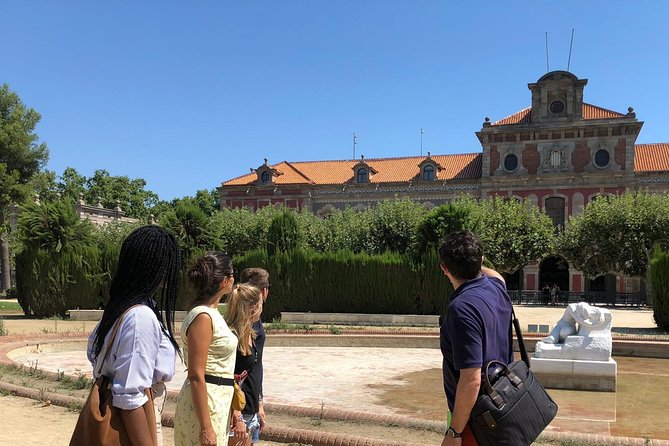
Now you shift into the wider civic map. In Parc de la Ciutadella, you’ll see a statue of General Prim. He’s described as a Catalan military legend who also served in the Spanish Imperial Army, which is a useful example of how messy loyalty can be in real life. Your guide uses that to set up a more complicated conversation about identity and politics.
From there, you’ll stop outside the Catalan parliament. This is where the tour addresses the 2017 illegal referendum and the intense political fallout that followed. It’s not just name-checking dates. The guide uses the surroundings—formal government space, public meaning, and crowd energy—to explain why people argue the way they do.
This stop is about 40 minutes. Admission is free. The drawback here is simply density: you’ll absorb a lot of political material in a short time, and the route is outside, so weather can affect comfort. If you’re visiting in summer heat or mid-winter chill, bring a bottle of water or a layer.
Stop 6: Arc de Triomf (Industrial Barcelona and the Defense of St. Eulalia)
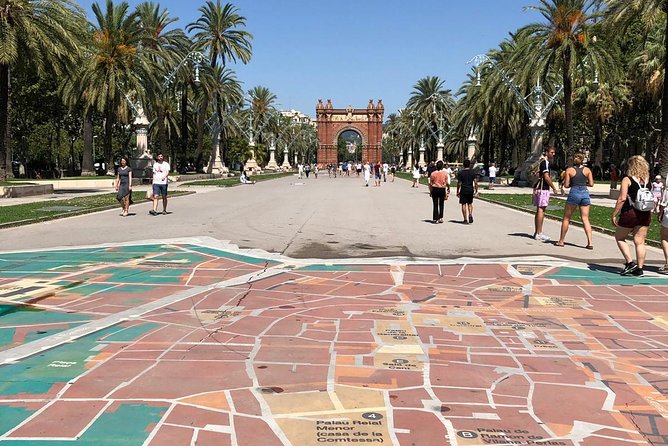
The tour closes at Arc de Triomf. This is described as an alternative Arch of Triumph, and it ties directly into Catalonia’s identity story as Barcelona grows into an industrial powerhouse in the 1880s. If you’ve seen triumphal arches elsewhere, this one feels like it’s telling a different kind of success story—more about economic force and civic self-definition than pure conquest.
Your guide brings you into the climax under the figure of a well-known hero/turncoat/pioneer tied to the defense of the besieged city of St. Eulalia. Then you’ll hear speculation about how his surrender to the Spanish may have either energized or demoralized resistance. That’s the kind of “history as human decisions” angle that makes this tour feel less like memorizing and more like thinking.
You’ll spend about 20 minutes here, and entry is free. It’s a strong finish because it links earlier memorial and escape themes to the idea of how cities narrate themselves.
Where the Tour Ends: Plaça de Catalunya Is a Smart Finish
You finish near Plaça de Catalunya, which is a practical win if you’re using public transport. It’s close to metro lines L1, L3, and L4, and there’s also a registered taxi rank nearby. Even if you’re staying elsewhere, you’ll likely find it easy to connect onward.
This matters because a lot of walking tours finish in dead-end neighborhoods where you have to work to get back to your day. Here, you land in a real hub with plenty of places to grab a drink or a bite right after the story ends.
How the Guide’s Approach Feels in Real Life
The strongest praised aspect of the experience is the guide work—local storytelling that handles Catalonia’s history in a way that includes multiple perspectives. That matters because Catalonia’s story isn’t tidy. Your guide’s goal is to explain the background so the present makes sense.
If you’re looking for “just the facts” only, you might find the political context heavy in places. But if you want Barcelona that you can interpret—why certain symbols show up, why certain dates matter, why some arguments get so intense—this tour has a clear strength.
Also, your guide experience really shows in the way the walk flows. For example, I like that the route doesn’t jump from medieval-looking streets to modern politics without bridging stops. It builds a narrative with architecture, memorials, and city planning doing the explaining.
Who This Walk Is Best For (And Who Might Prefer Something Else)
This is ideal if you:
- want a guided introduction to Catalonia’s identity story in a limited amount of time
- like history that connects to landmarks you can see immediately
- prefer a private group feel over crowded group tours
- can handle moderate walking for a couple hours in city streets
You might choose a different option if you:
- only want art and architecture with minimal politics
- plan to spend a lot of time shopping or lingering at each stop on your own
- need a fully museum-based experience with lots of indoor time
A Few Practical Tips So You Get More From Every Stop
A couple small choices will make the tour smoother:
- Bring comfortable walking shoes. The schedule is short, so you’ll want your feet to cooperate.
- Keep an eye on the first stop ticket requirement. Admission isn’t included at El Born Centre de Cultura i Memoria, while multiple later stops are free.
- If you’re doing other sights the same day, plan a little buffer. This route moves quickly through big themes.
One more thing: if you’re the type who asks questions, this is the kind of tour where that can pay off. A private format makes it easier to connect your interests to the guide’s story.
Should You Book This Barcelona Highlights Walking Tour?
I think it’s a good booking if your goal is understanding Barcelona beyond postcards. The route is tight and purposeful: El Born sets the cultural memory tone, Santa Maria del Mar and El Fossar add faith and commemoration, Estació de França brings escape and exile into focus, and then Parc de la Ciutadella plus the Catalan parliament discussion ties it to modern identity. The finish at Arc de Triomf gives the day a strong “so what does it mean now” feeling.
Skip it only if you want a purely scenic walk with light context. Otherwise, at $58.38 for a private, English-guided experience that includes hotel pickup within the city region and ends at a major transit hub, it’s solid value—especially if you like stories you can see made real in stone and streets.
FAQ
How long is the Barcelona Highlights Walking Tour?
It runs about 2 to 3 hours.
What does the $58.38 price include?
The tour price is per person and includes an English-speaking guide, plus the tour format with mobile ticketing and pickup if you’re staying in the Barcelona city region.
Is this tour private?
Yes. It’s limited to just your group.
Are pickup options available?
Pickup is offered if your hotel or lodging is in the city region of Barcelona, and the meeting location is coordinated with you.
Where do we start and where do we end?
You start at El Born Centre for Culture and Memory, Plaça Comercial 12, Ciutat Vella. You end near Plaça de Catalunya in L’Eixample.
Do I need tickets for each stop?
Admission is not included for the first stop (El Born Centre de Cultura i Memoria). The other stops listed are free.
What language is the tour offered in?
The tour is offered in English.
Is the tour suitable for people with limited mobility?
The tour lists a moderate physical fitness level. It’s a walking route, so you’ll want to be comfortable on foot for the duration.
Is it easy to get to after the tour?
Yes. The finish is near Plaça de Catalunya, with multiple metro lines nearby and a taxi rank close by.